
United States Signs Agreement with Iran to End Middle East War and Reopen Strait of Hormuz
The agreement comes as United States tensions with Iran reach a new phase of diplomatic engagement, with US President Donald Trump signing a bilateral memorandum of understanding with Iran on Wednesday to end the war in the Middle East. This includes reopening the Strait of Hormuz, suspending sanctions and outlining a $300 billion reconstruction plan for Iran funded by regional partners, while nuclear issues remain subject to 60-day negotiations. [2]
Trump Signs Iran Memorandum of Understanding
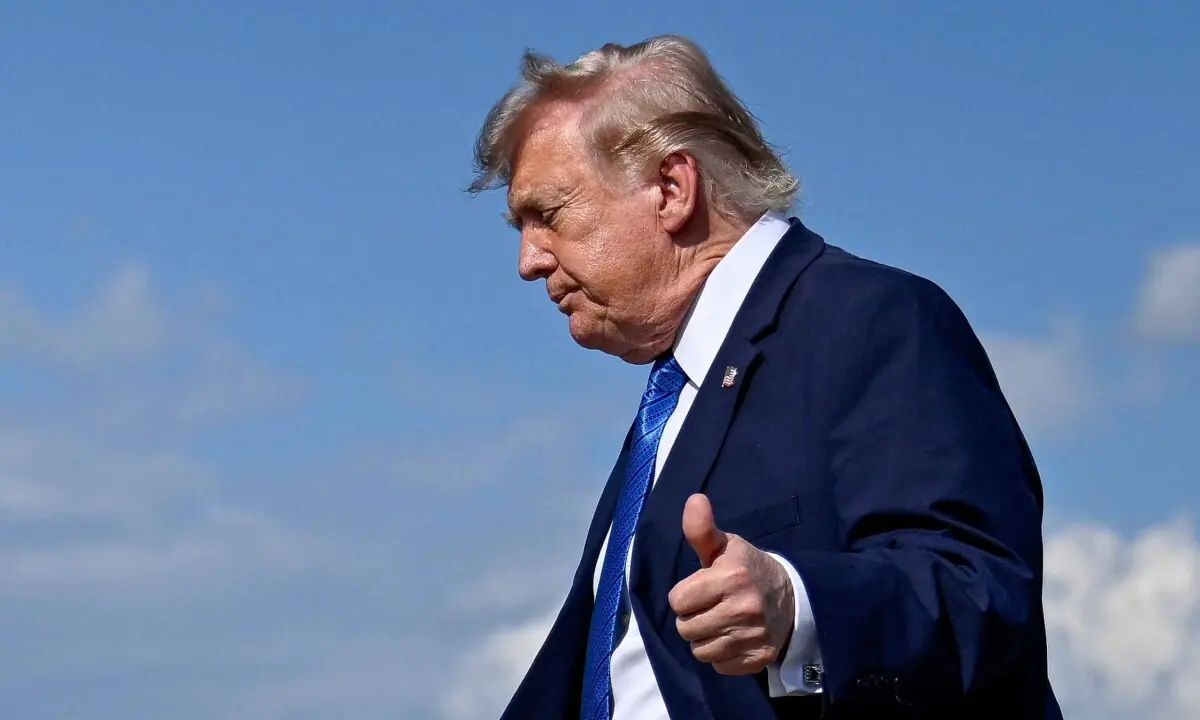
The agreement, known as the Islamabad Memorandum of Understanding, was signed remotely by Trump in France and by Iranian President Masoud Pezeshkian. [2] It also covers the Lebanese front with an immediate and permanent end to military operations. [2] Trump signed the document during his official visit to France, telling reporters “I just signed it” as he left a state dinner hosted at the Palace of Versailles. [2] The White House released a video showing Trump signing with a marker, seated beside French President Emmanuel Macron, who offered congratulations before the document was handed to US Secretary of State Marco Rubio. [2] Iranian Foreign Ministry Spokesperson Esmaeil Baghaei announced that the text was also signed by Iranian President Masoud Pezeshkian, with photographs broadcast by the official IRNA news agency. [2] Pakistani Prime Minister Shehbaz Sharif confirmed in the early hours of Thursday that an event will be held this Friday in Switzerland to mark the milestone and kick off technical talks. [2]
Core Provisions on Sanctions, Hormuz and Reconstruction
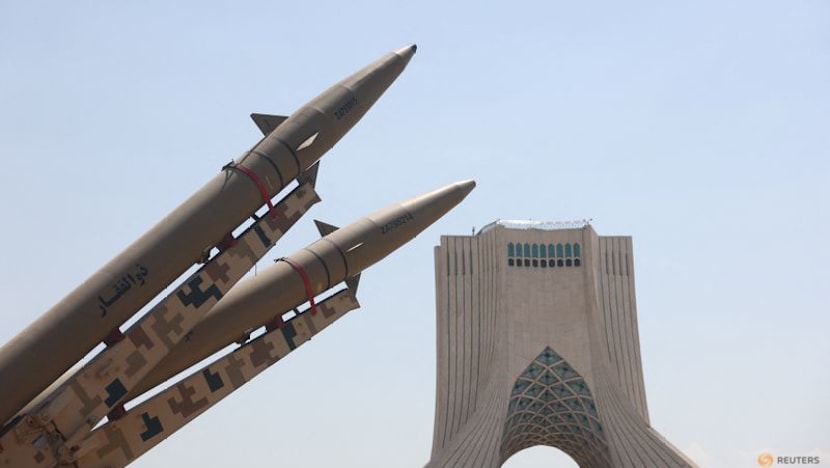
The Strait of Hormuz will reopen without delay, the US military blockade on Iranian ports will be lifted immediately, and Iran will restore full maritime navigation within 30 days. [2] Washington will suspend sanctions on Iranian oil sales effective from the moment of signing. [2] The US has also agreed to lift all remaining sanctions against Tehran upon the conclusion of a final agreement following a 60-day negotiation period. [2] During these 60 days, both governments will discuss the creation of a mechanism to process Iran’s enriched uranium stockpiles using a dilution method under the supervision of the IAEA. [2] The US official described this specific provision as a major victory for Washington. [2] Upon a final agreement, the US will coordinate with Gulf monarchies to release $300 billion in frozen assets for Iran’s reconstruction, with no direct US financial contribution. [2] The text stipulates that Iran agreed not to procure or develop nuclear weapons. [4]
Republican Backlash to the Deal
The deal has drawn sharp criticism from several Republicans including Senators Bill Cassidy, Thomas Massie and former officials like Nikki Haley and Mike Pence, who compare it unfavorably to the 2015 Obama-Iran deal and argue it fails to sufficiently curb Iran’s nuclear program or prevent future leverage over the Strait of Hormuz. [4] Louisiana Senator Bill Cassidy blasted the MoU as the worst foreign policy blunder in decades, stating “Reagan is rolling over in his grave” and noting that “Iran’s nuclear ambitions were not curbed, and they have learned that threatening the Strait of Hormuz works and will undoubtedly leverage it in the future.” [4] Thomas Massie criticised the inclusion of the $300 billion assistance plan, claiming the figure is five times as much as the US Congress spends on roads and bridges annually. [4] Nikki Haley questioned Washington’s commitment to help Iran rebuild, saying “This regime chants death to America, murders our troops, and attempts to assassinate Americans on US soil” and adding that “Now, we plan to unlock billions of dollars and lift sanctions, with the promise of even more money.” [4] Mike Pence said the US-Iran MoU does smack of the kind of appeasement that our administration rejected in the Obama-Iran nuclear deal. [4] Senator Ted Cruz defended the MoU from comparisons with the Obama deal but expressed concern about providing funds to Iran, urging the president not to give up the victory and stating “we have destroyed their military, and we should not fund the rebuild.” [4]
Advance for Eastern Mediterranean Legislation
Separately, the Senate Foreign Relations Committee approved the Eastern Mediterranean Gateway Act to strengthen US cooperation with Greece, Cyprus and Israel on energy, infrastructure and the India-Middle East-Europe Economic Corridor. [1] The legislation cleared a key hurdle Wednesday after winning the committee’s backing. [1] The American Jewish Committee and the Hellenic American Leadership Council welcomed the approval, describing it as an important step toward strengthening regional connectivity, energy cooperation and strategic coordination among the United States, Greece, Cyprus and Israel. [1] The bill builds on the framework established by the Eastern Mediterranean Security and Energy Partnership Act of 2019 and seeks to leverage those existing frameworks to support the development of the India-Middle East-Europe Economic Corridor. [1] It was introduced in the House by Congressman Brad Schneider and Congressman Gus Bilirakis and later introduced in the Senate by Senators Cory Booker and Dave McCormick. [1]
China Proposes Major Expansion of Tariff-Free Trade
China’s ambassador proposed expanding tariff-free trade under a new US-China Board of Trade from $30 billion to $300 billion. [3] Chinese ambassador to the United States Xie Feng on Wednesday proposed to increase the limit of tariff-free goods under the newly created US-China Board of Trade from the existing US$30 billion to US$300 billion. [3] Addressing a gathering at the US-China Business Council gala in Washington, Xie said he shared the view of many friends from American businesses that the tariff-free basket was far from big enough. [3] Xie added that personally he would argue for doubling the number to US$60 billion, or even raising it to US$300 billion. [3] The board of trade was one of the major outcomes of US President Donald Trump’s recent visit to China. [3]
Pope Leo Praises the Agreement
Pope Leo is pleased that the United States and Iran have reached a memorandum of understanding to end the monthslong war. [5]
What to watch next: Technical talks are set to begin this Friday in Switzerland following the signing, with nuclear issues to be addressed over the coming 60-day period under IAEA supervision.