
UN Security Council Prepares for Iran Sanctions Panel Vote as Russia Assists Tehran on Missiles Under Doomsday Clock
The UN Security Council faces a contentious vote this month on renewing the mandate of a panel monitoring sanctions on Iran amid the ongoing US-Israeli war with Iran and continued Russian assistance to Tehran on advanced missile technology, with the doomsday clock of regional escalation adding pressure to diplomatic efforts. France announced that the UN Security Council will vote on renewing the mandate of the panel of experts supporting the Iran sanctions committee, with the vote expected on Sept. 17 and the current mandate expiring on Sept. 26. [2] The US-Israeli war with Iran is expected to top the agenda during France’s presidency of the Security Council this month. [2]
UN Vote on Iran Sanctions Panel
France said the nuclear issue and Iran’s non-compliance with its UN obligations would be at the heart of discussions on the country this month. [2] The mandate of the panel, which supports the work of the UN sanctions committee on Iran, is due to expire on Sept. 26, during the annual meeting of world leaders at the UN General Assembly. [2] UN diplomats said the vote is expected on Sept. 17. [2] Outlining plans for the presidency of the 15-member Security Council, French UN ambassador Jerome Bonnafont told reporters that the Council will finally have to vote on renewing the mandate of the panel of experts on Iran. [2]
Russia and China Opposition
Russia and China oppose the renewal, arguing the Security Council no longer has a mandate on the Iranian nuclear issue and previously stated they cannot proceed to re-establish the 1737 Committee or its Panel of Experts. [2] In a joint statement in March, Russia and China said in reference to the sanctions committee that the Security Council cannot proceed to re-establish the 1737 Committee or its Panel of Experts. [2] Diplomats say a vote raises the prospect of vetoes by both Russia and China. [2] In 2024, Russia vetoed the annual renewal of a panel of experts monitoring enforcement of UN sanctions against North Korea over its nuclear weapons and ballistic missile programs. [2]
Background on Restored Sanctions
The sanctions were restored last year by Britain, France and Germany via a UN snapback mechanism after determining Iran was not complying with the 2015 nuclear deal, which Iran denies violates as it claims it is not seeking nuclear weapons. [2] The Iran dispute stems from a decision by Britain, France and Germany to trigger a UN snapback mechanism last year, restoring sanctions lifted under the UN-endorsed 2015 Iran nuclear deal after concluding that Tehran was not complying with the agreement meant to prevent it from developing a nuclear weapon. [2] Iran denies seeking nuclear weapons, but its uranium-enrichment program has long caused the US and its allies to worry that Tehran is at least keeping the option open of one day producing nuclear weapons. [2]
Russian Missile Technology Transfer
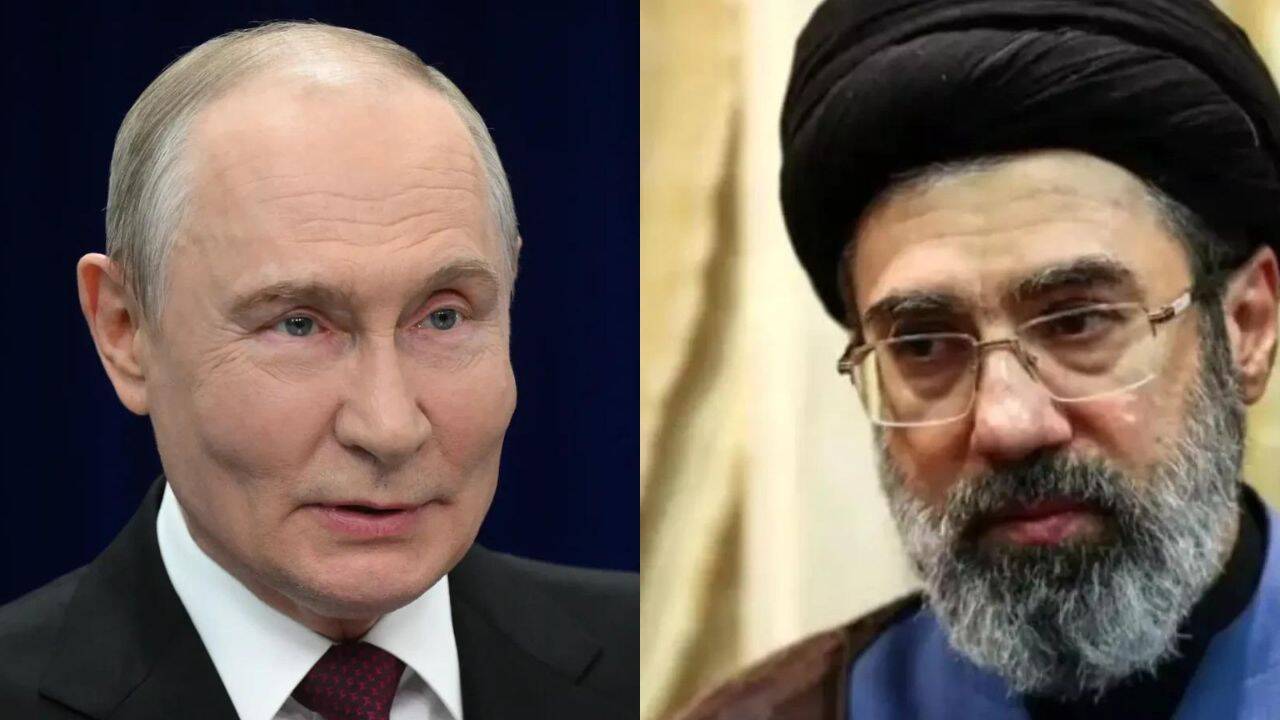
Russia has been secretly assisting Iran in developing ramjet propulsion for supersonic cruise missiles under a program codenamed C430L that began in 2023 and has continued into 2026 despite the US-Israeli war against Iran. [1] The C430L program, coordinated by Rosoboronexport with NPO Mashinostroyenia, involves analysis of Iranian flight tests and technical consultations, potentially giving Iran a weapon that could threaten US Navy vessels in the Gulf. [1] Russian President Vladimir Putin and Iranian Supreme Leader Mojtaba Khameini oversaw the context in which the program advanced. [1] The programme began in 2023, well before the ongoing US-Iran war, but has continued into the current conflict in the Middle East. [1] The C430L programme is primarily aimed at helping Iran develop a ramjet propulsion system, an engine that enables a cruise missile to sustain speeds several times faster than the speed of sound. [1] Russia’s state arms exporter, Rosoboronexport, arranged the programme and co-ordinated the project with NPO Mashinostroyenia. [1] By 2025, NPO Mashinostroyenia had received a large cache of Iranian technical material on the ramjet propulsion system. [1] The leaked correspondence shows that the C430L programme continued into 2026, after the start of the US-Israeli war against Iran, with Moscow preparing technical reports for Tehran and the two sides discussing the next phase of development. [1]
Xi Jinping's Visit to Egypt
Chinese President Xi Jinping is visiting Egypt this week for the first time in a decade, arriving in a Middle East transformed by war and renewed US sanctions on Iran. [3] When Chinese President Xi Jinping arrives in Cairo this week, he’ll find plenty has changed in Egypt and the region around it since his last trip to the Middle East’s most populous nation a decade ago. [3] Back in 2016, Xi’s five-day swing through Riyadh, Cairo and Tehran made him the first major world leader to visit since the U.S. and European Union lifted sanctions against Iran just days earlier. [3] Now, he’s coming back to a region convulsed by war and with U.S. economic weapons once again deployed against Tehran. [3] In Egypt, where he touches down Wednesday at the invitation of President Abdel-Fattah el-Sissi, a new administrative capital has sprouted up east of Cairo, and fresh highways, railways and monorails thunder across the vast metropolis. [3]
Doomsday Clock and Regional Military Developments
Japan’s Ministry of Defense officially included plans to develop underwater-launched hypersonic missiles in the fiscal year 2027 budget request. [4] A MOD rendering shows a submarine with two or three vertical launch system tubes, each carrying seven or eight solid-fuel boost-glide Hyper Velocity Gliding Projectile missiles. [4] Japan is also developing scramjet-powered hypersonic cruise missile technology for future underwater launch. [4] Calls for preemptive strikes on US forces are growing in Iran after renewed US attacks, intensifying debate over whether Tehran should shift away from a mainly retaliatory strategy. [5] US-Iran escalation prompts debate in Iran over preemptive strikes. [5]
What to watch next: The Security Council vote expected on Sept. 17 could trigger vetoes by Russia and China, while the C430L programme continues with further technical reports and discussions planned into 2026.