Doomsday Clock: Iranian Drone Intercepted by UAE as U.S. and Iran Resume Exchanges of Fire
The United Arab Emirates intercepted an Iranian drone over its territorial waters on Monday, an incident that followed renewed exchanges of fire between the United States and Iran over the weekend, including a U.S. strike on Larak Island and Iranian missile launches at U.S. sites in Jordan, pushing the doomsday clock.
UAE Intercepts Iranian Drone
The United Arab Emirates said that it intercepted an Iranian drone over its waters Monday, an attack that comes after the United States and Iran exchanged fire over the weekend for the first time in a month. [1] In a short statement earlier, the UAE Defense Ministry said it “dealt with” an Iranian drone that was detected over its waters approaching from Iran. There were no reports of damage. “This dangerous escalation constitutes a blatant violation of the UAE’s sovereignty, security, and stability, and a direct threat to the safety of its citizens and residents,” the Foreign Ministry said. [1] The Defense Ministry later issued a second statement denying a claim by the Iranian army that the Al Minhad Air Base in Dubai had been targeted, saying it was false. [1]
Weekend Exchange of Fire
Iranian officials said two people were killed and several others wounded in the U.S. attack Sunday night on Larak Island in the Strait of Hormuz. [1] Iran responded by launching missiles at U.S. sites in Jordan, which were intercepted. [1] On Sunday, U.S. Central Command said it struck Iranian launchers after observing forces with Iran’s Revolutionary Guard Corps preparing to launch rockets with sea mines into the Strait of Hormuz. [1] U.S. military officials disputed Iran’s claim that the latest American strikes were an act of aggression, calling them a “limited, precise action” against what they said were minelaying forces. [1] Iranian state television later showed what it said were ballistic missiles being fired at American bases in Jordan, and Jordan’s military said it intercepted eight that had entered its airspace. [1] In the wake of the U.S. attack on Sunday, Iran's military warned that any further U.S. attacks would draw a far heavier response, including strikes on bases or other points from which attacks against Iran are launched, state-run IRNA reported. [1] “The U.S. military has no choice but to leave the region,” the statement from Iran’s Armed Forces General Staff and the Khatam al-Anbiya Central Headquarters said. [1] Trump on Monday didn’t rule out the possibility of further strikes on Iran. “We’ll see what happens,” he told reporters. [1] Speaking after the first day of the Shanghai Cooperation Organization's summit in Kyrgyzstan, Iranian Foreign Minister Abbas Araghchi said the U.S. must abide by the June memo, state television reported. [1]
Strait of Hormuz and Economic Impact
During the lull in fighting, the U.S. has been ratcheting up economic pressure on Iran with the hope of forcing concessions out of Tehran, including reopening the Strait of Hormuz to shipping. [1] After the U.S. and Israel attacked Iran on Feb. 28, Iran established a chokehold on the vital strait, through which a fifth of the world's traded oil passed in peacetime, slowing ship traffic to a trickle. [1] That has roiled the global economy, raising prices worldwide for energy and other goods. [1] As the fighting resumed, the price of Brent crude oil, the international standard, climbed above $90, up about 25% from the start of the war, presenting a growing problem for U.S. President Donald Trump before the midterm elections. [1] A return to open conflict would be dangerous for the region, where Iran has targeted U.S. military bases and infrastructure in Gulf countries since the war began. [1]
Diplomatic and Political Reactions
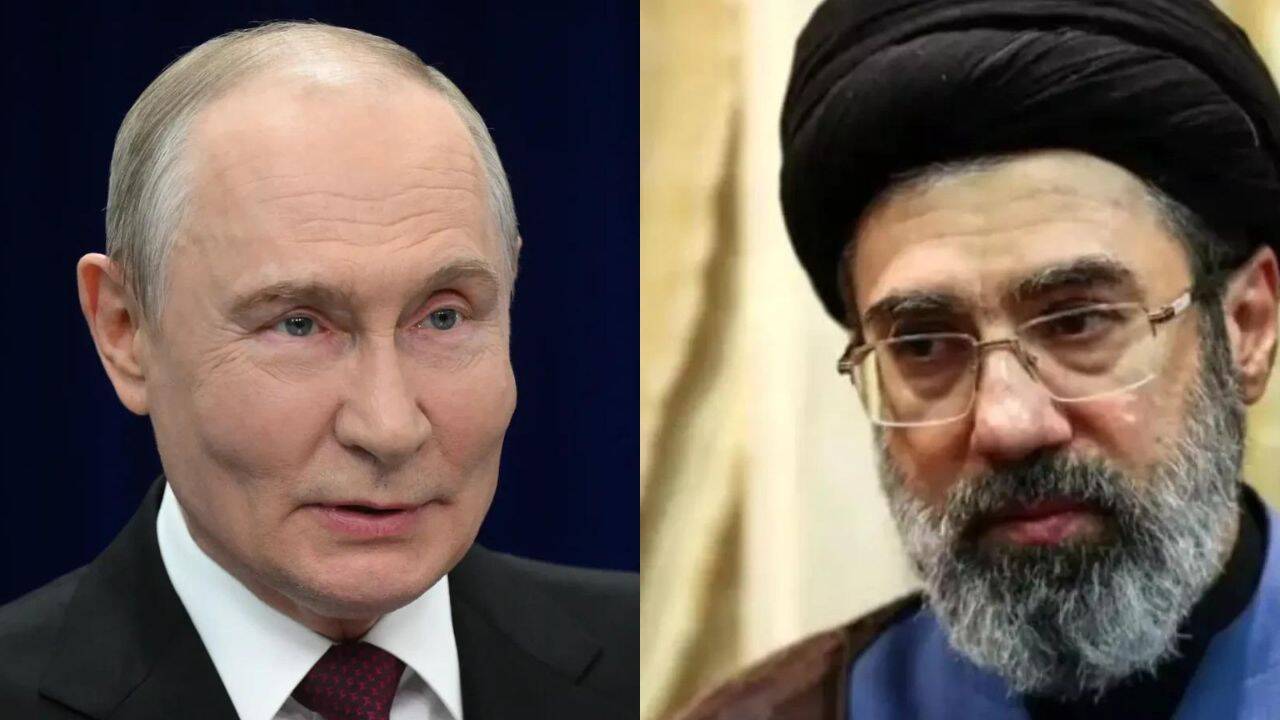
In the wake of the renewed violence, Anwar Gargash, a diplomatic adviser to the UAE’s president, said on social media that “the state of neither war nor peace cannot be a sustainable solution.” [1] He called for a political solution that would return normal navigation to the Strait of Hormuz, but also a “more realistic approach” than the June memo of understanding between Iran and the U.S., which, he said, “failed to outline a practical and acceptable” road map. [1] Iranian President Masoud Pezeshkia was scheduled to meet with Putin on the sidelines Tuesday. [1] Meantime, U.S. Treasury Secretary Scott Bessent opened meetings of the Group of 20 finance ministers in North Carolina on Monday, as Washington pressures other countries to help the U.S. economically isolate Iran. [1] The shifting strategy centers on threats to punish any country or entity that conducts business with Tehran. [1] Two weeks ago, the UAE suspended all trade with Iran after saying it had come under renewed fire from Iran with two missiles splashing down harmlessly in the Persian Gulf. [1] Iran denied the attack. [1] Bessent later suggested it was pressure from Washington that led to the UAE decision. [1] Trump stressed last week that he is “not in a hurry” to get Iran back to the negotiating table, and he continues making the case that the Islamic Republic’s leadership is on the ropes. [1]
U.S. Military and Strategic Considerations
U.S. military officials disputed Iran’s claim that the latest American strikes were an act of aggression, calling them a “limited, precise action” against what they said were minelaying forces. [1] The U.S. military said last week that it had completed clearing sea mines from the waterway’s international shipping routes. [1] The last time the U.S. military confirmed targeting Iran was July 29, when it announced a “heavy wave of strikes” on dozens of Revolutionary Guard targets. [1] President Donald Trump has pledged to respond to Iranian strikes on US military personnel in Jordan and UAE, vowing "we're going to hit them hard". [4] Trump also claimed the strait is in "extremely good shape" and Iran's financial system, military, and leadership have been largely degraded. [4] President Donald Trump and his senior national security advisers are reviewing a plan for limited US military strikes on Iranian positions around the Strait of Hormuz to prevent Tehran from rebuilding radar systems, air defenses and anti-ship missile capabilities, according to Axios. [5] The proposal was prepared by US Central Command (CENTCOM) over the past week and has the backing of Defense Secretary Pete Hegseth. [5] The plan has not yet been approved by Trump, but officials said the president could authorize it following the latest escalation between Washington and Tehran. [5] One official described the strategy as “mowing the lawn,” meaning periodic strikes would be carried out to prevent Iran from restoring military capabilities in the area. [5] One incident that reportedly heightened those concerns involved an Iranian surface-to-air missile fired toward a US F-35 fighter jet supporting maritime security operations in the Strait of Hormuz. [5] US officials said the missile did not come close enough to threaten the aircraft but viewed the launch as evidence that Iran is restoring its air-defense network. [5] A White House official neither confirmed nor denied the Axios report but said “the president has all options on the table,” adding that Iran wants a deal but has repeatedly failed to act in time. [5] Speaking to Fox News after the latest Iranian missile attacks, Trump vowed a strong response, saying the United States would “hit them hard” in retaliation. [5]
Market Reactions in Asia
The South Korean won slightly weakened against the U.S. dollar Tuesday, as tensions renewed in the Middle East with the United States and Iran exchanging strikes. [2] The won was quoted at 1,370.4 won per dollar at 3:30 p.m., down 1.8 won from the close of the previous stock trading session. [2] At one point in afternoon trading, the Korean currency backtracked to a low of 1,373.5 per dollar. [2] The latest adjustment comes as U.S. President Donald Trump threatened further strikes against Iran, prompting global oil prices to rise and reigniting inflation concerns. [2] Foreigners sold a net 491.9 billion won (US$358 million) worth of local stocks during the latest trading session, with the benchmark Korea Composite Stock Price Index edging up 0.23 percent to close at 6,835.80. [2] South Korean stocks rose for the second consecutive session Tuesday on gains in tech shares despite escalating tensions in the Middle East following a resumption of airstrike exchanges between the United States and Iran. [3] The benchmark Korea Composite Stock Price Index closed at 6,835.80, up 15.78 points, or 0.23 percent. [3] The index opened 0.52 percent lower, tracking overnight losses on Wall Street, following resumed military clashes between the US and Iran, fueling uncertainty in global oil prices and inflation worries in the world's largest economy. [3] However, the KOSPI erased the earlier losses in the afternoon on gains in tech shares after government data showed that South Korea's August exports remained solid, supported by strong chip demand. [3] Trade volume was light at 263.7 million shares worth 17.5 trillion won ($12.8 billion). [3] Winners closely outnumbered losers 444 to 421. [3] Foreign, institution and retail investors were all net sellers, offloading 491.9 billion won, 634 billion won and 539.8 billion won worth of stocks, respectively. [3] Market bellwether Samsung Electronics rose 0.38 percent to 261,000 won, and its chipmaking rival SK hynix advanced 1.14 percent to 1.69 million won. [3] Oil refineries were strong on rising crude oil prices, as industry leader SK Innovation jumped 7.81 percent to 135,300 won and S-Oil gained 1.07 percent to 151,700 won. [3] Leading shipbuilder HD Hyundai Heavy Industries increased 0.78 percent to 453,000 won, and major retailer Lotte Shopping vaulted 6.48 percent to 113,300 won. [3] However, defense giant Hanwha Aerospace fell 3.99 percent to 1.06 million won, and leading pharmaceutical firm Celltrion dropped 0.48 percent to 188,000 won. [3] The Korean won was quoted at 1,370.4 won against the US dollar, down 1.8 won from the previous stock trading session. [3]
What to watch next: Iranian President Masoud Pezeshkia was scheduled to meet with Putin on the sidelines Tuesday, while U.S. Treasury Secretary Scott Bessent continues meetings of the Group of 20 finance ministers in North Carolina.