
Ukraine Strikes Russian Rocket Fuel Plant With Neptune Missiles Destroying Multiple Workshops
Ukraine strikes on Russian military infrastructure continued with the use of domestically produced missiles against a key production site. Ukrainian forces struck the Kamensky Combine, a Russian military plant in Rostov Oblast that produces solid rocket fuel, using Neptune cruise missiles on the night of 15-16 August, destroying two workshops and damaging four others. [1]
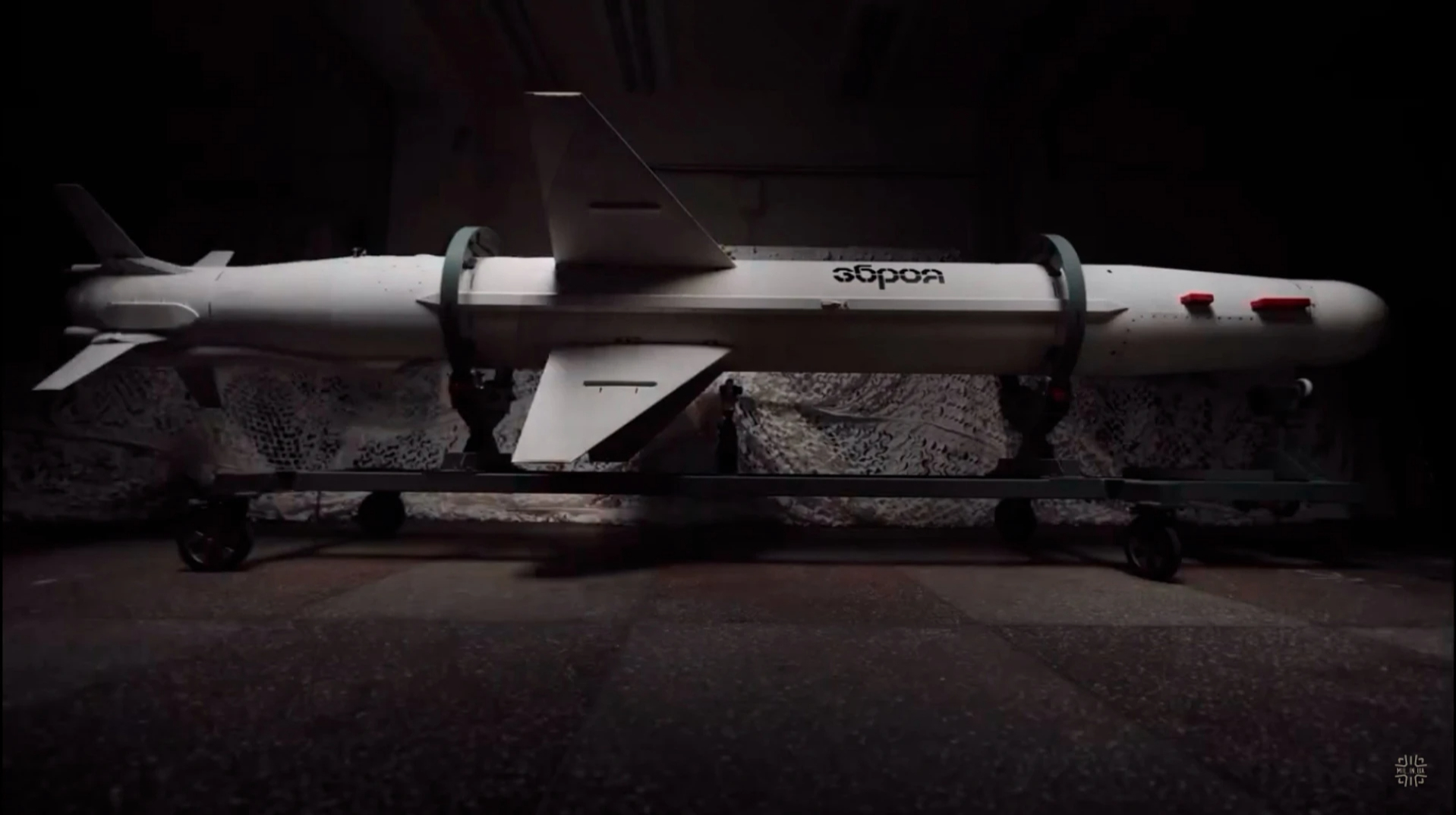
Ukrainian Neptune Strike on Russian Rocket Fuel Plant
The strike was carried out by Ukraine's Navy together with other units of the country's defence forces. [1] The damage to this industrial facility disrupts the production chain for solid rocket fuel for the Russian armed forces, which will significantly affect the loading of rocket engines for Russian air defence systems and multiple rocket launchers. [1] The plant produces solid rocket fuel, including for the Uragan, Smerch and Tornado-S multiple-launch rocket systems. [1] The following day, 17 August, Ukraine's General Staff confirmed that the strike had destroyed two workshops and damaged four other workshops that produced explosives and gunpowder. [1] The Ukrainian R-360 Neptune cruise missile is based on the Soviet Kh-35 Zvezda missile, with significantly improved range and modern electronics. [1] The Luch Design Bureau began developing the R-360 Neptune cruise missile after the annexation of Crimea in 2014. [1] The R-360 Neptune is designed to destroy ships with a displacement of up to 5,000 tonnes and, like all missiles of this class, can be launched from ground, surface and air platforms. [1] In April 2022, the missile was used to sink the Russian cruiser Moskva. [1] In late 2025, President Volodymyr Zelenskyy confirmed that Ukraine is also using an upgraded version of the Neptune, known as the Long Neptune. [1] The Neptune-D system uses RK360L cruise missiles. Their range is up to 1,000 km, while the warhead weighs 260 kg. [1] The missile is designed to strike land and sea targets. [1] In June 2026, Neptune missiles were used to strike a Russian Black Sea Fleet military facility in temporarily occupied Sevastopol, while in April 2026 they targeted a drone production facility in Taganrog owned by Atlant Aero. [1]
Russian Missile Attack on Kyiv Book Market
A Russian ballistic missile attack on Kyiv on 16 August triggered explosions, an extensive fire at a book market and left three people wounded. [3] The administration militaire de Kiev a recensé three blessés à la suite de l’attaque, qui, selon les services de secours, a provoqué un important incendie dans un marché. [3] The capital ukrainienne a en particulier payé un lourd tribut avec au moins 54 morts et 202 blessés. [3] Les forces russes ont lancé à maintes reprises sur Kiev des bombardements massifs, avec des missiles balistiques et de croisière. [3] Début août, une série de frappes sur la ville a fait au moins 17 morts à Kiev et sa région, sans que l’Ukraine, confrontée à une pénurie d’intercepteurs, ne parvaisse à abattre un seul missile russe. [3]

Ukrainian Neptune missiles struck the Kamensky Combine rocket fuel plant in Russia's Rostov Oblast. — Source: gdelt
Russian Strikes on Ukrainian Energy Infrastructure
Russian strikes hit energy infrastructure in six Ukrainian regions including Donetsk, Kharkiv, Sumy, Zaporizhzhia, Kherson and Chernihiv, causing new power outages. [4] As a result of the large-scale Russian attack, new power outages were reported in five regions of the country as of this morning. [4] The affected regions are Kharkiv, Sumy, Zaporizhzhia, Kherson and Donetsk oblasts. [4] Emergency repair work has already begun wherever the security situation currently allows. [4] Power engineers are doing everything possible to restore power to all consumers as quickly as possible. [4] Energy workers are asking consumers to shift energy-intensive activities to between 10:00 and 16:00 and to limit electricity consumption between 18:00 and 22:00. [4] An energy facility was damaged as a result of a Russian attack on Chernihiv Oblast. [4] The Russians attacked facilities belonging to the Naftogaz Group in various regions of Ukraine 13 times with drones and missiles. [4]
Escalating Cross-Border Drone and Missile Attacks
A massive Russian drone and missile assault on Moscow involved around 600 drones, with 201 shot down near the capital and three people wounded. [3] Moscou a été visée par 600 drones pendant la nuit de samedi à dimanche, une attaque d’une rare ampleur sur la capitale qui a fait au moins three blessés, a indiqué son maire après une nouvelle série de frappes meurtrières en Russie comme en Ukraine. [3] Sur 600 drones identifiés comme se dirigeant vers Moscou, 201 ont été abattus dans la région entourant directement la capitale, a précisé le maire Sergueï Sobianine. [3] Ukrainian missile strikes on Russia's Belgorod region killed six civilians and wounded four others including a child. [5] Ukrainian missile strikes killed six people and wounded four others, including a child, in Russia's Belgorod region, the acting governor said Monday. [5] "Ukrainian terrorists attacked the village of Koloskovo, Valuysky district, with missiles," Belgorod acting Governor Alexander Shuvaev said. [5] The attack, which Shuvaev said burned a "structure" and damaged a vehicle, came a day after Russia and Ukraine carried out missile and drone strikes deep inside each other's territory that killed 19 people on both sides. [5] Separate Russian strikes targeted port infrastructure in Odesa and Izmail. [5] Ukrainian authorities said Monday that Russia targeted port infrastructure in Ukraine's Izmail district in the southern region of Odesa overnight. [5] Russia's defence ministry said its forces had hit military targets in the port, which it described as "a berthing terminal used for unloading vessels carrying military cargo, hangars housing Western military equipment, and depots for naval drones". [5] In a separate strike, Russia said its forces had hit a patrol boat and fuel storage tanks in Odesa. [5] The local governor there said a civilian Togo-flagged vessel was damaged and four people were injured. [5]

Ukrainian Neptune missiles struck the Kamensky Combine rocket fuel plant in Russia's Rostov Oblast. — Source: ukrainskapravda
Neptune Missile Development and Prior Use
The Ukrainian R-360 Neptune cruise missile is based on the Soviet Kh-35 Zvezda missile, with significantly improved range and modern electronics. [1] The Luch Design Bureau began developing the R-360 Neptune cruise missile after the annexation of Crimea in 2014. [1] The R-360 Neptune is designed to destroy ships with a displacement of up to 5,000 tonnes and, like all missiles of this class, can be launched from ground, surface and air platforms. [1] In April 2022, the missile was used to sink the Russian cruiser Moskva. [1] In late 2025, President Volodymyr Zelenskyy confirmed that Ukraine is also using an upgraded version of the Neptune, known as the Long Neptune. [1] The Neptune-D system uses RK360L cruise missiles with a range up to 1,000 km and a warhead weighing 260 kg. [1] In June 2026, Neptune missiles were used to strike a Russian Black Sea Fleet military facility in temporarily occupied Sevastopol, while in April 2026 they targeted a drone production facility in Taganrog owned by Atlant Aero. [1]
Civilian Casualties and Broader Conflict Trends
A Russian ballistic missile attack on Kyiv on 16 August triggered explosions, an extensive fire at a book market and left three people wounded. [3] Ukrainian missile strikes on Russia's Belgorod region killed six civilians and wounded four others including a child. [5] Selon un rapport de la Mission de surveillance des droits de l’Homme des Nations unies en Ukraine, le mois dernier a été le plus meurtrier pour les civils en Ukraine depuis mai 2022, avec 437 morts et 2 610 blessés. [3] La capitale ukrainienne a en particulier payé un lourd tribut avec au moins 54 morts et 202 blessés. [3] Russian authorities have reported 79 civilians killed on their side in July, up from the previous month. [5] With frontline fighting at a near standstill and talks frozen, the warring countries have significantly stepped up missile attacks, pushing the civilian death toll to its highest levels since the war's first months in 2022. [5]
What to watch next: Strikes are expected to continue targeting energy sites and port areas while both sides report further long-range drone and missile activity across border regions.