
Ukraine Conflict Sees Nearly 1.2 Million Textbooks Destroyed in Russian Attacks
In the Ukraine conflict, Russian attacks have destroyed nearly 1.2 million school textbooks in Ukraine, representing 8.6% of the total print run for the 2026-2027 academic year, while also disrupting grain exports and continuing intense battlefield clashes.
Impact of Russian Attacks on Ukrainian Education
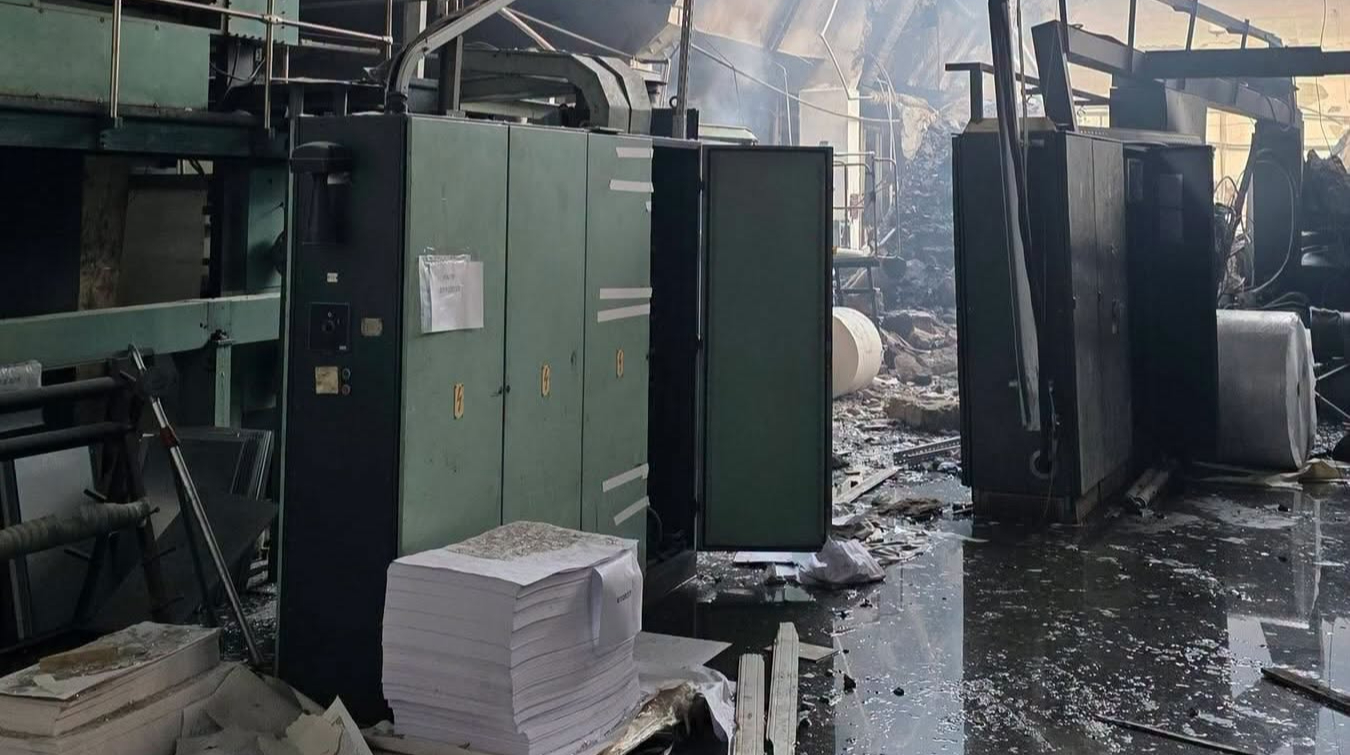
Large-scale Russian attacks on Ukrainian printing companies and logistics warehouses have destroyed nearly 1.2 million school textbooks. [1] Books that had already been prepared for dispatch were among those destroyed. [1] The biggest losses have affected textbook print runs for students in Years 4 and 9. [1] A total of 1,166,874 copies have been destroyed, accounting for 8.6% of the total number of textbooks printed for the 2026-2027 academic year. [1] The biggest losses were among books for Year 9: more than 850,000 copies were destroyed, equivalent to 9.5% of the print run. [1] More than 271,000 copies for Year 4 were lost, accounting for 7% of the print run. [1] Almost 45,000 textbooks for pupils in Years 6 and 7 were also destroyed, representing 6% of their print run. [1] Significant losses were incurred by some Ukrainian publishers including Ranok, Hramota, Lingvist, Akademiia, Osvita, Litera, Aston and Shkoliar. [1] The committee has now identified which textbooks need to be reprinted as a priority. [1] The government is looking for additional printing capacity to ensure that Ukrainian schoolchildren receive all the books they need by 1 September, when the new school year begins in Ukraine. [1] The authorities have also decided to improve logistics and establish safer storage facilities for new print runs. [1] There are two equally important goals for us today. The first is to do everything possible to ensure that Ukrainian schoolchildren receive the textbooks they need by 1 September. The second is not to leave Ukrainian publishers to deal with the aftermath of Russian strikes on their own. This is only the beginning of our joint work, said Serhii Babak, Chairman of the Committee on Education, Science and Innovation. [1] In early July, Russian missiles struck the central warehouse of the BookChef publishing house's logistics partner, destroying around 800,000 books. [1] A partner printing house of the publishers Ranok was also affected. [1] A Russian strike damaged a warehouse belonging to the Nash Format publisher and online store. [1] During a strike on Kyiv on 19 July, Russian forces destroyed a warehouse belonging to the knigolove publishing house where 250,000 books were stored. [1] The premises of the Mison publishing house's editorial office were completely burned down in the same attack. [1] The Konvi printing and polygraphy company, which produces materials for Ranok, Laboratoriia, ArtBooks, BookChef and many other publishers, was also affected. [1] Overall, Russian attacks destroyed more than 1.5 million copies of Ukrainian books in July alone. [1] Publishers have lost hundreds of millions of hryvnias due to relentless Russian attacks. [1]
Grain Export Reductions Due to Port Blockade
Ukraine has cut its grain export forecast for the July-June 2026/27 season by 12% compared with its previous projection. [2] We are currently targeting 38-40 million tonnes, said Taras Vysotskyi, Ukraine's Minister of Agrarian Policy and Food. [2] Before the intensified attacks on ports, the ministry had forecast exports of 43 million tonnes this season. [2] The ministry's forecast is broadly in line with estimates by analysts at APK-Inform, who on Monday 10 August cut their export forecast by 8.6% to 39.4 million tonnes due to disruptions to exports. [2] The estimate included 13.5 million tonnes of wheat, 24 million tonnes of maize and 1.5 million tonnes of barley. [2] The lower grain export forecast highlights the damage Russian attacks are inflicting on Ukrainian exports, more than 90% of which are shipped through seaports. [2] Disruptions to grain storage could result in a shortage of storage capacity for 11 million tonnes. [2] Losses to the agricultural sector resulting from the port blockade could reach US$3 billion. [2] On 23 July, inbound vessel traffic to Ukraine's Black Sea ports was suspended due to the threat of Russian attacks. [2] This followed weeks of aerial attacks on Ukrainian Black Sea ports. [2] Russian forces also attacked a bridge in Maiaky, Odesa Oblast, in an attempt to disrupt exports of Ukrainian grain and other goods via an alternative land corridor used by Ukraine following the suspension of maritime exports. [2]
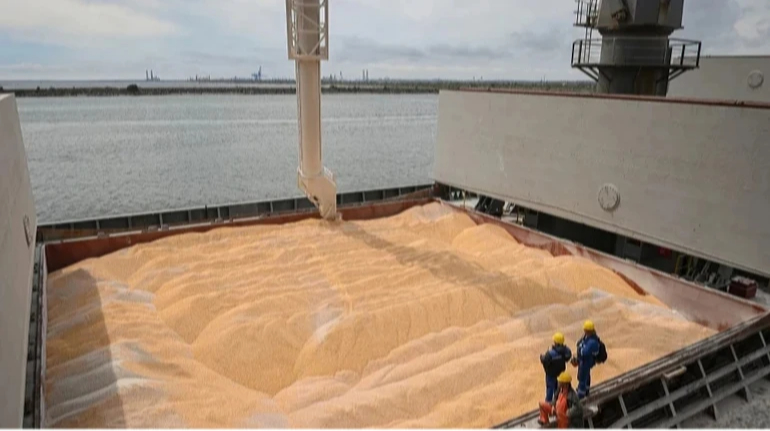
Russian attacks destroyed nearly 1.2 million Ukrainian school textbooks for the 2026-2027 academic year. — Source: ukrainskapravda
Russian Drone Production Plans
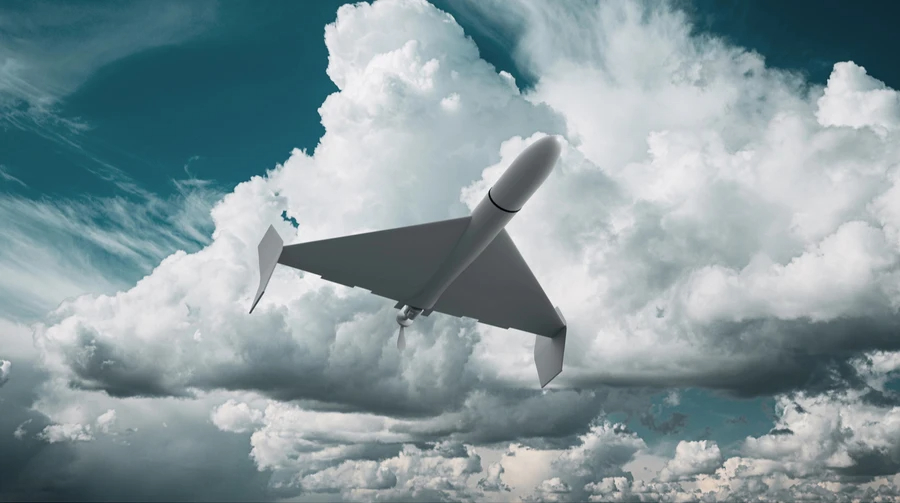
Russia's military-industrial complex plans to manufacture 11,000 attack drones of various types in August 2026. [4] The planned output includes Geran-1, Geran-2, Geran-3, Geran-4, Geran-5, Garpiya, Gerbera, Gerbera-Kamikaze and Gerbera Seeker. [4] In July, the Russians slightly reduced the intensity of drone strikes and cut production volumes, as they are reconfiguring production with a focus on the turbojet-powered Geran-4 and Geran-5 drones. [4] In one of the recent attacks, turbojet drones already made up 50% of the total. [4] Now we need different interceptors with a matching speed, or short-range air defence, to counter them, said Major General Vadym Skibitskyi, Deputy Head of Defence Intelligence of Ukraine. [4] During the strike on Bryansk Oblast on 1 August, Ukraine's defence forces hit all three underground storage facilities used to store warheads and fuel for Geran and Gerbera drones. [4] New production halls are being built within the Alabuga special economic zone in Russia's Tatarstan, where a factory producing Shahed-type drones operates. [4] Russia uses Shahed-type attack drones to strike Ukraine just days after they are manufactured. [4]
Daily Battlefield Clashes and Frontline Developments
A total of 254 combat clashes have occurred on the battlefield over the past day, with the Russians conducting the heaviest attacks on the Lyman front with 30 assaults and the Kostiantynivka front with 31 assaults. [5] On the North Slobozhanshchyna front and in the operational zone in Russia's Kursk Oblast, three combat clashes occurred. [5] The Russians launched one airstrike, dropping three guided bombs, and conducted 51 strikes on Ukrainian positions and settlements. [5] On the South Slobozhanshchyna front, the Russians conducted 25 attacks on Ukrainian positions near the settlements of Starytsia, Vovchansk, Lyman and Artilne and towards Izbytske, Volokhivka, Kupyne, Khatnie, Ukrainske, Bereznyky and Ambarne. [5] On the Kupiansk front, the Russians conducted two attacks near the village of Petropavlivka and towards the village of Novoplatonivka. [5] On the Lyman front, the Russians conducted 30 attacks, trying to break through Ukrainian defences towards the settlements of Drobysheve, Lyman, Dibrova and Ozerne and near Novoiehorivka, Novoselivka, Torske and Yampil. [5] On the Sloviansk front, the Russians conducted seven assaults near the village of Riznykivka and towards the village of Rai-Oleksandrivka. [5] On the Kramatorsk front, the Russians conducted three attacks near Nykyforivka and towards Yurkivka. [5] On the Kostiantynivka front, the Russians conducted 31 attacks near the settlements of Kostiantynivka, Illinivka and Rusyn Yar and towards Dovha Balka and Mykolaipillia. [5] On the Pokrovsk front, Ukraine's defence forces stopped 26 Russian assaults near the settlements of Novooleksandrivka, Kotlyne, Udachne and Molodetske and towards Kucheriv Yar, Nove Shakhove, Novohryshyne, Shevchenko, Svitle, Serhiivka, Muravka, Matiasheve and Novopavlivka. [5] On the Oleksandrivka front, the Russians conducted three attacks towards Danylivka and Nove Zaporizhzhia. [5] On the Huliaipole front, the Russians conducted 21 attacks towards the settlements of Vozdvyzhivka, Hirke, Staroukrainka, Huliaipilske, Rivne and Tsvitkove. [5] On the Orikhiv front, Ukrainian defenders repelled two Russian attempts to advance towards Prymorske and near Plavni. [5] On the Prydniprovske front, the Russians did not conduct any offensive operations over the past day. [5]
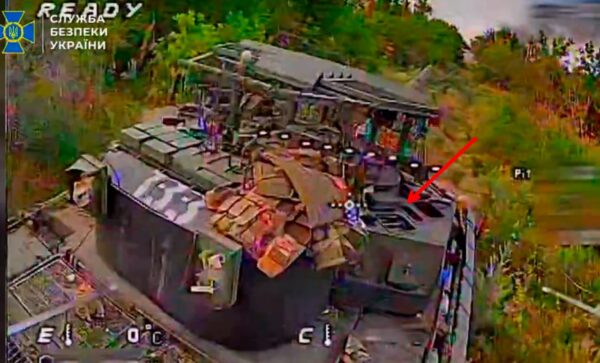
Russian drone-proof tanks face Ukrainian drone swarms during Donbas clashes. — Source: euobserver
Mechanised Assaults and Equipment Innovations in Donbas
Russia’s active protection system works very well, but only under 2023 conditions. [3] Rodynske near Pokrovsk has definitively fallen. [3] The battle for the town started in August 2025. [3] After almost exactly 1 year of extremely intense fighting, the battle for Rodynske is effectively over, with the last Ukrainian pockets of resistance finally being eliminated or having retreated. [3] The Russians attempted a major mechanised assault towards Dobropillia on 22 July. [3] Infantry fighting vehicles and tanks took part for the first time in a long while. [3] The result was the loss of seven tanks, six BMPs, two multiple rocket launchers and dozens of other pieces of equipment on the Russian side. [3] The battle took place in the area of responsibility of the 1st Azov Corps. [3] The Russians attempted this with two columns, one set out from the occupied village of Vozdvyzhenka, the other from Novoekonomichne. [3] The columns headed towards Volodymyrivka with the objective of reaching the village of Shakhove. [3] The Russian attack was preceded by the massive use of electronic jamming, artillery and air power. [3] Ukrainians remotely mined the routes of the Russian advance and used their own aircraft to attack Russian pontoon bridges. [3] These encountered seven Russian T-72B3A tanks equipped with the new Arena-M active protection system. [3] The system on one tank destroyed seven FPV drones. [3] Overall, 15 to 20 FPV drones were needed to destroy a tank. [3] We have now acquired a functioning KAZ against drones, but because of its lengthy development it is several years behind battlefield conditions. [3] The number of FPV drones is now so high that the enemy simply exhausts the existing small stock of defensive ammunition and then attacks the unprotected vehicle. [3] Arena-M would have been extremely useful in 2023–2025, but today it would require far more defensive ammunition. [3]
Ongoing Challenges Across the Ukraine Conflict
Russian attacks continue to affect multiple sectors in the Ukraine conflict, from education materials to agricultural exports and frontline positions.
What to watch next: Russia's planned output of 11,000 attack drones in August 2026 after reconfiguring production for turbojet-powered variants, continued heavy fighting on the Lyman and Kostiantynivka fronts, and Ukrainian efforts to secure additional printing capacity and safer storage for textbooks ahead of 1 September.