Ukraine Conflict Sees At Least Two Killed in Russian Strikes on Kyiv and Zaporizhzhia
Russian strikes killed at least two civilians in Kyiv and Zaporizhzhia while over 20 died in attacks across Ukraine including 16 at a shopping center in Kryvyi Rih, as the Ukraine conflict expands with increasing drone border violations, Black Sea attacks on commercial vessels, NATO contingency planning for potential Russian assaults on member states, and Russia's shift to faster jet-powered drones that Ukraine is countering with new interceptor technology. [1]
Civilian Toll from Recent Russian Strikes
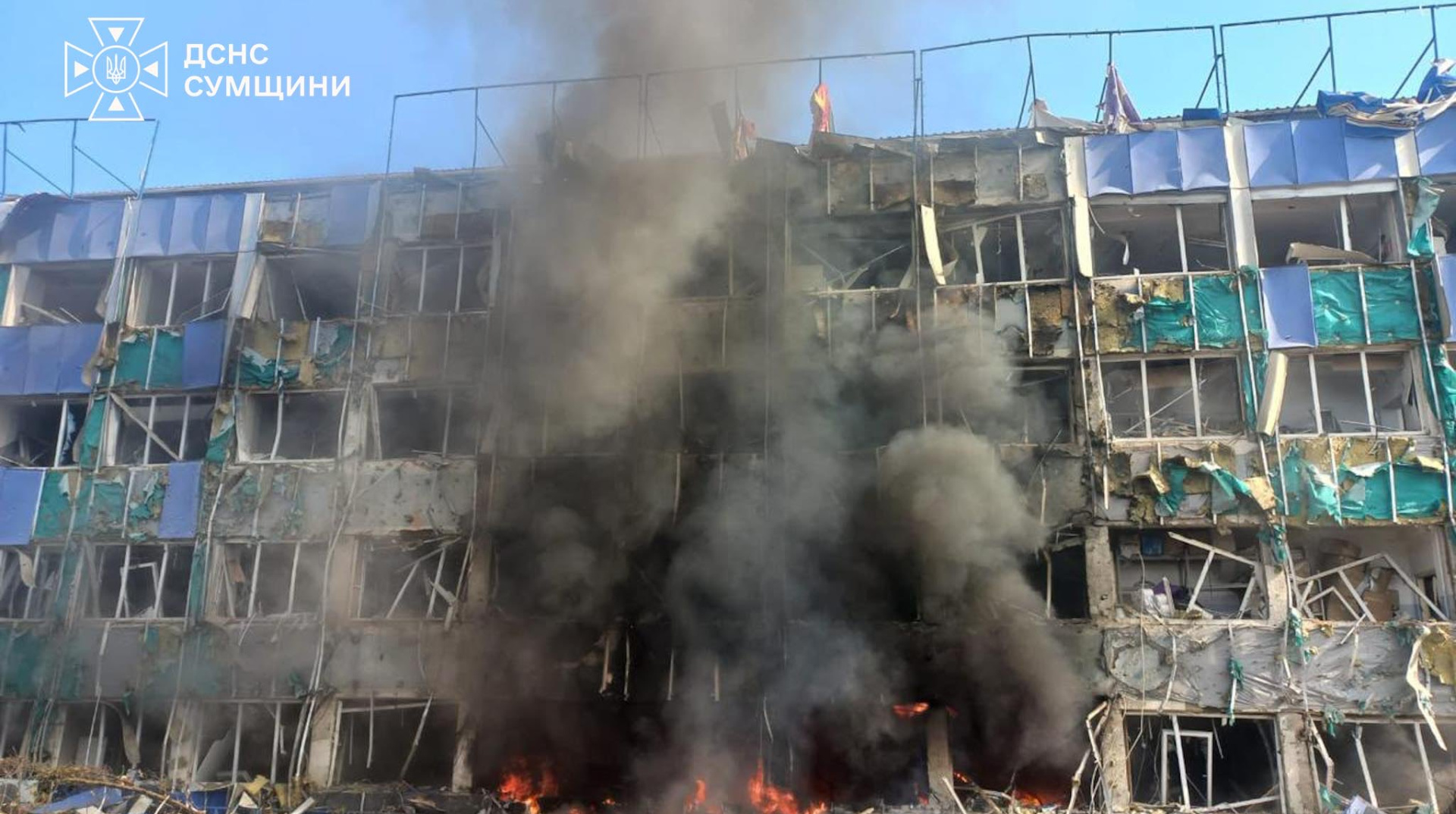
Civilian casualties have surged in recent months with Russian strikes killing two in Kyiv and Zaporizhzhia, four wounded in Zaporizhzhia drone attack, and over 20 killed including 16 at Kryvyi Rih shopping center with 130 injured and nine missing. [1] At least two people were killed because of Russian strikes in Kyiv and Zaporizhzhia. [1] The military command sounded an alarm for a Russian attack with ballistic missiles. [1] Later it informed via Telegram about a fire in a warehouse where according to the first information there is one dead and several wounded. [1] In Zaporizhzhia one person was killed and four others were wounded in a raid by a Russian drone. [1] On Friday more than 20 people were killed because of Russian attacks in Ukraine. [1] The deadliest strike occurred in Kryvyi Rih where Russian drones hit a shopping center causing the death of 16 people and injuring 130. [1] Nine people are considered missing including two children and rescuers continue to search for them in the rubble of the shopping center. [1] These figures reflect a broader surge in civilian deaths and injuries among both Ukrainians and Russians in recent months amid the Ukraine conflict. [1]
Escalation Beyond Borders and in the Black Sea
The front line remains largely static in a war of attrition featuring hundreds of drones and missiles targeting energy infrastructure and strategic sites in both Ukraine and Russia along with attacks on commercial ships and tankers in the Black Sea. [1] The Ukraine conflict is increasingly moving beyond Ukrainian and Russian borders with repeated violations of NATO member borders by drones interceptions of fighter jets attacks on commercial ships and tankers in the Black Sea and seizures of shadow fleet vessels. [1] In combination with scenarios and preparations for expanding the war onto European soil all these incidents show the critical point of escalation the war has reached. [1] The front line remains essentially immovable while in a war of attrition and direct economic cost mutual attacks with hundreds of drones and missiles on commercial ships and tankers in the Black Sea on energy infrastructure and other strategic infrastructure in Ukraine and Russia are increasing sharply. [1] The number of civilian dead and wounded has skyrocketed in recent months. [1] All the conditions for expanding the war are present and the mixture is explosive. [1] Russian forces have infiltrated areas near Sloviansk with small groups advancing through forests and residential buildings amid ongoing civilian attacks that injured seven residents in one 24-hour period. [3]

Russian strikes killed at least two civilians in Kyiv and Zaporizhzhia regions. — Source: kyivindependent
NATO Contingency Plans for Russian Attack
NATO has developed a Land Warfighting Concept for ground operations if Russia attacks member states prioritizing neutralization of missile threats creation of an autonomous buffer zone using drones and potential strikes on Russian territory including Kaliningrad. [1] NATO has developed a plan for conducting ground military operations in case of a Russian attack against member countries. [1] The NATO Land Warfighting Concept document was drawn up under the guidance of Major Andrew Pingray of the US Armed Forces. [1] In such a scenario of an attack on the Baltic countries Russia might initially use missiles and drones and then launch a ground attack with the participation of armored vehicles. [1] NATO's basic priority would be the neutralization of the missile threat with fighter jets missiles and drones capable of striking Russian systems. [1] One of the priority targets would be the Russian enclave of Kaliningrad where Russia has concentrated a significant number of missile systems and air defense systems. [1] The next step is the creation of a so-called autonomous zone along the borders with Russia and Belarus as a kind of barrier between Russian troops and NATO forces with drones and robotic military transport systems playing the main role. [1] No permanent deployment of NATO troops is foreseen there while in case of further advance of Russian forces the autonomous zone would be used to limit and stop the attack through unmanned systems. [1] At the same time the plan includes the possibility of strikes against military targets within Russian territory such as airports military industry bridges and railway junctions used for the transport of troops and equipment. [1] Russia for its part has installed secret bases capable of launching high-power drones deep inside NATO territory. [1]
Intelligence Warnings of Imminent Russian Actions
Intelligence warnings point to assessments from US and European intelligence on possible limited Russian attacks or hybrid provocations against NATO states as early as autumn mutual accusations of already conducting war and rising military budgets across both sides. [1] In early August the American Wall Street Journal reported citing new intelligence service estimates that Russia could launch a limited attack against a NATO country as early as autumn. [1] There have been recent reports from European and American intelligence officials that Russia is considering the possibility of an armed provocation on Polish territory missile or drone attacks against critical infrastructure or false flag attacks that would be attributed to Ukraine. [1] The conflicting interests are becoming increasingly difficult to reconcile and a climate of familiarity with a future military confrontation in Europe is being cultivated to justify the huge military budgets. [1] According to the SIPRI institute the 29 European NATO member states spent a total of 559 billion dollars last year for military purposes. [1] Germany alone accounted for 114 billion dollars marking an increase of 24 percent. [1] Ukraine's Main Directorate of Intelligence estimates that hybrid operations are currently the most likely form of Russian action against NATO however this type of operation usually precedes conventional military operations. [1] NATO scenarios speak of a conflict with Russia by 2030 or even earlier. [1] Moscow is testing the strength and determination of the alliance. [1] For the President of Latvia Edgars Rinkevics and other officials of Europe and the EU the hybrid war of Russia against the western countries is already underway giving an alibi for the corresponding war plans of NATO. [1] Meanwhile Moscow believes that the European countries are already waging war against Russia through Ukraine as well as through sanctions. [1]
{IMAGE_3}
Russia's Shift to Jet-Powered Drones
Russia has pivoted to producing around 3,000 jet-powered Geran-4 and Geran-5 drones monthly that travel at 500-600 kph outpacing Ukrainian piston-engine interceptors prompting Ukraine to develop and deploy faster jet-powered interceptors reaching 600 kph. [2] In July there were five times as many jet-powered drones as in June. [2] Sometimes two-thirds of all drones launched during the day are jet-powered. [2] Russian drones over Ukraine are nothing new and the country's military has become the global pioneer of downing piston-engine versions using first-person view interceptor drones. [2] But equipped with jet engines and in ever-increasing numbers Russia's attack drones are now outpacing Ukraine's interceptors. [2] Russia first started importing assembled piston-engined Iranian Shahed 131 and Shahed 136 one-way attack drones in 2022 which were known in Russian service as the Geran-1 and Geran-2 respectively. [2] Production was quickly localized and scaled at the Yelabuga drone factory in Tatarstan. [2] Russia's use of Geran-2 drones started to escalate massively from the summer of 2024. [2] The Ukrainian Air Force went from reporting around 400 drones a month to around 700 and then around 1,300 2,000 2,500. [2] This escalated up until May 2026 when nearly 7,500 drones were launched in a single month. [2] May represented a peak of Russia's use of the piston-engined drones against Ukraine. [2] Despite the massive numbers launched at the country the combination of Ukraine's new interceptor drones and years of experience in downing Russian drones helped interception rates peak around 95 percent. [2] Facing the decreased effectiveness of its piston-engined drones Russia has pivoted toward producing ever larger numbers of jet-powered drones. [2] Ukraine's Military Intelligence assesses Russia produces around 3,000 jet-powered Geran-4 and Geran-5 kamikaze drones per month. [2] By August 2026 production of Russia's jet-powered one-way attack drones had surpassed production of the piston-engined Geran-2 model. [2] The newer jet-powered models are significantly faster than piston-engined models making them much more difficult to shoot down with FPV interceptors and mobile fire teams. [2] While the piston-engined Geran-2 has a maximum speed of around 185 kph the jet-powered Geran-4 and Geran-5 can reach 500 kph and 600 kph respectively. [2] Jet-powered drones are more expensive and more complex to build than piston-engined variants leading to an overall drop in the numbers of drones being launched against Ukraine. [2] The total number of Russian drones reported launched at Ukraine by the Ukrainian Air Force has dropped off in recent months with less than 6,000 for June less than 5,000 for July and less than 2,500 for August so far. [2]
Ukraine's Development of Advanced Interceptors
Ukraine's response includes new faster FPV and jet-powered interceptors now in testing or service their cost-effectiveness compared to missiles and adaptations to counter the evolving Russian drone threat. [2] As the threat changes Ukraine's drone producers are scrambling to develop newer and faster models of the interceptor drones that proved so effective in neutering Russia's older and slower drones. [2] Simultaneously Russia is racing to scale production of newer versions redirecting resources once poured into production of piston-engined models into faster but more complex jet-powered models. [2] Interceptor drones are the main focus. [2] Ukraine has achieved high shoot-down rates for conventional Shahed-type drones. [2] A typical Ukrainian drone interceptor such as the Wild Hornets STING costs around 2,300 dollars. [2] Mobile fire teams have been established and equipped with modern systems which have significantly improved effectiveness. [2] Automated systems have even begun to appear. [2] Ukrainian effectiveness in dealing with Russian and Iranian drones was starkly demonstrated during the continuing war in the Persian Gulf. [2] As Iranian drones penetrated sophisticated American air defenses causing billions of dollars worth of damage Ukrainian interceptors and Ukrainian anti-drone specialists were called in to help bolster the defenses of US bases in the region. [2] Interceptors capable of intercepting jet-powered drones are currently being developed. [2] Ukrainian developers are aware of this problem. [2] One senior engineer working on one of Ukraine's interceptor programs said the team had already been modifying their existing drone interceptors to increase their flight speed and that they already had prototypes that were capable of reaching the speeds necessary to engage jet-powered drones. [2] It's an engineering problem to which there's an engineering solution. [2] The newer prototypes were not significantly more expensive than their current interceptor models that were in serial production. [2] Meanwhile the jet-powered drones they were designed to intercept were significantly more expensive for Russia to produce than piston-engined drones. [2] This favorable economic differential is important for the long-term sustainability of Ukraine's air defense as relying on expensive mostly Western-sourced surface-to-air missiles to defend against jet-powered drones would be unsustainable both due to the cost and the limited production of such interceptors. [2] Ukraine is also developing jet-powered interceptors. [2] The first jet-powered interceptors which can reach speeds of 600 kph are undergoing combat testing. [2] The interceptor is capable of high speeds and can be reused if no target is engaged. [2] The aircraft can also engage ground targets and helicopters. [2]
What to watch next: The total number of Russian drones reported launched at Ukraine has dropped off in recent months while NATO scenarios speak of a conflict with Russia by 2030 or even earlier and hybrid operations are considered the most likely form of Russian action against NATO. [1] [2]