
Trump Pauses Iran Strikes to Allow Negotiations but Warns of Quick Return to Military Action
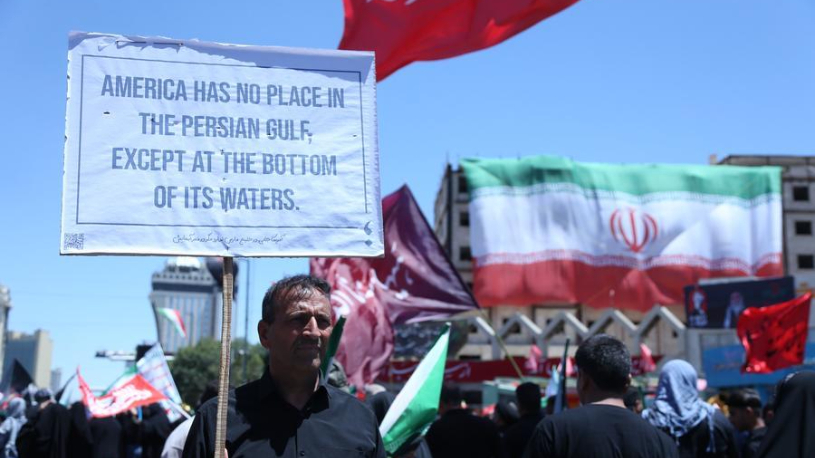
U.S. President Donald Trump announced a pause in strikes on Iran to allow time for ongoing negotiations while warning that failure to reach a deal would trigger renewed strong military action.
Trump Pauses Strikes to Pursue Iran Talks
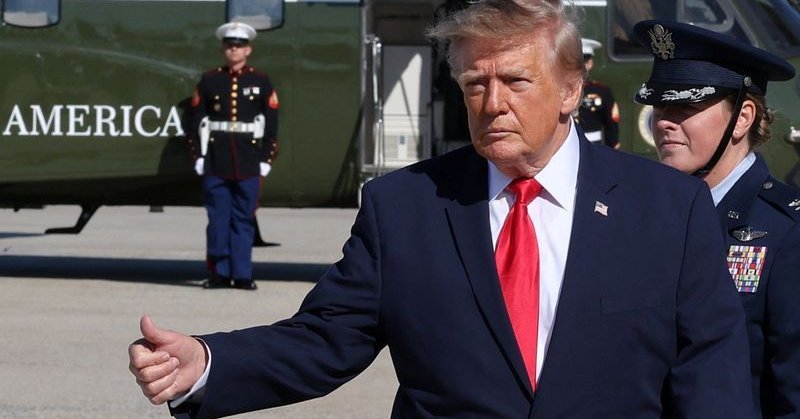
U.S. President Donald Trump said Monday that he decided to pause U.S. strikes on Iran in order to give negotiations another chance, while warning that he could order a restart of strikes if talks with Iran fail. [1] "We are in very deep talks with Iran. If they don't work out, we will go back to very strong military action," Trump said in an interview with U.S. online news outlet Axios. [1] Asked how long he was willing to give diplomacy, he said, "Not much time. Either it goes fast or not at all." [1] Trump said he decided to pause strikes on Friday because the countries that are mediating as well as other countries in the region had asked him to give talks with Iran another chance. [1] Later, the president told reporters that Iran sought talks only after its military was battered by the U.S. military. [1] "I think there's a good chance that something could happen," Trump said aboard Air Force One en route to an event in Michigan. [1] "And if it does, good, if it doesn't, we go back to doing what we were doing two days ago." [1]
U.S.-Israel Alignment and Iranian Assets
Trump said that his administration and the Israeli government are "pretty close" to being on the same page regarding Iran. [1] "We have a little difference, but pretty close," he said of Israeli Prime Minister Benjamin Netanyahu, who is expected to visit the White House on Tuesday. [1] Trump also reiterated that Iranian assets controlled by the United States will be used to cover damage to ships attacked when transiting the Strait of Hormuz. [1] "We're going to use Iran's money to pay for the damage they did," he said. [1]
Oman-Mediated Talks Show Partial Progress
Negotiations between Oman and Iran have made progress, though no deal has been reached, according to reports citing regional sources. [1]
Pentagon Delays Ukraine Aid Disbursement
The United States defense ministry Pentagon informed members of Congress that it does not intend to use the entire $400 million sum authorized for support to Ukraine before the fiscal year 2029. [2] This comes even though Ukraine's government urgently needs weapons to counter Russian missile attacks. [2] Congress had authorized the U.S. Department of Defense to use $400 million for support to Ukraine. [2] The Pentagon sent a letter to lawmakers in May outlining the use of the funding, a source familiar with the document said on Monday. [2] Democrats and some members of the Republican Party had criticized the Pentagon for delaying the granting of support to Ukraine. [2] Two months after the letter was sent, the funds have still not been paid or even committed to contracts, the source said. [2] Congress has repeatedly complained about the slow use of funds. [2] The letter has not been reported on previously. [2] Congress is dissatisfied with the Pentagon over Ukraine. Ukrainian President Volodymyr Zelenskyy is expected to meet President Donald Trump at the White House on Tuesday, where Zelenskyy will continue to demand urgently needed air defense equipment and finalize a drone deal with the United States, according to a source familiar with the plans. [2] Two sources from the Reuters news agency said that members of Congress were dissatisfied with the Pentagon's schedule, which they consider unusually slow given the ongoing conflict. [2] The delivery schedule in the letter indicated that the funds are to be used during fiscal year 2026, which ends on September 30, and that the final delivery of all aid is estimated to occur in the fiscal year ending September 30, 2029. [2] Trump's second term ends on January 20, 2029. [2] President Trump has recently taken a more positive stance toward Ukraine. [2] He approved a proposal granting Ukraine a license to manufacture Patriot interceptor missiles. [2] In addition, Trump has indicated that he will sign a bill on sanctions against Russia proposed by the late Republican Senator Lindsey Graham, a close ally of Trump in the Senate. [2] Zelenskyy will attend Graham's funeral on Tuesday. [2] Graham's sudden death in July has raised doubts about whether Trump's recent tilt toward Ukraine would have continued without Graham's defense speeches. [2] The Pentagon has not yet responded to Reuters' request for comment. [2]
U.S. Critical Minerals Deadline Faces Industry Shortfalls
U.S. President Donald Trump’s push to end Washington’s reliance on Chinese critical minerals by January is colliding with a stark reality: American miners and processors aren’t ready. [3] Trump has made U.S. mining and processing of critical minerals a national security priority since returning to office, pouring tens of billions of dollars into nearly 150 minerals companies to loosen China’s grip on supply chains for weapons and other strategic products. [3] The defense industry and other manufacturers are now just over five months away from a January 1, 2027, deadline under federal regulations to stop purchasing rare earths, magnets, tungsten, molybdenum and tantalum from China, Russia, Iran or North Korea. [3]
Yemen Warns of Houthi Push to Control Red Sea Shipping
Yemen’s Houthi Movement aims to replicate Iran’s Hormuz Strait strategy in the Red Sea by disrupting shipping in the Bab el-Mandeb and has been emboldened by an insufficient international response, Yemen’s top diplomat said on Monday. [5] “The Houthis want to copy the Iranian model and this will shut down two main straits, the gateways into the Gulf and Red Sea,” Yemeni Foreign Minister-designate Afrah Al-Zouba said, speaking to a small group of journalists at the Yemeni embassy in the Saudi capital, Riyadh. [5] The Red Sea has become a new front in the Iran war, with the Houthis taking an escalatory approach against Saudi Arabia by firing missiles and drones at the kingdom and declaring a blockade on Saudi shipping. [5] Saudi Arabia has responded with airstrikes on what it said were Houthi military facilities and said it would protect commercial shipping, accusing the Houthis of serving foreign agendas. [5] The escalation has also threatened to bring back conflict to Yemen, where war killed hundreds of thousands of people after the Houthis stormed the capital Sanaa in 2014, prompting Saudi Arabia to intervene at the head of an Arab coalition. [5] A truce was reached in 2022 but it has been pierced by the recent cross-border fire, and Saudi officials, Western diplomats and Yemeni officials see a return to full-scale war as more likely now than at any point since then. [5] Zouba said Yemen’s government, which enjoys strong Saudi backing, was prepared for an escalation and that firing was taking place along the frontline, spanning the country’s northwest from the Red Sea up to the Saudi border, but neither side had yet mounted an offensive. [5] “We think that this conflict now needs to come to an end, either via peaceful means, or the other way,” she said. [5]
What to watch next: Observers will monitor whether talks with Iran produce a deal before the short window closes, the results of Netanyahu’s White House visit on Tuesday, Zelenskyy’s meeting with Trump on the same day, and any further escalation along Yemen’s frontline.