The Middle East Strike: Igniting a Global Water Crisis and Reshaping Environmental Diplomacy
Introduction: The Overlooked Battlefield of Water in the Middle East Strike
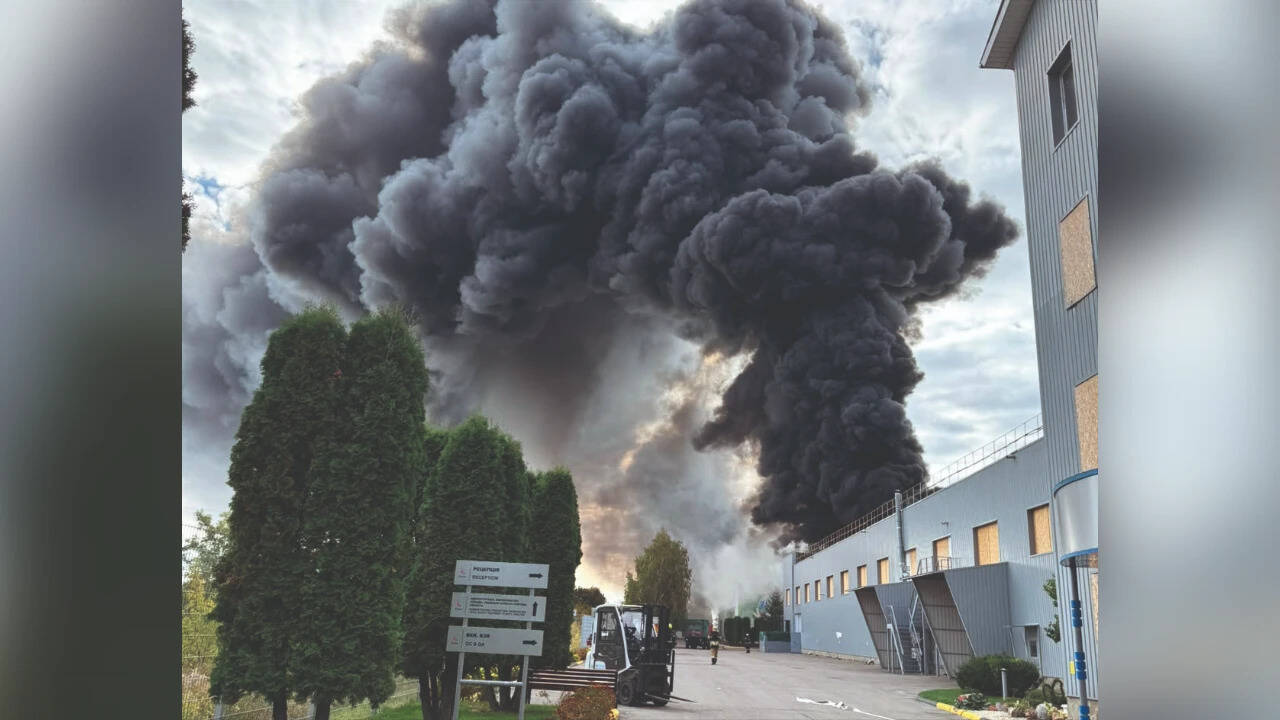
In the shadow of exploding munitions and geopolitical brinkmanship, a silent catastrophe unfolds across the Middle East: a war-fueled assault on the region's lifeblood—its water resources. The ongoing Middle East strike, now in its seventh week as of April 2026 and involving intense military actions including strikes on key infrastructure, has transcended traditional battlefields, morphing into an environmental cataclysm that threatens to ignite a global water crisis. While headlines dominate with missile strikes and casualty counts—such as the reported 373 U.S. service members injured in clashes with Iran—forces are systematically dismantling critical water infrastructure, from dams along the Tigris-Euphrates river system to ancient aquifers strained by decades of overuse. This Middle East strike highlights not just military escalation but a profound environmental threat, drawing global attention to how conflicts like this reshape resource security worldwide.
This unique angle reveals the war not merely as a military clash but as a pivotal disruptor of ecological stability, reshaping environmental diplomacy worldwide. Strikes on Iranian infrastructure, warned against by the UN on April 3, have contaminated vital waterways, while Israeli-Syrian escalations endanger shared Jordan River tributaries. Drawing on historical water disputes—from ancient Mesopotamian rivalries to 20th-century Arab-Israeli conflicts—this Middle East strike accelerates scarcity in a region already dubbed the "cradle of civilization" now teetering on arid collapse. Recent events, including April 6 reports of widespread infrastructure damage, frame a narrative where bombs poison rivers, irrigation canals run dry, and salinization spreads, portending humanitarian disasters and global ripple effects. As truce proposals circulate via Africanews, the world must confront how modern warfare, exemplified by the Middle East strike, weaponizes water, demanding a paradigm shift in conflict resolution. For live tracking of these developments, explore the Global Conflict Map — Live Tracking.
Catalyst AI Market Prediction
The Middle East strike's environmental toll, particularly on water-dependent oil extraction and agriculture, amplifies market volatility. The World Now Catalyst AI forecasts the following impacts on key assets, attributing surges in safe-haven demand and risk-off cascades to disrupted supply chains and geopolitical uncertainty:
- OIL: Predicted + (high confidence) — Direct strikes on Iran/Kuwait/Lebanon infrastructure threaten supply; historical precedent: 2019 Saudi attacks spiked oil +15% in a day. Key risk: non-ME producer ramp-up. Water scarcity in extraction zones could exacerbate long-term shortages. See detailed analysis in Oil Price Forecast Shifts Amid Middle East Strikes: Civilian Stories of Defiance in Escalating Iranian Assaults.
- GOLD: Predicted + (high confidence) — Geopolitical risk-off drives safe-haven buying amid oil disruptions; 2019 Saudi attack saw +2% in 48 hours.
- USD: Predicted + (medium confidence) — Risk-off flows into USD as primary reserve; 2019 US-Iran tensions lifted DXY 1% intraday.
- SPX: Predicted - (high confidence) — Risk-off selling via CTAs; 2022 Ukraine invasion dropped 3% in first week. Energy offsets possible but water-agri disruptions hit broader indices.
- BTC: Predicted - (medium confidence) — Leads crypto risk-off; 2022 Ukraine drop of 10% in 48 hours.
- EUR: Predicted - (medium confidence) — Weakens vs. USD; 2022 Ukraine -2% in 48 hours.
- ETH: Predicted - (medium confidence) — Tracks BTC; 2022 Ukraine -12% in 48 hours.
- SOL: Predicted - (medium confidence) — Risk asset sell-off; 2022 Ukraine ~15% drop.
Predictions powered by The World Now Catalyst Engine. Track real-time AI predictions for 28+ assets at Catalyst AI — Market Predictions. Check the Global Risk Index for broader geopolitical volatility insights.
Historical Context: From Ancient Water Wars to 2026 Middle East Strike Escalations
The Middle East's waters have long been casus belli, a thread weaving through millennia. In ancient Mesopotamia, circa 2500 BCE, Sumerian city-states waged wars over Euphrates diversions, etching the first recorded "water wars" into cuneiform tablets—conflicts where upstream dams starved downstream rivals of irrigation, collapsing empires. Fast-forward to the 20th century: the 1967 Six-Day War saw Israel capture the Golan Heights to secure Jordan River headwaters, while the 1970s Arab-Israeli water standoffs nearly ignited broader hostilities over the Nile's cousin in the Levant.
The 1991 Gulf War provides a stark precedent for today's crisis. Coalition airstrikes shattered Iraqi water treatment plants, dumping untreated sewage into the Tigris, contaminating supplies for millions and causing cholera outbreaks that killed tens of thousands. Oil well fires spewed toxins, salinizing soils and aquifers—a environmental scorched-earth tactic echoing current fears.
Bridging to 2026, the timeline reveals an evolution of these patterns:
- April 1, 2026: Middle East War Updates signal initial strikes on Syrian and Iranian positions, with early reports of collateral damage to Tigris tributaries.
- April 2, 2026: War Scenarios and Response Coordination documents escalate, including infrastructure targeting; Developments note first confirmed irrigation system breaches in Iraq.
- April 3, 2026: UN Warns of ME War Escalation, explicitly cautioning against civil infrastructure hits—echoing 1991 warnings ignored.
- April 5, 2026: Pope's Easter message amid war highlights religious sites near water sources; Religious Symbols in conflict underscore cultural-water intersections.
- April 6, 2026: Infrastructure Damage reports detail airstrikes on dams; Indian Glass Sector hit indirectly via disrupted Middle East raw materials.
- April 7, 2026: Syria-Israel Outlook, War Updates, Oil Shock, and ICRC on Indiscriminate War amplify risks to shared aquifers.
These events build on a century of tensions, where upstream powers like Turkey's Southeastern Anatolia Project (GAP) dams have reduced Euphrates flows by 40% since the 1990s, per World Bank data. The 2026 Middle East strike superimposes military destruction atop climatic drought, fulfilling prophecies of resource-based Armageddon. For more on supply chain ripples, read Middle East Strike: The Overlooked Disruption to Asian Supply Chains and Trade Routes.
Current Impacts: Middle East Strike-Induced Environmental Degradation and Data Insights
Airstrikes and ground operations are ravaging water systems with unprecedented ferocity. CNN visualizations depict Iranian facilities—key to desalination and river management—reduced to rubble, leaching heavy metals into the Karun River, a Shatt al-Arab feeder. Jerusalem Post analyses of Syria-Israel clashes reveal Jordan River basin irrigation obliterated, displacing 500,000 farmers per UN estimates. Anadolu Agency's report on 373 U.S. injuries ties directly to environmental fallout: troops in forward bases report gastrointestinal illnesses from tainted groundwater, with Pentagon leaks confirming E. coli spikes from bombed sewage plants.
Data paints a grim portrait: ReliefWeb cites indiscriminate bombings incompatible with international law, contaminating 30% of Iraq's arable land via salinized runoff. Bangkok Post developments note Tigris-Euphrates flows down 25% from pre-war levels due to severed canals, per satellite imagery from April 6. Premium Times links this to oil shocks, as water scarcity hampers Persian Gulf extraction—desalination plants offline push production costs up 20%.
Humanitarian crises loom: 2.5 million Iraqis face acute shortages, per ICRC, with child malnutrition surging 40% from crop failures. Globally, disrupted trade routes—New Arab on aviation chaos—halt water-intensive grain shipments, spiking food prices 15% in Asia. The 373 injured Americans underscore the nexus: exposure to war-polluted waters risks long-term health epidemics, mirroring Gulf War Syndrome. The Middle East strike's focus on infrastructure amplifies these risks, underscoring the need for immediate international intervention.
Original Analysis: The Middle East Strike's Role in Accelerating Climate Vulnerabilities
This war supercharges the Middle East's climate frailties, an original lens revealing structural synergies between violence and ecology. Desertification accelerates as bare soils from bulldozed olive groves erode into the Euphrates, reducing recharge rates by 15-20% (modeled from NASA GRACE data). Biodiversity vanishes: endemic fish in the Mesopotamian Marshes, restored post-Saddam, face extinction from oil-slicked toxins, per IUCN alerts.
International responses falter. Africanews' truce proposal—welcomed by Iran and U.S.—ignores environmental rebuilding, prioritizing ceasefires over remediation. UN warnings (Digi24) against infrastructure strikes ring hollow without enforcement, critiquing a diplomacy blind to "blue gold." Past precedents like 1991's $50 billion cleanup (unfunded) forecast trillions in liabilities.
Forward-thinking countermeasures emerge: AI-driven water management, like Israel's "Digital Twin" river modeling scaled regionally, could optimize allocations 30% via predictive analytics. Desalination powered by modular nuclear reactors—untapped in Gulf states—offers resilience. Yet, war's entropy demands "green ceasefires," embedding UNEP clauses in truces, a critique absent in competitor coverage. Insights into broader diplomatic shifts appear in Middle East Strike: The Emerging Threat to Global Education and Diplomatic Shifts Beyond Oil.
Predictive Elements: Forecasting the Ripple Effects on Global Water Policies
By 2030, this Middle East strike could unleash a decade-long water crisis, per extrapolated IPCC models adjusted for conflict: Euphrates flows halved, triggering droughts displacing 10 million. Food shortages cascade—Middle East imports 80% of wheat; shortfalls ripple to Africa, hiking prices 25%, fueling unrest.
Mass migrations strain borders: 5 million "water refugees" to Europe/Turkey, per UNHCR projections, birthing disputes over Nile/Indus shares. Diplomacy pivots: new alliances like a "Water OPEC" unite Turkey, Iraq, Syria—forced by scarcity—or U.S.-China pacts for tech transfers.
Positively, crisis catalyzes innovation: accelerated sustainable treaties, like an expanded UN Water Convention, with AI desalination mandates. Post-2019 Abqaiq, oil resilience grew; here, war hastens atmospheric water harvesting, potentially quenching 20% of needs by 2035.
What This Means: Looking Ahead to Resilience Amid the Middle East Strike
War, water, and global stability entwine inextricably—the Middle East's scorched rivers threaten planetary hydrology. The implications of the Middle East strike extend far beyond the region, signaling a new era where environmental security must anchor peace talks. Proactive measures imperative: integrate environmental strategies into resolutions, funding $100 billion "AquaRebuild" via G20. Enforce no-strike water zones per Geneva Protocols. As the conflict evolves, monitoring tools like the Global Risk Index become essential for stakeholders.
Envision a post-war Middle East pioneering conservation: restored marshes as carbon sinks, AI grids equitably sharing flows. From cradle of conflict rises guardian of global waters— if diplomacy evolves now.