Sudan Conflict Sees RSF Advance into Border Town of Kurmuk
Sudan’s Rapid Support Forces (RSF) have launched coordinated drone strikes and ground attacks across multiple regions including Khartoum, North Kordofan and the border town of Kurmuk in the Sudan conflict, while the Sudanese army reports repelling assaults and a senior RSF-appointed governor has defected.
Current Military Engagements
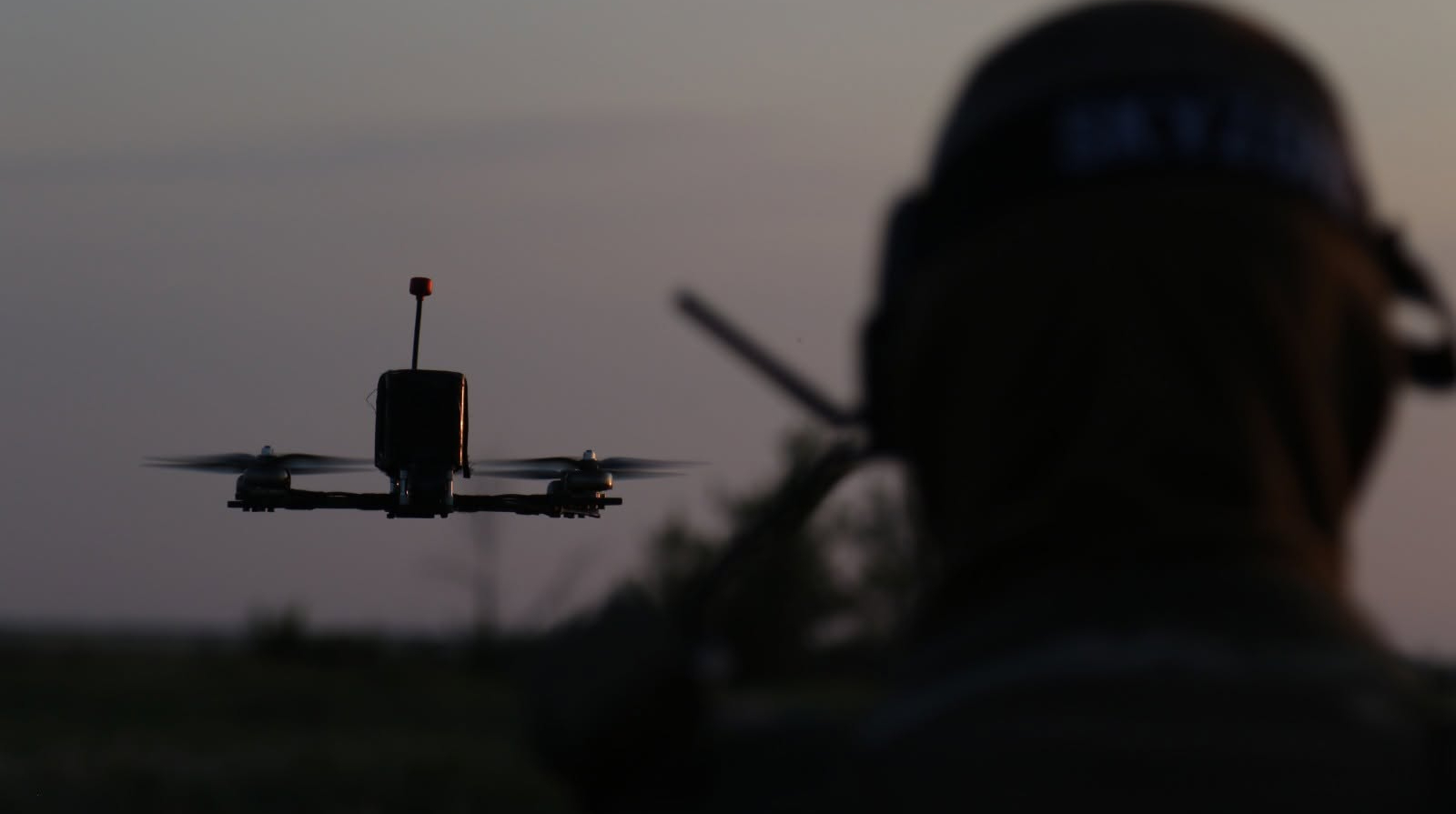
Drones targeted the Sudanese capital Khartoum on Thursday as paramilitary forces launched ground attacks on central Sudan and the southeastern Ethiopian border. Drones and anti-aircraft missiles were seen over Khartoum on Thursday for the second day in a row. An AFP correspondent in the capital reported anti-aircraft missiles fired from Omdurman, Khartoum’s twin city, followed by the sound of an explosion. Witnesses in central Khartoum and Khartoum North reported seeing drones in the sky and hearing explosions. An army source stated that military air defences engaged with the militia’s drones and downed them. [3]
The paramilitary launched a counteroffensive on the highway connecting the capital with the southern Kordofan region’s largest city, El-Obeid. An army source reported an attack with a large number of vehicles on the town of Jabret al-Sheikh, which was preceded by drone strikes. An RSF source confirmed a battle was ongoing there as well as the town of Bara further south. [3] The Sudanese army says it repelled an RSF attack in North Kordofan State. Rapid Support Forces targeted Jabra al-Sheikh area with more than 250 combat vehicles. [5]
According to military sources, the paramilitary group assaulted the town of Jabra al-Sheikh using heavy artillery and drones. RSF fighters were captured and dozens were killed in the fight. An army statement said the RSF attack involved more than 250 combat vehicles. Jabra al-Sheikh is a key transport hub in the region and control of the town could allow the RSF to put pressure on el-Obeid and Omdurman near Khartoum. [2]
On Wednesday the RSF launched drones targeting the capital Khartoum as well as Omdurman, Atbara and El Obeid, attacks which continued into Thursday. Major RSF attacks were also reported in North Kordofan and the town of Kurmuk bordering Ethiopia. [4]
Developments in Kurmuk
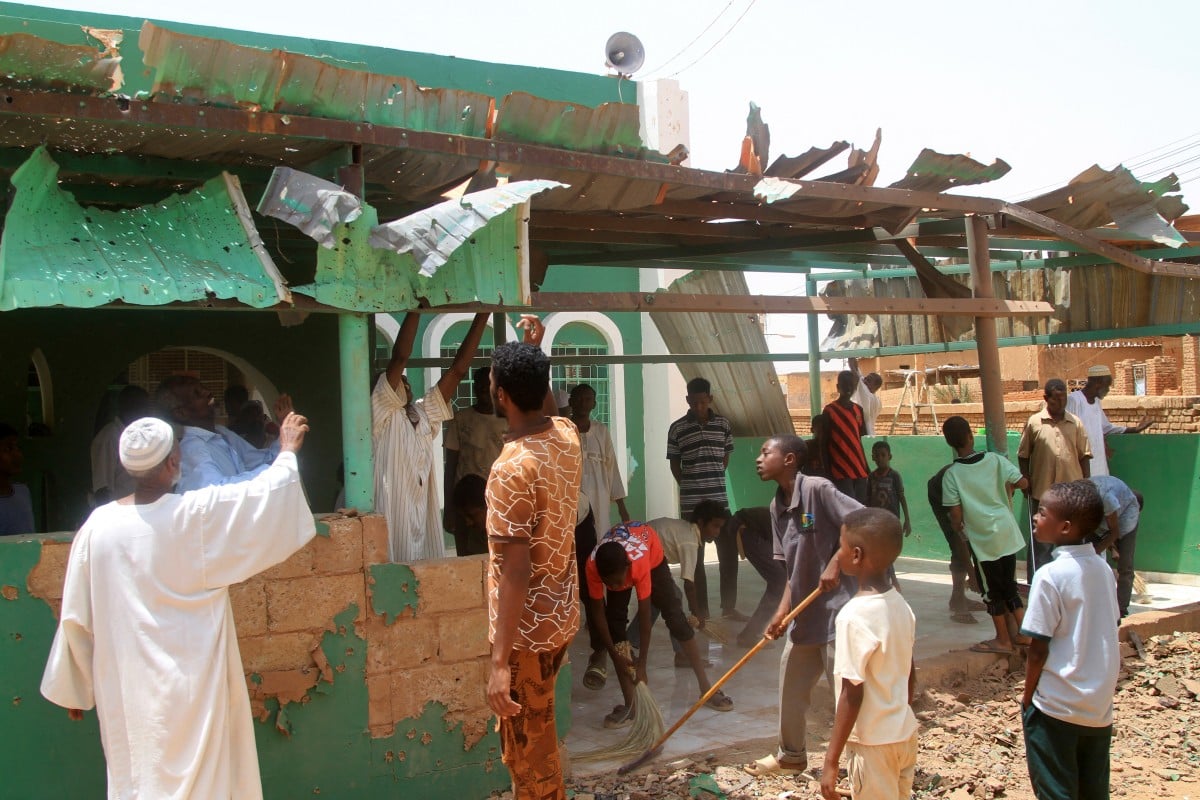
RSF paramilitary forces launch drone strikes and ground attacks in Khartoum and Kurmuk, Sudan. — Source: gdelt
Military and government sources say the paramilitary RSF and allies advance into town of Kurmuk in Blue Nile state. Sudan’s Rapid Support Forces and allies of the paramilitary group have advanced into a strategically important town on the Sudanese border with Ethiopia. They said the RSF and the Sudan People’s Liberation Movement – North (SPLM-N) entered Kurmuk in Blue Nile State on Thursday as the army began to withdraw. [2]
An RSF statement said an RSF-led coalition had inflicted heavy losses on army troops in Kurmuk, forced them to withdraw and seized weapons and ammunition. The RSF source said the paramilitary had liberated the town in the attack. The army official said it was the latest launched from inside Ethiopian territory. [3]
Hours later the local administration in Kurmuk said the town had come under intensive attacks over the last three days involving drones and artillery shelling which it said originated from the regional neighbourhood. The local administration said the Sudanese army continued to confront the attacks with steadfastness and bravery in defence of the town, its residents and public institutions. The town is on an important cross-border route linking Ethiopia with Blue Nile and the wider Nile Valley. The RSF advanced into the town with the army withdrawing and repositioning outside. [2]
The RSF seized the town in March but the Sudanese army recaptured it last month. A second RSF attack was reported on the town of Kurmuk on the southeastern border with Ethiopia which the army had recaptured last month. [3] Ethiopia has denied harbouring RSF fighters though local sources say the porous border is a key supply line for the RSF and its allies. The army accused Ethiopia of aiding the RSF in the attack on Kurmuk. It denied the claims. [4]
RSF Defection in Kordofan
The Rapid Support Forces-appointed governor of Sudan’s Kordofan region has resigned and left the group becoming the latest in a string of defections hampering the paramilitary force as it continues to battle the Sudanese army. Hamad Mohammad Hamad Khalifa announced his resignation from the RSF in a statement televised by Saudi-owned Al Arabiya on Wednesday citing ongoing suffering in areas controlled by the group. [4]
I Hamad Mohammad Hamed Khalifa announce my resignation as governor of the Kordofan region within the structures of the so-called Tasis government which regrettably has become merely a political façade for the practices of the Rapid Support Forces he said. Sudanese people today have no choice but to unite against all attempts to legitimise parallel forces or rogue militias that have squandered an entire generation’s lifetime in the service of individual interests he added. [4]
Alongside being the governor of RSF-held Kordofan which is split into North South and West Kordofan Khalifa was also a member of the presidential council for the RSF’s rival government. The RSF formed a rival government in April 2025 two years after fighting broke out in the capital Khartoum launching the country into a vicious civil war that is now in its fourth year. [4]
Khalifa also called for the return of the Sudanese government to the remainder of RSF-held Kordofan and Darfur which mostly came under the control of the RSF following the capture of El-Fasher. On the humanitarian conditions in RSF-held territory Khalifa stated that there was a complete inability to provide even the most basic humanitarian needs for the people of Kordofan and Darfur by the rival government. He added that the RSF was continuing a policy of destroying cities and killing civilians without conscience or moral restraint. [4]
Broader Conflict Context

RSF-appointed governor defects to Sudanese army amid fighting in Khartoum and Kurmuk. — Source: thenewarab
The defection is the latest in a string that is impacting the RSF’s ability to continue waging war against the army. Other RSF defectors include Al-Nour Ahmed Adam also known as al-Gubba an RSF commander who led five units in north Darfur that defected to the army in April. In late July the army took control of a major highway linking El-Obeid the capital of North Kordofan which had been under a partial siege with Omdurman opposite the capital Khartoum. [4]
The army has continued pressing gains in what conflict monitor ACLED has said marks the start of the war’s third phase. ACLED’s Sudan researcher Ali Mahmoud Ali and risk methodology lead Nohad Eltayeb said the army is seeking to build on its gains in Kordofan and advance in the RSF strongholds while the RSF attempts to relieve pressure on its western fronts through offensives in Blue Nile and drone strikes on Khartoum and River Nile. [4]
Since April 2023 Sudan has been ravaged by war between the Sudanese military led by its chief Abdel Fattah al-Burhan and the paramilitary Rapid Support Forces commanded by Burhan’s former deputy Mohamed Hamdan Daglo. [3] Sudan has been engulfed in its latest conflict since April 2023 when fighting started between the Sudanese army and the RSF over plans to integrate the paramilitary force into the regular military. [2]
The RSF last year consolidated its hold on the vast western region of Darfur and has since pushed to seize territory in Kordofan and along the southeastern Ethiopian border. The army holds the country’s centre north and east and has tried to project an image of a return to normalcy in areas it controls. [3] The army is pressing ahead with offensives on all fronts. [4]
Across Sudan aid workers estimate that more than 200,000 people have been killed in what the UN calls a war of atrocities. The conflict has also caused the world’s largest hunger and displacement crises. [2] The war has killed tens of thousands of people and displaced or forced nearly 15 million to flee their homes according to UN figures local authorities and academic estimates. [2]
Regional Economic Spillovers
Conflicts in Africa vary in scope and intensity. They range from large-scale civil wars to territorial disputes localised insurgencies inter-communal violence political instability armed conflict and terrorism. The continent has earned the reputation of being the world’s bloodiest. These conflicts can be felt across country borders. [1]
In a recent paper an economist looked at whether conflict had an effect on government debt among countries sharing geographical borders in regions of Africa. The research sampled 38 countries from western central eastern and southern Africa using data from 2000 to 2022. The study examined how conflict is linked to government debt across neighbouring African countries. [1]
The findings show that debt is shaped not only by domestic conditions but by developments in nearby countries. Conflict generates cross-border spillovers raising the debt level in geographically proximate countries. Military spending by neighbouring countries amplifies the spillovers. [1]
The research analysed historical data from the World Bank and a conflict database for the selected countries and period. This made it possible to measure the direct impact of conflict on a country’s debt within its own borders the indirect effect of conflict in one country on a neighbour’s debt and the total effect summing up the direct and indirect effects. [1]
Examining 38 countries in different regions ensured that different kinds of conflicts were accounted for. For instance conflicts in central Africa are often linked to weak governments political instability and tensions between ethnic groups. In west Africa conflict related to competition for natural resources and land is more typical. [1]
In western Africa the direct and indirect effects of conflict on debt are significant. Indirect spillover effects are substantial in triggering higher debt levels in a neighbour. For example instability in the western Sahel and Lake Chad Basin made governments borrow more to manage the fallout. [1]
For example there’s spillover from South Sudan to Uganda where the cost of hosting refugees and providing public services has placed a heavy strain on the host country’s budget. Conflict also erodes revenue. Insecurity weakens tax compliance and state capacity to provide public goods. This narrows the domestic resource base culminating in debt. [1]
Trade disruptions border closures damaged infrastructure and conflict-related uncertainty deplete trade flows lower customs revenues and disrupt supply chains. Military spending amplifies the indirect spillover effects of conflict on debt in western Africa. Neighbouring countries may have to prevent insurgent incursions and maintain internal security. Security costs can add to debt levels. [1]
Implications and Responses
The findings highlight the need for interventions: regional financial safety nets reducing the need for excessive and costly borrowing regional peace programmes and cross-border security cooperation on conflict prevention coordinated fiscal stabilisation strategies regional defence cooperation to reduce militarisation. [1]
With the escalating fighting both sides were likely to continue air and drone strikes particularly in north Kordofan. Coupled with a steady trend of RSF fighters defecting to the SAF these trends point to a significant disruption of the RSF’s supply lines and strike capacity. It is therefore unlikely that the RSF can withstand offensives on three parallel fronts. The SAF advances fragmentation of the RSF and the shift to aerial warfare by both sides will continue to impact civilians nationwide. [4]
What to watch next: analysts note that the SAF advances fragmentation of the RSF and the shift to aerial warfare by both sides will continue to impact civilians nationwide while regional instability can have a greater impact on government debt than domestic conditions alone.





,regionOfInterest=(1390,405)&hash=e1810e1bba27c1b82d21e49e5e548424315f79bcb1c3ecf27520a29f6a10c53c)