
222 Clashes Reported as Russia Presses Attacks on Ukraine's Kostiantynivka Front
In the Ukraine conflict, Ukraine's General Staff reported 222 combat clashes along the front line in the past day, with the highest number of Russian assaults (29) occurring on the Kostiantynivka front.
Frontline Combat Activity
Ukraine's General Staff reported a total of 222 combat clashes recorded on the front line over the past 24 hours. [1] The heaviest attacks took place on the Kostiantynivka front, where Ukraine's defence forces repelled 29 assaults near Kostiantynivka, Illinivka and Ivanopillia and towards Rusyn Yar and Stepanivka. [1] On the Pokrovsk front, Ukrainian forces stopped 25 attacks, with Russian forces active near Rodynske and Serhiivka and launching assaults towards Novyi Donbas, Hannivka, Shevchenko, Novohryshyne, Vasylivka, Myrne, Udachne and Muravka. [1] On the Sloviansk front, Russian forces conducted 17 assault operations near Kryva Luka, Zakitne and Riznykivka and towards Rai-Oleksandrivka. [1] On the South Slobozhanshchyna front, Ukrainian units repelled 15 Russian attacks near Starytsia and Lyman and towards Khatnie and Kolodiazne. [1] On the North Slobozhanshchyna front and in the operational zone in Russia's Kursk Oblast, Ukrainian forces stopped four Russian assaults, while Russian forces conducted three airstrikes using four guided aerial bombs and launched 68 attacks on Ukrainian positions and settlements. [1] On the Lyman front, Ukrainian forces repelled 10 Russian attacks near Zarichne and towards Novoselivka, Shyikivka and Drobysheve. [1] On the Kramatorsk front, Russian forces conducted two attacks towards Nykyforivka and Yurkivka. [1] On the Kupiansk front, Russian forces conducted one attack towards Zahryzove. [1] On the Oleksandrivka front, Russian forces conducted seven attacks towards Kalynivske, Vorone, Ternove and Berezove. [1] On the Huliaipole front, Russian forces launched 12 attacks towards Vozdvyzhivka, Tsvitkove, Staroukrainka, Danylivka and Charivne. [1] On the Orikhiv front, Ukrainian forces stopped one Russian attempt to advance towards Pavlivka. [1] On the Prydniprovske front, Russian forces did not conduct any assault operations. [1] On the Volyn and Polissia fronts, there is no evidence of any offensive Russian groups being formed. [1]
Russian Attacks on Kherson Oblast
Russian strikes damaged social infrastructure in Kherson Oblast injuring 14 civilians in one day. — Source: ukrainskapravda
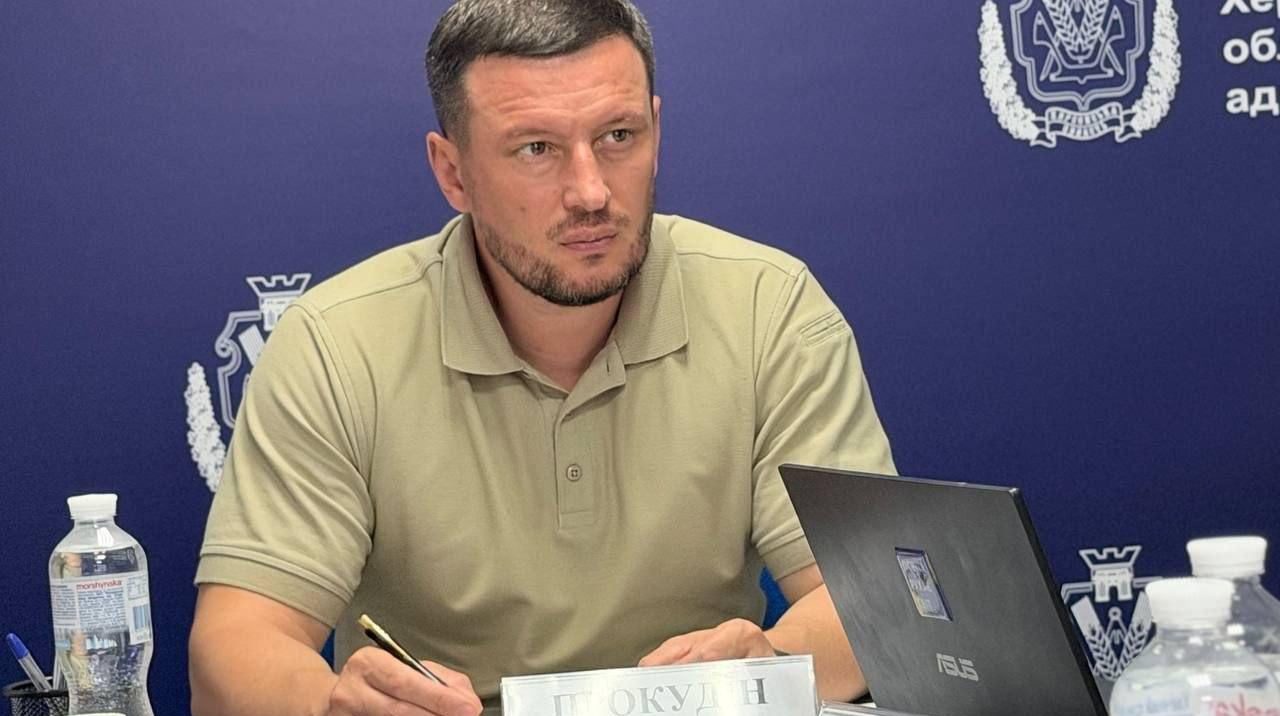
Russian forces injured 14 people in Kherson Oblast over the course of 13 August. [2] The city of Kherson and around 30 other settlements in the oblast came under Russian fire. [2] Russian forces targeted social infrastructure facilities and residential areas, damaging six apartment blocks and 13 houses. [2] The Russians also damaged a shop and cars. [2] A total of 14 people were injured. [2] Prokudin also noted that 20 people had been evacuated from liberated hromadas in the oblast on 13 August. [2]
Ukrainian Strike on Novorossiisk and Deep Strike Strategy
Ukraine's interim Defence Minister Yevhenii Hmar described the recent combined strike on the Russian naval base at Novorossiisk using missiles, rockets and naval drones as unique. [3] Hmar pledged to intensify deep strikes on Russian infrastructure, fleet and energy targets. [3] Hmar stated that Ukraine's defence forces will stop Russia's war machine by destroying infrastructure, fleet, logistics, energy sector targets and companies supporting the war against Ukraine. [3] The official called the Novorossiisk operation unique because the combined attack was executed with missiles, reactive drones and unmanned naval drones. [3] Hmar said the result stems from joint efforts and growing synergy within the defence forces. [3] One priority for Ukraine is intensifying deep strike operations on Russian territory. [3] Hmar promised that together with Commander-in-Chief Mykhailo Drapatyi, the General Staff, the Unmanned Systems Forces, the Security Service of Ukraine and other defence structures as well as arms manufacturers, the pressure will continue to intensify. [3] On the night of 12 August, Ukraine's defence forces struck the naval base at Novorossiisk, which since autumn 2023 had been the last stronghold of the Russian fleet in the Black Sea. [3] Following the attack, Russia's two largest terminals in the area suspended operations, with confirmed strikes on air defence positions, piers and other infrastructure. [3] OSINT analysts described the operation as the most successful and largest to date, adding that targets affected may have included the frigates Admiral Makarov and Admiral Essen, the minesweeper Viktor Cherokov, a patrol ship, a reconnaissance ship and a cargo transport ship. [3]
Russian Public Sentiment and Long War Outlook
Ukrainian forces report repelling 29 Russian assaults on the Kostiantynivka front. — Source: gdelt
A study shows that Russians no longer expect a quick end to the war, although support for the Kremlin's military objectives remains dominant in the regional public space. [3] The war has become part of everyday life for Russians. [3] Russian society does not have a unified view on how the war against Ukraine should end. [3] Part of the pro-war public continues to demand victory and fulfilment of the Kremlin's stated objectives. [3] Others want the fighting to stop, soldiers to return home and a return to normal life. [3] At the same time, almost everyone starts from the premise that the war will not end quickly. [3] This emerges from monitoring of Russian regional communities conducted by the civic organisation Join Ukraine. [3] Between 27 July and 2 August 2026, analysts examined 536 VKontakte groups and 428 Telegram channels covering all regions of Russia as well as occupied territories of Ukraine. [3] For the public in Russia's regions, continuation of the war is already felt in daily life through recruitment of contract soldiers, payments to military personnel and their families, benefits for veterans of the special military operation, discussions of a new mobilisation, drone attacks, air alerts and economic consequences. [3] The most visible change in attitude towards the war is observed in regions where the conflict is felt directly. [3] In Perm region, public discourse changed after repeated attacks that began in May. [3] In Samara region, strikes on the cities of Samara, Sizran, Novokuibyshevsk and Tolyatti caused panic and generated comments calling for an end to the war. [3] In Kemerovo region, the mood was influenced by drone attacks in neighbouring Omsk region and preparation of shelters. [3] Researchers note a gap between the desired scenario and the one considered probable. [3] Some Russians want the war to end but consider that this will not happen in the near future. [3] These discussions often lack a concrete scenario for ending the conflict and instead speak of stopping attacks, soldiers returning home and a return to normal life. [3] Another scenario discussed is freezing the conflict or a negotiated agreement, particularly by Russians tired of the war and its consequences. [3] At the same time, the pro-war public continues to demand victory. [3] For them, freezing the conflict or compromise is unacceptable and losses are justified by the need to see things through to the end. [3] Russians also criticise federal authorities, though for different reasons. [3] Some accuse the country's leadership that the war has not yet ended. [3] Others criticise it for lack of firmness and inability to achieve victory more quickly. [3] Moscow's official position remains unchanged. [3] During July, the Kremlin showed no willingness to abandon the conditions set by Vladimir Putin, including withdrawal of Ukrainian troops from four regions of the country, Ukraine's renunciation of NATO membership, neutral status, demilitarisation, denazification, recognition of territorial annexations carried out by Russia and lifting of international sanctions. [3] The study does not provide grounds to claim that Russians have become massively opposed to the war. [3] On the contrary, propaganda, censorship, self-censorship and the activity of fake accounts continue to shape an image of public support for continuing the war until Russia's total victory. [3] At the same time, a clear expectation of prolongation of the conflict has emerged in the regional information space. [3] The essential change is that the war is no longer perceived as a short campaign meant to end in a quick victory. [3] The public in Russia's regions is gradually adapting to the prospect of a long-term conflict, even as support for Russia's military objectives coexists with a more visible demand for its end. [3] At the beginning of July, Russians' trust in Kremlin leader Vladimir Putin fell by 3.4 percentage points, the sharpest decline recorded since the start of the full-scale invasion of Ukraine. [3] This decline in trust occurs against the backdrop of a fuel crisis worsened by Ukrainian strikes on Russia's oil infrastructure and transport. [3] The situation remains particularly difficult in occupied Crimea, where a fuel shortage was recorded and the tourist season was practically compromised. [3]
Military Command Changes and Skelia Regiment Reassignment
Ukraine's notorious 425th Assault Regiment, better known as Skelia, has been assigned to the command of the 1st Azov Corps of the National Guard. [5] The regiment's spokesperson Oleksii Bratushchak said on Aug. 13 that the large and controversial assault unit, which had numbered in the thousands and been fighting across multiple sectors of the front line in assault and rapid reaction roles, will also likely be brought together to fight in one sector. [5] The decision comes on the back of a series of moves by new Commander-in-Chief Mykhailo Drapatyi, who upon taking the post on July 21 quickly announced an audit of manpower allocation between units. [5] Skelia, which has received a disproportionate share of Ukraine's precious mobilized recruits, was expanded rapidly under the personal patronage and supervision of Drapatyi's predecessor as Commander-in-Chief Oleksandr Syrskyi, to whom the regiment along with other units of the newly-formed Assault Forces grouping directly answered. [5] Soon after, the General Staff ordered flows of newly mobilized Ukrainian soldiers had ceased to units of the Assault Forces, including Skelia. [5] On Aug. 7, Ukrainska Pravda reported, citing military sources, Skelia personnel began to be transferred to other units upon the order of the high command. [5] In the interview, Bratushchak confirmed both the cease in new replenishment and the transfer of Skelia personnel to other units, but denied that the regiment was being disbanded. [5] The military's handling of manpower became a major source of public criticism of Syrskyi, who was dismissed by President Volodymyr Zelensky after protests over the dismissal of Defense Minister Mykhailo Fedorov expanded to include demands for his removal. [5] In the weeks leading up to Syrskyi's dismissal, Skelia dominated headlines as a notorious example of the inhumane treatment of soldiers, after an investigation by Ukrainian media outlet Babel found dozens of cases of the death of service members during training. [5] After the investigation, the regiment's commander Yurii Harkavyi was suspended from his post. [5] Harkavyi has not been restored to his post at the time of publication, with Skelia led by acting commander Oleh Adamov. [5] With over 10,000 soldiers split between at least ten battalions across Ukraine's long front line, Skelia forces have seen action in some of the most intense fighting of the past year, including in the brutal urban battles of Kupiansk, Pokrovsk, and Kostiantynivka. [5] Together with Ukraine's Air Assault Forces, the regiment has played an active role in counterattacks across the southern front line, where President Zelensky announced on Aug. 12 that 745 square kilometers had been liberated in over six month of offensive operations. [5] At the same time, Skelia has also been criticized for its allegedly reckless approach to the lives of its soldiers when conducting assault operations, with some prominent Ukrainian volunteers, ex-commanders and thought leaders comparing the unit's tactics to those of Russian forces. [5] On July 20, just as the protest movement's calls to replace Syrskyi were reaching their peak, two Skelia soldiers, who had just featured in a video posted by the unit raising the Ukrainian flag in central Kostiantynivka, were filmed by the Russian side after being taken prisoner. [5] In public interviews, Syrskyi acknowledged the uneven distribution in favor of assault units, but justified it by citing their heavier losses, suffered while undertaking difficult and costly assault operations. [5] According to Bratushchak, the assignment of Skelia, part of the Ground Forces, to Azov's corps command does not entail the regiment's transfer into the structure of the corps, part of the Interior Ministry's National Guard. [5] The 1st Corps of the National Guard, better known as Azov, is made up of five National Guard maneuver brigades, one artillery brigade, and an unmanned systems regiment. [5] Since August 2025, the corps has held one of the most intense parts of the front line, near the city of Dobropillia in Donetsk Oblast. [5] The corps is led by legendary Ukrainian commander Denys Prokopenko, who led the defense of the Azovstal Steel Plant in the surrounded city of Mariupol in the first months of Russia's full scale invasion in 2022, after which he spent four months in Russian captivity, was released in a prisoner exchange, and took command of the reformed Azov Brigade. [5] Asked by the Kyiv Independent to confirm the news of Skelia's assignment to the Azov Corps' command, the corps has not responded at the time of publication. [5] Whether or not Skelia units would be used in their old assault and clearing roles or whether they would reinforce the brigades' depleted infantry lines would be up to the Azov corps command. [5]
Additional Developments
Russia carried out new strikes on Ukrainian ports of Chornomorsk, Odesa and Ochakiv as well as targets in Kherson and Zaporizhzhia. [4] Ukraine responded with attacks on Russian maritime infrastructure, including a mass drone attack on Krasnodar Krai and Novorossiisk. [4] Kyiv handed Washington proposals for ending the war, confirmed by President of Ukraine Volodymyr Zelensky. [4] NATO discussed incidents involving violation of Polish and Romanian airspace, for which the alliance attributes responsibility to Russia. [4] Ukraine requested from NATO equipment for humanitarian demining, including protective suits, magnetometers, remote activation systems and robots. [4] Moscow claims Kyiv refuses proposals for prisoner exchanges, stating that over the past month it delivered three lists of Ukrainian prisoners and convicted soldiers. [4] Putin warns of growing risk of conflict in the Pacific, claiming NATO is increasing military presence in that region. [4] Russia handed over the bodies of 261 Ukrainian soldiers and in return received 24 of its own killed in the war. [4] Russian forces struck a passenger train in Odesa Oblast. [4] According to preliminary information, the driver and his assistant were killed in the attack. [4] One of five drones detected by Romanian military radars at night near the border with Ukraine briefly entered Romanian airspace near Tulcea county. [4] Two F-16 aircraft were scrambled due to the incident and the population in the northern part of the county was sent a warning via the RO-Alert system. [4] The ministry noted that a group of five aerial targets was detected at 1.27 a.m. above Ukrainian territory in the Izmail area near the border with Romania. [4] Three minutes later, authorities issued a warning to the population in the northern part of Tulcea county. [4] Russian President Vladimir Putin visited Iturup island in the Kuril archipelago. [4] This is his first visit to the Kuril Islands. [4] Putin arrived on Iturup from Yuzhno-Sakhalinsk, where he had attended the final phase of Pacific Fleet exercises aboard the missile cruiser Varyag. [4] After the exercises he held a meeting on security of Russia's eastern borders. [4] On Iturup Putin met with Sakhalin Oblast Governor Valery Limarenko, who informed him about measures to support participants in Russia's military operation in Ukraine and their families as well as development of the region. [4] During the visit Putin toured the fish processing plant Yasni and also spoke with local residents in Yuzhno-Sakhalinsk. [4] Two people were killed in a Russian drone attack on Korabelnyi district in Kherson Oblast. [4] Russian forces killed two more people in Kherson. [4] At around 21.50 Russian forces attacked with a drone and killed two men in Korabelnyi urban district. [4] Competent services are determining the identities of those killed in the Russian attack. [4]
What to watch next: Ukrainian officials plan to continue intensifying deep strikes on Russian military and energy assets following the Novorossiisk operation, while monitoring shows Russians adapting to a prolonged conflict with mixed calls for victory or peace and declining trust in Putin amid fuel shortages.






,regionOfInterest=(1390,405)&hash=e1810e1bba27c1b82d21e49e5e548424315f79bcb1c3ecf27520a29f6a10c53c)