
Sudan Conflict Sees Over 1000 Civilian Deaths From Drone Strikes by May 2026
Drone strikes have caused more than 80% of documented civilian deaths in the Sudan conflict from January to April 2026, with over 1,000 civilian fatalities from such attacks recorded by the end of May, according to UN data.
Drone Strikes Drive Civilian Casualties
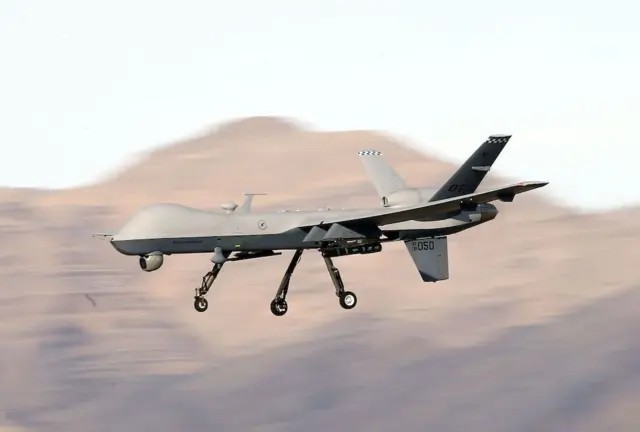
UN documentation shows at least 880 civilians killed by drones between January and April 2026, representing over four-fifths of all conflict-related civilian deaths in that period, with the total exceeding 1,000 by end of May. [1] Drones targeted hospitals, markets, water and electricity facilities, aid convoys and humanitarian workers, with 16 strikes on health facilities and 33 on markets documented in the first five months of 2026. [1] These figures do not necessarily reflect the full toll because access remains difficult in wide areas of Darfur, Kordofan and Blue Nile, many health facilities have gone out of service, and some victims are buried without official registration or independent investigation. [1] The UN Office for the Coordination of Humanitarian Affairs warned in a report marking World Humanitarian Day that cheap, modifiable armed drones place significant firepower in the hands of a growing number of parties and bring explosive weapons into the heart of cities and civilian areas. [1]
Shift in Conflict Dynamics and Tactics
Drone use has increased 600% in related fatalities and 81% in attacks during 2025 compared to the prior year, allowing both sides to conduct operations during the rainy season and strike areas far from front lines. [1] The Sudan conflict that began in April 2023 between the Sudanese army and the Rapid Support Forces has shifted from initial ground clashes, artillery shelling and air raids to drones becoming a central tool for attack, reconnaissance and infrastructure destruction. [1] Drones have effectively eliminated the traditional separation between the front and rear areas, exposing cities once considered relatively safe to sudden round-the-clock attacks. [1] Strikes have hit Khartoum, Omdurman, Khartoum Bahri, El Obeid, Atbara, Al-Damar, Rabak and cities in Kordofan, Darfur and Blue Nile, along with airports, power stations, fuel depots, water facilities and military sites inside populated zones. [1] El Obeid in North Kordofan has faced repeated strikes on vital civilian infrastructure including the main power station, fuel stations and areas near hospitals and markets, causing electricity cuts that disable water pumps, communications and medical services for a city hosting around half a million people including tens of thousands of displaced persons. [1]
{IMAGE_2}
Recent Ground Fighting and Territorial Changes
Ground fighting intensified between the Sudanese army and RSF in North Kordofan, Blue Nile and Darfur regions between late July and mid-August, shifting control of key towns and roads, including RSF seizure of Kurmuk and Geisan near the Ethiopia border. [2] Open-source data documented 55 ground battles between July 25 and August 17, with the majority in North Kordofan and Blue Nile states. [2] The army expanded control in Kordofan while the RSF advanced in Blue Nile, seizing Kurmuk and Geisan to gain near-total control of the Sudan-Ethiopia border. [2] Battles also flared in North Darfur in the Um Buru area west of El Fasher and in West Darfur in the Bir Saliba corridor just 7 kilometres from the Chadian border. [2] The army took control of four areas in one day in late July in North Kordofan, while the RSF secured four sites in two days on the Blue Nile front. [2] The RSF gained access to drones with more precise targeting capabilities along with advanced jamming equipment, while the army acquired new weapons including fighter jets seen over Khartoum and armoured vehicles patrolling streets. [2] Air traffic increased significantly over Nyala as flights delivered military supplies. [2] Violence in Geisan and Kurmuk displaced 14,000 people in Blue Nile State, forcing many, mostly women, children and young people, to cross the Nile River or travel dangerous roads. [2]
Impact on Humanitarian Operations
71 humanitarian workers were killed in Sudan in 2025, making it the second deadliest location globally for aid personnel that year, with ongoing attacks in 2026 contributing to 82 humanitarian deaths worldwide by the report date. [1] Sudanese national staff bear the greatest burden, operating in the most dangerous areas and continuing services when international organizations reduce presence. [1] Sudanese volunteers in emergency response rooms and community kitchens face risks of shelling, arrest, looting and accusations of collaborating with one side. [1] Attacks on infrastructure and aid convoys multiply harm by disrupting food, water, medicine and relief access for thousands. [1] When a humanitarian team stops or withdraws, the effect extends beyond lost staff to cut food, medicine and water for thousands, and the impact doubles when organizations suspend operations or convoys cannot move. [1]
{IMAGE_3}
Political and Military Motivations
Analysts view both sides' pursuit of military gains as aimed at bolstering legitimacy, disrupting rival political processes, and controlling territory and resources, alongside the role of external weapons supplies. [2] The army commander has advanced on the ground to consolidate authority over areas under control, while the RSF seeks to thwart that plan through escalation in Kordofan and Blue Nile. [2] The RSF aims to secure Darfur from all directions while expanding into Kordofan and Blue Nile to push the war away from Darfur and create conditions for its Tas'is government to assume responsibilities in controlled areas. [2] Both sides remain linked by external relations that keep weapons flowing, making ending the war harder as neither is willing to make concessions. [2] The recent military developments coincide with the army leadership's announcement of political dialogue to form a government and legislative council in army-controlled areas. [2] The RSF escalation is seen as an attempt to frustrate that internal political process. [2]
International Law and Calls for Action
Violations of international humanitarian law regarding civilian and aid worker protections have occurred, with UN officials warning about drones as a new face of old dangers and calling for accountability, arms flow restrictions and a ceasefire. [1] International humanitarian law prohibits targeting civilians, humanitarian workers and medical facilities, requires distinction between military and civilian objects, and demands precautions to avoid disproportionate harm. [1] Hospitals, markets and aid compounds do not lose protection simply because they are near military sites. [1] UN High Commissioner for Human Rights Volker Turk stated that the shift allows fighting to continue without pause and threatens to expand violence to new areas, leading to more displacement, aid disruption and hunger risks. [1] UN humanitarian coordinator Tom Fletcher said armed drones have become the new face of an old danger involving deliberate or reckless destruction of civilian lives, adding that mere condemnation will not protect the next aid worker and urging states to use their tools to protect civilians and impose real consequences on violators. [1] Continued flows of equipment without monitoring mechanisms increase strike capacity, prolong the conflict and render international calls to protect civilians ineffective. [1]
What to watch next: Both sides continue to bet on military solutions rather than political ones, with escalation of operations and vitriolic rhetoric from leaders reducing prospects for a humanitarian truce or serious negotiations, while Quartet mechanism and regional initiatives have not yet received the necessary response from the warring parties.