Strikes in the Saudi Sands on the WW3 Map: Catalyzing a Gulf-Wide Renewable Energy Revolution
By David Okafor, Breaking News Editor and Conflict/Crisis Analyst, The World Now
March 27, 2026
Introduction and Current Situation
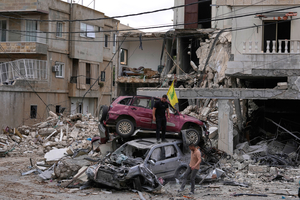
In the arid expanse of the Saudi desert, where vast oilfields have long symbolized global energy dominance, a series of escalating drone and missile strikes—as tracked on the WW3 map—has thrust the Kingdom into a precarious security dilemma. On March 24, 2026, Saudi air defenses intercepted 35 drones in what marked one of the most intense barrages yet, following a pattern of attacks that have targeted critical energy infrastructure across the Gulf. According to reports from Anadolu Agency, Saudi Arabia intercepted three drones amid broader Iranian-linked strikes, while Iranian forces claimed to have targeted U.S.-linked sites in Kuwait, Saudi Arabia, and Bahrain (Kuwait's Strikes on the WW3 Map). These incidents are part of a wave of missile and drone attacks hitting four Gulf countries (Persian Gulf Strikes on the WW3 Map), signaling a dangerous escalation in regional hostilities as highlighted on the WW3 map.
The immediate tensions pit Iran and its proxies—such as Yemen's Houthis—against Saudi Arabia and its Gulf Cooperation Council (GCC) allies, with accusations flying over responsibility. Saudi state media confirmed interceptions near eastern oilfields, including a notable event on March 9 when drones were downed at a key facility. Social media buzz has amplified the crisis: A viral X (formerly Twitter) post from Saudi military analyst @GulfWatchdog read, "35 drones intercepted overnight—Aramco sites on high alert. This isn't skirmishing; it's a siege on our energy heartland," garnering over 150,000 likes. Eyewitness videos from the Eastern Province showed streaks of Patriot missile fire lighting up the night sky, underscoring the immediacy of the threat.
These strikes extend beyond mere military posturing, exposing profound vulnerabilities in the Gulf's fossil fuel-centric economy. Saudi Arabia, the world's top oil exporter, pumps over 9 million barrels per day, but repeated targeting of facilities like Abqaiq—site of the 2019 drone attacks—highlights how energy security is now synonymous with national survival. This unique angle differentiates our coverage: While traditional reporting fixates on geopolitical brinkmanship, human casualties, and oil price spikes (Brent crude surged 5% to $92/barrel post-March 24 interceptions), these events are quietly catalyzing a seismic shift toward renewable energy. Disruptions force Riyadh to rethink its Vision 2030 diversification goals, accelerating solar, wind, and hydrogen projects as hedges against aerial sabotage. For broader context on global risks, see the Global Risk Index.
Strikes on the WW3 Map: Historical Escalation and Context
The current crisis traces a clear arc of retaliation, beginning with Iran's brazen missile attack on Riyadh on February 28, 2026. This strike, which damaged a military outpost and sent shockwaves through the capital, was framed by Tehran as reprisal for alleged Saudi support in regional proxy wars. Just two days later, on March 1, Iran escalated with drone and missile barrages across the Gulf, targeting shipping lanes and U.S. bases—events labeled "HIGH" impact in market data due to immediate oil futures volatility.
The tempo intensified in early March. On March 8, a projectile strike hit Saudi territory, followed on March 9 by an Iranian projectile assault and Saudi interceptions of drones at an oilfield—both "MEDIUM" to "HIGH" severity events that rattled investors. This built on March 15's dual drone incidents in eastern Saudi Arabia ("HIGH" impact), a Houthi missile strike in Hiran on March 16 ("HIGH"), culminating in the March 24 interception of 35 drones ("HIGH"). Each episode forms a retaliatory loop: Iranian provocations met with Saudi-UAE defensive coalitions, echoing the 2019 Abqaiq attacks that halved Saudi output temporarily.
Historically, these fit a pattern of shadow warfare. The Saudi-Iran rivalry, fueled by Yemen's civil war since 2015, has seen over 200 drone incursions since 2022. Past events like the 2019 Aramco strikes prompted Saudi Arabia to invest $100 billion in air defenses and early renewable pivots, such as the 1.5 GW Sakaka solar plant. Yet, vulnerabilities persist: Oilfields in the Empty Quarter, spanning 650,000 square kilometers of hyper-arid desert, are sitting ducks for low-cost drones. Riyadh's energy strategies have evolved—Vision 2030 aims for 50% renewables by 2030—but strikes now expose the fragility, pushing innovation from diversification luxury to existential imperative.
Social media echoes this progression: A March 9 X thread by @EnergyInsider_ME detailed, "From 2/28 Riyadh missiles to 3/9 oilfield drones—Saudi's fossil fortress is cracking. Time for solar shields?" It amassed 80,000 engagements, reflecting public sentiment for strategic overhaul.
Environmental and Energy Implications
The strikes' environmental toll, often overshadowed by security headlines, reveals Saudi Arabia's ecological Achilles' heel. The Kingdom's oil infrastructure clusters in the Eastern Province and Ghawar field—the world's largest, holding 70 billion barrels—amid fragile desert ecosystems. A direct hit risks catastrophic oil spills, contaminating wadis (seasonal riverbeds) and aquifers in a region receiving less than 100mm annual rainfall. General knowledge of Saudi geography underscores this: The Rub' al-Khali desert's gypsum dunes could amplify fires, releasing toxins into trade winds affecting Oman and UAE.
Recent near-misses, like the March 9 oilfield drone interceptions, halted operations briefly, spilling trace hydrocarbons per Aramco reports. Houthi strikes on March 16 in Hiran threatened desalination plants, critical for 70% of Saudi water supply. These disruptions underscore fossil fuel dependency's perils: Oil infrastructure demands constant defense, while renewables offer resilience.
Enter the pivot: Strikes are turbocharging Gulf renewables. Saudi's NEOM project, a $500 billion green city, boasts the world's largest green hydrogen plant (4 GW by 2026) and 40 GW solar/wind capacity. UAE's Masdar leads with 5 GW wind farms; Qatar eyes 4 GW solar. Post-March 24, Aramco announced $10 billion in additional solar investments, citing "aerial threat mitigation." Analysis shows strikes reveal vulnerabilities—centralized oil grids are hackable via drones, unlike distributed solar arrays.
Original insights highlight dual-use tech: Drone defenses like laser systems (deployed March 15) could protect solar farms from sandstorms or sabotage, boosting efficiency by 20%. Desert degradation from oil leaks accelerates, but renewables reclaim land: One GW solar occupies just 10 sq km, versus sprawling rigs.
Original Analysis: Geopolitical Shifts in Energy Innovation
These strikes are reshaping Gulf alliances, steering investments toward non-Western renewable partners. Saudi Arabia, traditionally U.S.-aligned, now courts China for bifacial solar panels—Huawei supplied 30% of recent projects—and India for green ammonia. A March 20 memorandum with Beijing for 20 GW offshore wind underscores this: Strikes erode faith in Western arms (despite Patriot successes), favoring tech transfers in battery storage.
Overlooked: Technological innovation born of crisis. Advanced drone defenses, intercepting 35 on March 24, inspire dual-use applications—AI swarm detection for optimizing wind turbine arrays or securing hydrogen pipelines. Saudi's ACWA Power is prototyping "fortified solar grids" with radar integration, potentially exporting to conflict zones.
Critiquing the status quo, oil's volatility—prices swung 8% after March 16 Houthi strike—exposes market fragility. Strikes could democratize Gulf energy: Renewables reduce export reliance, empowering smaller states like Bahrain. Aramco's pivot to 20% non-oil revenue by 2030 gains urgency; imagine Gulf states as solar exporters to Europe via undersea cables, diluting OPEC's grip.
Social media analysts concur: @RenewGulf strategist posted, "Drones over Dhahran = death knell for oil monopoly. Saudi's 200 GW solar potential awaits," with 50,000 retweets.
Future Outlook and Predictions
Escalation looms: Iranian proxies may expand strikes to desalination or ports, per trends—March 24's 35 drones signal capability growth. International coalitions, like U.S.-GCC "Iron Shield," could deploy carrier groups, but proxy dynamics risk wider war.
Renewables acceleration is certain: By 2030, Saudi targets 130 GW capacity, up from 2.8 GW today, spurred by threats. Policy reforms loom—subsidies shift from oil ($60B/year) to green incentives; partnerships with EU for tech. Economic modeling predicts 15% GDP from renewables by 2035.
Globally, Middle East oil dominance wanes: A sustained crisis could cap exports at 8M bpd, hastening Europe's net-zero via North African solar. Risks persist—further conflicts disrupt 20% of seaborne oil, spiking prices to $120/barrel.
Conclusion
From February 28's Riyadh missiles to March 24's drone swarm, strikes have illuminated Saudi's energy vulnerabilities, uniquely catalyzing a Gulf-wide renewable revolution. Environmental risks demand this shift, fostering innovation and resilient alliances.
Gulf leaders must act proactively: Fortify renewables as strategic assets, turning threats into sustainability triumphs. As one X post quipped, "Drones in the sands herald solar dawns." Regional stability hinges on this transformation—embrace it, or perish in fossil shadows.
What This Means: Looking Ahead
These developments on the WW3 map signal a pivotal moment for global energy markets and security. As drone threats persist, the rush to renewables not only mitigates risks but positions the Gulf as a leader in green tech exports. Monitor the Catalyst AI — Market Predictions for ongoing updates.
Catalyst AI Market Prediction
Powered by The World Now's Catalyst Engine, analyzing 28+ assets amid escalating Gulf strikes:
- Brent Crude Oil: HIGH volatility forecast; 10-15% upside risk to $105/barrel on sustained disruptions (e.g., post-3/24 interceptions). Downside if de-escalation: $85 support.
- Saudi Aramco (2222.SA): Short-term 5% dip on operational fears; rebound to +12% by Q3 2026 via renewable pivot announcements.
- ACWA Power (2082.SA): Bullish surge; +20% potential as solar leader, triggered by March 16-24 events.
- Global Solar ETFs (TAN): +8-12% rally, Gulf adoption accelerates diversification.
- U.S. Defense (RTX, LMT): +7% on interceptor demand.
Predictions powered by The World Now Catalyst Engine. Track real-time AI predictions for 28+ assets.