
Six Volcano Eruptions Today in Indonesia Occur With Independent Dynamics
On 31 August 2026 six Indonesian volcanoes experienced volcano eruption today as independent events with no systemic link between them according to authorities. The six volcanoes that erupted simultaneously were Gunung Ibu in North Maluku, Semeru in East Java, Lewotobi Laki-laki and Ili Lewotolok in East Nusa Tenggara, Anak Krakatau in the Sunda Strait, and Sinabung in North Sumatra. [3] PVMBG stated Indonesia’s location in the Ring of Fire with 127 active volcanoes makes simultaneous eruptions possible without any single geological process triggering all of them. [4]
Simultaneous Eruptions Across Indonesia
The six volcanoes that erupted simultaneously were Gunung Ibu in North Maluku, Semeru in East Java, Lewotobi Laki-laki and Ili Lewotolok in East Nusa Tenggara, Anak Krakatau in the Sunda Strait, and Sinabung in North Sumatra. [3] PVMBG confirmed the events were independent volcanic dynamics with no systemic link between them. [4] Gunung Sinabung’s alert level was raised from Level II (Waspada) to Level III (Siaga) on 31 August after it produced a 3,500-metre ash column. [3] Anak Krakatau remained at Level III (Siaga) and produced a 200-metre ash column on the same day. [4] Officials stated its eruption does not automatically generate a tsunami. [3] Gunung Marapi in West Sumatra remains at Level II (Waspada) with recorded shallow and deep volcanic earthquakes plus a high risk of cold lahars during heavy rain. [2] The simultaneous activity occurred on 31 August 2026 as pure independent dynamics according to PVMBG. [4]
Official Explanation from PVMBG
PVMBG stated Indonesia’s location in the Ring of Fire with 127 active volcanoes makes simultaneous eruptions possible without any single geological process triggering all of them. [3] Kepala PVMBG Rita Susilawati explained that each volcano has its own system and processes toward eruption differ between one mountain and another. [4] No evidence was found of one geological process that triggered all the eruptions simultaneously on 31 August. [3] Tectonic earthquakes do not automatically cause eruptions unless proven through internal monitoring data such as deep seismicity, ground deformation, temperature changes and gas release. [4] The agency clarified that the six volcanoes erupted on the same day through independent volcanic dynamics. [3]
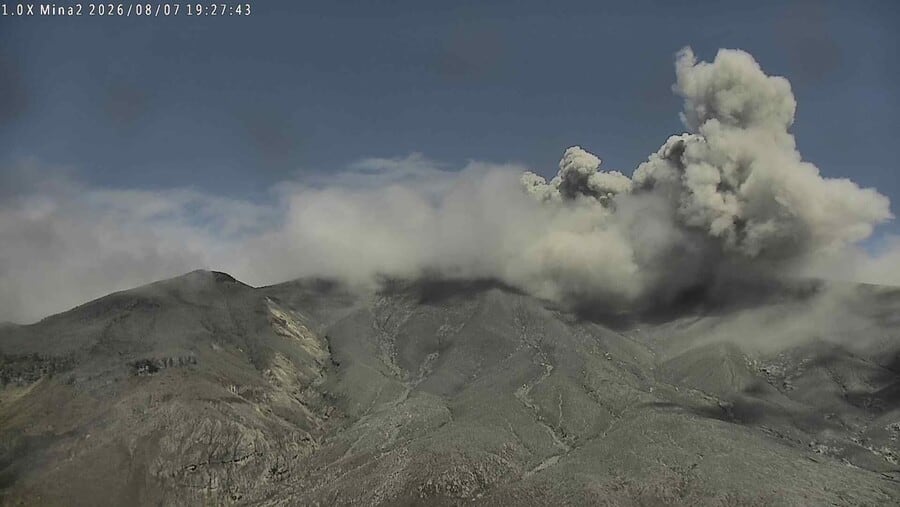
Gunung Marapi erupts ash column as PVMBG maintains Level II Waspada status. — Source: gdelt
Status Changes and Current Alerts
Gunung Sinabung’s alert level was raised from Level II (Waspada) to Level III (Siaga) on 31 August after it produced a 3,500-metre ash column. [3] Anak Krakatau remained at Level III (Siaga) and produced a 200-metre ash column on the same day. [4] Gunung Marapi in West Sumatra remains at Level II (Waspada) with recorded shallow and deep volcanic earthquakes plus a high risk of cold lahars during heavy rain. [2] The status of Sinabung was raised at 12.00 WIB on 31 August 2026 following the ash column observation. [4] Anak Krakatau has held Level III status since 2 July 2026. [3] PVMBG continues to monitor all sites with instrumental observations that show ongoing activity at the reported levels.
Hazards and Safety Recommendations
PVMBG emphasized exclusion zones around the active volcanoes including a three-kilometre radius from the eruption center at Kawah Verbeek on Gunung Marapi. [2] Residents near valleys and river flows originating from Gunung Marapi peaks were urged to increase vigilance due to the high risk of cold lahars especially during heavy rainfall. [2] If volcanic ash rain occurs residents are advised to wear protective respiratory masks and cover clean water facilities to prevent contamination. [2] Communities around Sinabung must empty the danger zone of three kilometres from the peak and six kilometres in the south-east sector while watching for rain-triggered lahars along rivers heading from the summit. [3] PVMBG asked the public not to be provoked by hoaxes and to always refer to official government information. [2]
Ongoing Activity at Volcán Puracé in Colombia
Volcán Puracé in Colombia continues to show elevated seismicity, ash emissions, and ground deformation, keeping it at Orange alert with no return to stability indicated by temporary decreases. [1] A magnitude 2.7 earthquake shook areas near the volcano in Totoró and Puracé on the day of the report. [1] Around one hundred rock-fracturing events have been located between 10 and 15 kilometres north-east of the volcanic edifice at depths of 6 to 11 kilometres. [1] Ash emission has been recorded since Monday afternoon and continues with constant sulfur dioxide and ash output above the summit. [1] Ground deformation persists slowly between Puracé, Piocollo and Curiquinga volcanoes. [1] The Servicio Geológico Colombiano warned that temporary fluctuations or apparent decreases do not by themselves signal a return to stability. [1]
Monitoring and Outlook
Instrumental parameters of recent weeks remain above historical thresholds for the massif representing a significant alteration in dynamics. [1] No thermal anomalies have been detected in the crater bottom according to satellite platforms. [1] Seismicity related to magmatic fluids especially tremor continues to predominate under the summit at reduced depths. [1] PVMBG maintains periodic observation of Gunung Marapi noting cloudy weather with temperatures between 18 and 24 degrees Celsius and humidity of 74 to 99 percent. [2] The agency records one shallow volcanic earthquake and eight deep volcanic earthquakes along with local and distant tectonic events during daily monitoring. [2] Continued vigilance is required as parameters stay elevated and temporary lulls do not confirm stability at any of the monitored sites. [1]
What to watch next: Authorities will continue instrumental monitoring of seismicity deformation gas emissions and ash output at the Indonesian volcanoes and at Volcán Puracé with updates issued if levels change or new events are recorded.