Saudi Arabia Joins US in Retaliatory Iraq Strikes on Militias in Iraq
US and Saudi forces conducted joint strikes on Iran-aligned militias in eastern Iraq on July 28-29 in retaliation for more than 30 IRGC-directed drone attacks on Saudi oil facilities over the prior 72 hours. The Iraq strikes marked the first time Saudi Arabia publicly acknowledged responsibility for operations inside Iraq since the start of broader US-Iran hostilities.
Joint US-Saudi Strikes Target Militia Sites in Eastern Iraq
Saudi Arabia's defense ministry stated it carried out coordinated and targeted strikes with the US against pro-Iran militias. [1] CENTCOM reported that US and Saudi fighter aircraft hit multiple terrorist logistics and weapons sites across eastern Iraq as a direct response to the recent attacks. [2] The US military described the operation as precision strikes against Iran-aligned terrorists directed by the Islamic Revolutionary Guard Corps to attack US forces and Saudi energy infrastructure. [2] Saudi officials emphasized that the kingdom does not seek escalation but will respond to any aggression targeting its territory. [3] CENTCOM warned the IRGC and its proxies to cease or face further response. [2] The combined air operation followed a short pause in Iran war hostilities. [2] US and Saudi statements noted that the strikes targeted sites used by terrorist militias loyal to Iran. [1]
Retaliation for Recent Drone Attacks on Saudi Oil Facilities
The strikes came in response to more than 30 IRGC-directed aerial drone attacks in the last 72 hours. [2] Saudi Arabia's defense ministry stated it had intercepted and destroyed drones launched from Iraq toward its oil facilities. [1] Saudi Defence Ministry spokesperson Turki al-Maliki said Iran-backed militias launched the attacks from Iraqi territory. [3] One US official said the IRGC had directed attacks on Saudi partners since the weekend without provocation. [1] The message from the operation was described as clear that such efforts would not go without response. [1] Saudi Arabia said the terrorist militias loyal to Iran were linked to attacks on the kingdom’s oil facilities. [2]
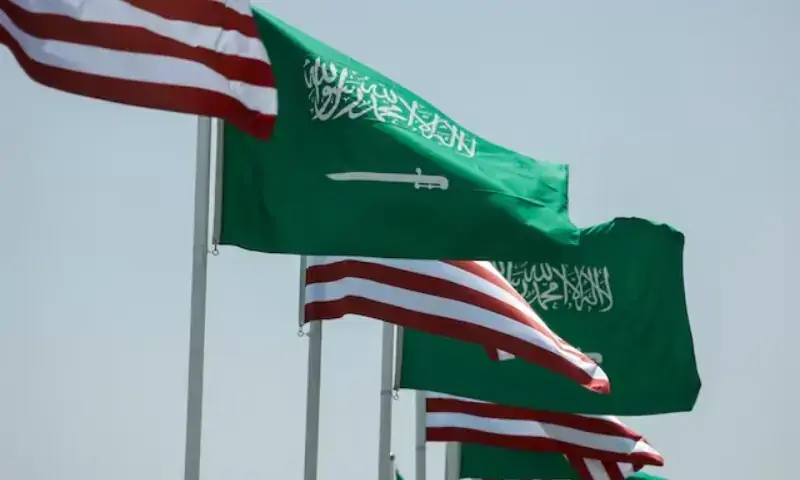
US and Saudi fighter jets conduct joint strikes on Iran-aligned militia sites in eastern Iraq. — Source: dawn
Casualties and Damage Reported by Iraqi Popular Mobilisation Forces
Iraq's Popular Mobilisation Forces reported that several of its headquarters were attacked. [3] The PMF said preliminary reports indicated several people were killed and others wounded, with damage to a number of its buildings and facilities. [3] The PMF's Nineveh command said eight of its members were killed and four others wounded in the joint US-Saudi attacks in the northern Iraqi province. [4] Footage showed flames and thick plumes of smoke rising from sites in Iraq's northern Nineveh province and southern Basra province. [4] Firefighters were seen arriving at one of the targeted locations in Basra. [4]
Iran Denies Involvement and Warns of Miscalculation
Iran rejected allegations that it directed recent drone attacks on Saudi oil facilities. [4] An Iranian defense official described attempts to link Tehran to attacks on US interests and Saudi targets as a major miscalculation. [3] The unnamed military official, quoted by state broadcaster IRIB, said attributing attacks on US interests in the region to Iran was a major miscalculation. [3] The IRGC vowed that as long as threats against the Islamic Republic of Iran continue and illegal and malicious actions by US forces against its interests are under way, the resistance will also continue. [3] Iraqi militias also denied responsibility. [4]
Broader Context of US-Iran Hostilities and Hormuz Tensions
The strikes occurred amid a brief pause in broader US-Iran hostilities that ended with Iran launching ballistic missiles at US bases. [2] CENTCOM said it intercepted all ballistic missiles launched by Iran in what it described as an attempted surprise attack on US forces in the Middle East. [4] Iran’s IRGC said it had fired ballistic missiles at US military installations in Jordan. [3] Iran’s IRGC said on Wednesday it attacked and stopped three tankers in the strait. [2] The IRGC Navy said its forces struck three oil tankers in the Strait of Hormuz after they ignored warnings for taking an unsafe and illegal route. [3] Iran’s IRGC said it continued to maintain full control over the strategic waterway. [3] Oman proposed a new regional deal aimed at resolving the conflict over the critical Strait of Hormuz. [3] Tehran ruled out Oman’s proposal for regional joint management of the Strait of Hormuz. [3]
Market Reaction and Diplomatic Developments
Oil prices rose more than 3-4 percent following the strikes due to fears of escalation affecting global energy supplies through the Strait of Hormuz. [2] Oil prices climbed more than $3 a barrel on Wednesday after the US and Saudi Arabia strikes over concerns the conflict may escalate. [3] President Donald Trump met with Israeli Prime Minister Benjamin Netanyahu in Washington for their first in-person talks since the Middle East war began in late February. [2] Netanyahu said in a video message after the meeting that it was one of the best conversations he had ever had with the president of the United States. [2] Trump said the pair had a very good meeting. [2]
What to watch next: Further US military response remains possible if the IRGC and its proxies do not cease attacks, while Iran maintains it will continue resistance amid ongoing tensions over the Strait of Hormuz.