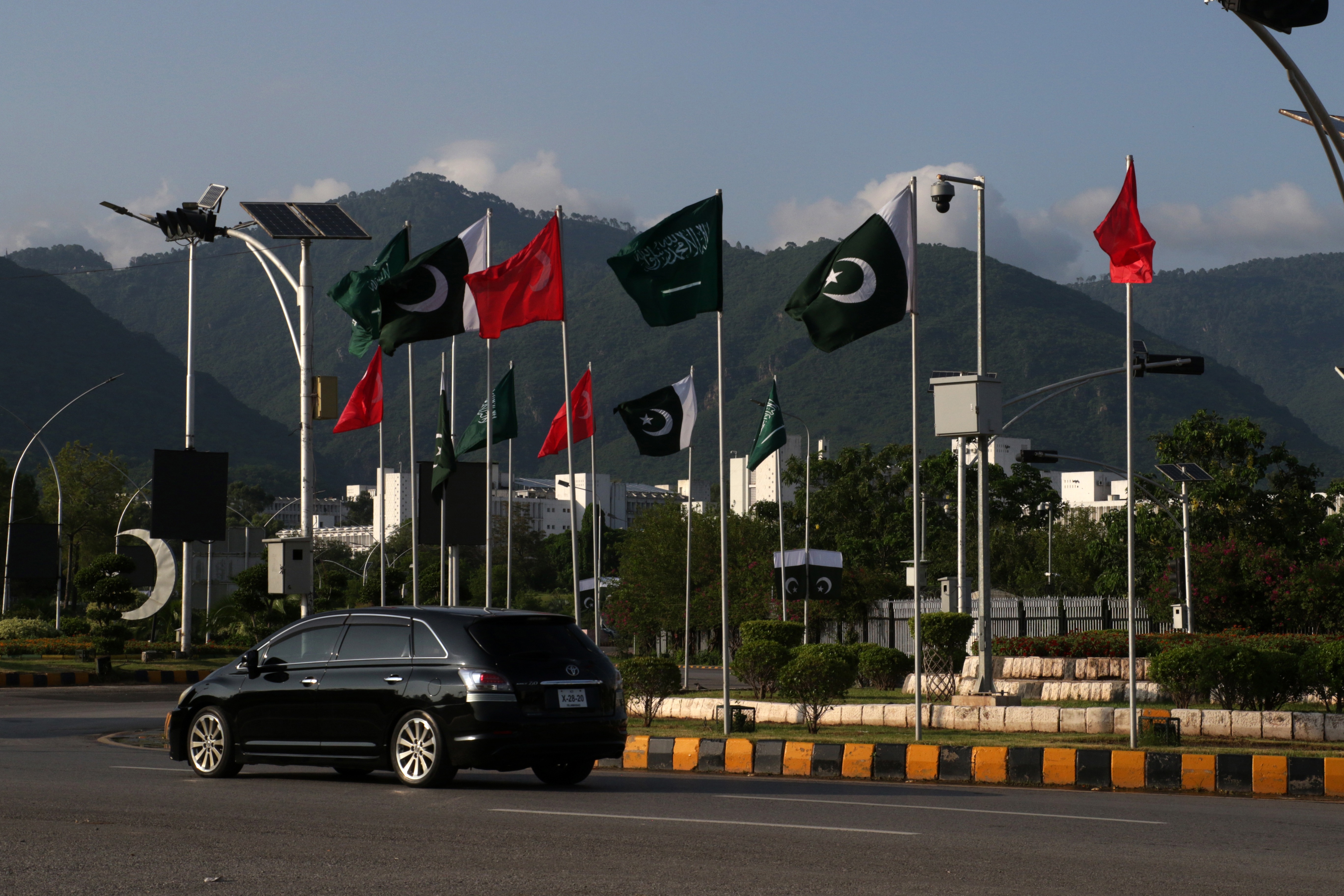

Saudi Arabia Forms Defence Pact With Turkey and Pakistan in Mecca
Saudi Arabia is forming defensive alliances including a new joint defence pact with Turkey and Pakistan signed in Mecca and a multinational maritime coalition in the Red Sea to deter attacks from Iran-aligned groups amid the regional war that began with US and Israeli strikes on Iran on 28 February.
Saudi Arabia Signs Mecca Defence Pact
The Mecca defence pact signed last week by Saudi Arabia, Turkey and Pakistan includes a collective defence clause modelled on NATO Article 5 that requires consultations on support if one member is attacked. [1] Announced at Islam's holiest site and after Friday prayers, the Saudi-Turkey-Pakistan defence agreement carries the symbolic weight of Muslim nations pledging to defend each other as if they were one "Ummah," or Muslim nation. [1] On Saturday, Turkish Foreign Minister Hakan Fidan said the pact was technically the same as NATO's Article 5 and would require consultations between all parties to determine what sort of support to provide any attacked country, if they ask for any. [1] The agreement, known as the Mecca Joint Defence Agreement, was signed last Friday by Saudi Crown Prince Mohammed bin Salman, Turkish President Recep Tayyip Erdogan and Pakistani Prime Minister Shehbaz Sharif. [2] It includes a collective defence provision modelled on NATO’s Article 5, under which an attack on one member would be treated as an attack on all three. [2] The pact was signed against the backdrop of a regional war sparked by US-Israeli strikes on Iran on 28 February. [2]
Egypt Weighs Joining the Alliance
Egypt is seriously considering joining the Mecca defence pact, with its foreign minister stating authorities are examining the move under the constitution, while Turkey has described Cairo as a natural partner. [2] Egypt is seriously considering joining the new joint defence agreement between Saudi Arabia, Turkey and Pakistan, Foreign Minister Badr Abdelatty said on Thursday. [2] Abdelatty made the remarks after talks with his Turkish counterpart, Hakan Fidan, in the northern coastal city of El Alamein. [2] Asked at a joint press conference whether Cairo would enter the agreement, Abdelatty said the pact was being examined by the relevant Egyptian authorities in accordance with the constitution and any legal obligations that membership could entail. [2] On Saturday, one day after the pact was signed, Fidan said he expected Egypt to join the alliance, describing Cairo as a "natural partner on all issues." [2] "I believe that at the next stage Egypt will also be among us in the alliance," Fidan told Turkey’s state-run Anadolu Agency. [2] The two officials said on Thursday they discussed a number of topics around the economy and trade relations, setting a bilateral trade target of $15 billion between the two sides. [2] Abdelatty said Egypt was also considering other regional security initiatives, including a Saudi proposal focused on Red Sea security, as the region faces what he described as "unprecedented challenges." [2]
Attacks Prompt Limited Saudi Retaliation
Saudi Arabia has faced attacks on oil infrastructure, shipping in the Red Sea and Strait of Hormuz from Yemen's Houthis and Iraqi militias since the war began, prompting limited and initially secret military responses after diplomatic efforts. [1] Since the U.S. and Israel launched the war on Iran on February 28, Saudi Arabia has tried to absorb attacks, choosing to first pursue a purely diplomatic path before beginning limited military responses that were kept secret. [1] The kingdom has faced damaging attacks on critical oil infrastructure from Yemen and Iraq, as well as on its shipping via the Strait of Hormuz and the Red Sea. [1] Two weeks ago, Saudi Arabia and the U.S. launched joint airstrikes targeting Iraqi militias they said were involved in the attacks on the kingdom. [1] It was the first retaliation announced by the kingdom during the war, and came despite the Saudis having sought to avoid being seen as a co-belligerent with the U.S. and Israel. [1] On Saudi Arabia's southern border, Yemen's Houthis last month ended a four-year truce, declaring a naval blockade on the kingdom and firing on its oil infrastructure. [1] The Houthi attacks have shown the kingdom's continued vulnerability to asymmetric warfare and revived memories of the 2019 crisis when Saudi oil production halved after Houthi drone and missile attacks that were planned by Iran, according to Reuters reporting. [1]
Red Sea Maritime Coalition Takes Shape
Two days later, Riyadh announced its intention to lead a maritime defence coalition in the Red Sea. [1] Riyadh this time wants the Yemeni government to lead any offensive that takes place, and had said a multi-national maritime coalition was needed to defend Red Sea shipping. [1] Invitations were sent out just a few days before the first meeting, several people who attended said, showing the urgency with which Saudi was approaching the mission. [1] So far, 14 regional countries have signed on, with more expected to join. [1] Western diplomats say European nations are still deliberating whether to join, concerned about how far they would potentially become involved in a war in Yemen. [1] Saudi Arabia wants to announce its official formation as soon as possible, with meetings planned this week in Jeddah. [1]
Oil Prices Rise Amid Iran Standoff
Oil prices rose on Friday and were on track for weekly gains due to the ongoing Iran standoff and US threats of an indefinite naval blockade that could disrupt Middle East crude supplies. [3] Oil prices rose on Friday and were on track for weekly gains after the United States threatened an indefinite naval blockade of Iran, raising concerns about disruptions to crude supplies from the Middle East. [3] Brent futures were up 12 cents, or 0.14%, to $87.19 a barrel at the close. [3]
Broader Regional Context and Risks
But nascent attempts to construct a multinational maritime coalition in the Red Sea, and the decision to bring Turkey into a defence pact with the kingdom and Pakistan, have so far failed to ward off attacks, analysts and diplomats said. [1] Riyadh faces a dilemma: how to deter attacks and protect the ambitious economic vision it is pursuing without becoming entangled in a broader conflict in the region sparked by the war between the U.S. and Iran. [1] As one Middle Eastern official put it, "Saudi Arabia's problem is that the kingdom's enemies know it wants to avoid war. They are abusing that." [1] "This is all very concerning and is exactly what Saudi Arabia wanted to avoid," said Aziz al-Ghashian, a Saudi analyst and senior non-resident fellow at the Gulf International Forum. [1] "Iran and its affiliates think Saudi won't respond. They understood restraint as basically an acceptance of being targeted and this is why it was very important for Saudi to find a way to deter them. The trick is how to balance it," he said. [1] "This is Saudi Arabia's way to signal to Iran that we are willing to go further up the ladder, of course [first that] of diplomacy before crossing the line of diplomacy to the other side," said Yasmine Farouk, project director for the Gulf and the Arabian Peninsula at Crisis Group. [1] "The way I see this pact and coalition is [Saudi] incrementally reaching the final stages of de-escalatory and deterrence policies," she said, while still noting the coalitions were "trial balloons" and joint military action was currently unlikely. [1]
What to watch next: meetings planned this week in Jeddah on the maritime coalition, Egyptian authorities' examination of the Mecca pact under the constitution, and further Houthi actions on Saudi targets.