Safest Countries in the World Face Travel Warnings as Middle East Tensions Escalate With US-Iran Preparations
Even the safest countries in the world face travel warnings as Middle East tensions escalate with US-Iran preparations, according to official advisories that highlight risks of rapid and unforeseen developments across the region.
Current Military Posture and Iranian Warnings
Iran’s Khatam al-Anbiya Headquarters has stated that the United States is preparing new military actions against Iran with support from regional countries. [3] The headquarters warned that any such attack would prompt direct Iranian responses against US bases and interests across the Middle East, with cooperating countries viewed as parties to the conflict. [3] This statement was carried by Iran’s Mehr News Agency on Sunday, September 20, and described intelligence about a planned joint meeting in Europe to coordinate operations. [3] The headquarters, responsible for coordinating Iran’s armed forces during wartime, claimed the moves aim to compensate for recent strategic setbacks without providing supporting evidence or naming the countries involved. [3]
Naval and Missile Exchanges in the Strait of Hormuz
Recent incidents include US forces destroying five Iranian crude oil tankers after intercepting two Iranian ballistic missiles targeting a US Navy warship. [3] Iran has claimed capture of a US unmanned underwater vessel in the Strait of Hormuz, describing it as one of the US military’s most sophisticated autonomous underwater systems, though the United States has not confirmed the claim and no independent verification has been provided. [3] Iran has also shot down at least two US MQ-1 drones in recent days, according to American officials, with the location and exact variant remaining unclear. [4] The Iranian Revolutionary Guard has fired on a Togo-flagged oil tanker in the Strait of Hormuz, with the vessel reported to have caught fire after the guard stated it was attempting to pass “illegally.” [4]
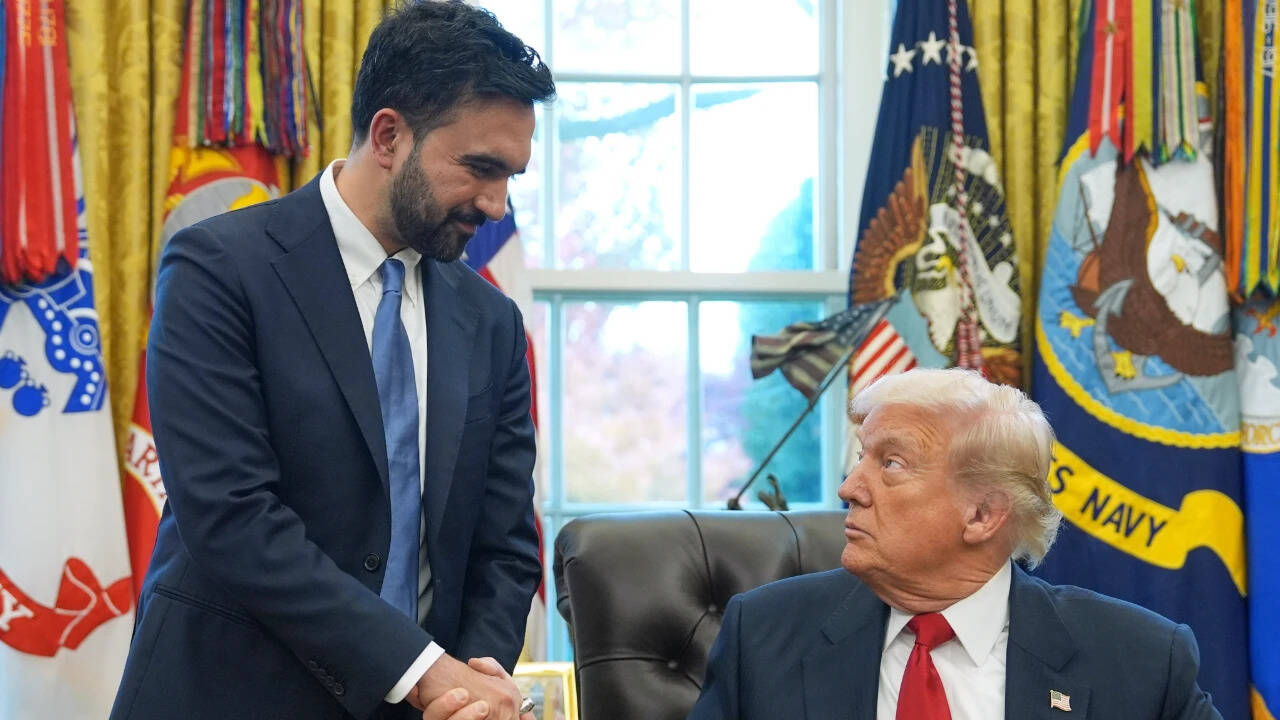
Trump meets NYC Mayor Mamdani at Gracie Mansion during UNGA visit. — Source: timesofindia
Houthi Escalation and Saudi Arabian Front
Houthi forces in Yemen launched ballistic and cruise missiles and drones targeting Riyadh and Aramco facilities in Yanbu, marking the first strike on the Saudi capital since the conflict resumed. [5] The Houthi military spokesman stated that fighters had carried out two successful military operations using a large number of ballistic and cruise missiles and drones, with one operation targeting sensitive sites in Riyadh and the other targeting Aramco facilities in Yanbu. [5] Saudi-led coalition forces reported intercepting a ballistic missile launched by the Houthis and stated that additional attacks on civilian infrastructure in cities including Yanbu were thwarted by air defenses. [5] This escalation has displaced over 110,000-112,000 people in Yemen according to the UN, with near 3,000 persons reported to have fled across the water to Djibouti. [4] Saudi Arabia has responded with scores of airstrikes on Houthi-held areas. [5]
US Government Responses and Travel Warnings
The US State Department issued security warnings for the Middle East citing risk of unforeseen escalation, urging citizens not already in the region to seriously reconsider travel. [4] President Trump cut short a weekend at Camp David to return to the White House, with the White House providing no explanation for the early return. [5] The Trump administration approved a $24.3 billion sale of 48 F-35 fighter jets to Saudi Arabia, making it the second Middle East country after Israel to operate them, following Houthi attacks on Saudi oil and military sites. [4] Reports indicate more American military personnel have died in the Middle East during the ongoing conflict than publicly disclosed by the Pentagon, with at least 22 or 23 deaths cited by officials, including 14 during what the Trump administration calls Operation Epic Fury. [4] The House of Representatives has voted for the third time to limit the war, with seven Republicans joining Democrats in the latest resolution aimed at requiring congressional approval. [4]

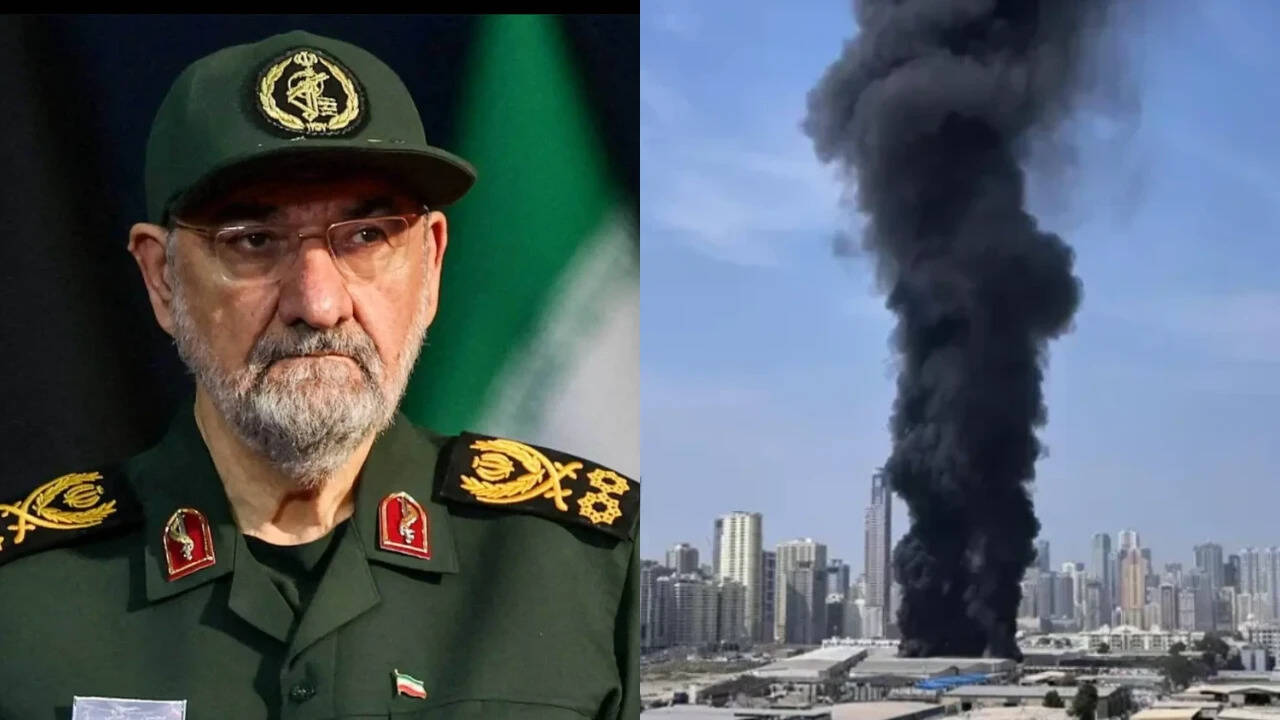
Iranian spokesperson for Khatam al-Anbiya Headquarters delivers statement on US military preparations. — Source: khaamapress
Diplomatic Tracks and Iranian Conditions
Iran has conveyed conditions through mediators from Qatar and Pakistan for ending the conflict, including ending the war on all fronts, unfreezing Iranian assets, and lifting the naval blockade, while awaiting a response from President Trump. [4] Iran’s top negotiator indicated that Tehran had conveyed these conditions to the US through mediators for reopening the Strait of Hormuz. [5] The CIA director met Egypt’s president in Cairo, where the Egyptian leader stressed the paramount importance of settling regional crises through political and diplomatic tracks. [5] Turkey’s foreign minister stated that discussions had occurred with Saudi Arabia and Pakistan about possible assistance, noting that military needs in state technical matters could be met. [5]
Broader Regional and Global Context
The developments occur within ongoing Middle East conflicts involving the US, Iran, Israel, Hezbollah, and Houthis, with the Middle East war beginning in February with US-Israeli strikes on Iran that prompted retaliatory attacks. [5] Impacts include disruption to global shipping through key straits such as the Strait of Hormuz and Bab al-Mandab, with the latter becoming even more strategic since the blockade on the Strait of Hormuz. [5] Economic costs to the US have exceeded $45 billion, with the war estimated to cost two to three billion dollars per month and expected to increase during intensified fighting periods, though this does not include costs for repairing damaged bases. [4] Tensions escalate ahead of the high-stakes UN General Assembly, where wars in the Middle East remain among the major issues confronting the gathering of nearly 130 world leaders. [1]
What to watch next
Observers will monitor responses to Iran’s conditions conveyed through Qatar and Pakistan mediators, further congressional actions on war limits, and developments at the upcoming UN General Assembly.