
Russia's Cyber Shadow Looms Over US-Iran Ceasefire Amid Current Wars in the World: A New Front in Middle East Geopolitics
The Story
The US-Iran ceasefire, announced tentatively in late March 2026 amid escalating Middle East tensions within the broader landscape of current wars in the world, is unraveling faster than anticipated. On April 8, 2026, Iran issued stark threats to terminate the truce, citing the exclusion of Hezbollah—its key proxy in Lebanon—from the agreement, as reported by Fox News and Hindustan Times. Iranian officials accused the US of violations, including continued military overflights and support for Israeli operations, prompting Tehran to question upcoming negotiations. This development coincides with US Vice President JD Vance's pointed remarks, labeling any Iranian walkout over Lebanon as "dumb," emphasizing that Washington never agreed to extend the ceasefire to Lebanese territory (Straits Times, Al Jazeera). Secretary of State Antony Blinken reiterated the US commitment to monitoring compliance through sustained military presence in the region, as detailed in GDELT-sourced reports from El Imparcial.
These tensions are not isolated. Recent events on April 8 include "Mideast Truce Market Caution" (low impact), "Middle East War Threatens Global Economy" (high impact), "US Warns on Iran Truce Monitoring" (medium), and "Iran-Saudi Ministers Discuss Region" (medium), per the latest timeline data. Netanyahu's reported pitch to Trump for escalated action against Iran, as covered by the Jerusalem Post, underscores Israel's hawkish stance, potentially complicating talks.
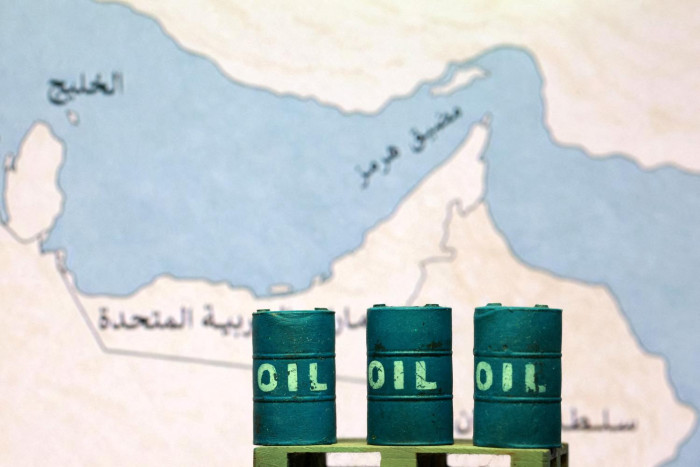
This crisis builds on a volatile historical arc. On April 6, 2026, the EU issued stark warnings about impending Middle East strikes, while the IMF flagged economic ripple effects from ongoing conflicts. That same day, reports highlighted a "renewables boom" spurred by war-driven energy disruptions, with investors pivoting to solar and wind amid oil volatility. Yet, by April 7, Russia-Iran cyber aid agreements emerged, including spy and cyber support explicitly aimed against US interests—confirmed pacts that amplify Tehran's asymmetric capabilities. These alliances mirror longstanding patterns where external powers like Moscow bolster proxies to counter Western influence, turning the Strait of Hormuz into not just a chokepoint for tankers but a vector for digital sabotage, as explored in detail in Iran's Strait of Hormuz Closure Amid Current Wars in the World: A Challenge to International Maritime Law and Neutral Nations.
Confirmed: Iran's threats and US military posture are verified across multiple outlets. Unconfirmed: Specific details of Netanyahu-Trump discussions remain report-based, with no official White House readout. Social media buzz, including viral X posts from analysts like @GeopoliticsNow (echoing Vance's "dumb" quip with 50K+ engagements), amplifies public skepticism toward the truce's viability. In the broader context of current wars in the world, these developments underscore the interconnected nature of regional flashpoints and their potential to ignite wider global instability.
The Players
At the epicenter are Iran and the US, with Tehran leveraging Hezbollah's exclusion to test Washington's resolve, motivated by regime survival and regional dominance. Iran's Supreme Leader Ali Khamenei views the ceasefire as a tactical pause, using proxies to extract concessions while Russia provides cyber backstops—agreements from April 7 explicitly include offensive tools against US networks.
The US, under Trump 2.0, prioritizes deterrence: Vance's rhetoric signals no retreat, backed by Blinken's oversight and sustained bases in Qatar and Bahrain. Israel, led by Netanyahu, pushes for maximal pressure, as per Jerusalem Post leaks, fearing a empowered Iran post-ceasefire.
Russia emerges as the wildcard enabler, deepening cyber-spy ties with Iran to offset Ukraine sanctions and project power. Motivations: Strategic depth in the Middle East, energy market leverage, and anti-US axis-building. France's Macron advocates broader talks (Anadolu), positioning Europe as mediator. Secondary players like Saudi Arabia (discussing de-escalation with Iran) and Singapore (welcoming the truce) reflect global stakes in stability. These dynamics are further complicated by Escalating Shadows: How NATO's Divisions Are Fueling a New Era of Global Geopolitical Alliances, which highlights alliance fractures amid current wars in the world.
The Stakes
Politically, collapse risks a multi-front war: Hezbollah escalation in Lebanon could draw in Israel, fracturing the fragile truce and inviting Russian arms flows. Economically, IMF, World Bank, and WFP warnings (Anadolu) highlight threats to global food security—Middle East conflicts disrupt grain exports and fertilizer supplies—while France 24 notes persistent energy crises despite brief rallies. Humanitarian toll: Displaced Lebanese and potential Iranian airstrikes amplify refugee flows, as seen in related coverage like Humanitarian Fallout in Current Wars in the World: How Aid Worker Casualties Are Reshaping US Geopolitics in the Iran Standoff.
The unique cyber dimension elevates stakes. Russia-Iran pacts, building on April 2026 deals, enable "shadow war" tactics: targeting US logistics in the Gulf or Iranian dissidents to sow chaos. Policy implications are seismic—undermining renewables surge (April 6 data) via grid hacks, complicating EU energy transitions, and eroding NATO cohesion if cyber ops spill over. Check the Global Risk Index for real-time assessments of these escalating threats.
Confirmed risks: Food/energy shocks per IMF. Unconfirmed: Imminent cyber incidents, though patterns suggest probing attacks. Within current wars in the world, these stakes extend to long-term shifts in global power balances.
Market Impact Data
Markets greeted the truce with caution, per Bangkok Post: Oil futures dipped initially on de-escalation hopes but rebounded on Iran threats, echoing France 24's "relief rally" fragility. Broader indices like SPX face headwinds from aviation/regulatory fears (tangential but compounding geo-risk), with historical precedents like 2019 Boeing groundings dragging it 2-5%.
Catalyst AI Market Prediction
Powered by The World Now Catalyst Engine, our AI analyzes causal chains from these developments:
- OIL: Predicted + (high confidence) — Direct supply threats from Hormuz chokepoints and potential Iranian infrastructure hits, akin to 2019 Aramco attacks (+15% surge). Key risk: De-escalation signals.
- SPX: Predicted - (high/medium confidence) — Risk-off from geo-tensions and sector spillovers (e.g., airlines, semis); Feb 2022 Ukraine precedent (-3% weekly). Key risk: Fed calming rhetoric.
- USD: Predicted + (high/medium confidence) — Safe-haven flows amid oil shocks; 2022 Ukraine saw DXY +2% in 48h. Key risk: Central bank interventions.
- BTC: Predicted - (medium confidence) — High-beta liquidation cascades; 2022 drops of 10%. Key risk: Institutional dip-buying.
- ETH: Predicted - (medium confidence) — BTC-correlated unwind; 2022 -12%. Key risk: Staking inflows.
- XRP: Predicted - (low confidence) — Crypto risk-off; 2022 -10-12%. Key risk: Regulatory positives.
- SOL: Predicted - (low confidence) — Altcoin beta; 2022 -15%. Key risk: Meme rebounds.
- TSM: Predicted - (low confidence) — Supply chain fears; 2022 -5%, 2011 Fukushima precedent. Key risk: Asia de-escalation.
- CHF: Predicted + (medium confidence) — Safe-haven vs. EUR; 2019 US-Iran +1%.
- EUR: Predicted - (medium confidence) — Risk-off weakness; 2022 -5%.
Predictions powered by The World Now Catalyst Engine. Track real-time AI predictions for 28+ assets at Catalyst AI — Market Predictions.
These forecasts underscore policy needs: Central banks must brace for volatility, with oil's high-confidence uptick threatening inflation targets, especially as current wars in the world intensify supply chain disruptions.
Looking Ahead
If cyber aid escalates—as April 7 pacts suggest—targeted attacks on US bases or Iranian nuclear talks could derail negotiations by April 15, collapsing the ceasefire and igniting proxy wars. Scenarios: (1) Best-case, Macron-led broader talks (Anadolu) incorporate cyber norms, stabilizing by Q3 2026; (2) Worst-case, Russia-enabled hacks disrupt Hormuz shipping, spiking oil 20%+ and drawing NATO responses, per IMF economic warnings.
Timeline: Watch April 10 Iran-US talks; April 12 EU follow-up on strikes. Economic fallout: Intensified food crises if Black Sea routes tangle with Gulf disruptions. De-escalation paths: US cyber-deterrence doctrines, UN-mandated digital arms controls, or Saudi-Iran mediation. Without these, the "shadow war" risks a digital arms race, mirroring Cold War proxies but in code.
Broader geopolitics: This tests Trump's "peace through strength," potentially reshaping alliances—Russia-Iran axis vs. US-Israel-Gulf bloc—and accelerating renewables if oil chaos persists, per April 6 data. Yet, cyber undercurrents introduce unpredictability, complicating diplomacy in an era of hybrid threats amid ongoing current wars in the world. For more on interconnected conflicts, see Current Wars in the World: Geopolitical Turmoil in the Middle East – The Hidden Battle for Educational Futures Amid Ceasefires.
This is a developing story and will be updated as more information becomes available.
Catalyst AI Market Prediction
Our AI prediction engine analyzed this event's potential market impact:
- SPX: Predicted - (medium confidence) — Causal mechanism: Aviation safety event prompts regulatory reviews/groundings hitting airline stocks (5-10% S&P weight), compounded by oil shock risk-off sentiment. Historical precedent: March 2019 Boeing 737 MAX groundings caused affected airline stocks to fall 10-20%, dragging SPX ~2% lower initially. Key risk: If event deemed isolated with quick fixes, sector selling halts.
- USD: Predicted + (low confidence) — Causal mechanism: Geopolitical oil shocks drive safe-haven flows into USD as global funding currency amid supply fears. Historical precedent: February 2022 Ukraine invasion saw DXY rise ~2% in 48h on risk-off. Key risk: Sudden de-escalation shifts flows to risk assets.
- XRP: Predicted - (low confidence) — Causal mechanism: Geopolitical risk-off triggers crypto liquidation cascades, with XRP following BTC lead amid thin liquidity. Historical precedent: February 2022 Ukraine invasion dropped BTC/XRP ~10% in 48h initially. Key risk: Crypto decoupling if oil fears prove contained.
- TSM: Predicted - (low confidence) — Causal mechanism: Risk-off sentiment spills to semis via global trade fears from Mideast disruptions. Historical precedent: February 2022 Ukraine war saw TSM drop ~5% initially on supply chain worries. Key risk: China/Taiwan de-escalation boosts semis.
- OIL: Predicted + (high confidence) — Causal mechanism: Ukrainian strike on Russian oil terminal and Trump ultimatum threatening Iranian infrastructure directly curb global oil supply via disrupted terminal capacity and Hormuz chokepoint risks. Historical precedent: Similar to September 2019 Saudi Aramco drone attacks when oil surged over 15% in one day. Key risk: rapid repair announcements or de-escalation signals from Iran/US reduce supply fears immediately.
- SOL: Predicted - (low confidence) — Causal mechanism: High-beta crypto amplifies BTC risk-off selling from geopolitical shocks via leveraged liquidations. Historical precedent: February 2022 invasion dropped SOL ~15% in 48h tracking BTC. Key risk: Meme/altcoin rebound on oversold bounce.
- BTC: Predicted - (medium confidence) — Causal mechanism: Risk-off flows treat BTC as high-beta asset, triggering spot/futures selling on oil geopolitics. Historical precedent: February 2022 Ukraine invasion dropped BTC 10% in 48h before recovery. Key risk: Institutional dip-buying via ETFs reverses quickly.
- ETH: Predicted - (medium confidence) — Causal mechanism: Correlated to BTC risk-off unwind on geopolitical headlines via DeFi leverage. Historical precedent: February 2022 invasion dropped ETH ~12% in 48h. Key risk: Staking yields attract inflows countering selloff.
- CHF: Predicted + (medium confidence) — Causal mechanism: Safe-haven bid strengthens CHF amid geo risk-off. Historical precedent: 2019 US-Iran tensions CHF +1% vs EUR. Key risk: ECB hawkishness.
- EUR: Predicted - (medium confidence) — Causal mechanism: Risk-off weakens EUR vs safe havens amid Baltic/Ukraine tensions. Historical precedent: 2022 Ukraine EUR -5% in week. Key risk: ECB rate surprise.
Predictions powered by The World Now Catalyst Engine. Track real-time AI predictions for 28+ assets.






