
Russia Strikes Ukraine Passenger Train Near Polish Border After Diplomatic Train Departs
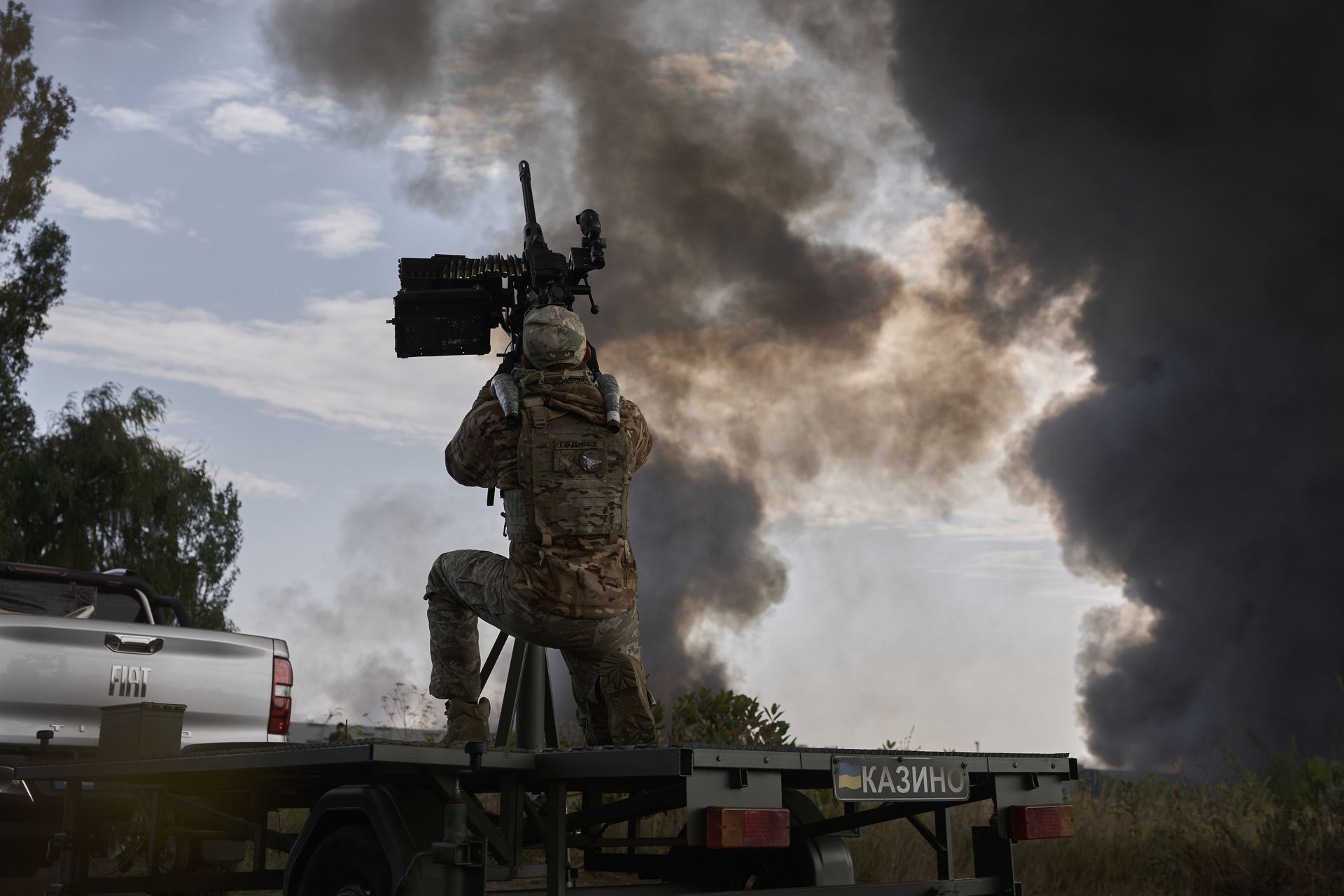
Russia launched a mass drone attack on western Ukraine on Sept. 12 using Shahed-type drones guided via Belarusian LTE networks and repeater stations, striking railway infrastructure near the Polish border including a passenger train locomotive at Yahodyn station shortly after a train carrying former UK Prime Minister Boris Johnson, former Swedish Prime Minister Carl Bildt and other Western officials had departed. [1] [3]
Russian Drone Attack Targets Western Ukraine Railways
Ukrainian officials stated that the drones in the Sept. 12 attack stayed close to the Belarus border and received signals through Belarusian commercial LTE networks and radio repeater stations located in Belarus. [1] The Sept. 14 statements followed a Russian attack that targeted railway facilities in Rivne, Volyn and Lviv oblasts, with one strike hitting a passenger train locomotive at Yahodyn station 2km from the Polish border. [4] The drone strike at Yahodyn occurred minutes after a diplomatic train carrying Boris Johnson, Carl Bildt, a German chancellor adviser, a German MP and others left the station following the Yalta European Strategy conference; former CIA director David Petraeus was at the station and the targeted train was evacuated with no injuries. [3] Ukrainian Railways suggested the diplomatic train may have been the intended target as its departure was advanced due to the constant threat of Russian attacks; Russia claimed the drones targeted railway infrastructure used to transport military equipment from Europe. [3] The locomotive of a passenger train traveling from Kyiv to Warsaw was hit by a Russian drone just kilometers from the Polish border. [4] The monitoring group warned the train crew about the threat in advance, thanks to which no one was injured. [4] The train, which had 208 people aboard, would continue on to Poland after a delay at the border of about six hours. [4]
Use of Belarusian Networks and Repeaters in Attacks
Ukrainian officials stated that the drones in the Sept. 12 attack stayed close to the Belarus border and received signals through Belarusian commercial LTE networks and radio repeater stations located in Belarus. [1] The revelation came two days after Russia sent hundreds of the petrol-powered drones, hugging Ukraine's northern border, in a rare mass attack targeting regions in western Ukraine on Sept. 12. [1] Speaking on a Radio NV livestream, Presidential Advisor Serhii "Flash" Beskretnov said the flight path of the drones used in the attack suggested the use of domestic mobile networks for the cross-border attacks. [1] "If we look at the movement of jet-powered and conventional 'Shaheds,' they stay close to the border with Belarus," he said. [1] "I came to the conclusion that the 'Shaheds' probably have connectivity to Belarusian commercial LTE networks." [1] Separately, on the same day, State Border Guard Service Spokesperson Andrii Demchenko told Ukrainian television that Russia was also using radio repeater stations in the attacks. [1] "The air strikes that targeted Rivne, Volyn, and Lviv oblasts were also actually carried out from the territory of Belarus," Demchenko said. [1] "The air assets launched by Russia were fed with a signal through repeaters that were also located precisely on the territory of this country." [1] The placement of such relay stations in Belarusian territory has been a cause of tension between Kyiv and Minsk, with President Volodymyr Zelensky in the summer issuing a formal ultimatum for the equipment to be taken down. [1]
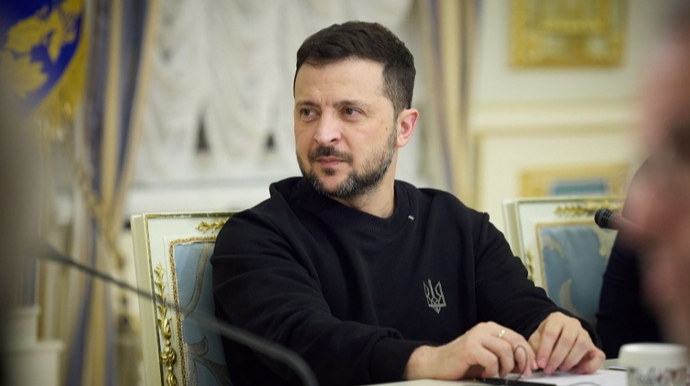
Zelenskyy speaks during a news conference about halting Russian strikes on Ukrainian infrastructure. — Source: ukrainskapravda
Western Officials Present During Strike
The drone strike at Yahodyn occurred minutes after a diplomatic train carrying Boris Johnson, Carl Bildt, a German chancellor adviser, a German MP and others left the station following the Yalta European Strategy conference; former CIA director David Petraeus was at the station and the targeted train was evacuated with no injuries. [3] David Petraeus knows the sound of an explosion very well. [3] As a US general, he commanded coalition forces in Iraq in 2007 and 2008, where he succeeded in stabilising the situation. [3] He later became commander of allied forces in Afghanistan. [3] After leaving the military, then-president Barack Obama chose him to head the CIA intelligence service. [3] Petraeus is a strong supporter of Ukraine; he has visited the country 11 times since the start of Russia’s full-scale invasion. [3] On Sunday morning, he was on a train at the station in the village of Yahodyn, near the Polish border, when Russia attacked with jet-powered Geran drones. [3] As he told the New York Times, the train he was on was evacuated. [3] Shortly afterwards, he heard an explosion. [3] “For those who had never been under fire, it was frightening,” he said. [3] The Russian drone ultimately did not hit the train on which the former CIA chief was returning to Poland, but another passenger train. [3] It destroyed the locomotive, but passengers had been evacuated from the train around 15 minutes earlier, so nobody was harmed. [3] Shortly before the strike, a special diplomatic train carrying several prominent Western representatives passed through the station in Yahodyn. [3] They included former British prime minister Boris Johnson, an adviser to the German chancellor, a member of the German parliament and former Swedish prime minister Carl Bildt. [3] This wasn’t our train, but the one just minutes after us by the 🇵🇱 border crossing. [3] It was evacuated as the 🇷🇺 drone approached and no one was hurt. [3] Very good safety system. [3] Our train just had an evacuation warning but could proceed to Dorohusk. [3] The question is whether it was a coincidence that Russia attacked the station at the very time Western diplomats were passing through, or whether it had instead targeted their train. [3] Ukrainian Railways considers the latter a possibility. [3] According to the company, the diplomatic train left the station earlier than originally scheduled. [3] “It is quite likely that this Russian drone may also have been targeting the diplomatic train, which departed the station earlier than planned as part of ongoing adjustments to train timetables due to the constant threat of Russian attacks. Ukrzaliznytsia (Ukrainian Railways) continually adjusts train schedules depending on which tracks are available and which have been blocked as a result of attacks,” it said. [3] According to TASS, Russia’s defence ministry said its drones had “targeted railway infrastructure facilities in western Ukraine used to transport military equipment from European countries”. [3] Johnson commented on X on Sunday that he does not know what warped logic led Putin to blow up a stationary Ukrainian locomotive at the Polish border this morning. [3]
NATO Neighbors Express Concern Over Border Proximity
The attack happened minutes after another train carrying European officials including former Swedish prime minister Carl Bildt and former UK British prime minister Boris Johnson left the station on the way back from an annual conference in Kyiv. [4] Former CIA director David Petraeus was at the station when the drone hit, the New York Times reported. [4] The strike marked the latest escalation by Russia in the war — in its fifth year — as acts of sabotage, arson and drone incursions proliferate across the continent. [4] “This is Putin’s terror ‘knocking’ directly on the doors of the EU and NATO,” Ukrainian Minister of Foreign Affairs Andrii Sybiha said in a post on social media, calling for Europe to increase sanctions against Russia. [4] Ukraine’s state railway operator confirmed a strike on a train in Volyn, about 2km from the Ukraine-Poland border in northwestern Ukraine. [4] Polish Minister of Foreign Affairs Radoslaw Sikorski said there was no violation of the border, but called the incident “escalation” by Russian President Vladimir Putin. [4] The drones involved in the incident were Geran-5 jet-powered drones, Polish authorities said. [4] Polish Prime Minister Donald Tusk, speaking after an emergency meeting with top civilian and military leaders, said he cannot exclude the potential of escalation by Russia to Poland’s territories in the next weeks or months, including attempts to disrupt or paralyze border crossings. [4] Poland would consider how to mobilize allies to be prepared for a common response if needed, he said. [4]
Zelenskyy Proposes Mutual Halt to Infrastructure Strikes
President Zelenskyy proposed that partners secure a mutual agreement with Russia to halt strikes on critical infrastructure such as energy, food and railways, stating Ukraine is ready to reciprocate but is not convinced Russia would abide. [2] President Volodymyr Zelenskyy has said Ukraine has proposed that its partners "secure an agreement with Russia that would stop the destruction of critical infrastructure". [2] "Ukraine has proposed that its partners secure an agreement with Russia that would stop the destruction of critical infrastructure. Food, energy, and other basics that sustain life must be protected, and Russian strikes are directed primarily against them." [2] Meanwhile, Zelenskyy added that "Ukraine is not convinced that Russia is willing to abide by any agreement". [2] "If our partners are ready to ensure that Russia genuinely refrains from striking our electricity system, other energy facilities, critical infrastructure, and food supply routes, then, of course, we are ready to ensure a corresponding halt to our strikes," he wrote, adding that "a de-escalatory step regarding critical infrastructure could be the first step towards peace. We expect specifics from our partners." [2] In his evening address, Zelenskyy also said there is a "strong proposal from the US" for a mutual halt to strikes between Russia and Ukraine. [2] "And if this could become the first de-escalatory step, a step towards Russia halting its strikes on our critical infrastructure and us halting our response, then Ukraine is ready to support de-escalation," he noted. [2]
Context of Russia's Drone Guidance Methods
Ukrainian officials stated that the drones in the Sept. 12 attack stayed close to the Belarus border and received signals through Belarusian commercial LTE networks and radio repeater stations located in Belarus. [1] Lacking access to technology like SpaceX's Starlink, Russia consistently uses a mix of innovative radio technology to maintain connection with Shahed-type drones during mass attacks on Ukraine. [1]
What to watch next: Polish Prime Minister Donald Tusk said he cannot exclude the potential of escalation by Russia to Poland’s territories in the next weeks or months, including attempts to disrupt or paralyze border crossings, while Ukrainian Foreign Minister Andrii Sybiha called for Europe to increase sanctions against Russia. [4]