

Palestine Conflict Death Toll Tops 73,400 as Israel Opens Probes into Child and Aid Worker Killings
The death toll in the Palestine conflict has exceeded 73,400 since the start of the Israel-Hamas war in October 2023, with Israeli forces killing 10 more Palestinians and wounding 25 others in the past 24 hours, according to the Gaza Health Ministry. [1]
Gaza Death Toll and Recent Casualties
Gaza’s death toll has exceeded 73,400 since the start of the Israel-Hamas war in October 2023. [1] Israeli forces killed 10 more Palestinians and wounded 25 others in the past 24 hours, according to the Gaza Health Ministry. [1] More than 73,000 Palestinians have been killed in Israeli attacks since the start of the Gaza war in 2023. [5] The dead include many aid workers, doctors, journalists and others. [5]
Israeli Military Investigations into High-Profile Killings
Israel’s military has opened criminal investigations into the killings of 5-year-old Hind Rajab and her relatives in January 2024 and into the March 2025 deaths of 15 emergency and aid workers from the Red Crescent, Palestinian Civil Defense and the United Nations, following reviews by its Fact-Finding and Assessment Mechanism. [5] The military said the investigation decisions followed probes by its Fact-Finding and Assessment Mechanism. [5] It released decisions regarding five incidents involving the deaths of Palestinians. [5] They included an examination of the killings of seven aid workers with the World Central Kitchen charity in April 2024. [5] On that incident, the military said there was “no reasonable suspicion of criminal misconduct that would justify the opening of a criminal investigation.” [5]
Smugglers transport banned goods across the Gaza border as millions of dollars change hands. — Source: apnews
Reactions to the Investigations
Rights groups note that such Israeli military probes into killings of Palestinians rarely result in convictions, with only a tiny proportion leading to indictments over the past decade. [5] Dan Owen, a researcher in the Yesh Din rights organization, said that over the last decade only a “tiny” proportion of investigations had led to indictments while growing political pressure “further deters Israeli law-enforcement authorities from holding those responsible accountable, even when clear evidence does exist.” [5] The investigation into the killing of Hind Rajab and paramedics in Gaza launched by the Israeli army came as a “surprise” in the country, “because so much time has passed” since the events took place. [2] “The timing is extremely late.” [2] But the fact that these two very renown cases are being referred to criminal investigation is already an admission on the part of the Israeli army that something here went deeply wrong. [2] Eid Aziz, media director for the Red Crescent, told Reuters that “more important than opening the investigation is that this should have been prevented.” [5] Munther Abed, a Palestinian paramedic who said he was present at the incident in which 15 of his colleagues were killed, told Reuters on Wednesday he hoped “those who killed my colleagues, who were like family to me, face justice, real justice.” [5]
Smuggling Networks and Economic Impact
Smuggling of restricted and banned goods into Gaza has boomed under Israel’s tight controls, with cigarettes and tobacco generating the largest profits. [3] Hospitals, government agencies and residents rely on smugglers for medicine, fuel, spare parts, food and other essentials that command massively inflated prices. [3] Israeli soldiers and Palestinian middlemen are accused of receiving millions of dollars in payoffs to facilitate smuggling via commercial trucks, military vehicles and occasionally aid shipments, while Gaza’s Hamas-led government collects taxes of up to 80 percent on unreported smuggled goods. [3] Palestinians face inflated prices for groceries and batteries, hospitals have turned to smugglers for medicine and equipment, and Israeli soldiers and other middlemen are accused of pocketing millions of dollars as the smuggling of goods restricted by Israel into the Gaza Strip has boomed. [3] Cigarettes and tobacco — banned from entry to Gaza since the start of the Israel-Hamas war in October 2023 — rake in the biggest profits for smugglers and merchants. [3] Everything from iPhones and solar panels to fuel and anesthetics are also brought into the tiny coastal territory illegally. [3] Israel restricts quantities of some goods and bans others outright. [3] It defines many as “dual use” — including concrete, vehicle parts and X-ray machines — asserting they could be repurposed by Hamas militants for military functions. [3] Gaza’s Hamas-led government also takes in some of the profit, according to merchants and one Palestinian official. [3] Merchants call it “taxing” — on both smuggled goods and those brought in legally. [3] Mohammad Barbakh, of the Palestinian Economy Ministry in Gaza, told AP the government receives up to 20% of the price of any smuggled goods if the merchant reports them to authorities, and that increases to 80% if the items go unreported and authorities discover them. [3] Since the war began, Israel has tightly controlled all entry of food, aid and goods into the Gaza Strip, including a total aid blockade that shut off entry entirely for nearly three months last year, pushing parts of the territory into famine. [3] The flow of goods has increased since a fragile ceasefire deal went into effect in October but remains well below prewar levels. [3] Smuggling has become vital to Gaza’s economy — it’s a major source of income as most of the population “lost their source of living.” [3] Several top merchants estimated that smuggling makes up over half their total operations and can bring in more than 70% of profits. [3] Residents say a vehicle battery can go for more than $2,300, compared with $140 prewar. [3] Solar panels sell for $3.25 per watt, from 16 cents a watt. [3] The price per pack of cigarettes has hit as much as $140 recently, and over $1,000 during Israel’s total blockade. [3]
West Bank Settlement Pressures
Israeli attacks and settler activity in the occupied West Bank town of Qusra have continued since 2011, reflecting a broader pattern of collusion between the army and occupiers aimed at reshaping Palestinian reality through pastoral settlement. [4] Qusra mayor says Israeli attacks on town date back to 2011. [4] Current escalation reflects broader shift toward ‘pastoral settlement’ in occupied West Bank. [4]
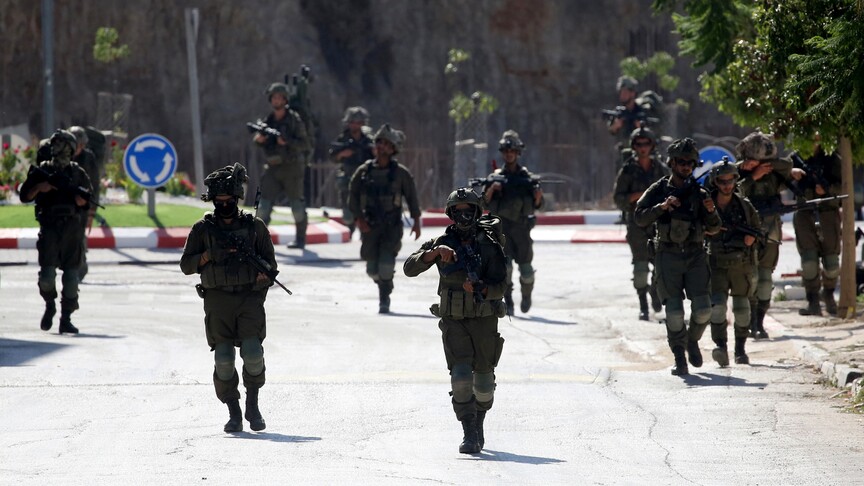
Israeli military opens probes into killings of child Hind Rajab and aid workers in Gaza. — Source: anadolu
Ceasefire Status and Continued Violence
The October ceasefire halted major fighting but Israeli strikes have persisted, resulting in more than 1,200 additional Palestinian deaths since the truce. [5] The Gaza ceasefire declared in last October may have halted major fighting in Gaza but it failed to end Israeli attacks. [5] Israel has said its ongoing strikes aim to thwart imminent attacks by Hamas and other Gaza militants. [5] More than 1,200 Palestinians and four Israeli soldiers have been killed since the truce, according to Gaza health authorities and the Israeli military. [5]
What to watch next
Israeli forces say they have never deliberately targeted civilians in the Gaza war. [5] They say the Palestinian militant group Hamas endangers such people’s lives by using them for cover. [5] The Israeli military did not immediately comment directly on the deaths of the Red Crescent workers at the time. [5]







