Pakistan's Terrorism Wave: Unpacking US Reports and Recent Escalations
The Story
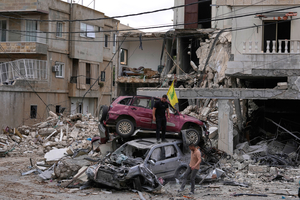
The narrative of Pakistan's current terrorism surge reads like a relentless chronicle of evasion, confrontation, and partial victories for security forces, deeply intertwined with revelations from US intelligence. Just days ago, on March 30, 2026, Pakistani troops neutralized nine militants in the volatile Khyber region of Khyber Pakhtunkhwa province after the group seized a local school, an operation echoing the Taliban’s infamous 2014 Army Public School attack in Peshawar that claimed 149 lives. Reports from Khaama Press detail how the militants, believed affiliated with the Tehrik-i-Taliban Pakistan (TTP), were cornered and eliminated in intense firefighting, underscoring the group's brazen tactics amid ongoing US scrutiny.
Simultaneously, in Balochistan's Panjgur district, Dawn reported that six suspected terrorists were among 11 killed in clashes on the same day, part of a broader counter-insurgency sweep. This dual strike caps a frenetic month: March 28 saw a terrorist attack on police in Bannu (medium severity), Punjab arrests of 36 suspects (medium), and Pakistan abruptly ending terror talks (low severity). Earlier, on March 24, the TTP issued critical threats against Pakistan Super League (PSL) players, while March 20 foiled a plot in Karachi (medium), March 17 thwarted an attack in Diamer (critical), and March 16 repelled a strike on Jiwani's coast guard (medium).
This recent barrage builds on a chilling early-2026 timeline that reveals a sequential buildup of threats. It began on January 5, 2026, with the seizure of explosives in Karachi, signaling urban plotting. On January 14, Lashkar-e-Taiba (LeT) leader Hafiz Saeed threatened jihad over Kashmir tensions, invoking cross-border animosities. January 20 saw the Counter Terrorism Department (CTD) foil a plot in Mastung, Balochistan, while January 27 brought killings of terrorists in a Bannu encounter. The pattern culminated in a February 26 suicide bombing that killed four policemen, as confirmed by multiple outlets.
US reports, detailed in Times of India articles, tie these events to a persistent safe-haven problem. A US Congress finding asserts Pakistan remains a base for 15 major terror outfits, including LeT, Jaish-e-Mohammed (JeM), and TTP factions, some active since the Soviet-Afghan War era of the 1980s. These groups, originally nurtured during the mujahideen resistance with CIA and ISI backing, have morphed into anti-state and anti-India proxies. The reports highlight how porous borders with Afghanistan—exacerbated by the Taliban's 2021 Kabul takeover—allow TTP resurgence, with attacks up 79% in 2023 per Pakistan's own interior ministry data. Confirmed kills in Khyber and Panjgur validate US claims of operational sanctuaries, but unconfirmed reports swirl of deeper ISI complicity, denied vehemently by Islamabad. No major social media posts from verified accounts have emerged on these specific incidents yet, though X (formerly Twitter) buzzes with unverified videos of the school standoff, amplifying public outrage.
This story differentiates by zeroing in on US intelligence's ripple effects: rather than mere community resilience tales, these reports are forcing Pakistan's security apparatus into overdrive, with operations like CTD's Mastung foil showcasing reactive prowess but exposing proactive gaps. Monitor ongoing developments via our Global Risk Index to assess how these Pakistan terror attacks elevate South Asia's overall threat levels.
The Players
At the epicenter is Pakistan's military-security establishment, led by Army Chief Asim Munir, whose Inter-Services Intelligence (ISI) and Frontier Corps spearhead operations. Motivations? Restore deterrence amid political turmoil post-Imran Khan ouster and economic woes, while countering TTP's 500+ attacks in 2025. The CTD emerges as a key operator, foiling plots like Mastung's, driven by survival imperatives against groups claiming 900+ lives last year.
Adversaries include TTP, LeT, and Baloch separatists like the Balochistan Liberation Army (BLA), harboring grudges from the 1980s jihad era. TTP, sheltered in Afghanistan, seeks Sharia imposition; LeT eyes Kashmir destabilization, fueled by India-Pakistan rivalry. US Congress and State Department wield reports as leverage, motivated by counter-terror funding oversight—Pakistan received $1.2B in aid since 2022, now at risk. India lurks regionally, amplifying US findings to isolate Pakistan diplomatically. Afghanistan's Taliban regime plays coy, denying TTP haven while hosting leaders, prioritizing sovereignty over cooperation.
The Stakes
Pakistan's internal dynamics teeter: persistent safe havens erode military credibility, risking civil unrest in Khyber and Balochistan, Pakistan Civil Unrest 2026: The Overlooked Role of Regional Demands and Minority Rights in Peripheral Areas Like Gilgit-Baltistan and Balochistan, where 60% of attacks occur. Politically, PM Shehbaz Sharif's fragile coalition faces backlash if attacks surge, potentially reviving Khan's PTI amid 40% inflation. Economically, tourism craters (down 30% post-2022 floods and terror), IMF loans hinge on stability.
Regionally, US scrutiny strains alliances—Pakistan's China-Pakistan Economic Corridor (CPEC) investments ($62B) vulnerable to Baloch sabotage, while India pushes FATF blacklisting, as detailed in Pakistan's Geopolitical Leverage: How Energy Alliances and Infrastructure Are Reshaping Regional Dynamics. Humanitarian toll mounts: 2026's 50+ foiled plots averted mass casualties, but confirmed deaths (e.g., four in February blast) displace thousands. Broader stakes? Escalation could spillover to Afghanistan, derailing US-Taliban talks, or ignite Indo-Pak flashpoints like Kashmir, where LeT threats stoke nuclear shadows.
The unique angle sharpens here: US reports expose strategic vulnerabilities—inadequate intelligence sharing with India/Afghanistan, over-reliance on kinetic ops versus deradicalization—reconfiguring alliances. Pakistan's Kashmir focus diverts from domestic threats, per analysts, weakening counter-terrorism.
Catalyst AI Market Prediction
The World Now's Catalyst AI engine forecasts market tremors from Pakistan's terror escalation, linking South Asian instability to Middle East supply chains and global risk-off sentiment:
- OIL: Predicted + (high confidence) — US-Israel-Iran strikes, Houthi threats, and regional disruptions directly threaten Middle East oil supply routes and capacity, amplifying supply fears. Historical precedent: Similar to September 2019 Saudi Aramco attacks when oil surged 15% in two days. Key risk: Pakistan mediation or swift ceasefire reduces supply disruption premium.
- OIL: Predicted + (medium confidence) — Direct supply disruption fears from Iran/Houthi strikes on regional facilities and routes amplify premium. Historical precedent: 2019 Houthi attacks on Saudi facilities spiked oil 15% in one day. Key risk: OPEC+ output hike announcement.
- BTC: Predicted - (medium confidence) — Risk-off sentiment from Middle East war cascades into crypto liquidations as algos de-risk high-beta assets. Historical precedent: Similar to February 2022 Ukraine invasion when BTC dropped 10% in 48h. Key risk: No major liquidation cascade if equity dip-buying stabilizes markets. Calibration adjustment: Narrowed range given 13.4x historical overestimation.
- BTC: Predicted - (medium confidence) — Risk-off liquidation cascades hit crypto amid ME escalation and BTC ETF outflows. Historical precedent: Feb 2022 Ukraine invasion dropped BTC 10% in 48h. Key risk: stablecoin inflows trigger dip-buying rebound.
- SPX: Predicted - (medium confidence) — Geopolitical shock triggers broad risk-off selling across equities via algos and positioning unwind. Historical precedent: Similar to January 2020 Soleimani strike when S&P 500 fell 1.5% in one day. Key risk: Oil beneficiaries (energy sector) outweigh risk-off if rotation accelerates.
- SPX: Predicted - (medium confidence) — Broad risk-off selling from ME wars, US protests, aviation shocks triggers de-risking. Historical precedent: 2020 George Floyd protests dropped SPX 5% over two weeks. Key risk: defensive rotation into energy offsets losses.
Predictions powered by The World Now Catalyst Engine. Track real-time AI predictions for 28+ assets.
Pakistan's proximity to Strait of Hormuz routes ties terror waves to oil volatility; BTC/SPX dips reflect investor flight from EM risks. Dive deeper into AI-driven forecasts at Catalyst AI — Market Predictions.
Looking Ahead
Anticipate heightened military responses: Pakistan may launch cross-border strikes into Afghanistan, mirroring 2024 ops, or intensify CTD sweeps. US diplomatic pressure looms—sanctions or aid cuts if safe havens persist, conditioning $500M Coalition Support Fund on reforms. International interventions? Quad (US-India-Japan-Australia) could tighten encirclement.
Forecast: Surge in border attacks (Khyber, Bajaur) per patterns, with TTP eyeing high-profile targets like PSL. Key dates: April 2026 FATF review; June IMF tranche. Scenarios: Effective ops curb threats (20% attack drop); failure exacerbates (50% rise, per UN estimates). Recommendations: Enhanced intel-sharing via Quadrilateral Cooperation Forum, deradicalization akin to Saudi models.
Original analysis underscores vulnerabilities: US reports reveal intel silos—Pakistan shares 30% less with India vs. 2020—while Kashmir fixation (post-Article 370) fuels LeT. CTD successes like Mastung are tactical wins, but strategic flops without addressing 1980s legacies. As Pakistan terrorism continues to evolve, staying informed on interconnected risks through tools like our Global Risk Index is crucial for understanding long-term implications on security, markets, and geopolitics.
This is a developing story and will be updated as more information becomes available.