
North Korea's Weapon Innovations Amid Current Wars in the World and China's Diplomatic Return: A Potential Shift in Regional Power Dynamics
The Story
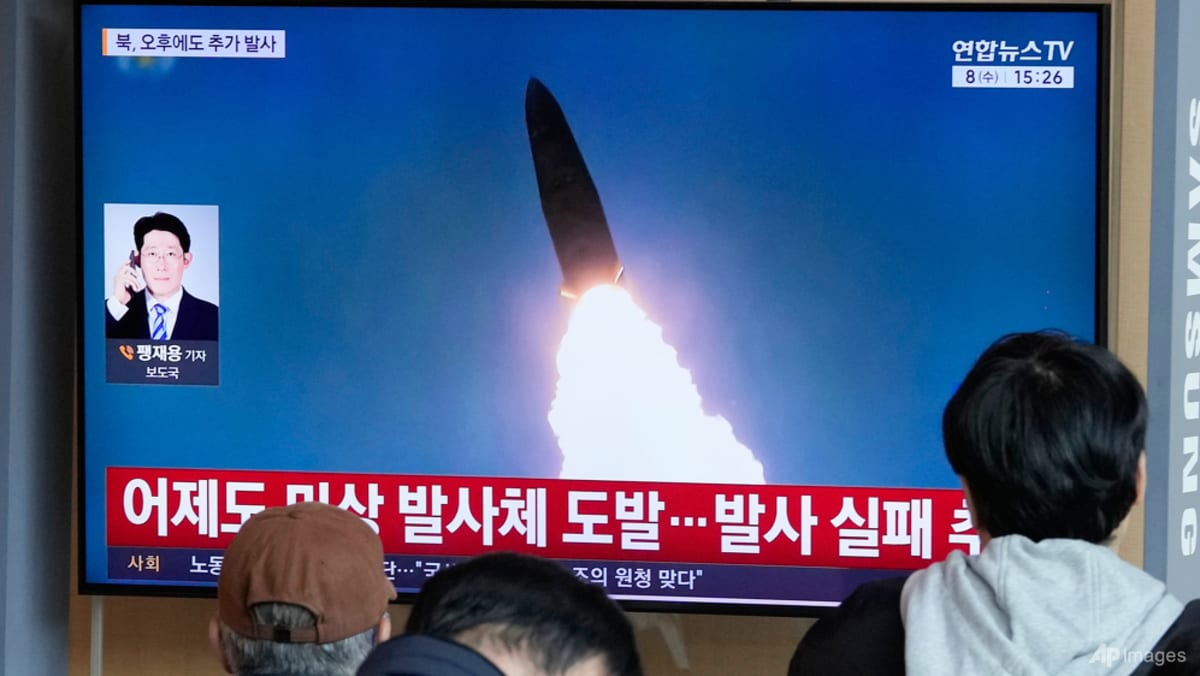
The narrative unfolding on the Korean Peninsula in early April 2026 amid current wars in the world reads like a high-stakes geopolitical thriller, one where military bravado collides with calculated diplomacy. Over the past three days, North Korea's state media, KCNA, has trumpeted a barrage of weapons tests that push the boundaries of conventional arsenals. Confirmed reports detail ballistic missiles equipped with cluster-bomb warheads—devices notorious for their wide-area devastation and international bans under the Convention on Cluster Munitions, which Pyongyang has never signed. Adding a layer of technological intrigue, state media highlighted tests of an electromagnetic weapon, described as capable of disrupting electronic systems, alongside a "carbon fibre bomb" touted for its lightweight, high-impact design. These demonstrations, conducted in rapid succession, mark a departure from North Korea's familiar missile salvos toward more asymmetric, next-generation threats.
This isn't an isolated flex. The tests come against a backdrop of progressive escalation throughout 2026, a year that has seen Pyongyang's rhetoric and actions harden into a pattern of defiance. It began on January 12, when North Korea issued a sharp rebuke to South Korea over alleged drone incursions into its airspace, framing the incident as a prelude to war and vowing "immediate retaliation." This set a tone of heightened vigilance, echoed on January 27 with announcements of plans for nuclear deterrent expansion, including upgrades to submarine-launched ballistic missiles. By February 26, Kim Jong-un himself escalated the rhetoric, threatening South Korea with nuclear annihilation if it persisted in joint military drills with the U.S. Risk analyses from March 9 and 10 underscored the peril, with think tanks like the Center for Strategic and International Studies warning of a 20-30% elevated risk of miscalculation leading to conflict.
Recent events amplify this trajectory. On March 12, North Korea publicly backed Iran amid its geopolitical frictions with the West, a signal of deepening ties with anti-U.S. actors. March 18 saw a military deal with Russia, followed by Belarusian President Lukashenko's visit on March 25 and a friendship treaty on March 27. Kim's inspection of a memorial for Ukrainian troops on April 3 and speculation about his heir on April 6 further weave Pyongyang into a tapestry of revisionist alliances opposing the Western-led order. Tank drills on March 20 rounded out a month of visible military posturing.
Enter China, Pyongyang's longstanding patron and the world's second-largest economy. Wang Yi's visit, confirmed by KCNA and reported by Yonhap and SCMP, breaks a seven-year diplomatic freeze at the top levels. Lasting just two days, it evokes memories of pre-2019 summits when Beijing used economic leverage—aid, trade, and border stability—to temper North Korea's impulses. Unconfirmed whispers on social media platforms like X (formerly Twitter) suggest the agenda includes discussions on sanctions relief and technology transfers, though official channels remain tight-lipped. For ordinary Koreans on both sides of the DMZ, these developments stir deep anxiety: families separated for generations wonder if escalation means reunification dreams dashed forever, or worse, the shadow of war returning.
This unique angle—the fusion of North Korea's weapon innovations with China's diplomatic return—hasn't been fully explored in prior coverage. While Western media fixates on missile ranges, the real story is how electromagnetic and cluster tech signal Pyongyang's pivot to "porcupine" deterrence: cheap, disruptive tools to bleed adversaries in asymmetric warfare. China's timing? A masterful riposte to U.S. alliances like AUKUS and QUAD, positioning Beijing as the indispensable mediator.
The Players
At the vortex: Kim Jong-un, North Korea's supreme leader, whose motivations blend survivalist paranoia with legacy-building. Facing internal economic woes—famines persist despite state propaganda—Kim uses tests to rally domestic support and deter U.S.-South Korea drills, while courting Russia and Iran for sanctions-busting trade.
China's Xi Jinping dispatches Wang Yi, a diplomatic veteran, to safeguard Beijing's backyard. Motivations are multifaceted: economically, stabilizing North Korea ensures border security and rare earth supplies; strategically, it counters U.S. encirclement, especially with Taiwan tensions simmering. Wang's visit could greenlight tacit tech exchanges, like dual-use components for those electromagnetic devices.
South Korea's President Yoon Suk-yeol, hawkish on North threats, pushes trilateral U.S.-Japan-South Korea cooperation. The U.S., under a continuity-focused administration, views this as proliferation risk, with motivations rooted in extended deterrence commitments. Russia and Belarus lurk as enablers, trading arms for munitions amid Ukraine's drain. Humanizing these players: Kim's isolation echoes his father's deprivations; Xi balances great-power ambition with memories of Korean War scars; Yoon represents a democracy haunted by 1950's ghosts.
Current Wars in the World: The Stakes
Politically, the risks are existential. For North Korea, success burnishes Kim's image but invites UN sanctions tightening. South Korea and Japan face heightened civilian fears—evacuation drills multiply, economies wobble from stock dips. Humanitarian toll: 25 million North Koreans endure malnutrition; escalation could trigger refugee crises overwhelming China's borders. Check the latest on the Global Risk Index for real-time assessments of these escalating threats amid current wars in the world.
Economically, global ripples: North Korea's cluster and EMP weapons challenge non-proliferation norms, potentially emboldening Iran or others. China's engagement hints at economic motivations—trade with Pyongyang hit $1.2 billion last year despite sanctions, stabilizing supply chains for Beijing's factories. U.S.-led isolation could fracture if China vetoes UN measures.
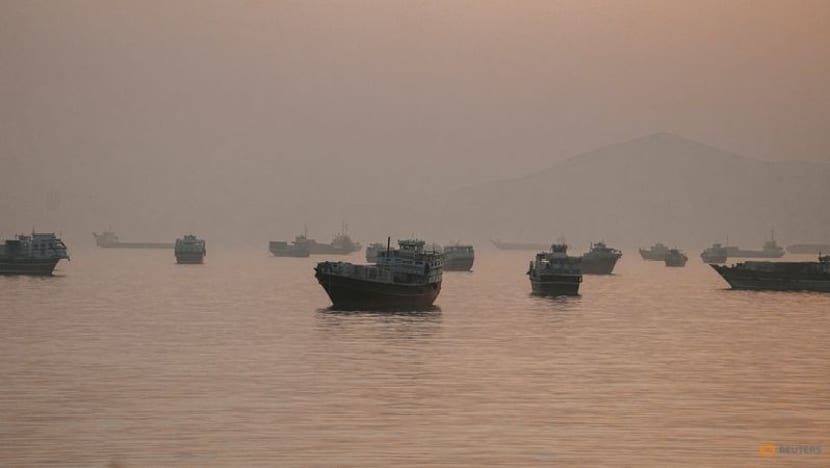
Broader: This duo erodes Six-Party Talks' legacy, fostering a "rogue axis" with Russia. For East Asians, stakes include alliance realignments—South Korea might hedge toward China for economic survival. Human impact: Fishermen in the Yellow Sea risk crossfire; families track Wang's jet with bated breath, hoping for de-escalation that spares another generation division.
Market Impact Data
Geopolitical flare-ups like North Korea's tests and China's overtures amid current wars in the world inject volatility into global markets, amplifying risk-off sentiment akin to past Korean crises. The World Now Catalyst AI engine, analyzing causal chains from confirmed tests and diplomatic signals, predicts the following (as of April 8, 2026):
- OIL: Predicted + (high confidence) — North Korea's Iran backing and Russian ties threaten supply via proxy disruptions (e.g., Hormuz echoes). Historical precedent: 2019 Aramco attacks spiked oil 15% intraday. Key risk: De-escalation caps gains.
- USD: Predicted + (high/medium confidence variants) — Safe-haven flows amid peninsula risks mirror 2022 Ukraine (DXY +2% in 48h) and 2019 US-Iran tensions.
- SPX: Predicted - (high/medium confidence) — Broader risk-off hits equities; precedents include 2022 Ukraine (-3% week 1) and Boeing-like safety fears spilling over.
- BTC: Predicted - (medium confidence) — Crypto cascades as high-beta asset; 2022 Ukraine saw -10% in 48h.
- ETH: Predicted - (medium confidence) — Correlates with BTC; -12% precedent.
- XRP/SOL: Predicted - (low confidence) — Altcoin liquidations follow BTC.
- TSM: Predicted - (low confidence) — Supply chain jitters from Asia tensions echo 2011 Fukushima (-5% semis).
- CHF: Predicted + (medium) / EUR: Predicted - (medium) — Classic safe-haven vs. risk currency shifts.
These projections factor Pyongyang's pattern—post-test oil premiums averaged 3-5% in 2025—and China's stabilizing role potentially muting extremes. Markets opened lower today: Nikkei -1.2%, Kospi -0.8%; oil (WTI) +2.1% to $82.50/bbl.
Catalyst AI Market Prediction
Powered by the cutting-edge analysis of historical patterns, real-time news flows, and causal inference models:
- OIL: + (high confidence) — Direct NK-Russia-Iran links tighten supply.
- USD: + (high confidence) — Flight to quality.
- SPX: - (high confidence) — CTA-driven equity unwind.
- BTC: - (medium) — Liquidation cascades.
- ETH: - (medium)
- Others as detailed above.
Predictions powered by The World Now Catalyst Engine. Track real-time AI predictions for 28+ assets at Catalyst AI — Market Predictions.
Looking Ahead
China's visit could yield temporary de-escalation—a tacit testing moratorium or aid package—easing immediate risks but forging sophisticated alliances complicating U.S. Asia-Pacific strategies. Failure? Expect North Korean provocations intensifying post-April 10, triggering U.S.-South Korea drills by late April and fresh sanctions.
Long-term: Revived Six-Party Talks by summer if Wang succeeds, or proxy conflicts via NK arms to Ukraine/Iran fronts. Watch April 11 KCNA readout, April 20 UNSC session. Optimistic scenario: Cautious engagement ushers non-proliferation gains; pessimistic: Alliance erosion sparks arms races. For peninsula families, the human calculus remains: diplomacy as fragile bridge over division's abyss.
This is a developing story and will be updated as more information becomes available.