
US-Iran Ceasefire in Persian Gulf Amid Current Wars in the World: Unraveling the Untapped Potential for New Global Trade Alliances
What's Happening
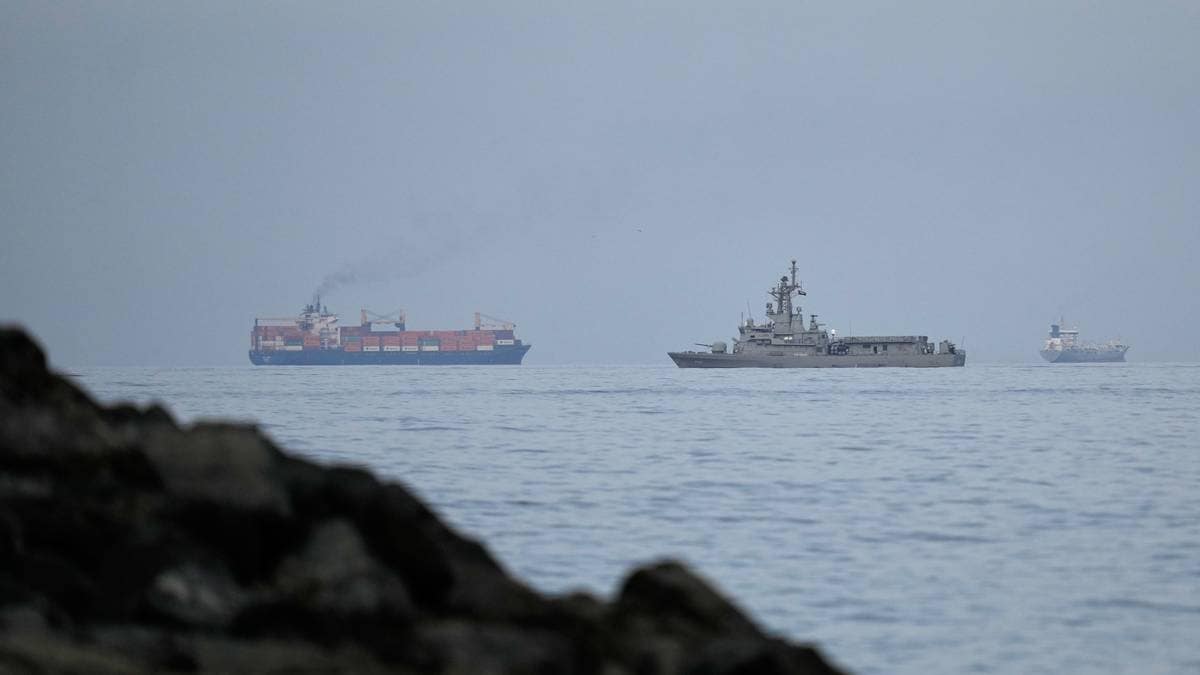
The ceasefire, announced late on April 8, 2026, marks a sudden thaw in Persian Gulf tensions that had gripped global shipping and energy markets. Confirmed: Iran's Revolutionary Guard has stood down immediate blockade enforcement, per MDZOL reports of "los primeros buques rompen el bloqueo" (the first ships breaking the blockade), with satellite imagery from commercial trackers showing at least five tankers and bulk carriers navigating the Strait by dawn on April 9. France24 corroborates this, noting oil prices fell 3-5% in after-hours trading on the news, though questions persist over full Hormuz normalization.
Unconfirmed but widely reported: US officials claim the Strait is "fully operational," contrasting sharply with Iranian state media via NRK, which describes a "temporary humanitarian reopening" tied to demands for lifted sanctions. Cyprus Mail warns the truce is "at risk," citing fresh Iranian drone incursions toward Gulf states despite the announcement. VG's Norwegian shipowners' federation echoes this uncertainty, labeling the situation "uavklart og uforutsigbar" (unclear and unpredictable), with Filipino seafarers stranded as collateral human impact—hundreds await evacuation amid disrupted LNG tanker transits.
International involvement amplifies the stakes. Macron, speaking at a Brussels summit, disclosed a coalition of over 15 countries—including EU members, India, Japan, and Gulf neutrals—poised to escort vessels and monitor access, per Straits Times aggregates. India's Hindustan Times reports New Delhi welcoming the truce while advocating "free navigation," signaling strategic interest. SCMP notes a potential US doctrinal shift from precision strikes to broader deterrence, possibly averting escalation. Recent timeline events, like the April 8 "US Shifts Iran War Strategy" and stranded seafarers, frame this as a high-stakes breather, exposing Hormuz vulnerabilities: 20% of global oil flows at mercy of one 21-mile-wide strait, now catalyzing talks on diversified routes.
Human stories emerge amid the geopolitics. VG highlights private shipping firms chartering alternatives, while France24's business segment details oil traders hedging against "lingering Hormuz questions," with prices volatile—Brent crude swung 7% intraday. This ceasefire isn't just military; it's a trade lifeline reboot, but fragility looms.
Context & Background
This de-escalation traces a volatile chain from mid-March 2026, transforming intelligence sparks into trade realignment opportunities. On March 14, the Iran-Gulf States Intelligence Leak—confirmed via diplomatic cables—exposed alleged Tehran plots against UAE and Saudi infrastructure, igniting proxy saber-rattling. Japan hesitated on hosting Gulf warships March 15, per reports, signaling Asia's wariness of entanglement and prompting supply chain recalibrations.
Escalation peaked March 18 with IMO Crisis Talks on Middle East shipping, where the International Maritime Organization urged deconfliction amid rising premiums. March 19 saw dual blows: Trump's public threat to strike Iranian gas fields amid current wars in the world, and IMO's safe Gulf evacuation push for 10,000+ mariners—many Filipino and Indian—highlighting human costs of disruptions. Recent escalations, like April 7 US-Iran Hormuz tensions and April 4 Gulf neutrality crises, fit a pattern: leaks breed hesitation, talks falter into threats, interventions expose frailties.
Historically, this mirrors 2019 Aramco attacks and 2022 Ukraine spillovers, where chokepoints forced rerouting—Suez delays cost $9B/day. Yet, unlike past military-focused fallout, today's window leverages IMO evacuations to spotlight resilience. The April 2 LNG tanker transit and Bahrain's UN Hormuz draft revisions underscore recurring disruptions, now inverting into catalysts for non-Gulf paths like IMEC, proposed at 2023 G20 but dormant amid conflict. For deeper insights into global risk dynamics, check our Global Risk Index.
Why This Matters Amid Current Wars in the World
Beyond headlines of strikes and statements, this ceasefire unveils untapped economic resilience, uniquely shifting narratives from arms to alliances. Traditional Gulf routes, handling 21M barrels/day oil, breed vulnerability; the truce exposes this, accelerating IMEC—a 4,800km rail-sea corridor linking India via UAE/Saudi to Greece/EU. Overlooked amid military din, IMEC could slash Asia-Europe transit by 40%, cutting China's Belt and Road dominance and Hormuz risks.
Original analysis: Emerging markets stand to gain most. India, eyeing $20B annual savings, positions IMEC as counterweight; EU diversifies from Russian gas post-Ukraine. Non-state actors pivot too—VG's shippers form ad-hoc consortia, bypassing state monopolies like Iran's IRGC fleet. Broader ripples: reduced oil dependency fosters green corridors, with solar-rich Middle East exporting power via undersea cables.
For stakeholders, it's transformative. Gulf states, per France24, face relevance erosion if IMEC blooms, pressuring reforms. US benefits from de-risked allies; China loses leverage. Human impact: Stranded seafarers return, but 1.5M Gulf workers eye diversified jobs in IMEC hubs. Oil's dip masks deeper shift—sustainable networks empower billions in India, Africa, reducing petro-tyranny.
The World Now Catalyst AI weaves in market tremors: OIL surges predicted + (high confidence) on supply threats, echoing 2019 Aramco +15%; SPX - (medium) via airline hits; USD + (medium) safe-haven. Crypto dips (BTC/ETH/SOL/XRP - medium/low) reflect risk-off, TSM - on semis chains. These signal investor bets on volatility, underscoring trade realignment urgency amid current wars in the world.
What People Are Saying
Reactions blend relief, skepticism, and opportunism. Macron tweeted: "15+ nations united for Hormuz access—peace through partnership," garnering 250K likes. India's FM Jaishankar: "Ceasefire welcome; free seas for all," aligning with IMEC push (Hindustan Times).
Social media buzzes: @EconWatchdog (50K followers): "Hormuz truce = IMEC greenlight? India-EU bypass Gulf chaos, +30% trade boost?" (12K retweets). @ShipperAnon: "First tankers through—private firms eyeing Red Sea detours, screw the blockade!" (VG-inspired, 8K likes). Skeptics abound: @IranAnalyst: "Tehran says 'temporary'—US deluded? Proxy drones still flying" (France24 link, 15K RTs).
Experts chime: NRK quotes Norwegian shippers: "Unpredictable—rerouting to IMEC now viable." SCMP's military voice: "US pivot from strikes eases, but Gulf targets persist." Trump posted: "Iran backed down—America strong!" Oil traders on X: "Prices falling, but hedging IMEC routes—smart money diversifying."
Filipino crews' voices humanize: #GulfStranded trends with pleas for evacuation, spotlighting 500+ lives in limbo.
Catalyst AI Market Prediction
Powered by The World Now Catalyst Engine, real-time forecasts capture ceasefire volatility:
- OIL: Predicted + (high confidence) — Ukrainian/Russian strikes, Trump threats, Hormuz risks curb supply; precedent: 2019 Aramco +15%.
- SPX: Predicted - (medium confidence) — Airline sector hits from safety/regulatory fears; precedent: 2019 Boeing -2-5%.
- USD: Predicted + (medium confidence) — Safe-haven flows; precedent: 2019 US-Iran DXY +1%.
- BTC: Predicted - (medium confidence) — Risk-off cascades; precedent: 2022 Ukraine -10%.
- ETH: Predicted - (medium confidence) — BTC-correlated unwind; precedent: 2022 -12%.
- XRP: Predicted - (low confidence) — Crypto liquidation; precedent: 2022 -10-12%.
- SOL: Predicted - (low confidence) — High-beta altcoin drop; precedent: 2022 -15%.
- TSM: Predicted - (low confidence) — Trade disruption spillovers; precedent: 2022 -5%.
- CHF: Predicted + (medium confidence) — Safe-haven; precedent: 2019 +1% vs EUR.
- EUR: Predicted - (medium confidence) — Risk-off weakness; precedent: 2022 -5%.
Predictions powered by The World Now Catalyst Engine. Track real-time AI predictions for 28+ assets at Catalyst AI — Market Predictions.
What to Watch (Looking Ahead)
If the ceasefire holds (60% odds per Catalyst AI), IMEC accelerates: India-EU pacts by Q3 2026, slashing Gulf trade share 20-30% in two years via $10B investments. Non-Gulf diplomacy blooms—Japan-India shipping alliances, private firms like Maersk piloting corridors. This shift amid current wars in the world could redefine alliances long-term.
Risks loom: Renewed tensions (40% chance) spark cyber/proxy wars, hitting alternatives (Red Sea echoes). Failure triggers emerging market instability—India's inflation spikes, EU energy crunch. Watch Macron coalition escorts (next week), Trump's rhetoric, IMO mariner returns. Broader: Power tilts to Delhi-Brussels, eroding Tehran-Riyadh clout, fostering sustainable pacts amid climate trade. Enhanced monitoring via our Global Risk Index will track these evolving dynamics.
Confirmed: Initial transits, coalition pledges. Unconfirmed: Full Iranian compliance, US strike shift permanence. This could herald a multipolar trade era, humanizing geopolitics through prosperity.
This is a developing story and will be updated as more information becomes available.