
Nepal Floods in natural disasters Leave 584 Dead and 2,482 Missing as Upstream Lake Threatens Further Disaster
Catastrophic flash floods and landslides triggered by a massive collapse on Langtang Lirung in Nepal amid natural disasters have killed at least 584 people and left 2,482 missing across Nepal and Tibet, with rescue operations repeatedly halted by the risk of further flooding from an unstable upstream lake. [2]
Death Toll and Missing Persons
At least 584 people were dead and 2,482 missing across Nepal and Tibet by Friday evening after the Bhote Koshi-Trishuli disaster, with Nepal accounting for 579 deaths and 1,924 missing and Tibet reporting five dead and 558 missing. [2] The scale remained fluid, as Nepal Police maintained a higher list of those unaccounted for; tunnel searches continued and large numbers of people remained cut off or out of communication. [2] Rescue teams on both sides of the border were repeatedly forced to reassess and retreat Friday as an unstable barrier lake overflowed into Bhote Koshi river, sent a fresh surge downstream and briefly halting operations. [2] Hours later, another avalanche dumped an estimated 50,000 cubic metres of ice debris. [2] Satellite images later showed an even more worrying development — a second, larger upstream lake was still growing and had no visible outlet. [2] MEA spokesperson Randhir Jaiswal said 320 Indian nationals in Nepal remained “uncontactable” on Friday, up from 290 earlier, while around 100 persons of Indian origin holding other nationalities were also out of contact. [2] Jaiswal said it was a “dynamic situation”. [2] India had not confirmed any deaths by Friday evening and MEA said it was seeking clarity from Nepalese authorities. [2] MEA said at least 84 nationals had been rescued in Nepal — 63 workers from Trishuli-1 and 21 pilgrims from Tamil Nadu. [2] The group of 21 reached Delhi on Friday. [2] In addition, MEA said 149 Indians crossed into Nepal from Tibet on Friday and around 400 more were safe on the Chinese side. [2] In Nepal, the official missing count nearly doubled within hours to close to 2,000 as authorities added fresh lists from devastated settlements, hydropower projects and tourism groups. [2] The country’s National Disaster Risk Reduction and Management Authority (NDRRMA) said 4,451 people had been rescued. [2] The rapidly changing figures reflected the enormous task of reconciling reports from families, district administrations, employers, tour operators and security agencies as rescuers reached previously inaccessible areas. [2] In Tibet’s Gyirong County, China reported five people dead and 558 missing, including 260 foreign nationals. [2] Beijing had not released a nationality-wise breakdown of the missing foreigners as yet. [2] Chinese authorities separately said they had moved all stranded tourists out of the accessible Gyirong area. [2] A total of 555 tourists were evacuated, while 499 villagers and construction workers affected by the disaster were moved to shelters or other safe locations. [2] Xinhua said no tourists remained stranded in the areas covered by that evacuation operation, although hundreds of people remain officially missing in the wider disaster zone. [2]
Trigger and Immediate Cause
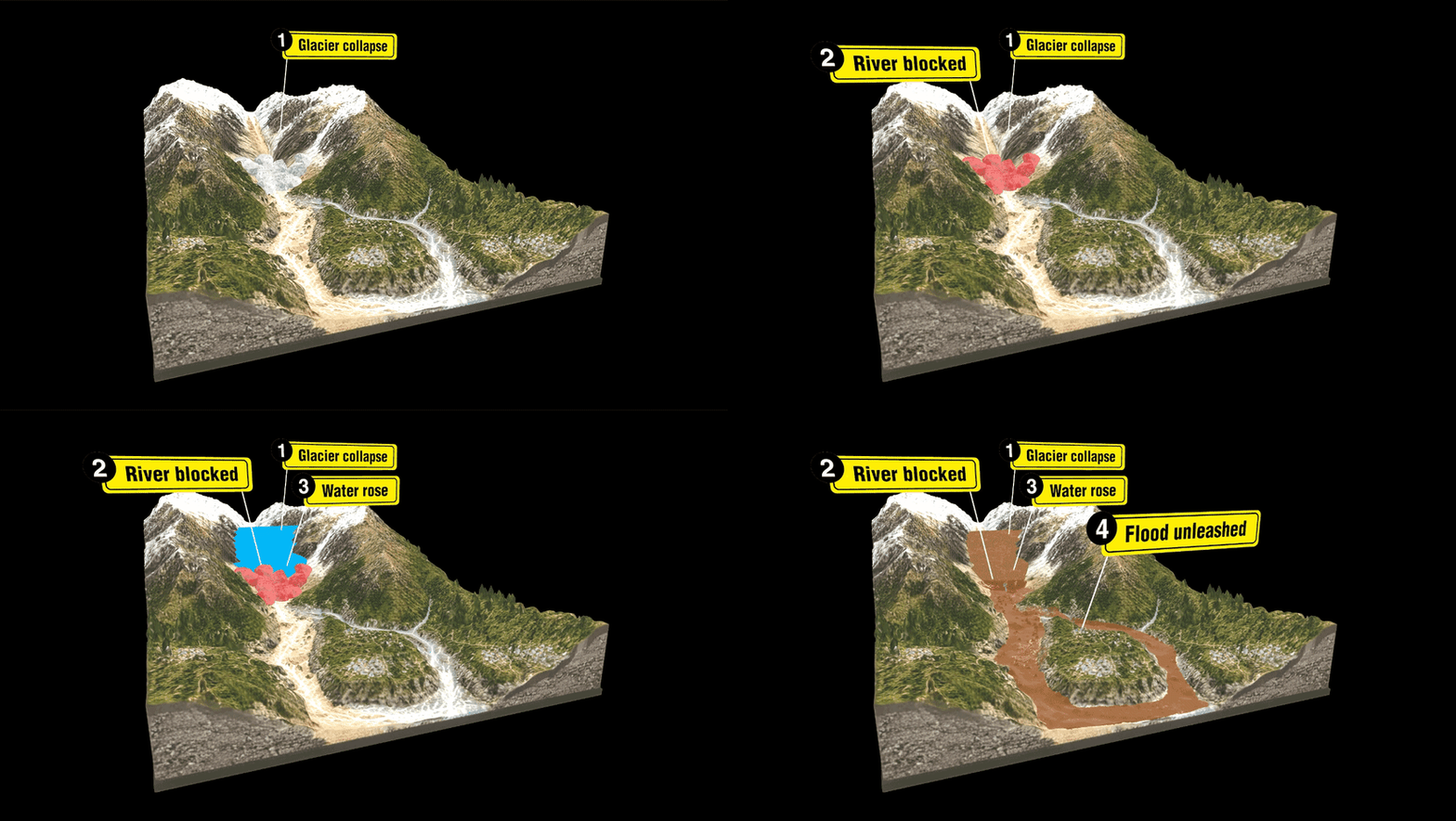
On Wednesday (Aug 26) morning, catastrophic flash floods and landslides tore through the Nepal-Tibet border region. [1] The disaster started in the high-altitude peaks of the Himalayas, where a devastating avalanche of ice, rock, mud and water smashed into villages and a border port. [1] The disaster appears to have begun high on the north side of Langtang Lirung, a mountain in Nepal near the border with Tibet. [1] And while the disaster was earlier thought to be caused by a 4.4-magnitude earthquake, subsequent analysis by the United States Geological Survey found that the seismic energy had instead been generated by the collapse and resulting debris flow. [1] Many conventional flood-warning systems rely heavily on rainfall, but there was no significant rainfall immediately before this disaster. [1] Hatim Sharif, a hydrologist at the University of Texas San Antonio, told AFP that the lack of rainfall beforehand would have undermined conventional flood-warning systems. [1]
Scale of Destruction
Entire villages were wiped out in seconds. [1] Roads, bridges and power stations were destroyed as a torrent of water, ice, mud and rock surged through the Himalayan valleys. [1] The terrifying force flattened buildings and swept away vehicles in its path. [1] Multiple videos captured the moments when entire locations were transformed in mere seconds. [1] Surveillance cameras mounted at Gyirong Port caught the moment the disaster unfolded, showing a massive, brownish mudflow surging down the canyon from the Nepali side of the border, directly engulfing the Gyirong Port building and people attempting to escape. [1] Satellite images of the region also show just how much the rivers’ borders had expanded. [1] The satellite images below of Syapru Besi in Nepal before and after the flooding show the extent of how much the river overflowed. [1] The extreme topography of the Himalayas made matters worse. [1] Steep slopes accelerated the material downhill, while narrow valleys channelled the flow towards settlements below. [1]
Impact on Hydropower Projects and Tourists
Hydropower sites accounted for an extraordinary share of those unaccounted for. [2] NDRRMA said 933 people linked to projects remained missing, while the ministry of energy said reports from promoters indicated that more than 1,000 workers had at one stage lost contact. [2] “There are reports that more than a thousand people working on hydropower projects have lost contact,” ministry spokesperson Mohan Shakya said. [2] The largest concentration was at the Korean-funded 216MW Upper Trishuli-1 project, where workers had taken shelter inside tunnels as floodwater and debris destroyed access routes. [2] Initial information indicated around 400 people were inside the tunnel and another 176 outside were uncontactable. [2] Officials said about 40 Indians and eight Koreans working at the project were unaccounted for; around 100 Chinese workers had also been employed there, with some rescued. [2] Project liaison officer Giri Adhikari said debris had entered the roughly 10km tunnel. [2] “There should be no shortage of oxygen inside. There is a shortage of food and water. If rescued in time, it is estimated that those inside are still alive,” he said. [2] With roads and tunnel approaches washed away, Adhikari said rescuers could reach some access points only by being lowered from helicopters along the cliff. [2] Other hydropower projects also reported large numbers “out of contact”. [2] Officials listed 93 at Rasuwagadhi Hydropower Project alone. [2] France says four nationals missing after Nepal flood. [4] [5]
Ongoing Risks and Rescue Challenges from natural disasters
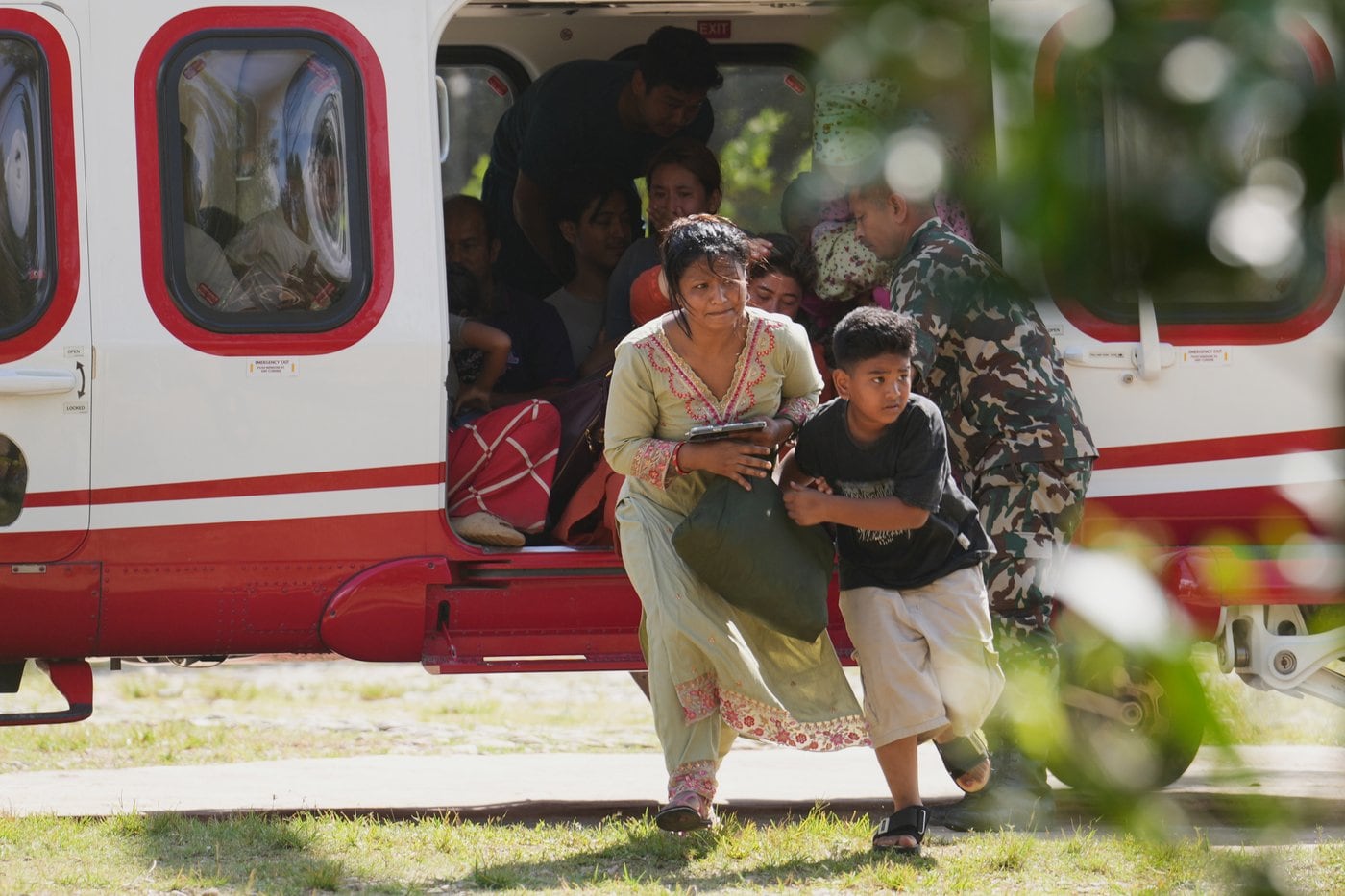
Authorities have warned of fresh flooding from dammed lakes upstream of the disaster sites. [1] Debris from the disaster has blocked the Bhote Koshi River, forming a new lake. [1] Water is building up behind the new barrier, and there is a high risk that it could breach, sending a new surge of water downstream. [1] On Aug 28, rescue operations in Nepal and Tibet were briefly halted after an upstream dammed lake started overflowing. [1] Rescue efforts resumed later in the day. [1] Continued overflow could trigger another flash flood or mudslide, making it extremely dangerous for rescuers to proceed towards the priority search area. [1] For the nearly 2,000 still missing, rescue teams are racing to find them, even as the risk of another disaster looms. [1]
Climate Context and Warning Limitations
But as to what led to the collapse in the first place, much remains unclear for now. [1] Scientists say it is too early to blame climate change directly, but warming temperatures could be making the Himalayan landscape less stable. [1] University of Dayton geosciences professor Umesh Haritashya said frozen water in cracks within the mountains can act as a "glue" that helps hold rocks and soil together. [1] “As the climate changes, as the weather gets warmer, the glue is melting,” he told CNA’s Asia First. [1] By the time the torrent was moving through the narrow Himalayan valleys, there was very little time to escape. [1]
What to watch next: a second, larger upstream lake was still growing and had no visible outlet.