Natural Disasters Strike as Volcanic Ash From Anak Krakatau Halts 209 Flights at Jakarta Airport
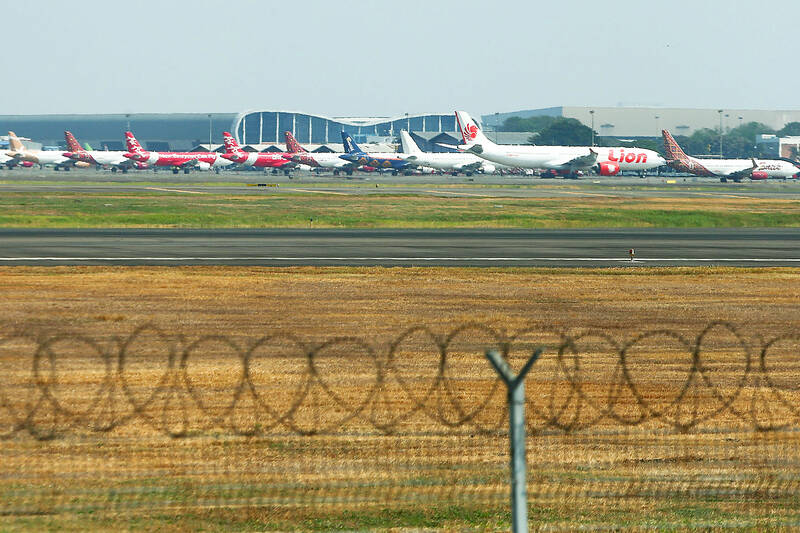
In the wake of natural disasters, Indonesia’s Soekarno-Hatta International Airport suspended flights until 1:30pm local time on Sunday after volcanic ash from the erupting Mount Anak Krakatau was detected over Jakarta, affecting more than 200 flights and over 22,000 passengers. [5]
Airport Suspension Extended
Indonesia’s Soekarno-Hatta International Airport extended its suspension of flight operations until 1:30pm local time on Sunday due to volcanic ash from the ongoing eruption of Mount Anak Krakatau. [5] The suspension, initially scheduled until 5:30am, was subsequently extended to 9:30am and then 1:30pm. [5] More than 22,000 passengers have been impacted by the suspension, which affected 209 flights, including several international flights, Indonesia’s transportation ministry said. [5] An earlier airport suspension had been due to end at 5:30am, affecting 33 flights, including 16 international cancellations and seven delays, Indonesia’s Ministry of Transportation said. [1] Director General of Civil Aviation Lukman F Laisa said the extended suspension followed a “paper test” conducted between 12:35am and 1:05am that confirmed the presence of volcanic ash at the airport. [1] “Safety remains the top priority in every operational decision, including flight schedule adjustments made by airlines,” Lukman said. [1] Singapore Airlines was among the carriers affected, cancelling two flights to and from Jakarta on Saturday and delaying two more into Sunday. [1] International flights scheduled for Sunday that were delayed or cancelled include some to or from Singapore, Kuala Lumpur, Guangzhou, Hong Kong and Doha, according to the airport's website. [5] Monitoring data from Sultan Hasanuddin International Airport showed 21 flights were affected by the volcanic activity on Sunday, with 12 flights canceled and nine others delayed. [3]
Ongoing Eruption Details
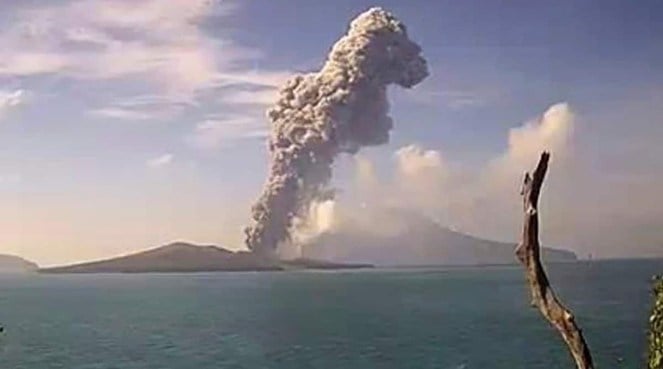
Anak Krakatau began erupting late on Friday, producing a fountain of lava and booming sounds that could be heard up to 700km away, according to the meteorological agency BMKG. [1] Two new eruptions were recorded on Sunday, the volcanology agency warned. [1] Ash was identified as high as 6,000 metres on the Java side of the volcano, and a plume of up to 15,000 metres on the Sumatra side and some parts of Banten province in Java, BMKG posted on its website. [1] Mount Anak Krakatau has been erupting continuously, with its highest-intensity activity of 2026 beginning Friday night and continuing through Sunday. [2] The heightened activity has also produced rumbling and booming sounds heard as far as coastal areas of Banten and Lampung. [2] Volcanic ash had spread to several parts of Indonesia by Sunday, including the greater Jakarta area. [2] Anak Krakatau is roughly halfway between Java and Sumatra in Indonesia’s vast island chain, which sits on the Pacific “Ring of Fire,” where earthquakes and volcanic eruptions are frequent. [4] Volcanic ash poses a serious hazard to aircraft, capable of damaging jet engines and reducing visibility. [1]
Health Warnings Issued Amid Natural Disasters
Griffith University epidemiologist Dicky Budiman has warned of health risks from volcanic ash and advised people on how to safely clean themselves and their surroundings after exposure. [2] “Volcanic ash differs greatly from ordinary dust because it contains silica resembling sharp glass fragments that can damage exposed organs, including the eyes, nose, mouth and skin,” Dicky told ANTARA in Jakarta on Sunday. [2] Volcanic ash exposure can cause irritation, including red, painful, watery eyes and light sensitivity, and may cause scratches or other eye injuries, he said. [2] Ash can also cause conjunctivitis, an inflammation of the eye lining that can result in redness, burning and sensitivity to light, Dicky said. [2] In the respiratory tract, exposure can irritate the nose and throat, causing a runny nose, dry cough and, after heavy exposure, shortness of breath or chest pain. [2] Symptoms can worsen in people with asthma or chronic bronchitis, potentially causing phlegm-producing coughs, breathing difficulties or wheezing, he said. [2] “People should avoid strenuous activity when volcanic ash levels are high because faster breathing can draw ash particles deeper into the lungs,” he said. [2] Fresh volcanic ash may also carry an acidic coating that can intensify irritation to the lungs and eyes before being washed away by rain, Dicky said. [2] People should clean ash as soon as possible using water and avoid rubbing surfaces or shaking clothing, which could spread particles further. [2] He also advised people to keep windows and doors tightly closed to prevent volcanic ash from entering their homes. [2] Doors should be opened only when necessary, such as when people need to leave, while covering exposed skin with clothing can reduce ash exposure. [2] People can protect their lungs by wearing a properly fitted mask, such as an N95, which covers the nose and mouth. [2] “Because this is sharp silica dust, use eye protection such as goggles. If your eyes become irritated, rinse them immediately with clean water,” Dicky said. [2] People experiencing shortness of breath, chest pain or eye problems should seek medical attention promptly to minimize the health effects of volcanic ash, he said. [2] “Stay alert, follow updates from official government sources and do not panic, because panic can harm us all,” Dicky said. [2]
Local Impact and Precautions
Indonesia’s disaster mitigation agency, BNPB, “urges the public to remain calm while increasing vigilance. In the event of ashfall, people are advised to wear masks and eye protection, reduce outdoor activities, cover water sources and exercise caution when driving, as volcanic ash can reduce visibility,” said spokesperson Berton Panjaitan. [4] Several schools cancelled activities on Saturday with students and residents suffering eye irritation from the ash, while fishermen cancelled their fishing trips due to the eruption, local media outlet Kompas reported. [4] The disaster mitigation agency said on Saturday there was no imminent risk of tsunami from the volcano. [4]
Historical Context of the Volcano
Anak Krakatau emerged from the sea in the 1920s in the caldera left by the catastrophic 1883 eruption of Krakatoa, one of the deadliest volcanic events in recorded history. [1] The volcano has erupted periodically in the decades since, including a 2018 eruption that triggered a partial collapse of its crater and a tsunami that killed more than 400 people along the coasts of Java and Sumatra. [1] Anak Krakatau, which means child of Krakatau, emerged a century ago from the area once occupied by Krakatau, then known as Krakatoa. [4] Krakatoa was destroyed in 1883, when its massive eruptions killed more than 36,000 people in a series of tsunamis. [4]
What to watch next: Authorities will continue monitoring the situation with airlines, air navigation services and Indonesia’s meteorological agency as the eruption continues.