
712 Flights Disrupted as Indonesia Shuts Eight Airports after Anak Krakatau Eruption in Natural Disasters
Indonesia's Anak Krakatau volcano erupted for 30 seconds at 3:53 a.m. on Sunday after showing signs of activity since Friday, prompting authorities to close eight airports including Jakarta's Soekarno-Hatta due to drifting volcanic ash and stranding more than 150,000 passengers in these natural disasters. [1] [2] Camera footage showed lava flares from the volcano during the event. [1]
Eruption Details and Immediate Impact
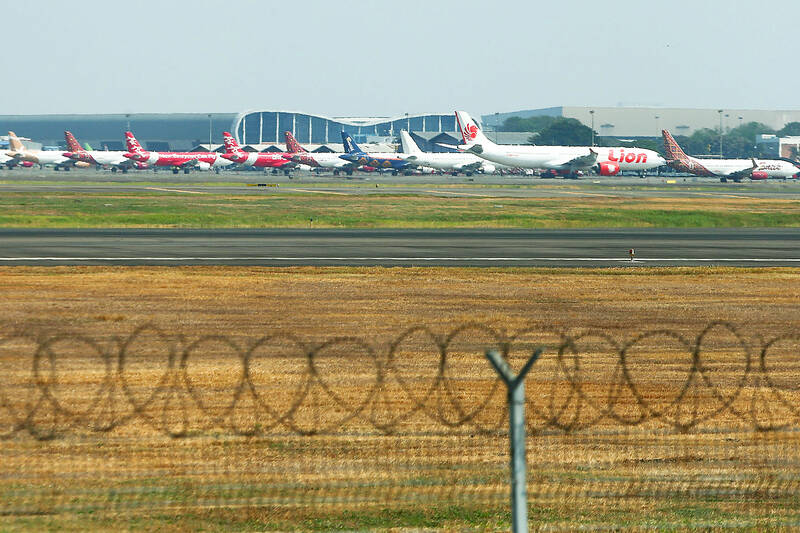
Indonesia’s Geological Agency said the volcanic island in Indonesia’s Sunda Strait had showed signs of activity since Friday before erupting for 30 seconds at 3:53 a.m. on Sunday. [1] [2] The eruption was the strongest during the current period of unrest. [1] [2] No casualties were reported and no evacuation order was issued. [1] The nearest settlement is more than 16 km away, but authorities warned residents and visitors to stay at least 3 km from the active crater. [1] Volcanic ash spread across parts of Jakarta and Lampung Province. [1] Airplanes were parked as Soekarno-Hatta International Airport closed its operations. [1] The operations at seven other airports were also suspended. [2] Indonesia has temporarily closed eight airports until midnight local time as a change in wind direction raised fears that volcanic ash from the Anak Krakatau eruption could spread to a wider area. [2]
Scale of Airport Closures and Flight Disruptions
The airports affected are Soekarno–Hatta International Airport (CGK) in Jakarta, Halim Perdanakusuma International Airport (HLP) in Jakarta, Radin Inten II Airport (TKG) in Bandar Lampung, Husein Sastranegara Airport (BDO) in Bandung, Pondok Cabe Airport (PCB) in South Tangerang, Budiarto Airport (RTO) in Tangerang (Curug), Muhammad Taufiq Kiemas Airport (TFY) in Krui, and Atung Bungsu Airport (PXA) in Pagar Alam. [2] Transport Minister Dudy Purwagandhi said 712 flights have so far been affected. [2] [5] By yesterday evening the closure had affected 467 flight movements in Soekarno-Hatta airport alone that affected about 150,000 passengers. [1] The airport was ordered closed until at least 9:30 p.m. [1] The eruption also disrupted services at Bali’s I Gusti Ngurah Rai International Airport and at Medan. [1] International carriers including Malaysia Airlines, Singapore Airlines and Qantas cancelled or warned of affected services. [2] Malaysia Airlines has cancelled flights to and from Jakarta for the rest of the day. [2] Singapore Airlines released a list of flights cancelled due to volcanic activity caused by the eruption of Mount Anak Krakatau. [2] Qantas said there are disruptions to a number of Qantas services linked to the eruption. [2]

Volcanic ash from Anak Krakatau eruption closes Soekarno-Hatta airport and strands passengers. — Source: gdelt
Passenger Experiences and Official Responses
Indonesian passenger Michele Gouw said “It’s a natural disaster, it’s a force majeure, so, what can we do? We just have to accept it and wait for the airline and airport directions.” [1] Diego Urdiales, a Spanish tourist who was supposed to fly home to Madrid, said “It’s of course an inconvenience. I was supposed to get input from the airline but so far no news.” [2] Businesswoman Henny Yensan, 44, who was due to fly from Jakarta to her hometown in Sumatra, said she was forced to reschedule her flight for Tuesday. [2] Samuel Guiberteau, a Danone executive, said “nothing is certain for the moment” as he searched for an alternative flight back to Jakarta. [2] Indonesia’s Directorate-General of Civil Aviation said it was closely monitoring the eruption’s impact on air travel and coordinating with airlines, airport operators, air navigation services and the meteorology agency. [1] “Safety remains our top priority in every operational decision,” Ministry of Transportation director general of civil aviation Lukman F. Laisa said. [1] He warned flight schedules could face cascading disruptions affecting aircraft rotations, fleet availability and terminal capacity as airlines work to restore operations. [1] Transport Minister Dudy Purwagandhi instructed commercial carriers to provide clear real-time updates and to ensure all affected passengers receive full ticket refunds without unnecessary delay. [5] “The most important thing is that passengers' rights to ticket refunds must be guaranteed by the airlines so they do not have to wait needlessly,” he stressed. [5]
Volcano's Ongoing Activity and Hazards
Anak Krakatau has been on alert level 3, the second highest, since July 2. [2] Geological Agency head Lana Saria said activity at Anak Krakatau has intensified since July, with Sunday’s eruption the strongest during the current period of unrest. [1] [2] The repeated eruptions indicate a continued supply of magma and volcanic gases beneath the volcano. [1] [2] Officials cannot predict whether a larger eruption will occur. [1] [2] Ms Saria said in a video briefing: “We continue to evaluate the volcano’s development based on all monitoring data, not solely on the number of eruptions or the height of the ash column.” [2] She said the main hazards include volcanic ash, high concentrations of gas, and the ejection of hot rocks and other material around the crater area. [1] [2] The continuous eruption earthquake of Anak Krakatau began on Friday, September 4, 2026, at 11:07 p.m. and ended on Sunday, September 6, 2026, at 12:04 a.m. local time. [4] Although the continuous eruption has ended, Mount Anak Krakatau remains active, with a relatively high risk of further eruptions that could cause incandescent rock ejections, heavy ashfall, and lava flows. [4]
Mitigation Measures for Ash and Travel
Indonesia’s disaster mitigation agency BNPB said it will carry out a weather modification operation today, potentially involving cloud seeding, to trigger rainfall and help clear volcanic ash that has disrupted daily life since yesterday. [2] “If the rainfall is heavy enough, the volcanic ash that has been disrupting our daily lives since yesterday and continues to do so today will be washed away quickly,” BNPB chief Suharyanto said at a news conference. [2] Several flights to Jakarta are planned to be diverted to Kertajati Airport in West Java following volcanic ash from Mount Anak Krakatau, where passengers will continue their journey by buses and the Whoosh high-speed train. [4] Cabinet Secretary Teddy Indra Wijaya said bus and Whoosh services will be prepared from Kertajati to Jakarta. [4] The state-owned railway company, PT Kereta Api Indonesia, has also added trains to Jakarta from Surabaya, Malang, Semarang, and Yogyakarta. [4] To reduce health risks from volcanic ash, the public was advised to wear masks and goggles when outdoors, wash their hands and face after coming inside, and wet the body before wiping off ash. [4]
Broader Context of Simultaneous Eruptions in Natural Disasters
Four other Indonesian volcanoes are also on alert level 3: Mount Semeru in East Java, Merapi, Lewotobi Laki-laki and Sinabung. [2] Four gunung api active in Indonesia were reported to have erupted simultaneously on Sunday. [3] The volcanoes reported to have erupted are Gunung Anak Krakatau in Selat Sunda, Gunung Semeru in Jawa Timur, Gunung Ili Lewotolok in Nusa Tenggara Timur, and Gunung Ibu in Maluku Utara. [3] Volcanic ash can contain particles of volcanic glass, rock, and crystals that are very small and have a hard and abrasive nature. [3] If it enters the engine system, the particles can work like fine sandpaper that erodes vehicle components. [3] One component that first encounters volcanic ash is the engine air filter. [3] When a vehicle is used amid exposure to volcanic ash, fine particles can quickly accumulate on the surface of the filter. [3] The buildup of ash makes the air flow to the engine obstructed. [3]
What to watch next: Officials continue to evaluate the volcano’s development based on all monitoring data while the weather modification operation proceeds to clear ash and alternative transport options remain available for affected passengers.