
Most dangerous countries see Russian units identified in Oleshky humanitarian crisis
The conflict has made Ukraine one of the most dangerous countries, where Ukrainian authorities and military units have identified Russian forces allegedly using civilians as human shields in occupied Oleshky and near Kupiansk while Russian aerial attacks continue to target Ukrainian energy and civilian infrastructure.
Humanitarian Crisis in Occupied Oleshky
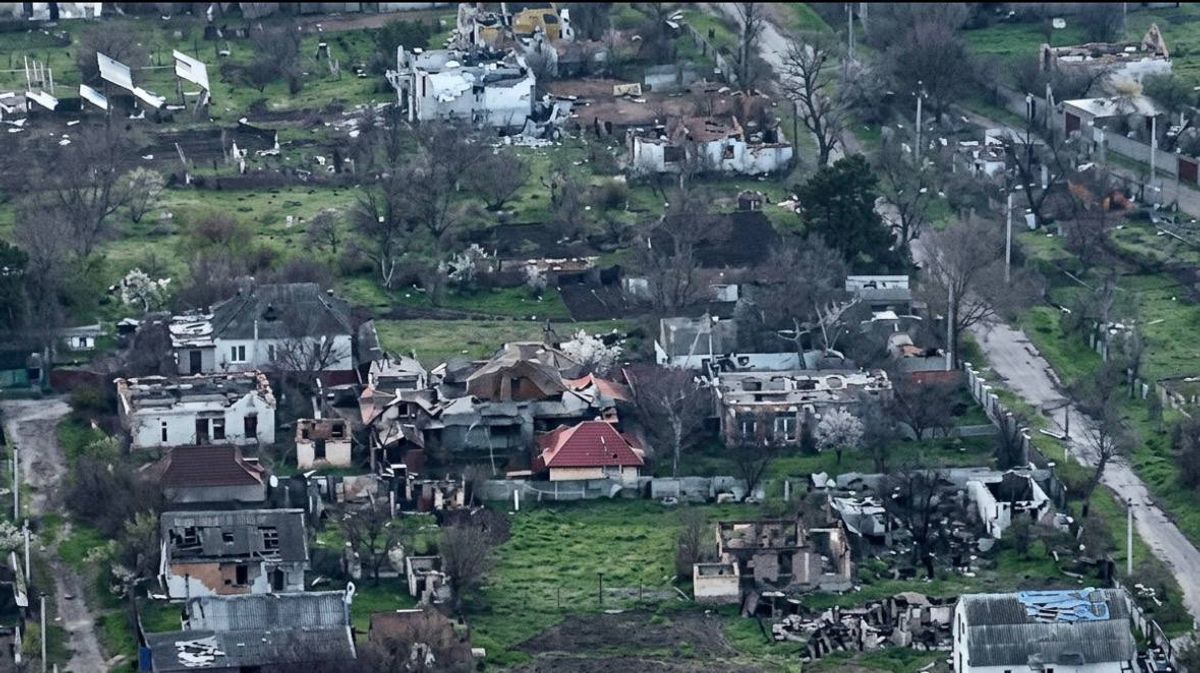
Ukrainian investigative outlet Slidstvo.Info has identified two Russian military units whose personnel have been present in or around occupied Oleshky in Kherson Oblast, and whose commanders may be linked to the humanitarian crisis in the city. Oleshky has been under Russian occupation since the early days of the full-scale invasion. Residents face severe shortages of food, water, and electricity, while only a small number of residents have managed to evacuate. Around 2,000 people, including nearly 50 children, remain in the city, according to the Foreign Ministry. While Russian troops occupy Oleshky and the eastern bank of the Dnipro River in Kherson Oblast, the Ukrainian military controls the western bank. Russian troops use towns and villages on the eastern bank to launch attacks across the river, including on the liberated city of Kherson. The first unit identified by Slidstvo.Info is the 126th Separate Coastal Defense Brigade of the Russian Black Sea Fleet, which is currently deployed in the Kherson direction as part of Russia's Dnieper grouping. The brigade was formed in occupied Crimea in 2014 from Ukrainian servicemen who joined Russia after the occupation of the peninsula. According to the outlet, it was previously commanded by Colonel Oleg Aleksandrov and is currently commanded by Konstantin Kochetkov. The second unit is the 331st Guards Parachute Regiment of Russia's 98th Guards Airborne Division. Slidstvo.Info identified its servicemen in the Oleshky area. The regiment has fought in Kyiv Oblast, the Svatove-Kreminna and Bakhmut directions, and around Chasiv Yar since the start of the full-scale war. It is currently deployed in the Kherson direction. Its commander since August 2025 has been 40-year-old Colonel Oleg Morozov, known by the callsign "Kholod". Russian forces have placed guns, mortars, and mines in and around residential neighborhoods due to the city's proximity to Ukrainian-controlled territory, Oleksandr Tolokonnikov, deputy head of the Kherson Regional Military Administration, told the Kyiv Independent. Tolokonnikov said Russia shields its positions from Ukrainian strikes through the continued presence of civilians. "Oleshky and its people are necessary for Russian troops so that Ukrainian troops cannot actively attack them in these settlements," he said. Russian forces are preventing Ukraine and international humanitarian organizations from accessing the occupied territories to provide aid. On Sept. 25, the Council of Europe Commissioner for Human Rights, Michael O'Flaherty, raised concerns about the worsening humanitarian situation in Oleshky. O'Flaherty said international humanitarian law requires occupying authorities to ensure civilians have access to food and medical supplies and to facilitate the delivery of humanitarian aid. On Sept. 27, Ukrainian forces delivered around four tons of food to Oleshky residents, distributing supplies to 100 locations across the city with the help of drones, the Kherson Oblast Military Administration head said. Some Oleshky residents confirmed that they found the packages, according to messages sent to Oleshky evacuation volunteer Kseniia Arkhipova. [1]
Alleged Use of Civilians as Human Shields Near Kupiansk
Drone footage allegedly shows Russian troops using civilians, including children and elderly people, as human shields to flee via a gas pipeline in northeastern Kharkiv Oblast amid the Ukrainian push in the Kupiansk sector, Khartiia Corps said on Sept. 29. Children, elderly people, and a person on crutches walked alongside draft-age men who were likely Russian soldiers wearing civilian clothes, according to Khartiia Corps' drone footage. The group was allegedly led from Kupiansk to the Ostrogozhsk-Shebelinka Gas Pipeline through the contested village of Holubivka near Kupiansk, the unit added. Khartiia Corps said the group of civilians would have to walk more than 10 kilometers through the pipeline before exiting into a forest, where they would likely be transported to Russian-occupied territory. The Kyiv Independent could not independently verify the claim. "The occupiers use this gas pipeline to secretly smuggle their assault troops into (Kupiansk)," Khartiia Corps, part of the National Guard, said in its statement on Facebook. "Now they are using that same pipeline to abduct civilians." Khartiia Corps said Ukrainian forces did not launch an attack because doing so would have put civilians at risk. Throughout the full-scale war, the Russian military has regularly breached international warfare conventions, especially through its indiscriminate attacks on civilian areas and the alleged abduction of civilians from occupied territories. The Russian military has previously been accused of using civilians as "human shields" in hot spots of the war. In November 2025, the Donetsk Oblast Prosecutors' Office said a Russian commander ordered his soldiers who had entered Pokrovsk to use civilians as "human shields" via radio communications. There are "several layers" to the Russian tactic, including using civilians as cover while moving through open areas without drone protection, abducting children and elderly people, and potentially using the tactic for propaganda purposes, according to a senior officer at the Corps' headquarters. Khartiia Corps said in its statement that Russian troops were filming the group as it walked. The source said that while the illegal tactic does not affect the broader picture of the Ukrainian defense in the area, "the overall effect of using pipelines for logistics and human travel is big." "Russia has been effectively using pipelines in Avdiivka, Sumy, and now in Kupiansk," the source told the Kyiv Independent. "This literally allows them to teleport close to the front lines)." Using civilians as cover in combat zones is a serious violation of international humanitarian law, while the forcible transfer of civilians is also prohibited under the Geneva Conventions. The laws of war also require combatants to distinguish themselves from the civilian population. Foreign Minister Andrii Sybiha reacted to the video released by Khartiia Corps, calling for what he described as "grave violations of international humanitarian law" to be properly documented and investigated and for those responsible to be held accountable. "Russia is once again using Ukrainian civilians as instruments of war," Sybiha said in an X post on Sept. 28. "Civilians cannot be used as instruments of war or forcibly transferred." [2]
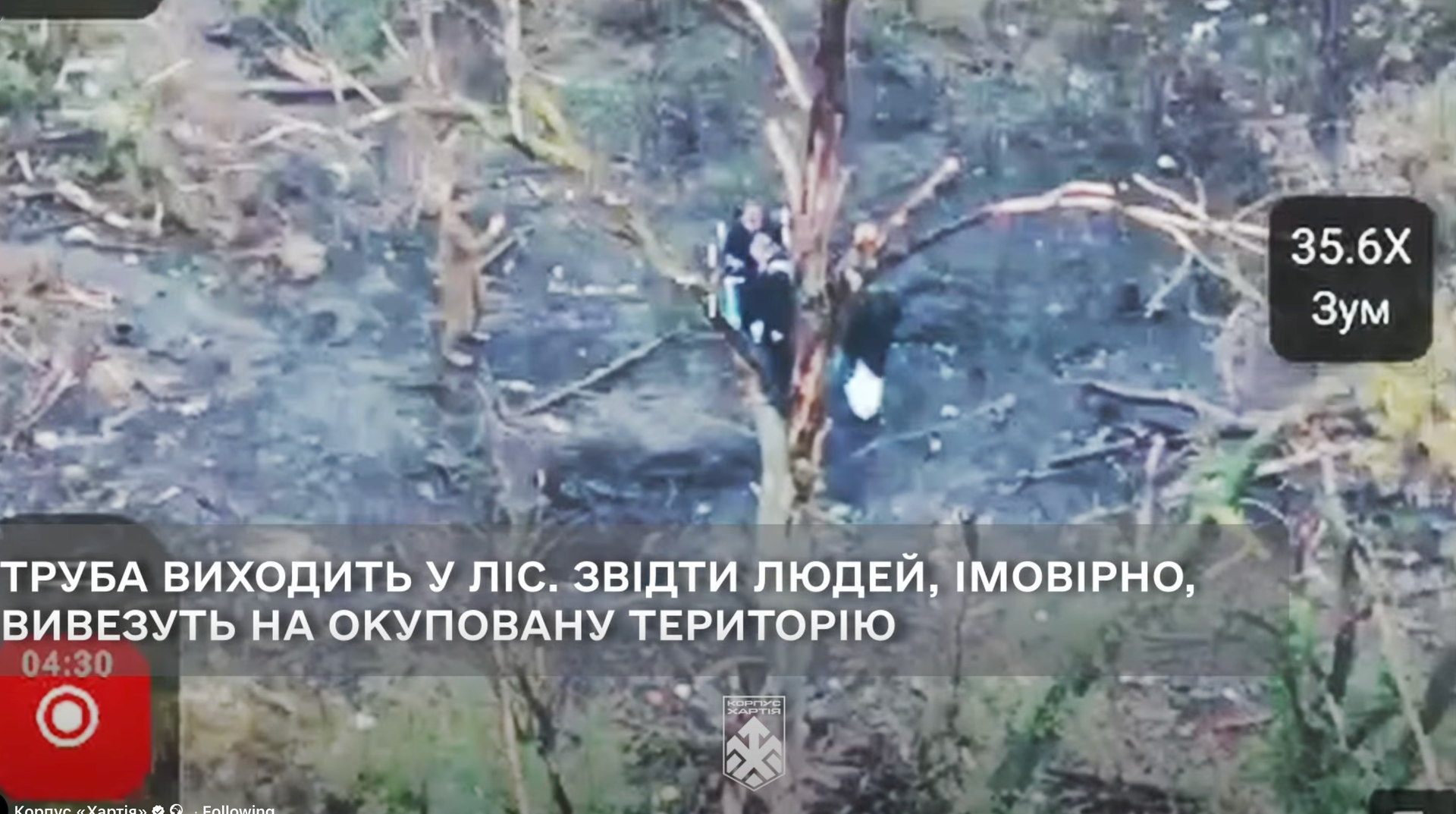
Ukrainian forces report Russian troops using civilians as human shields while fleeing via Kupiansk pipeline. — Source: kyivindependent
Russian Aerial Campaign and Ukrainian Air Defenses
Ukraine is certainly heading into a very difficult fall and winter. Daily news from across the country shows that Russia has launched a massive campaign of aerial terror against all of Ukraine. The targets include the capital and many other Ukrainian cities, all the way to the western border. As Ukrainian intelligence has determined in recent days, Russia's aim is to completely destroy Ukraine's civilian infrastructure capacity to withstand the winter. It is targeting energy supplies, data centers, water supplies and sewage systems. As we saw in the recent attacks on Kyiv where hospitals and buildings belonging to the Academy of Sciences were hit, the targets are wide-ranging. A clear problem for Ukraine right now is its limited air defense capability, specifically because it is short of interceptor missiles for Patriot systems. Another major problem is the jet-powered Geran-5 drones Russia is using with Chinese support. They are being used extensively and causing a great deal of destruction. It is certainly crucial to obtain the air defense weapons it needs from allies and partners as quickly as possible, above all interceptor missiles for Patriot systems from the United States and other allied and partner countries that have them in storage. The other issue is the need to develop a capability to intercept jet-powered drones as quickly as possible. Several projects are underway, but Ukraine currently has no working solution. When an expert met Robert Brovdi, commander of Ukraine's Unmanned Systems Forces, in September, he said it could take three to four months. That is, of course, a fairly critical period for Ukraine. Those interception systems will certainly be developed, but for now Russia has a clear advantage in the air. The shortage of Patriot systems has been known about for a long time. There are faster and slower solutions. President Volodymyr Zelenskyy also raised the possibility of producing Patriot systems in Ukraine under license when he met Donald Trump in the United States. But it would take years before production delivered any real benefit. Right now, it is vital that the United States and everyone else able to produce interceptor missiles increase their production capacity. Even more important is a contribution from countries that already have the missiles in storage. Greece and some other countries, for example, should either sell or give them to Ukraine. We see every day that Russian attacks on civilians are intensifying and Russia hopes to bring Ukraine to its knees over the winter. As Ukrainians have repeatedly shown over the years, they will not give up, however hard things get. [3]
Ground Combat Activity Across Front Lines
A total of 213 combat clashes were recorded on the battlefield on 28 September. The highest number of Russian attacks – 30 – has been repelled by Ukraine's defence forces on the Pokrovsk front, followed by 22 on the Kostiantynivka front. A total of 213 combat clashes were recorded over the past day. On the North Slobozhanshchyna front and in the operational zone in Russia's Kursk Oblast, four Russian assaults were recorded over the past day. The Russians launched four airstrikes, using nine guided bombs, and conducted 190 strikes on Ukrainian positions and settlements. On the South Slobozhanshchyna front, Ukrainian forces repelled eight Russian attacks. The Russians attempted to advance towards the settlements of Nova Kozacha, Dovhenke, Khrypuny, Riznykove and Lozova. On the Kupiansk front, the Russians conducted one attack in an attempt to improve their positions towards the city of Kupiansk. On the Lyman front, Russian attempts to break through Ukrainian defences were repelled, with the Russians conducting 11 attacks near the settlements of Ridkodub, Novoselivka, Drobysheve, Lyman and Dibrova. On the Sloviansk front, the Russians conducted two assaults near the settlements of Yampil and Kryva Luka. On the Kramatorsk front, the Russians conducted one attack near the village of Yurkivka. On the Kostiantynivka front, 22 Russian attacks were recorded. The Russians conducted assaults near the settlements of Kostiantynivka, Novoselivka, Dovha Balka and Vilne and towards Kucheriv Yar and Zolotyi Kolodiaz. On the Pokrovsk front, the Russians conducted 30 attacks. According to updated information, the Russians attempted to advance near the settlement of Svitle and Molodetske and towards Dobropillia, Novohryshyne, Serhiivka and Novopavlivka. On the Oleksandrivka front, the Russians conducted two attacks near the settlements of Oleksandrohrad and Berezove. On the Huliaipole front, the Russians conducted five attacks on Ukrainian positions. They attempted to advance near the settlements of Hirke, Huliaipolske and Charivne and towards Vozdvyzhivka. On the Orikhiv front, the Russians made five attempts to improve their positions by attacking towards the settlements of Novoandriivka, Yurkivka, Pavlivka and Stepnohirsk. On the Prydniprovske front, the Russians did not conduct any assaults. On the Volyn and Polissia fronts, there is no evidence of any offensive Russian groups being formed in the area. [4]

Russian military units identified in occupied Oleshky amid humanitarian crisis and air superiority over Ukraine. — Source: errnews
International and Ukrainian Responses
On Sept. 25, the Council of Europe Commissioner for Human Rights, Michael O'Flaherty, raised concerns about the worsening humanitarian situation in Oleshky. O'Flaherty said international humanitarian law requires occupying authorities to ensure civilians have access to food and medical supplies and to facilitate the delivery of humanitarian aid. Foreign Minister Andrii Sybiha reacted to the video released by Khartiia Corps, calling for what he described as "grave violations of international humanitarian law" to be properly documented and investigated and for those responsible to be held accountable. "Russia is once again using Ukrainian civilians as instruments of war," Sybiha said in an X post on Sept. 28. "Civilians cannot be used as instruments of war or forcibly transferred." President Volodymyr Zelenskyy has said that the overall drone interception rate is currently 70%, while 57% of jet-powered drones are being downed. He has also stated that new interceptors are being actively tested. "All day today, there have been attacks by 'Shaheds', many of them jet-powered. More than 120 drones already, 90 of them jet-powered… The overall drone shoot-down rate as of today is 70% – this includes both regular and jet-powered 'Shaheds'. But for jet-powered 'Shaheds', unfortunately, the rate is much lower than it needs to be – 57% for now. New interceptors are being actively tested." Zelenskyy said that some combat groups are using interceptors, but "some details still need to be refined to ensure sufficient effectiveness and deployment at scale". He added that "we are pushing the developers to move faster". Overall, Zelenskyy said that nine people are known to have been killed in different parts of Ukraine on 28 September. More than 80 people have been injured. The president added that following a jet-powered Shahed attack on the building of the National Academy of Sciences of Ukraine in Kyiv, one person is still being searched for under the rubble. [1] [5]
Most dangerous countries Face Continued Challenges from Infrastructure Attacks
Ukraine is certainly heading into a very difficult fall and winter as Russia holds the upper hand in the air. Daily news from across the country shows that Russia has launched a massive campaign of aerial terror against all of Ukraine. The targets include the capital and many other Ukrainian cities, all the way to the western border. As Ukrainian intelligence has determined in recent days, Russia's aim is to completely destroy Ukraine's civilian infrastructure capacity to withstand the winter. It is targeting energy supplies, data centers, water supplies and sewage systems. As we saw in the recent attacks on Kyiv where hospitals and buildings belonging to the Academy of Sciences were hit, the targets are wide-ranging. A clear problem for Ukraine right now is its limited air defense capability, specifically because it is short of interceptor missiles for Patriot systems. Another major problem is the jet-powered Geran-5 drones Russia is using with Chinese support. They are being used extensively and causing a great deal of destruction. It is certainly crucial to obtain the air defense weapons it needs from allies and partners as quickly as possible, above all interceptor missiles for Patriot systems from the United States and other allied and partner countries that have them in storage. The other issue is the need to develop a capability to intercept jet-powered drones as quickly as possible. Several projects are underway, but Ukraine currently has no working solution. [3]
What to watch next: Ukraine's efforts to obtain more Patriot interceptor missiles from the United States and other partners, along with development of solutions to counter jet-powered Geran-5 drones, remain critical as Russia continues targeting energy, water, and civilian infrastructure.