
Russian Drone Strikes Kill One at Kyiv's National Academy of Sciences
Russian forces conducted intensified drone and missile strikes on Kyiv in September, including daytime attacks on civilian infrastructure such as the National Academy of Sciences, a historic market, data centres, and a medical centre, killing civilians and forcing scientists to flee burning buildings.
Intensified Russian Attacks on Kyiv
Kyiv was hit by 155 Russian missiles and drones in September, up from 113 in August. [4] Strikes occurred up to 10 times per day, with air-raid alerts lasting nearly 24 hours in some cases. [4] Kyiv has been in a worse situation than Kharkiv in terms of air-raid alerts, even though Kharkiv lies just 30 km from the front line. [4] The capital and its surroundings would probably account for the highest number of civilians killed and injured anywhere in Ukraine in September. [4] The main weapons currently used by the Russians to attack Kyiv are Geran-5 jet drones, which are essentially smaller cruise missiles measuring six metres long. [4] Ukrainians intercept Geran-4 drones with an effectiveness of 70 to 80 percent, but the rate for Geran-5s is only 50 to 65 percent. [4]
Strike on National Academy of Sciences
A Russian jet-powered drone struck the National Academy of Sciences building in central Kyiv on 28 September, killing one person and injuring six. [4] Scientists and other employees attempted to climb out through smoke-filled windows as the building caught fire. [4] The attack likely targeted 86-year-old security expert Volodymyr Horbulin, who was present and sustained minor injuries. [4] The drone hit a room one floor above his office, and his assistant was killed. [4] The historic building had only three floors, which helped limit casualties along with the firefighters’ rapid response. [4]
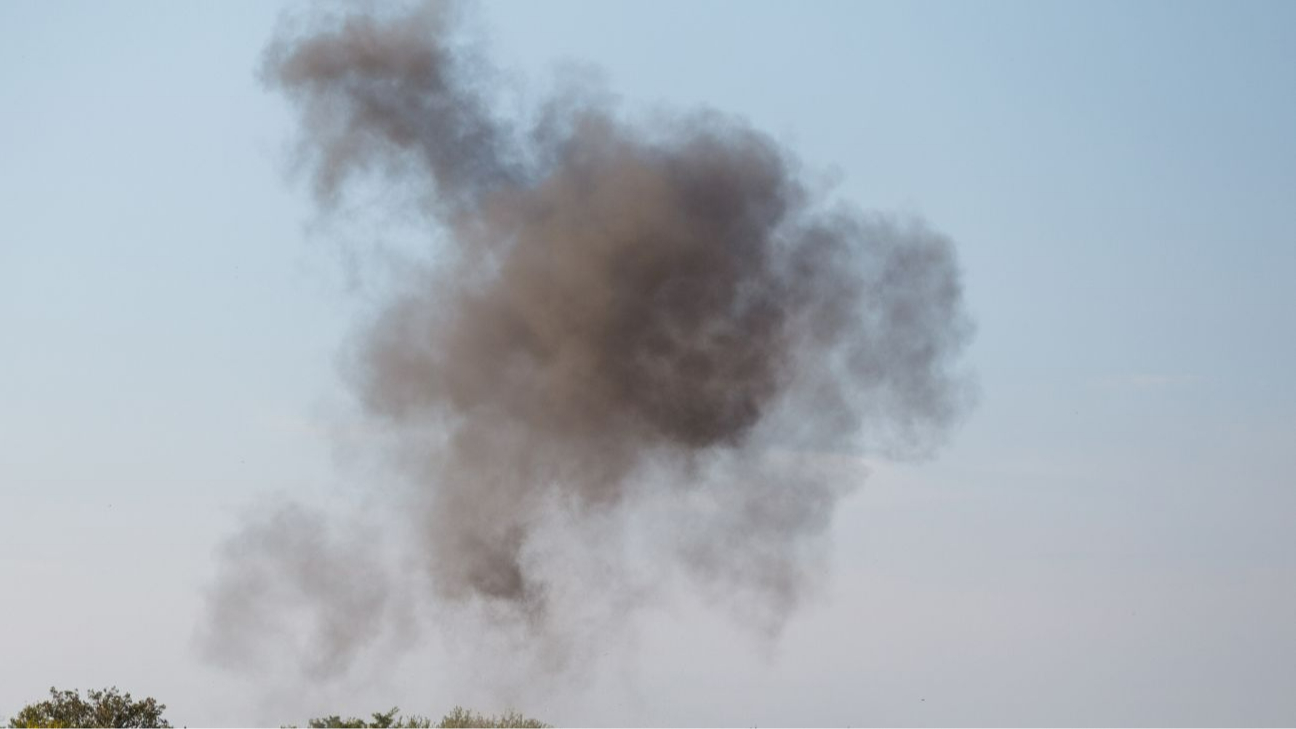
Russian drone strike hits Kyiv's Podilskyi district near National Academy of Sciences. — Source: ukrainskapravda
Additional Daytime Strikes in Central Kyiv
The same day, a strike hit the Dobrobut medical centre near the EU delegation office, about 200 metres away. [4] The explosion was felt by the EU ambassador, who described it as the loudest blast experienced in three years in Kyiv. [4] A pharmaceutical company was also struck. [4] These attacks took place in the wider city centre during the working day. [4] The Russians struck the heart of the capital 10 times a day in recent days. [4]
23 September Drone Attacks
On 23 September, Russian drone strikes in Kyiv killed two people and injured at least 45. [3] The strikes damaged a historic market near the central railway station, railway infrastructure, business centres, and residential buildings. [3] A reporter covering the attack near the central railway station heard a deafening strike that sounded close and followed a trail of smoke to the impact site. [3] Rescue workers fought a fire inside the historic market that Russia had struck. [3] Another air-raid alert went off while reporting, forcing the team to move to a shelter. [3] The exhaustion from covering such attacks can sometimes come after the reporting is finished. [3]
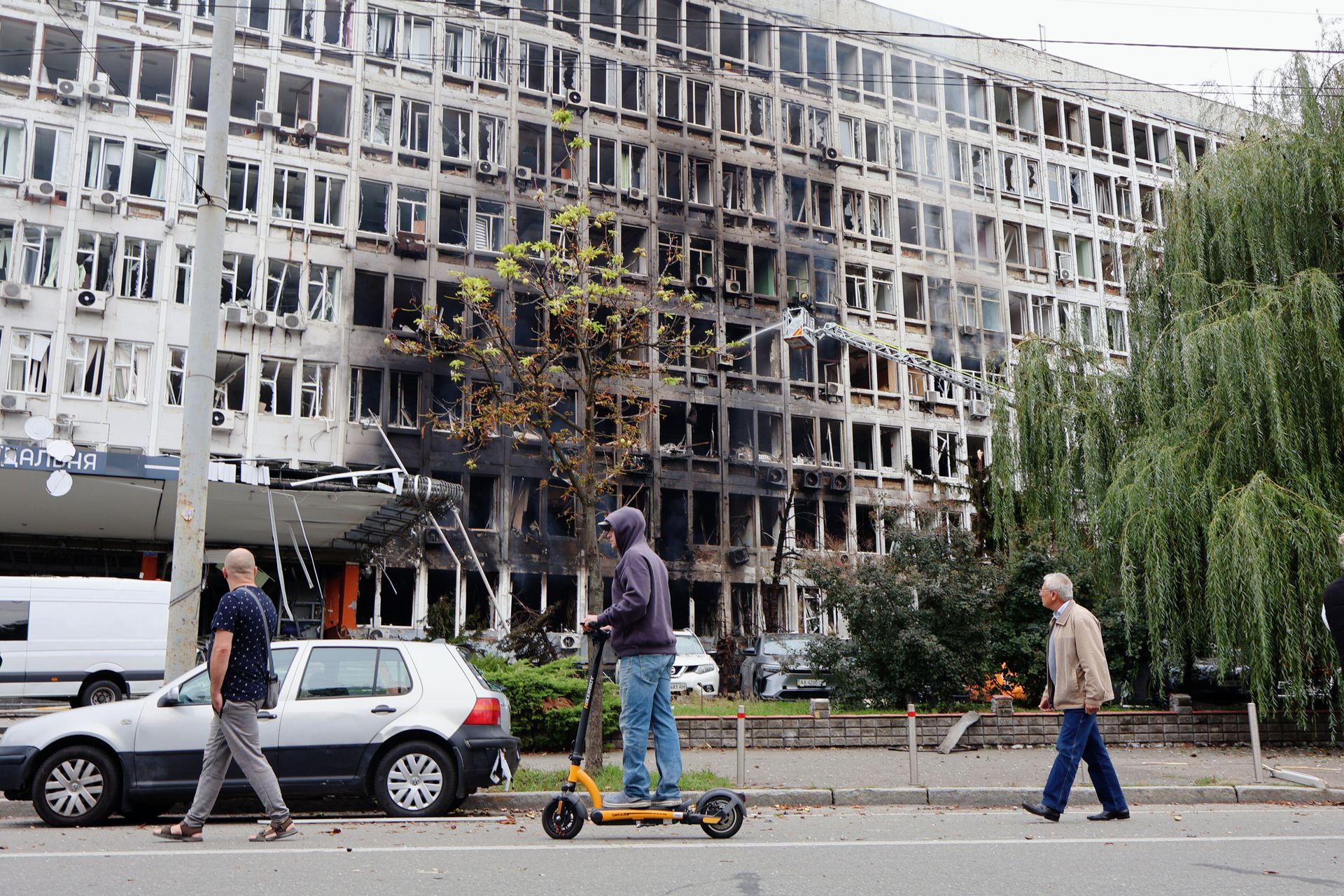
Russian drone strikes damaged the National Academy of Sciences building in Kyiv. — Source: kyivindependent
Ukrainian Long-Range Operations and Russian Retaliation
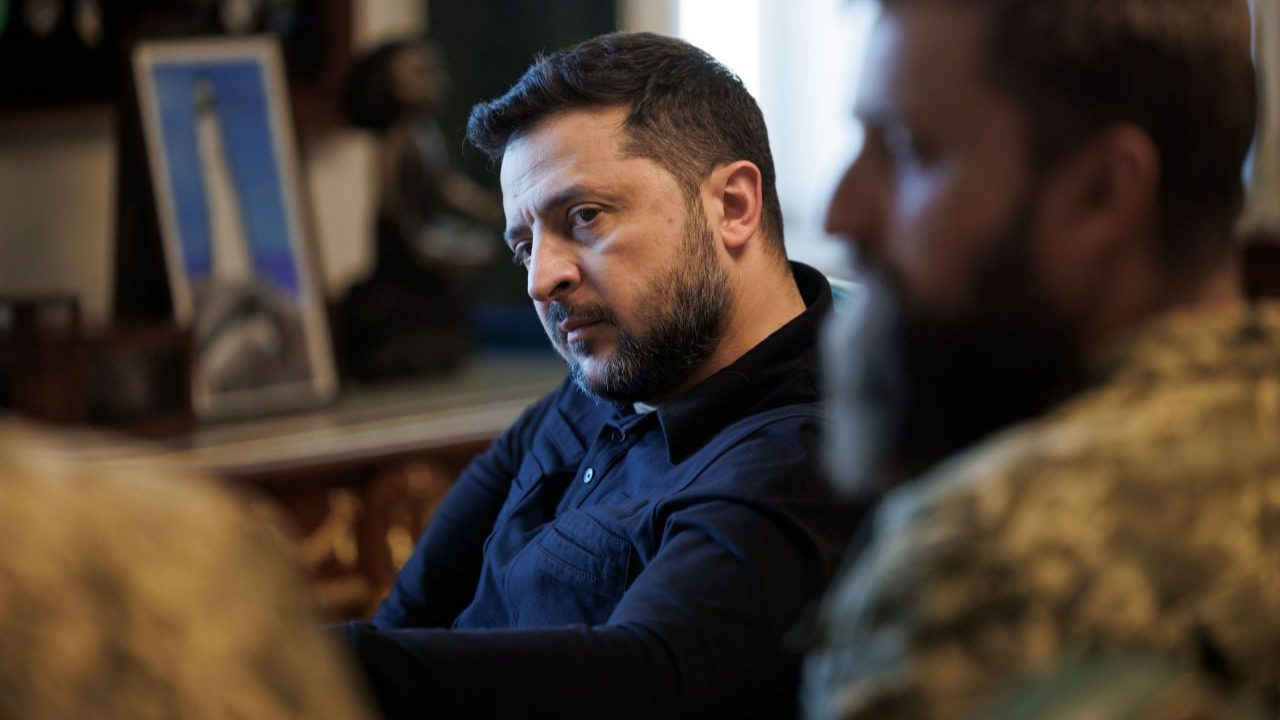
Zelenskyy approved long-range Ukrainian operations for October. [1] Strikes on Russian oil industry targets using weapons including Flamingo, Palianytsia, and Pelican are continuing. [1] On the night of 19-20 September, Ukraine launched a large-scale attack on Moscow and Moscow Oblast using these weapons. [1] The Kremlin said Ukraine will have to "pay the price" for its actions in recent months. [1]
Broader Overnight Strikes
Russian strikes also hit two foreign-flagged cargo vessels in the Odesa region of the Black Sea. [5] The attacks damaged energy facilities, substations, civilian businesses, and residential buildings in Kyiv and 10 other regions. [5] The Russian defence ministry said it struck two military cargo vessels in the Black Sea and two data centres in Kyiv overnight. [5]
What to watch next: Zelenskyy has stated that all of Ukraine's key long-range objectives are being carried out and Russia's oil industry continues to feel the impact, while the Kremlin has vowed retaliation through corresponding strikes.