Most dangerous countries face new war crimes reports as Mali civilians suffer under Africa Corps
In some of the most dangerous countries, escalating conflicts worldwide have seen new reports of war crimes and civilian harm in Mali, Pakistan facing low-cost suicide drone incursions from Afghanistan, renewed hostilities in Yemen and Saudi Arabia, and Ukrainian territorial gains in a drone-dominated battlefield.
Mali Sees Continued Abuses Under Africa Corps
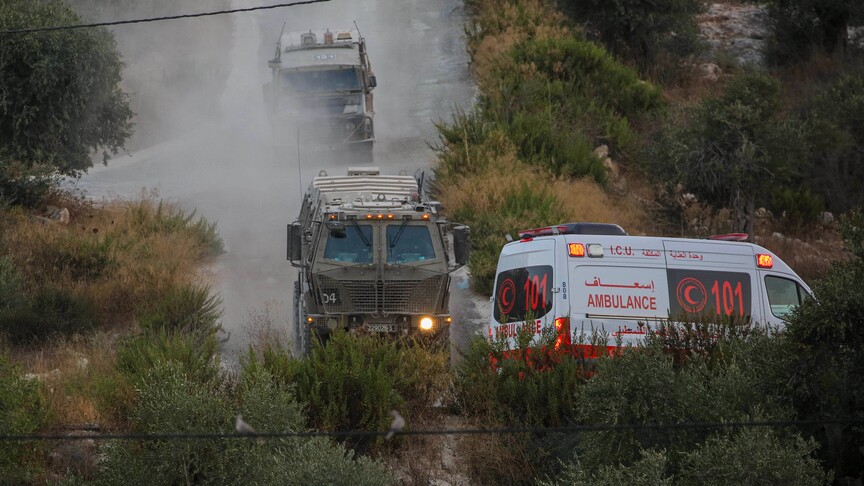
When Africa Corps officially began operations in Mali in June 2025, few people held out hope that it would help alleviate the suffering of civilians in Mali, caused on the one hand by armed groups in Azawad and members from the Group for the Support of Islam and Muslims (GSIM), but also by the army and its auxiliaries from the Russian private military company known as Wagner. [1] Troops from Africa Corps, under the direct control of the Kremlin, had already begun deploying in the country as early as January 2025 and were gradually taking over Wagner's role in support of the army's military operations. [1] Joint patrols by the army and Wagner between 2023 and 2025 were marred by serious violations which we recently detailed again in a report, some of which we believe amount to war crimes. [1] In particular, we document seven incidents in which 34 people were deliberately killed during these patrols. [1] The victims - all civilians, according to the testimonies collected - were shot, had their throats slit, and were burned; some were even mutilated after death. [1] Many of them were shot in cold blood while they were herding their livestock or after being apprehended. [1] Accounts of widespread torture followed. [1] Deadly drone attacks in Ejdeir (without warning and on a market day, 16 dead) and Tangata (at night on a house, the day after a wedding, seven dead), in March and November 2025, also caused deaths and destruction. [1] Both strikes were carried out without any apparent evidence of the presence of armed combatants or military targets at either location. [1] Torture and ill-treatment were also commonplace during these operations. [1] The same was true in the military camps at Léré and Nampala, where detainees could be held for months without being able to notify their families or appear before a judge - or could simply disappear. [1] Survivors of this torture - which was carried out alongside interrogations about the activities of armed groups - whose bodies sometimes still bear the scars, spoke with Amnesty International. [1] Suspension by the arms, simulated drowning, electric shocks, beatings with boots, rifle butts, and iron bars, and detention in degrading conditions with unsanitary restrooms: the range of practices is wide. [1] Some had been subjected to sexual violence, forced to undress, and made to remain naked for several days while in custody. [1] These abuses were committed primarily by Wagner Group members, but with the full knowledge of the Malian armed forces. [1] According to the testimonies collected, at least five people died as a result of this torture. [1] Members of the Fulani, Tuareg, and Arab communities living along the border with Mauritania were the main victims of the war crimes documented in this report. [1] These often-deadly military operations are accompanied by looting (money, livestock, jewelry, blankets, etc.) and the destruction of property, clearly calling into question the Malian authorities' claims that they are targeting only members of armed groups. [1] Although Africa Corps has replaced Wagner, nothing has been done to change the situation. [1] Impunity persists. [1] To our knowledge, no legal proceedings have been initiated regarding the abuses committed by government forces against civilians since 2023. [1] Victims do not dare to file complaints for fear of reprisals. [1] Those who dare to criticize the conduct of military operations are subjected to repression. [1] The military authorities exercise total control over information. [1] Allegations of abuses have already been levelled against members of Africa Corps, according to Human Rights Watch. [1] On July 10, 2026, in Bombori, the village's Fulani neighbourhood was raided: 80 men were rounded up outside before being beaten and interrogated about the activities of armed groups. [1] Six people who tried to flee were shot dead, while three others were executed. [1]
Pakistan Intercepts Low-Cost Suicide Drones
Small, low-cost fixed-wing suicide drones reportedly powered by commercially available DLE55 engines are emerging as a new challenge for Pakistan’s military, with experts warning that the aircraft can be difficult to detect and may force Islamabad to spend heavily on countering relatively inexpensive weapons. [2] Pakistan said it intercepted 23 suicide drones that entered its airspace from Afghanistan during September. [2] An examination of photographs and videos of drones intercepted by Pakistani forces suggests that at least some were built using commercial components and relatively simple technology. [2] Drone expert Mark Grozel told France 24 that an engine visible in the images appeared to be a DLE55, a 55cc model available commercially, including through online marketplaces. [2] The aircraft examined were approximately two metres long and could carry between 500 grams and one kilogram of explosives, Grozel said. [2] Pakistan’s military said on September 23 that it had shot down eight fixed-wing drones in Khyber Pakhtunkhwa, including four near the Torkham border crossing and four in areas near Kohat. [2] Pakistani officials described the incidents as incursions from Afghanistan, but the claims have not been independently verified in full. [2] Experts say the drones’ small size and low-altitude flight can make them difficult to detect. [2] The cost imbalance is a central concern for Pakistan. [2] The reported drone incursions come amid escalating conflict between Pakistan and the Afghan Taliban, who were once close partners. [2] Relations deteriorated after Pakistan began striking what it described as militant positions inside Afghanistan, particularly those linked to Tehreek-e-Taliban Pakistan (TTP). [2] Islamabad accuses the Afghan Taliban of sheltering or supporting militants responsible for attacks inside Pakistan. [2] The Taliban have rejected Pakistan’s accusations and said the TTP issue is an internal Pakistani matter. [2] The dispute has increasingly involved cross-border attacks, drone incidents and Pakistani strikes inside Afghanistan, raising concerns about further escalation and civilian harm. [2]
Civilian Risks Rise in Saudi-Yemen Escalation
Responding to the dramatic escalation of armed hostilities between the Huthi de facto authorities, the Yemeni government and Saudi Arabia in recent weeks and the growing toll on civilians amidst ongoing attacks, Amnesty International’s Regional Director for the Middle East and North Africa, Heba Morayef, said: “The risks to civilians in Yemen and Saudi Arabia are rapidly increasing each day this conflict escalates. All parties to the c [3] Saudi Crown Prince Mohammed bin Salman is facing one of the biggest crises of his tenure as the Houthis, whom he tried to crush a decade ago, attack the kingdom while his allies hold back. [5] The Houthi drone and missile campaign has killed at least 18 people and shut the country’s main airport, stretching the kingdom’s defenses. [5] Hundreds of Saudi flights remain grounded, schools have moved online and the capital’s financial district has shifted to remote work — less than two weeks before Riyadh hosts its flagship gathering of global investors. [5]
Ukraine Advances in Operation Vivaldi
In mid-September, Ukraine formally announced the existence of Operation Vivaldi, which has retaken territory near Lyman and disrupted a Russian advance toward the fortified cities that form a key part of Ukraine’s eastern defenses. [4] Lyman is a road and rail junction on the northern approaches to Sloviansk and Kramatorsk. [4] Russia has spent months trying to advance around it as part of a wider effort to encircle Ukraine’s eastern defensive line. [4] Vivaldi has substantially reduced the Russian push into Ukrainian territory north of Lyman, disrupting the northern arm of the plan. [4] Ukraine’s Third Army Corps has claimed that by the end of last month the operation had retaken 176 sq km of territory. [4] Vivaldi began in May this year, but Ukraine kept it quiet until September. [4] The corps described its first phase – which appears to have taken place over several months – as creating favorable conditions for later activity. [4] This involved attacking Russian air defense, electronic warfare capabilities, artillery and logistics, disrupting Russian drone operations and concealing Ukrainian intentions. [4] Ultimately, Ukrainian forces were able to disrupt Russian defenses well beyond the frontline and into the depth of the Russian rear areas, and drive back Russian drone units, including elements of the elite Rubicon drone formation. [4] This allowed Ukraine’s Third Corps to achieve the necessary measure of local drone superiority. [4] Subsequent phases exploited this advantage with the coordinated application of different military capabilities. [4] Drones and robots have been important. [4] Drone crews and other units worked together to strike enemy systems before the infantry advanced. [4] And ground robots carried supplies, conducted mine clearance or provided fire support, and some, for the first time, were dropped by drones behind Russian defenses. [4] But other capabilities have been critical. [4] Even armor, in the form of tanks and infantry fighting vehicles, has retained a role – although it is used more cautiously because of the threat posed by enemy drones. [4] After other forces have suppressed enemy drone and artillery units, armored vehicles have helped exploit gaps in the enemy defenses, allowing troops to advance much faster. [4] But there are some caveats that must be considered. [4] First, 176 sq km is still a limited advance in the overall scheme of the war. [4] And Russia is continuing to advance elsewhere, albeit very slowly. [4] Second, while Russian milbloggers – the ecosystem of journalists, commentators and analysts who support the war, but can be critical of the way it is being waged – have confirmed the problems caused by Operation Vivaldi, we are still reliant for most of our information on Ukrainian sources. [4] Fourth, Russia is likely to adapt, given that the capacity to adapt to new equipment and tactics is one of the significant features of the war. [4]
Impunity and Civilian Protection Concerns
The protection of civilians in the context of the conflict must be a priority for the Malian authorities and all parties to the conflict, in accordance with international humanitarian law. [1] Military operations and camps must be monitored, and the justice system must be able to conduct independent investigations into all alleged cases of abuses. [1] The risks to civilians in Yemen and Saudi Arabia are rapidly increasing each day this conflict escalates. [3]
What to watch next: Russia is moving troops from other sections of the front, while Russian attacks on Ukrainian cities and infrastructure have intensified ahead of winter. [4]