More Than 3,600 Remain Displaced in Italy's Campi Flegrei After July Earthquake
More than 3,600 people remain displaced in Italy's Campi Flegrei area following a magnitude 4.0 earthquake on 31 July 2026, with officials reporting 408 evacuation orders and 19 churches declared unusable.
Campi Flegrei Displacement One Month After July Quake
After the magnitude 4.0 earthquake on 31 July, more than 3,600 people were forced to leave their homes in the Campi Flegrei area. [1] The figures were presented during a coordination meeting in Pozzuoli led by the Prefect of Naples. [1] Most families remain in temporary accommodation or shelters. [1] The municipal administration of Pozzuoli issued 408 evacuation orders following the 31 July event. [1] The ongoing emergency linked to bradyseism and seismic events continues to produce significant numbers of displaced residents and unusable buildings. [1] Updated data from the coordination center showed the scale of the displacement one month after the quake. [1]
Slow Return Rate and Local Impacts in Pozzuoli
More than 3600 people remain displaced in Campi Flegrei one month after the July earthquake. — Source: gdelt
One month after the 31 July quake, only 9 of the 1,391 evacuated families have returned to their homes. [1] Schools and churches remain among the structures deemed unusable. [1] The municipality of Pozzuoli declared 19 places of worship unusable after the seismic event. [1] Reports indicate rising rents in the affected zone. [1] The situation of the displaced continues to be monitored at coordination meetings where data on unusable buildings and housing contributions are reviewed. [1] The low return rate reflects persistent concerns over building safety in Pozzuoli. [1]
Spain's Seismic Risk and Loss of Preparedness
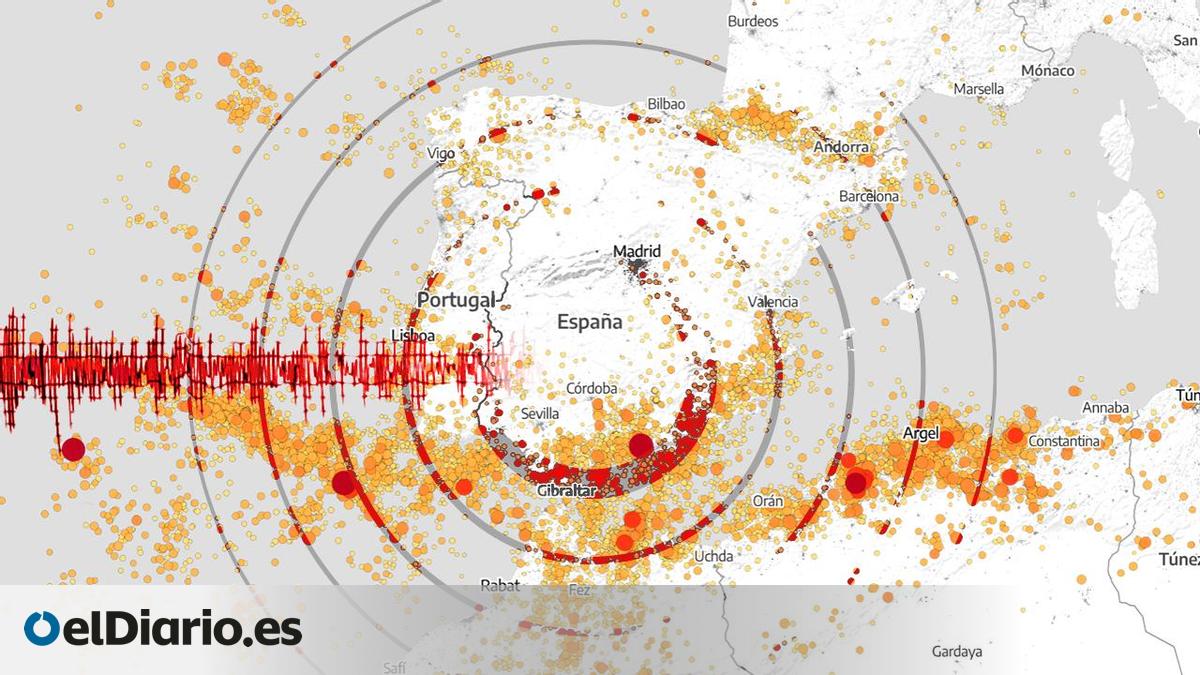
Experts note that Spain has experienced no destructive earthquakes of magnitude above 6 in the 20th century, despite a historical average of two per century since the 15th century. [2] Juan Vicente Cantavella, director of the Red Sísmica Nacional, stated that earthquakes that caused hundreds of victims in the past can occur again and that preparation is necessary. [2] Belén Benito of the Universidad Politécnica de Madrid said the country is in a countdown period because the absence of major events has led to a loss of risk awareness. [2] Patricio Venegas Aravena of the Universidad Loyola Andalucía observed that Spain is very little prepared and that both authorities and citizens need to increase their perception of the risk. [2] The convergence between the African and Eurasian plates occurs at a rate of between 2 and 4 millimetres per year, leading to accumulating deformation that will result in a larger earthquake. [2] Historical events such as the 1522 Almería quake, the 1829 Torrevieja quake and the 1884 Arenas del Rey quake remain part of the geological record. [2]
Projected Impacts from Simulated Major Spanish Quakes
Simulations using the PAGER system for a repeat of the 1829 Torrevieja earthquake under current population and building conditions project between 11,000 and 28,000 deaths together with widespread infrastructure collapse. [2] The model indicated a possible horizontal ground acceleration of up to 0.81g, exceeding the 0.55g limit in national building codes and triggering soil liquefaction. [2] Pablo Silva of the Universidad de Salamanca noted that the Torrevieja scenario would produce a gigantic disaster requiring international assistance. [2] In contrast, a repeat of the stronger 1884 Arenas del Rey earthquake produced damage estimates similar to those recorded in 1884 because the affected area in southern Granada has seen less tourist and urban development. [2] The primary risk factor identified is the extensive urbanisation of the coast from Mar Menor to Santa Pola, where most buildings date from the 1970s and 1980s. [2]
Indonesian Airlift Delivers Hundreds of Tons of Aid
Indonesia airlifted nearly 778 tons of emergency relief supplies to earthquake-affected communities in East Nusa Tenggara between 15 and 21 August. [5] Berton SP Panjaitan of the National Disaster Mitigation Agency confirmed that distribution across two primary air routes surpassed 777 metric tons by 21 August. [5] Indonesian Air Force aircraft carried 312.7 tons while commercial cargo planes delivered an additional 465 tons. [5] On Friday, 2,968 family tents were dispatched, with 2,332 allocated to Labuan Bajo and 636 to Maumere; 245 large refugee tents were also sent, split between 201 units to Labuan Bajo and 44 to Maumere. [5] The central staging warehouse at Halim Perdanakusuma Air Force Base maintained a stockpile of roughly 577 tons as of Friday. [5] Four additional military transport sorties carrying 47 tons were scheduled for Saturday, with specific aircraft routed to Maumere and Labuan Bajo. [5]
What to watch next
Continued monitoring of displacement figures in Pozzuoli and further PAGER-style simulations for Spanish coastal zones will provide updated assessments of both ongoing recovery needs and potential future impacts.