
Middle East War on the WW3 Map: Asia's Untapped Potential in Mediating the US-Israel-Iran Escalation
By Viktor Petrov, Conflict & Security Correspondent, The World Now
Field Report - April 2, 2026
Introduction
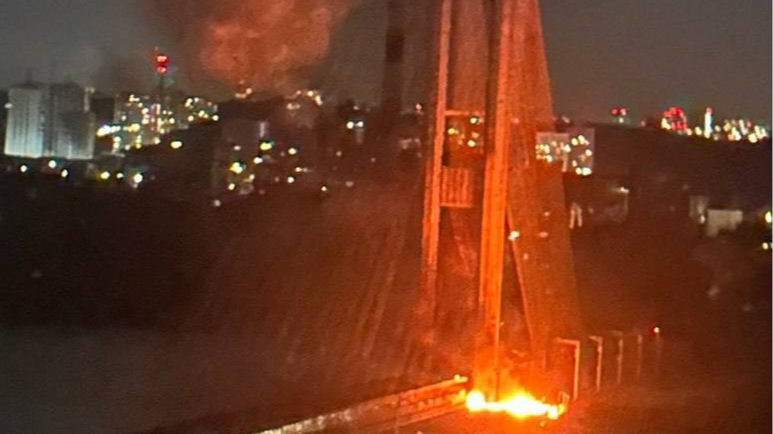
The Middle East war, now in its fifth week and vividly tracked on the WW3 map, has escalated into a high-stakes confrontation between the United States, Israel, and Iran, with profound global ramifications that extend far beyond the region's borders. What began as targeted Israeli strikes against Iranian proxies has spiraled into direct U.S. military involvement, disrupting global energy supplies, triggering economic shocks, and raising fears of a broader regional conflagration. Iranian missile barrages on Israeli cities, U.S. carrier deployments in the Persian Gulf, and Houthi attacks on shipping in the Red Sea have combined to create a volatile theater of operations, where proxy militias, cyber operations, and conventional airstrikes intertwine.
This situation report shifts focus from the well-trodden paths of cyber warfare, cultural reverberations, proxy entanglements, diplomatic realignments, and energy market turbulence—topics extensively covered in prior analyses—to an underexplored dynamic: the emerging diplomatic leverage of Asian nations as neutral mediators. Recent developments, particularly Pakistan's bold proposals for peace talks on March 29, 2026, underscore Asia's potential to broker de-escalation, leveraging its economic stakes in stable energy flows and its non-aligned geopolitical posture. Drawing from source articles, including U.S. President Donald Trump's prime-time addresses promising a "very fast" resolution and denying regime change objectives, as well as reports of Iran's ceasefire overtures (denied by Tehran), this report sets the stage for a comprehensive assessment.
Key events from the sources paint a picture of intensifying escalation amid glimmers of negotiation. Trump's statements, covered live by Hindustan Times, NZ Herald, The Guardian, and Daily News Egypt, emphasize a swift end to hostilities, even as economic fallout widens—oil prices surge, stock markets wobble, and Asian economies grapple with supply disruptions. Pakistan's initiative, highlighted in Dawn's War Diary, positions Islamabad as a bridge-builder, inviting all parties to multilateral talks. This Asian pivot could reshape alliances, offering a counterweight to traditional Western and Russian mediation efforts, as explored further in our analysis of alliances in flux.
Current Situation and Escalation
As of April 2, 2026, the conflict rages with U.S. and Israeli forces conducting precision strikes on Iranian military infrastructure, including missile sites near Tehran and naval assets in the Strait of Hormuz. Iran has retaliated with drone swarms and ballistic missiles targeting Israeli airbases and U.S. naval vessels, while Houthi allies disrupt Bab al-Mandeb shipping lanes. Casualty figures from Stiripesurse.ro's latest bilanț report over 1,200 deaths, predominantly Iranian military personnel, but with rising civilian tolls in border areas. Trump's April 1-2 addresses, as live-updated by The Guardian, Hindustan Times, and NZ Herald, assert the war "will finish very fast" and reject regime change, claiming Iran has informally sought a ceasefire—claims Tehran dismissed as "false and baseless."
Economic fallout is acute: Oil prices have spiked 20% since late March due to Hormuz threats, per Bangkok Post developments, detailed in our oil price forecast chaos analysis. Asian markets, heavily reliant on Gulf imports, face blackouts and inflation—Japan Times notes Gulf states' exposure, while Asia Times links this to the "end of the unipolar moment." Recent events include U.S. deployment of a third carrier on March 31 (HIGH severity), Russia-Ukraine spillover rhetoric on April 1 (HIGH), and critical coordination responses on April 2.
Pakistan's March 29 peace proposals, reiterated in Dawn, offer a turning point. Islamabad, leveraging ties with Iran, Saudi Arabia, and neutrality vis-à-vis Israel-U.S., has proposed neutral-ground talks in Islamabad or Doha. This gains traction as Asia feels the pinch: Energy disruptions on March 27 crippled refineries in India and Southeast Asia, prompting calls for mediation from non-Western powers. QDND.vn's analysis questions endgame scenarios, suggesting Asian involvement could sidestep U.S.-Russia polarization.
Historical Context and Evolution
The war's progression, traced via the provided timeline and visualized on the WW3 map, reveals a rapid spillover from regional tensions to global crisis, underscoring the need for external mediation:
-
March 27, 2026: Middle East War Disrupts Asia Energy – Iranian strikes on Saudi facilities and Houthi blockades halted 15% of global oil flows, triggering blackouts in Pakistan, India, and Vietnam. This non-regional ignition point marked Asia's direct stake.
-
March 28, 2026: US Joins Israel-Iran War – Following Israeli preemptive actions against Hezbollah and IRGC bases, President Trump authorized U.S. air and naval support, escalating from proxy to direct confrontation.
-
March 29, 2026: US-Israel-Iran War Day 30 – Milestone of sustained hostilities, with Iranian counterstrikes hitting Dubai ports and Israeli cities.
-
March 29, 2026: Pakistan Proposes Middle East Peace Talks / Pakistan Offers Middle East Peace Talks – Dual announcements from Islamabad, framing Asia's diplomatic entry.
This chronology mirrors historical patterns: The 1973 Yom Kippur War drew superpowers via oil shocks; 1991 Gulf War involved coalitions. Yet, unlike Europe's post-WWII mediation roles, Asia's shift—from bystander in 2003 Iraq to active player—reflects economic multipolarity. Past conflicts saw U.S. dominance; today's rapid escalation (five days from disruption to U.S. entry) demands fresh voices. Pakistan's moves, amid Day 33 uncertainties (Dawn), highlight how energy vulnerabilities catalyze diplomacy, preventing prolonged instability akin to Yemen's quagmire.
Original Analysis: Asia's Diplomatic Opportunities and Challenges on the WW3 Map
Asia's mediation potential offers strategic windfalls. For Pakistan, success burnishes its post-Afghan image, secures energy pacts with Iran/Saudi Arabia, and elevates its UNSC bid. Broader Asia—China, India, Indonesia—stands to mitigate vulnerabilities: 70% of Japan's oil transits Hormuz. Successful talks could enhance influence, as Asia Times argues in heralding unipolar decline.
Benefits include reduced supply risks and geopolitical capital. Pakistan's Shia-Sunni balancing act positions it neutrally, unlike Qatar's Gulf biases. Original insight: This could forge an "Asian Minsk"—a la Ukraine—bypassing Geneva formats, drawing Japan/India for economic guarantees.
Challenges abound. Divergent interests fracture unity: China backs Iran economically; India buys Israeli arms; Pakistan's U.S. aid ties clash with Tehran bonds. Sources infer distrust—Trump's opacity (Dawn) and Iran's denials (NZ Herald) signal reluctance. Gulf exposure (Japan Times) risks alienating Sunni states wary of Pakistan's Iranian leanings. Internal Asian rivalries, like Indo-Pak tensions, could undermine credibility.
Yet, unified Asian diplomacy might tip balances. By hosting talks, Asia signals multipolarity, diluting U.S. leverage and exposing Gulf dependencies. If Pakistan corrals ASEAN+3, it could enforce ceasefires via trade incentives, reshaping alliances toward pragmatic blocs.
Predictive Elements and Future Outlook
Pakistan's talks hold promise for de-escalation within weeks, aligning with Trump's timeline. High-confidence scenarios: Short-term ceasefire by mid-April, with U.S. drawdown if Iran halts proxies. Broader realignments could emerge if Asia unites—China mediating Iran, India Israel—fostering multipolar pacts.
Escalation risks loom: Failed talks trigger Hormuz closure (oil +50%), Russian/Ukrainian spillover (April 1 events), or Israeli ground ops. Economic crises could cascade, per Guardian live feeds.
Long-term: Success accelerates multipolarity, per Asia Times, with Asia dictating energy strategies—diversified pipelines, renewables push. Failure entrenches Iran stronger (Japan Times), birthing hardened alliances and protracted war, redefining Middle East toward balanced powers.
Looking Ahead: What This Means for the WW3 Map
As the Middle East war evolves on the WW3 map, Asia's mediation role could redefine global power dynamics, preventing further escalation and stabilizing energy markets. Stakeholders should monitor Pakistan's initiatives closely, as they represent a pivotal shift toward multipolar diplomacy. Track ongoing developments via our Global Risk Index.
Catalyst AI Market Prediction
The World Now Catalyst AI forecasts market ripples from the conflict:
-
EUR: Predicted - (low confidence) — Causal mechanism: USD strength from safe-haven demand amid ME escalation pressures EUR/USD pair lower via correlated forex flows. Historical precedent: Similar to Jan 2020 Soleimani strike when EUR weakened 0.8% in 24h. Key risk: unexpected de-escalation reduces USD bid.
-
OIL: Predicted + (high confidence) — Causal mechanism: Houthi strikes, Bab al-Mandeb threats, Hormuz closure, and Iran tensions directly elevate oil supply risk premium via potential Strait disruptions. Historical precedent: July 2019 Saudi oil facility attacks caused +15% oil surge in one day. Key risk: swift diplomatic de-escalation reduces premium instantly.
-
BTC: Predicted - (medium confidence) — Causal mechanism: Geopolitical risk-off triggers liquidation cascades in crypto as risk asset, amplified by $414M fund outflows. Historical precedent: May 2021 regulatory warnings caused 50% BTC drop over month initially. Key risk: institutional dip-buying on ETF flows reverses sentiment. Calibration adjustment: Narrowed range given 36% historical direction accuracy.
-
SPX: Predicted - (medium confidence) — Causal mechanism: Houthi missile strike on Israel sparks broad risk-off, prompting algorithmic de-risking across equities. Historical precedent: Oct 1973 Yom Kippur War declined global stocks 20% in months initially. Key risk: contained escalation limits selling. Calibration adjustment: Maintained given 63% accuracy.
Predictions powered by The World Now Catalyst Engine. Track real-time AI predictions for 28+ assets.