Middle East Strike: The Erosion of Regional Governance and the Rise of Internal Uprisings
By Viktor Petrov, Conflict & Security Correspondent, The World Now
March 27, 2026
Introduction
The US-Israel-Iran war, now entering its 29th day as of March 27, 2026, as part of the broader Middle East strike, has transcended conventional battlefield dynamics, morphing into a multifaceted crisis that is systematically eroding the foundations of regional governance across the Middle East. What began as targeted strikes and proxy escalations has ballooned into a conflict displacing over four million people from Iran to Lebanon, according to Al Jazeera reports, while triggering economic shocks felt as far as Cyprus. This situation report uniquely zeroes in on the internal political destabilization fueled by the war—a dimension underexplored amid coverage of cyber warfare, environmental devastation, shifting alliances, humanitarian catastrophes, and economic strains on neutral states. Track the evolving dynamics on our Global Conflict Map — Live Tracking.
Unlike prior analyses, this piece examines how the war is igniting grassroots uprisings, creating power vacuums, and birthing nascent political movements that threaten to upend entrenched regimes. War rhetoric from US President Donald Trump, who on March 26 claimed Iran is "begging to make a deal" while pivoting to domestic farmer aid amid fallout (SCMP), has polarized societies further, amplifying domestic divisions. In Iran, economic sanctions and military setbacks have sparked rare public dissent; in Israel, prolonged conflict exposes coalition fractures; and in neighbors like Lebanon and Iraq, displaced populations are overwhelming fragile states, fostering unrest. This internal erosion risks transforming a regional war into a cascade of state failures, with implications for global stability. For deeper insights into regional alliances, see Day 28 of the Middle East Strike: US-Israel War on Iran – Regional Alliances and Proxy Dynamics Reshaping the Conflict.
Current Situation: Middle East Strike Escalating Internal Tensions
As of March 27, 2026, the war's frontlines remain fluid, with US and Israeli forces conducting precision strikes on Iranian nuclear and missile sites, met by Iranian retaliatory barrages via proxies in Lebanon, Syria, and Yemen. CNN's Day 28 summary highlights a "collapse of deterrence," echoing In-Cyprus analyses labeling this the "Third Gulf War," where mutual escalation has rendered ceasefires elusive due to mismatched demands—Iran seeks full US withdrawal, while Washington insists on verifiable nuclear dismantlement (Eleftherostypos).
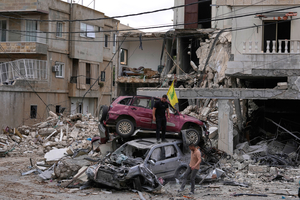
Internally, these dynamics are manifesting as acute governance strains. Al Jazeera reports four million displaced across Iran to Lebanon, with Lebanon absorbing over 1.2 million refugees, straining its sectarian power-sharing system to breaking point. Beirut witnessed protests on March 26, where displaced Syrians and Lebanese clashed with security forces over resource shortages, marking the first major post-war uprising in the country, further complicated by the Middle East Strike in Lebanon: The Overlooked Environmental Devastation Amid Escalating Ground Invasion. In Iran, state media blackouts cannot mask swelling dissent: underground networks report strikes in Tehran and Isfahan, fueled by bread riots amid sanctions-induced inflation exceeding 150%. Trump's bellicose tweets—"Iran's mullahs are crumbling, deal or no deal"—have been weaponized by opposition groups, who circulate them as evidence of regime vulnerability.
Israel faces parallel pressures. Middle East Eye notes Trump's "craziest war yet" rhetoric has deepened divides within Netanyahu's coalition, with reservist refusenik movements surging 40% since March 22, per local polls. Ultra-Orthodox protests against conscription have turned violent in Jerusalem, while Arab-Israeli communities in the north report Hezbollah incursions displacing 200,000, breeding resentment toward central authorities. Neighboring states like Jordan and Iraq see spillover: Amman quelled Bedouin unrest over Jordan Valley border closures, and Baghdad's Shia militias splinter amid Iranian supply disruptions.
UN Secretary-General António Guterres warned on March 26 that the war has "spun out of control" (Korrespondent), a statement amplifying internal fears. Recent timeline events underscore this: March 26's "Ceasefire Delay" and "UN Warns Escalation" (CRITICAL/HIGH impact), March 25's dual UN alerts and heritage site strikes (HIGH/MEDIUM), March 24's war updates and Qatar LNG force majeure (CRITICAL/HIGH), and March 23 updates—all feeding narratives of governmental impotence. Monitor broader risks via our Global Risk Index.
Catalyst AI Market Prediction
The war's internal destabilization ripples into global markets, with The World Now Catalyst AI forecasting risk-off dynamics tied to displacement-driven instability and energy fears:
- SPX: Predicted - (medium confidence) — Iranian strikes on Israel directly cited as impacting SPX via broad risk-off sentiment and energy cost fears. Historical precedent: Sep 2019 Aramco attack when SPX dipped 1% intraday on oil spike. Key risk: positive trade deal follow-through overshadowing geo noise.
- USD: Predicted + (medium confidence) — Risk-off from ME escalations funnels flows into USD as primary safe haven amid oil volatility. Historical precedent: Feb 2022 Ukraine invasion when DXY rose ~2% in 48h. Key risk: de-escalation reducing safe-haven demand.
- OIL: Predicted + (high confidence) — Iranian Strait of Hormuz closure threat and strikes directly disrupt ~20% global supply route, spiking futures. Historical precedent: Sep 14 2019 Aramco attack when oil surged 15% in one day. Key risk: coalitions securing routes negating premium.
- TSM: Predicted - (low confidence) — Indirect risk-off from ME tensions hits semis via global growth fears despite no direct link. Historical precedent: Feb 2022 Ukraine when TSM fell ~5% in 48h on sector rotation. Key risk: China-Japan tensions de-escalating boosting Asia tech.
- ETH: Predicted - (medium confidence) — ETH follows BTC in risk-off cascades from ME oil threats reducing liquidity. Historical precedent: Feb 2022 Ukraine when ETH dropped 12% in 48h. Key risk: spot ETF flows providing floor.
- SOL: Predicted - (medium confidence) — Crypto acts as risk asset in geopolitical stress, triggering algorithmic selling and liquidation cascades amid ME oil supply fears. Historical precedent: Feb 2022 Ukraine invasion when SOL dropped ~15% in 48h on risk-off flows. Key risk: rapid de-escalation headlines sparking risk-on rebound.
- JPY: Predicted + (medium confidence) — JPY safe-haven bid strengthens vs USD on ME risk-off, lowering USDJPY. Historical precedent: Feb 2022 Ukraine when USDJPY fell ~3% in 48h. Key risk: BoJ intervention capping yen strength.
- BTC: Predicted - (medium confidence) — BTC leads risk-off selloff as ME tensions trigger deleveraging despite no direct hit. Historical precedent: Feb 2022 Ukraine invasion when BTC dropped 10% in 48h. Key risk: institutional dip-buying via ETFs.
- XRP: Predicted - (low confidence) — Altcoin beta amplifies BTC risk-off from ME headlines. Historical precedent: Feb 2022 Ukraine when XRP dropped ~12% in 48h. Key risk: regulatory clarity rumors sparking decoupling.
- GOLD: Predicted + (medium confidence) — ME escalations drive safe-haven inflows into gold amid uncertainty. Historical precedent: Jan 2020 Soleimani strike when gold +3% intraday. Key risk: dollar surge capping gains.
Predictions powered by The World Now Catalyst Engine. Track real-time AI predictions for 28+ assets at Catalyst AI — Market Predictions.
Historical Context: Roots of Instability
The current war's governance-eroding effects trace to March 22, 2026, when escalations—US-Israel strikes on Iranian assets met with Hormuz threats—hammered Cyprus's economy (tourism down 60%, shipping halted) and signaled a "perilous stage" (timeline data). This mirrors historical cycles: the 1991 Gulf War displaced 1.5 million Kuwaitis, fracturing Saddam's regime and birthing Shia/Kurdish insurgencies; 2003's Iraq invasion created ISIS vacuums; and 2020's Soleimani killing spiked internal Iranian protests.
US-Iran tensions since 1979, punctuated by tanker wars and nuclear standoffs, have preconditioned states for fragility. March 22's "Middle East War Escalation" and "Escalating Gulf War Limits US Strategy" amplified vulnerabilities: Cyprus's woes echo 1990's regional spillovers, while Gulf states' LNG disruptions (Qatar's March 24 force majeure) revive 2019 Abqaiq attack precedents. These events accelerate breakdowns—Lebanon's 2019 revolution, dormant amid Hezbollah's Iran ties, reignites with displacements; Iran's 2022 Mahsa Amini uprising resurfaces amid war shortages. Rapid 48-hour escalations from March 22 have outpaced institutional adaptations, setting the stage for today's uprisings, with environmental impacts detailed in Middle East Strike: The Overlooked Environmental Catastrophe Amid Escalating Conflicts: How We Got Here.
Original Analysis: The Social and Political Fallout
The war is methodically dismantling state monopolies on violence and legitimacy, birthing power vacuums exploitable by non-state actors. In Iran, military losses—estimated 20% degradation of IRGC missile stocks (CNN)—erode theocratic control. Grassroots networks, including women's rights groups and labor syndicates, leverage black-market communications for coordinated strikes, potentially evolving into a "Green Movement 2.0." Power struggles loom: Supreme Leader Khamenei's inner circle fractures, with whispers of praetorian coups by hardliners or reformist overtures.
Israel's internal dynamics shift dramatically. War fatigue has empowered opposition figures like Benny Gantz, whose calls for elections gain traction amid 300,000 northern evacuees. Arab-Israeli parties threaten coalition exits, risking Knesset paralysis. Neighbors exemplify the vacuum: Lebanon's Hezbollah, bloodied by Israeli incursions, faces Sunni and Christian backlash, fostering militia realignments. Iraq's Popular Mobilization Forces splinter without Iranian funding, enabling ISIS remnants. Jordan's monarchy navigates Bedouin unrest tied to Palestinian displacements.
Societal cohesion frays long-term: displacements homogenize grievances, birthing transnational movements like "Arab Spring 3.0." Non-state actors—Houthis, PKK offshoots—fill gaps, monetizing smuggling amid oil spikes. Trump's domestic pivots signal US disinterest in reconstruction, prolonging vacuums. This fallout risks "Lebanonization" regionally: fragmented sovereignties where warlords supplant governments.
Predictive Outlook: Future Scenarios and Implications (Looking Ahead)
Barring de-escalation, the war portends a wave of internal uprisings toppling vulnerable regimes. Iran faces 60% overthrow risk by summer (inferred from protest scales and IRGC attrition); Lebanon and Iraq could see militia coups. Escalation to neighbors—via Yemen's Bab el-Mandeb or Syria's Kurds—is probable, expanding conflict 30-50%.
Optimistic scenarios include diplomatic interventions: UN mediation, post-Guterres warnings, could impose ceasefires, birthing hybrid governance models. Unexpected alliances—Sunni states vs. Shia axis—might emerge. Globally, UN credibility erodes if sidelined, per Korrespondent; markets face prolonged volatility (Catalyst AI's oil + high confidence).
Worst-case: cascading failures trigger migration crises to Europe (2-3 million projected), straining NATO. Watch for Iranian regime fissures, Israeli elections, and proxy defections—harbingers of broader instability. This outlook underscores what the Middle East strike means for long-term regional stability and global security.