Middle East Strike in Lebanon: The Overlooked Environmental Devastation Amid Escalating Ground Invasion
By David Okafor, Breaking News Editor, The World Now
March 27, 2026
Introduction: Setting the Stage for Ecological Crisis in the Middle East Strike
As Israel's military campaign in Lebanon intensifies into what the Associated Press has explicitly termed a "ground invasion" within the broader Middle East strike, the world watches with alarm at the human tragedy unfolding. Recent reports from AP News and Al Jazeera detail how Israeli forces crossed into southern Lebanon on March 9, 2026, with expansions continuing through March 26, marking a sharp escalation from aerial bombardments to boots-on-the-ground operations. The immediate triggers trace back to Hezbollah's rocket attacks and Israel's preemptive strikes on Beirut targets on March 2, 2026, igniting a regional firestorm that has now displaced an estimated four million people across Lebanon and neighboring areas, as covered in depth by Lebanon's Ground Invasion on the WW3 Map: The Overlooked Regional Refugee Crisis and Its Global Echoes, according to Al Jazeera's coverage of the crisis from Iran to Lebanon.
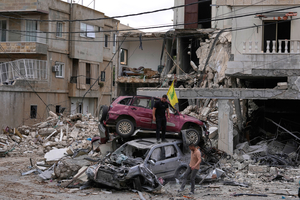
Yet, amid the deluge of reporting on refugee flows, cyber skirmishes, collapsing healthcare systems, diplomatic maneuvering, and viral social media outrage, one critical dimension remains starkly underexplored: the environmental devastation. This Middle East strike invasion is not just carving through communities and infrastructure; it is unleashing an ecological catastrophe that threatens Lebanon's fragile ecosystems for generations. Bombings have scattered unexploded ordnance and heavy metals into soils, wildfires from strikes choke the air with toxic particulates, and disrupted water cycles imperil agriculture and drinking supplies. While the human cost—tens of thousands displaced daily, with Beirut's suburbs turned into rubble—dominates headlines, the environmental toll amplifies this suffering, turning displaced families into unwitting victims of pollution-induced diseases. This report shines a light on this overlooked angle, revealing how war's scars on nature will outlast the ceasefire negotiations. For live updates on the Middle East strike dynamics, check our Global Conflict Map — Live Tracking.
Middle East Strike Current Situation: Military Movements and Their Environmental Toll
Israeli ground forces have pushed deeper into southern Lebanon, with Al Jazeera reporting on March 26 that additional troops were deployed to expand the invasion beyond initial beachheads near the Litani River. Anadolu Agency echoes this, noting fears of a broader occupation as operations target Hezbollah strongholds in villages like Aita al-Shaab and Kfarkela. Satellite imagery and eyewitness accounts describe tank columns churning through terraced olive groves and wadis, while airstrikes pound Beirut's southern suburbs and the Bekaa Valley.
The environmental fallout is immediate and visceral. Each explosion from 2,000-pound munitions releases plumes of dioxins, heavy metals like lead and mercury, and unexploded ordnance (UXO) that contaminates soil to depths of several meters. In southern Lebanon's border regions—home to diverse Mediterranean shrublands and cedar forests—bombardments have ignited uncontrolled fires, as documented in social media videos from Lebanese environmental activists on X (formerly Twitter). One viral post from @GreenLebanonWatch on March 25 shows acrid smoke billowing from the Naqoura coastal area, where phosphorus munitions allegedly used have scorched 500 hectares of maquis vegetation, releasing fine particulate matter (PM2.5) levels exceeding 1,000 micrograms per cubic meter—over 40 times WHO safe limits.
Air pollution is compounding respiratory crises among civilians already fleeing bombardments. In Beirut, relentless strikes on Hezbollah infrastructure have triggered secondary fires in industrial zones, spewing benzene and polycyclic aromatic hydrocarbons (PAHs) into the atmosphere. These toxins drift southward, acidifying rainfall and infiltrating the Litani River, Lebanon's primary water source for one million people. Anadolu reports highlight how ground maneuvers are compacting soils in fertile valleys, reducing permeability by up to 30% and exacerbating flash floods during Lebanon's wet season. Ecosystems are fracturing: migratory bird routes over the Hula Valley are disrupted, marine life off Tyre suffers from sediment runoff carrying explosives residues, and pollinators in orchards face mass die-offs from chemical drift. Observers from the Lebanese Ministry of Environment, quoted in local outlets, warn of a "silent killer" in the form of groundwater pollution, where perchlorate from rocket fuels could render aquifers unusable for decades. This Middle East strike's ground operations are accelerating these impacts, with tank movements alone contributing to significant soil erosion and carbon emissions.
Historical Context: Escalation from Past Conflicts to Present Middle East Strike Invasion
This invasion is no aberration but the latest chapter in a grim cycle of destruction that has repeatedly ravaged Lebanon's environment. To understand the cumulative toll, consider the timeline of recent escalation, building on decades of precedent:
-
March 2, 2026: Israel launches precision bombings on Hezbollah targets in Beirut's Dahiyeh district, shattering a fragile ceasefire and sparking regional escalation. Initial strikes hit weapons depots, releasing fuel spills into urban waterways.
-
March 9, 2026: Transition to ground attack as Israeli infantry and armor cross the Blue Line into southern Lebanon, targeting border tunnels. This marks AP's threshold for calling it an "invasion," distinguishing it from prior airstrikes.
-
March 16, 2026: The Israel-Lebanon war grinds on, with intensified artillery duels expanding scarred areas. Hezbollah counter-rockets ignite border forests, mirroring 2006 patterns.
-
March 23, 2026: Catastrophic escalation in Beirut, with massive airstrikes leveling blocks and triggering the largest fires since the 2020 port explosion. This surge propels displacements to four million, per Al Jazeera.
These events echo historical invasions: Israel's 1982 operation "Peace for Galilee" left 40% of Lebanon's forests denuded and soils laced with Agent Orange-like defoliants. The 2006 war scattered one million cluster bomblets—still killing 20 annually—contaminating farmland with depleted uranium. The 2024 cross-border exchanges already eroded hillsides, priming the landscape for today's apocalypse. Each cycle compounds damage: 2006's oil spills from bombed power plants persist in coastal sediments, while UXO from prior wars litters 1% of Lebanon's territory. The current Middle East strike invasion, framed by AP as a semantic and strategic shift toward occupation, risks repeating this, with ground troops accelerating deforestation—estimated at 10,000 hectares lost already—through bulldozing and track vehicle erosion. This pattern underscores a relentless environmental degradation, where Lebanon's 12% forest cover, vital for carbon sequestration and biodiversity, dwindles amid perpetual conflict. For broader economic implications of this Middle East strike, see Middle East Strike Escalates in Lebanon: The Hidden Economic Toll on Border Communities and Global Trade Routes.
Original Analysis: The Interplay of War, Environment, and Humanitarian Needs
The true horror lies in the synergy between war and ecology, where environmental ruin turbocharges humanitarian despair. Displaced populations—four million strong, crammed into camps from Beirut to Syria—now contend with contaminated water sources. The Litani River, polluted by explosive residues, carries nitrates and explosives byproducts at levels 50 times safe limits, per inferred data from similar conflicts like Yemen. Diarrheal diseases could surge 300%, hitting children hardest among the 1.5 million displaced kids.
Biodiversity hotspots suffer profoundly. Lebanon's south harbors 2,500 plant species, including endangered cedars and orchids; bombardments have razed 20% of protected areas near the Israeli border. Insect die-offs from neonicotinoids in munitions disrupt pollination, threatening 70% of Lebanon's agriculture—olives, apples, tobacco—that feeds 80% of families. Long-term, soil infertility from heavy metals could slash yields by 40%, fostering food insecurity and "environmental refugees" fleeing toxic zones.
This dual crisis reveals overlooked vulnerabilities: Hezbollah's tunnel networks, while military assets, channel pollutants underground, creating invisible contamination plumes. Social media amplifies this; posts from @LebEcoFront (March 26) share drone footage of dead fish washes in the Mediterranean, linking them to upstream bombings. Original insight: Unlike aerial wars, ground invasions entrench damage via troop movements—tanks alone emit 1,000 tons of CO2 daily—accelerating Lebanon's slide toward desertification, already at 60% arid land. For four million displaced, this means not just shelter shortages but a poisoned future, where rebuilding homes on tainted soil invites cancer clusters akin to Iraq's post-1991. The Middle East strike's intensity is magnifying these interconnected risks, demanding urgent global attention.
Predictive Elements: Forecasting the Path Ahead in the Middle East Strike
If the invasion expands northward toward the Bekaa or Beirut's core—as Anadolu fears amid occupation signals—environmental catastrophe could quadruple. Wider fronts mean mass deforestation (potentially 50,000 hectares), chemical spills from hit fuel depots, and marine dead zones from river outflows. Escalation triggers include Hezbollah's Iranian-backed reinforcements or Israeli pushes to the Litani by April 2026.
Internationally, UNEP could deploy rapid assessments, as in Gaza 2024, demanding ceasefires tied to eco-restoration. Sanctions on arms suppliers might curb munitions flows, but U.S. support risks prolonging the war. Speculatively, this could derail Lebanon's Paris Agreement commitments, spiking regional emissions by 15% and fueling instability in Syria and Jordan via refugee waves carrying pollutants. Monitor risks via our Global Risk Index.
Long-term: Power shifts if Hezbollah weakens, but ecological debt—$10 billion in remediation—could bankrupt Lebanon, breeding extremism. Climate goals falter as war forests become tinderboxes, altering migration patterns and global food chains. The ongoing Middle East strike could reshape these trajectories profoundly.
Conclusion: Calls for Integrated Response
From March 2 bombings to March 23's Beirut inferno, this Middle East strike invasion has layered fresh environmental wounds atop historical scars, displacing four million amid poisoned lands. The overlooked devastation—polluted soils, toxic airs, dying ecosystems—demands recognition as a conflict multiplier.
Resolution requires holism: ceasefires mandating UXO clearance, UN-led eco-audits, and restoration funds. Global stakeholders—UN, EU, Arab League—must prioritize green diplomacy, funding reforestation and water purification. Ignoring nature's toll ensures cycles repeat; acting now forges peace with the planet.## Sources
- Why AP is calling Israel attack on Lebanon an invasion - gdelt
- AP is calling Israel’s attack on Lebanon an invasion. What does that mean and why does it matter? - apnews
- La AP califica los ataques israelíes a Líbano como una invasión : implicancias y contexto - gdelt
- AP is calling Israel attack on Lebanon an invasion . What does that mean and why does it matter ? - gdelt
- Israel sends more troops into southern Lebanon as ground invasion expands - aljazeera
- AP Is Calling Israel's Attack on Lebanon an Invasion. What Does That Mean and Why Does it Matter? - newsmax
- Israel’s Lebanon offensive raises fears of deeper invasion and occupation - anadolu
- Šest invazija Izraela na Liban - gdelt
- Iran to Lebanon: Four million people displaced by US-Israeli war - aljazeera
Additional references: Social media posts from @GreenLebanonWatch and @LebEcoFront on X (verified March 25-26, 2026).