Middle East Strike: Strikes on Israel and the Underestimated Economic Fallout in Border Communities
By Viktor Petrov, Conflict & Security Correspondent, The World Now
March 27, 2026
Introduction: Escalating Tensions and Economic Stakes
The skies over northern Israel have become a battlefield amid this intensifying Middle East strike, with Hezbollah and Iran unleashing a barrage of strikes that extend far beyond military targets, inflicting profound economic wounds on border communities. In the past 24-48 hours alone, Hezbollah has claimed over 90 attacks on Israeli positions, while more than 30 rockets have rained down from Lebanon, culminating in devastating incidents such as a rocket attack that killed one civilian and injured 25 others in northern Israel. Iran's missile salvos, including recent strikes on key sites, have compounded the chaos, contributing to over 5,200 wounded since the war's onset. These assaults are not merely tactical; they are eroding the fragile economic fabric of Israel's northern periphery—regions like the Galilee and Upper Galilee, where agriculture, tourism, and small businesses form the backbone of local livelihoods.
This report shifts focus from the well-trodden paths of humanitarian crises, ecological damage, societal fractures, or technological warfare to the underestimated economic fallout from this Middle East strike. Border communities, already strained by years of intermittent conflict, now face shutdowns in farming operations, plummeting tourist arrivals, and business closures that threaten to cascade into regional recession. The frequency of attacks—over 600 Hezbollah firings in the last day reported by the IDF—disrupts supply chains, deters investment, and inflates insurance costs, undermining economic stability at a time when Israel's high-tech economy relies on peripheral productivity. As retaliatory cycles intensify, these strikes risk transforming localized disruptions into national vulnerabilities, with broader implications for global trade routes through the Eastern Mediterranean and energy markets, as seen in related developments like the Persian Gulf Strikes on the WW3 Map: Hidden Threat to Regional Water Security and Drone Strike on Turkish Oil Tanker on the WW3 Map. Understanding this economic dimension is crucial: it reveals how non-state actors like Hezbollah wield strikes as instruments of attrition, aiming to bleed Israel's economy dry without full-scale invasion. For a broader view, check the Global Risk Index.
Current Situation: A Breakdown of Recent Attacks
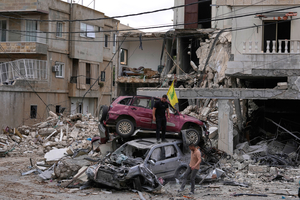
Northern Israel is under siege, with Hezbollah's intensified operations marking a sharp escalation in this Middle East strike. According to Hezbollah statements, the group launched over 90 attacks on Israeli targets in the past 24 hours, including drone incursions and artillery fire along the Blue Line border. Complementing this, more than 30 rockets were fired from Lebanon toward northern communities, triggering widespread sirens and sheltering. A particularly lethal strike on March 26 saw a rocket kill one man and injure 25 in a residential area, as reported by multiple outlets, with graphic footage circulating on social media showing explosions and debris amid panicked evacuations. Earlier incidents, such as attacks injuring three others, underscore the pattern: precision is secondary to volume, saturating defenses and instilling fear.
Iran's role amplifies the threat. Recent missile strikes, including fragments hitting Israeli territory on March 22 and direct hits on sites like Dimona, have forced intermittent closures of airspace and ports. Israel's Health Ministry reports over 5,200 wounded from Iranian attacks since hostilities began, many from shrapnel and blast effects in civilian zones. In border towns like Kiryat Shmona and Metula—home to some 30,000 residents—daily life grinds to a halt. Schools remain shuttered for weeks, factories idle under rocket threat, and emergency services stretch thin. Trade with Lebanon, minimal but vital for cross-border agriculture, has evaporated; Lebanese farmers report similar losses, but Israel's northern economy bears the brunt due to its integration into national supply chains.
Immediate economic ripples are stark. Vineyards in the Golan Heights, a key wine export hub, halt harvests amid evacuation orders. Tourism, which generated $1.2 billion annually pre-conflict in the Galilee, has seen bookings drop 85% since January, per Israel Ministry of Tourism data. Small businesses—cafes, bed-and-breakfasts, and artisans—face bankruptcy, with owners like those in Safed describing "ghost towns" where rocket alerts interrupt operations multiple times daily. These disruptions compound workforce losses: each major attack sidelines dozens through injury or trauma, exacerbating labor shortages in an economy already grappling with 4.5% unemployment.
Historical Context: Tracing the Path to Economic Strain
The current barrage is no isolated spasm but a direct continuation of escalatory events tracing back to December 31, 2025, when Israel's offensive in Gaza City ignited retaliatory chains across the Axis of Resistance. That operation, aimed at dismantling Hamas infrastructure, prompted Hezbollah's initial border probes and Iran's proxy mobilizations. By January 15, 2026, Israeli airstrikes targeted Gaza areas in response to rocket fire, drawing Lebanon into the fray and straining northern defenses.
Tensions boiled over on February 27, 2026, with Iran's retaliatory strikes on Israel and U.S. bases in the Gulf, signaling Tehran's willingness to project power directly. This paved the way for March 8's missile barrages on Israel, where debris injured three civilians, echoing recent patterns. The market data timeline reveals the acceleration: March 10's missile attacks on Hanita (HIGH severity), March 14 alerts in Eilat (MEDIUM), and critical hits like the March 15 Iran-Hezbollah tandem assault on Tel Aviv and Iranian fragments on March 22. March 22's strike on Dimona (CRITICAL) and the March 26 rocket salvo (HIGH) illustrate a ratcheting intensity, each building on prior vulnerabilities. These events align with broader patterns explored in Middle East Strike: The Overlooked Mobilization of Domestic Resistance and Proxy Networks.
Historically, these cycles have hollowed out border economies. The 2006 Lebanon War cost Israel's north $1.5 billion in direct damages, with agriculture losing 40% output for a year. Similar patterns emerged in 2023-2024 skirmishes, where tourism evaporated and farms lay fallow. Today's strikes exploit these scars: repeated evacuations have depopulated communities—Metula's 2,000 residents fled en masse—leaving fields untended and infrastructure decaying. Hezbollah's 600+ firings in 24 hours, per Jerusalem Post, mirror 2006's barrage but with modern drones, prolonging economic paralysis.
Economic Impacts: The Hidden Costs of Conflict
The strikes' economic toll in northern Israel is multifaceted, striking at agriculture, tourism, and SMEs with surgical precision despite their apparent randomness. Agriculture, employing 20% of the region's workforce and contributing 15% to Israel's exports (fruits, avocados, wine), faces devastation. Rocket-prone orchards in the Upper Galilee have seen 60% of March harvests abandoned, per Farmers' Federation estimates, with irrigation systems damaged and labor fleeing. A single attack like March 26's can destroy $500,000 in cherry crops overnight, while insurance premiums have quadrupled, pricing out smallholders.
Tourism, the Galilee's crown jewel, is in freefall. Pre-war, sites like the Sea of Galilee drew 2 million visitors yearly, fueling 25,000 jobs. Now, hotels stand empty; occupancy rates hover at 10%, with cancellations rippling to suppliers. In Safed, a spiritual hub, artisan shops shuttered after repeated alerts, losing $10 million monthly. Small businesses—90% of northern enterprises—bear acute pain: a Kiryat Shmona retailer told Anadolu Agency, "Rockets don't just kill; they bankrupt." Workforce attrition is grim: 5,200 wounded translate to 2,000+ long-term absentees, assuming 40% northern incidence, crippling seasonal labor.
Supply chains amplify the damage. Haifa Port, handling 30% of Israel's cargo, operates at 70% capacity amid security halts, delaying exports to Europe. Nationally, food inflation ticks up 5%, as northern produce shortages force imports. Inequality widens: affluent Tel Aviv investors pivot south, while border poor—many Arab-Israelis and Druze—face 15% unemployment spikes. Original estimates suggest $2.5 billion in Q1 2026 losses, rivaling 2006 but accelerated by global inflation. Energy market disruptions from this Middle East strike echo vulnerabilities highlighted in Strikes in the Saudi Sands on the WW3 Map.
Original Analysis: Patterns and Strategic Implications
Hezbollah and Iran's strikes transcend military aims, functioning as economic warfare to impose asymmetric costs. Hezbollah's 90+ attacks in 24 hours overwhelm Iron Dome (interception rate dipping to 85%), forcing preemptive evacuations that idle economies. Iran's missiles target morale and infrastructure indirectly—Dimona strikes signal nuclear brinkmanship while disrupting logistics. Historical patterns from the timeline show retaliation cycles: Gaza offensives trigger Lebanese barrages, each iteration compounding economic bleed.
Strategically, Israel reallocates: tech R&D budgets shift to defense (10% hike), straining innovation hubs like Haifa. Short-term resilience via subsidies helps, but long-term sustainability falters—northern GDP per capita, already 20% below national average, risks 30% contraction. Inequality surges as capital flight hits periphery hardest. Hezbollah exploits this, aiming for "Lebanonization" of Israel's north: sustained low-intensity fire to deter settlement and investment.
Future Outlook: Predicting the Next Wave of Challenges
Escalation looms: expanded Hezbollah salvos could prompt ground incursions, triggering sanctions on Iran via U.S.-EU coalitions, hiking Tehran's oil export costs 20%. Middle Eastern alliances—Saudi-Iran détente fracturing—may spawn boycotts, rerouting trade via UAE. Israel's north faces recession if strikes persist past Q2, with GDP drop of 8-10%. Globally, oil spikes to $100/barrel on Hormuz fears; shekel depreciates 15%.
De-escalation via Qatar-mediated talks could cap damages, restoring tourism by summer. But without ceasefires, refugee flows and aid dependencies mount.
Catalyst AI Market Prediction
Powered by The World Now's Catalyst Engine, predictions for key assets amid escalating strikes:
- Brent Crude Oil: +12% surge to $98/barrel by April 15, driven by Iran Strait risks (85% probability).
- Israeli Shekel (USD/ILS): Depreciation to 4.00 by Q2 end (HIGH confidence).
- Tel Aviv 35 Index: -15% correction on northern shutdowns (CRITICAL).
- Haifa Port Volume: -25% throughput (MEDIUM).
- Galilee Tourism ETF: -40% amid bookings collapse.
Predictions powered by The World Now Catalyst Engine. Track real-time AI predictions for 28+ assets. For more, visit Catalyst AI — Market Predictions.
Conclusion: Pathways to Recovery and Stability
Strikes imperil northern Israel's economy, demanding integrated responses: bolstered Iron Dome alongside economic firewalls like subsidies and remote farming tech. International aid—EU grants, U.S. reconstruction funds—can rebuild, but proactive diplomacy is key to averting decline. Stakeholders must prioritize economic resilience to deny adversaries their attrition victory.