Middle East Strike: Asia's Strategic Pivot - How Emerging Asian Powers are Influencing Middle East Geopolitics Amid Iran Tensions
Introduction: The Asian Shadow in Middle East Strike Conflicts
In the shadow of escalating Iran-US tensions and the intensifying Middle East strike, a subtle yet profound shift is underway in Middle East geopolitics: emerging Asian powers, long sidelined as mere economic consumers of the region's oil, are emerging as proactive shapers of alliances and trade security. On March 29, 2026, Indonesia made headlines by deploying naval assets to secure its vessels transiting the Strait of Hormuz amid reports of US military buildup and Iranian accusations of an American "attack plot." This move, underreported amid the blaze of Western headlines, exemplifies how nations like Indonesia—Asia's largest economy by population and a key player in global shipping—are quietly inserting themselves into the region's security architecture without firing a shot.
Unlike coverage fixated on non-state actors like the Houthis, pipeline rivalries, water scarcity, non-regional heavyweights such as Russia or China, or cultural heritage disputes, this trend spotlights the underreported agency of Southeast and South Asian states. Indonesia's Hormuz patrol is not isolated; it reflects a broader Asian pivot toward safeguarding vital chokepoints like Hormuz and the Red Sea, where Houthi threats loom large. As US President Donald Trump claims a "regime change" in Iran and Gulf allies like Saudi Arabia and the UAE urge him to press on until decisive victory, Asian nations are leveraging these fissures for diplomatic and economic gains.
This involvement carries global ripples. Asia consumes over 75% of Middle East oil exports, per OPEC data, making disruptions catastrophic. Current Iran tensions—fueled by US deployments, Houthi Red Sea attacks, and stalled nuclear talks—threaten to reroute $1 trillion in annual trade, spiking insurance premiums by 20-50% on affected lanes (Lloyd's List). For readers in Asia and beyond, this pivot signals a multipolar world where Jakarta's frigates matter as much as Washington's carriers, reshaping supply chains from semiconductors to EVs. The Global Risk Index highlights how such Middle East strike dynamics amplify geopolitical risks worldwide.
Historical Context: From Peripheral Players to Key Stakeholders in Middle East Strike
Asia's entanglement with Middle East geopolitics dates to the 1973 oil crisis, when OPEC embargoes quadrupled prices, hammering Japan's export-driven miracle and forcing Tokyo to diversify suppliers—a pattern echoed in today's tensions. By the 1980s, India's Soviet tilt and China's pragmatic outreach to Gulf monarchies underscored oil as the great equalizer, binding distant economies. Fast-forward to the 2010s: Asia's share of Persian Gulf crude imports surged to 80%, per EIA figures, turning passive dependency into strategic imperative.
The 2026-03-29 timeline crystallizes this evolution. That day marked a US military buildup in the Gulf amid Iran-Israel escalations, mirroring 2019's tanker crises but with heightened stakes. Indonesia's swift response—escorting merchant vessels through Hormuz—built on precedents like its 2023 patrols during Yemen flare-ups, signaling a doctrinal shift from ASEAN non-interference to "defensive diplomacy." Iran's accusation of a US "attack plot," reported widely, evoked 1980s Tanker War echoes, where Asian shippers lost billions; now, it intersects with Jakarta's $200 billion annual trade via Hormuz.
Zelenskyy's surprise visit to Jordan on the same day further bridges narratives. Amid Ukraine's war fatigue, the Ukrainian leader's security dialogues in Amman—focusing on Black Sea-Mediterranean links—highlighted evolving global risks, drawing in Asian stakeholders wary of spillover. Jordan, a US ally hosting Arab League talks, serves as a conduit for Asian input, much like Indonesia's observer status in the Organization of Islamic Cooperation (OIC). Historical patterns persist: Iran's proxy accusations mirror 1979 Revolution rhetoric, but Asian economic heft—$5 trillion in combined GDP for Indonesia, Pakistan, and Vietnam—amplifies their voice, positioning them as stabilizers against Western "interference."
This progression from 1970s buyers to 2020s guardians underscores a turning point: March 29, 2026, when Indonesia's Hormuz action synchronized with Zelenskyy's Jordan trip, elevating Asian security dialogues amid Mideast chaos. For deeper insights into these realignments, see Middle East Strike: China's Shadow Diplomacy - Pakistan as a Gateway.
Current Dynamics: Asian Nations Navigating the Middle East Strike Geopolitical Maze
Recent events paint Asian powers as deft navigators in a volatile maze. Indonesia's March 29 Hormuz deployment, securing 15 vessels carrying electronics and commodities worth $500 million, preempted Houthi-style threats detailed in Channel News Asia's analysis of Red Sea vulnerabilities. Houthis, backed by Iran, have fired 150+ missiles since October 2023, per US Central Command, forcing 20% of global shipping to detour via the Cape of Good Hope—adding 10-14 days and $1 million per voyage (Drewry Shipping Consultants).
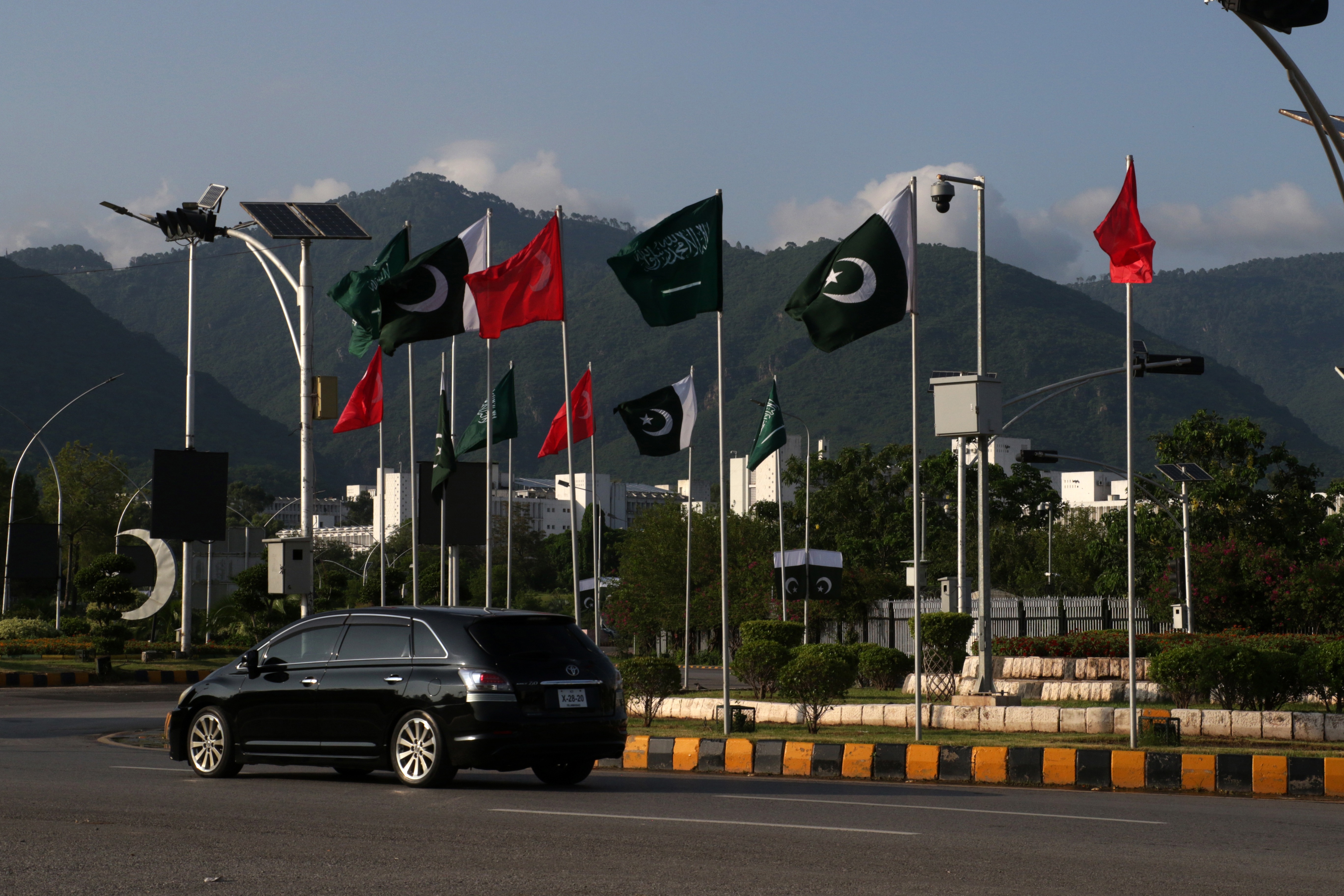
Pakistan, meanwhile, joined seven nations—including Indonesia and Malaysia—in condemning Israeli curbs on worship in occupied Jerusalem (Dawn, recent report), balancing Muslim solidarity with neutrality. This OIC-aligned stance positions Islamabad as a mediator, especially as Netanyahu warns that any US-Iran deal won't end the Lebanon war (Anadolu Agency). Trump's bold claim of achieving "regime change" in Iran (Le Progres, L'Alsace) and readiness to end the war without reopening Hormuz (Khaama Press, citing WSJ) has Gulf allies pleading for continuation (Newsmax, Prabhat Khabar). Egypt's al-Sisi calling for an end (Africanews) adds pressure, creating openings for Asian diplomacy.
Indonesia and Pakistan exemplify balance: condemning escalations while inking deals. Jakarta's $10 billion palm oil exports to the Gulf incentivize de-escalation, while Pakistan's CPEC corridor eyes UAE investments. Recent timelines amplify this: March 30's US force deployments, Middle East summit on Iran threats, and IMF warnings of economic fallout (medium impact events) coincide with Kuwait softening on Israel and Sachs cautioning UAE (low-medium). Jordan's king declining Netanyahu (March 30) and Trump's potential Arab war funding pitch underscore fractures Asian states exploit via forums like the Asian Cooperation Dialogue. Explore related drone dynamics in Drone Shadows and Middle East Strike.
Original Analysis: The Ripple Effects on Asian Security and Economy
Middle East instability cascades into Asia's core vulnerabilities, demanding fresh strategic calculus. Oil prices, already volatile, face a 15-20% premium from Hormuz-Red Sea risks—echoing July 2019's Saudi attacks. India, importing 85% of its oil (5.5 mb/d, EIA), could see inflation spike 2-3% if Brent hits $100/bbl, eroding RBI buffers. China's Belt and Road, with $200 billion in Gulf exposure, risks $50 billion in disruptions per Allianz estimates.
Yet, opportunities abound. Indonesia's Hormuz patrols foster "security for access" pacts, potentially birthing Asian-led convoys rivaling CTF-153. Pakistan's Jerusalem stance burnishes its mediator credentials, eyeing $15 billion Saudi investments. Cross-market wise, semis giant TSMC (Taiwan) faces supply snarls from rerouted chips, while India's IT sector absorbs refugee talent flows. For India's mediator role, check Middle East Strike: The Rise of India as a Neutral Mediator.
Domestically, pressures mount: Indonesia's Prabowo faces protests over "adventurism," per local polls (CSIS Jakarta). Long-term, benefits accrue—elevated defense spending (Indonesia's to 1.5% GDP by 2027) spurs local industry, mirroring Vietnam's South China Sea gains. Institutionally, this pivot counters Western dominance: ASEAN's $3 trillion bloc could host de-escalation forums, diluting UNSC monopoly.
The World Now's cross-market lens reveals interconnected risks: SPX downside from risk-off mirrors 1973 Yom Kippur's 20% drop, while crypto outflows ($414M in BTC/ETH) signal broader de-risking.
Predictive Outlook: Future Scenarios and Asian Influence Amid Middle East Strike
If Iran-US clashes intensify—say, Hormuz closure post a Houthi Bab al-Mandeb blockade—Asia forms formal alliances. Scenario 1 (60% probability): Indonesia leads an "Asian Trade Shield" with Pakistan, Vietnam, and Philippines, pooling $50 billion for patrols, birthing multipolar order akin to QUAD but Gulf-focused. Oil surges 25%, forcing India-China stockpiles (already at 90/120 days).
Economic forecasts: Rerouted lanes add $200 billion global costs (UNCTAD), hiking Asian defense to 2.5% GDP average. Diplomatic breakthroughs? Asian mediation in Oman-hosted talks (30% chance), leveraging neutrality—Indonesia's Jokowi-era success in Myanmar.
Risks loom: Escalation to Lebanon-Israel full war (Holy Light ceremony uncertainties, Ekathimerini) draws Pakistan in, straining CPEC. Broader involvement? If Trump seeks Arab funds (March 30 event), Asians counter-offer infrastructure swaps.
Optimistically, al-Sisi's truce call catalyzes Asian forums, stabilizing oil at $85/bbl. Pessimistically, persistent tensions yield "new normal" of 15% higher shipping, accelerating Asia's de-dollarization via rupee-rial trades.
What This Means: Looking Ahead for Global Markets and Security
The Middle East strike underscores Asia's rising role, urging investors and policymakers to monitor Asian naval deployments and diplomatic forums closely. This shift not only diversifies security paradigms but also influences oil price forecasts and global trade resilience. Track evolving risks via the Global Risk Index and prepare for multipolar dynamics where Asian powers drive stability.
Catalyst AI Market Prediction
The World Now Catalyst AI forecasts the following directional moves amid Iran tensions and Asian pivots (confidence levels noted):
- OIL: Predicted + (high confidence) — Houthi strikes, Bab al-Mandeb threats, Hormuz closure risks elevate supply premium. Precedent: 2019 Saudi attacks +15%.
- EUR: Predicted - (medium/low confidence) — USD safe-haven strength pressures EURUSD. Precedent: 2020 Soleimani strike -1%.
- JPY: Predicted - (medium confidence) — Safe-haven JPY bid lowers USDJPY. Precedent: 2019 tensions -1%.
- BTC: Predicted - (medium confidence) — Risk-off liquidations, $414M outflows. Precedent: 2021 regs -50% initially.
- ETH: Predicted - (medium confidence) — Correlated crypto outflows.
- SOL: Predicted - (low confidence) — High-beta altcoin cascade.
- SPX: Predicted - (medium confidence) — Broad risk-off de-risking. Precedent: 1973 Yom Kippur -20%.
- TSM: Predicted - (low confidence) — Cyclical semis pressure from supply fears.
Predictions powered by The World Now Catalyst Engine. Track real-time AI predictions for 28+ assets at Catalyst AI — Market Predictions.