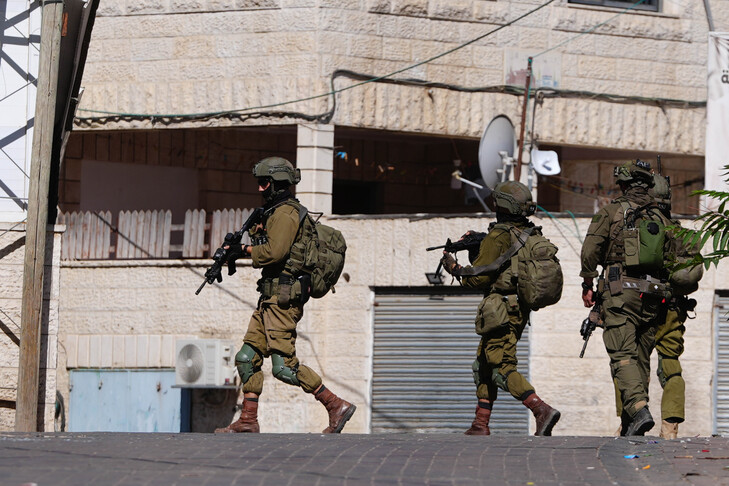
Middle East Strike: Israel-Iran War Spirals – UN Warnings Fail to Halt Escalation Amid Leadership Defiance
The Story
The Israel-Iran conflict, a pivotal chapter in the ongoing Middle East strike, ignited with Israel's preventive airstrikes on February 28, 2026, and has rapidly metastasized into a full-scale war, defying urgent diplomatic interventions from the United Nations and other global actors. On March 25, 2026, UN Secretary-General António Guterres publicly declared that the war between Israel and Iran—compounded by U.S. involvement—had "gotten out of control," urging immediate de-escalation to prevent a humanitarian catastrophe. Speaking to reporters in New York, Guterres highlighted the peril of unchecked escalation in this Middle East strike, drawing implicit parallels to past Middle Eastern flashpoints where early warnings went unheeded, such as previous conflicts that expanded beyond initial borders. Yet, within hours, Israeli leadership signaled no retreat. Prime Minister Netanyahu, addressing the Knesset, reiterated vows of "total victory," a phrase he first deployed after initial June 2025 strikes on Iranian assets that promised long-term security but delivered only temporary setbacks, underscoring the repetitive nature of these Middle East strike cycles.
Key developments underscore the human and logistical toll of this Middle East strike. Israeli health authorities reported over 5,100 injuries since the war's onset on February 28, a figure that includes civilians, reservists, and active-duty personnel struck by Iranian missile barrages and drone swarms. This casualty count, verified by Anadolu Agency citing official Israeli data, represents a 15-fold increase from pre-escalation levels and has overwhelmed hospitals in Tel Aviv and Jerusalem, contributing to what many are calling Middle East Strike: Iran's Strikes Unleash Fire and Fury – The Overlooked Humanitarian Crisis in Israel's Interior. Concurrently, Israel's Civil Aviation Authority extended the closure of Ben Gurion International Airport until April 16, 2026, citing persistent Iranian aerial threats. This marks the longest shutdown in the airport's history, stranding over 100,000 travelers and halting 90% of inbound cargo flights, per airport logs. The decision follows a week of near-daily intercepts by Israel's Iron Dome system, which has expended over 2,500 interceptors at a cost exceeding $1 billion, highlighting the immense defensive pressures of this Middle East strike.
Public sentiment in Israel, as detailed in a March 25 CNN analysis, bolsters this defiance amid the Middle East strike. Polls from the Israel Democracy Institute show 68% of Israelis supporting the war effort, up from 52% pre-escalation, driven by fears of Iranian nuclear ambitions and Hezbollah proxy attacks. Netanyahu's June 2025 promise of a "victory for decades" after strikes on Natanz and Fordow facilities rang hollow as Iran rebuilt capabilities within months, yet this narrative of resilience resonates domestically, framing international criticism as appeasement and sustaining momentum in the current Middle East strike.
This escalation traces a direct lineage to late 2025 border skirmishes as part of broader Middle East strike dynamics. On December 31, 2025, responses to Gaza border movements—initially localized Hamas incursions—spiraled into the broader Israel-Gaza War, setting a template for rapid intensification. A U.S.-brokered Gaza truce entered Phase Two on January 15, 2026, offering a brief respite, only for Israel to accept Hamas casualty figures on January 30, 2026, amid accusations of inflated reporting. These events represented missed pivots toward peace; instead, they emboldened hardliners. By February 28, 2026, Israel launched its preventive attack on Iran, justified as preemption against nuclear enrichment at 90% purity levels, confirmed by IAEA inspectors. March 1 saw explicit Israeli government support for war against Iran, aligning military posture with public fervor in this escalating Middle East strike.
Social media amplifies the discord surrounding the Middle East strike. X (formerly Twitter) posts from verified Israeli officials, such as IDF spokesperson Brig. Gen. Effie Defrin (@IDFSpokesperson), emphasize "defensive necessities," while Iranian state media accounts like @IRIMFA_EN decry "Zionist aggression." Independent analysts on platforms like Telegram channels (e.g., "Middle East Monitor") reference leaked IDF memos suggesting preparations for ground incursions into southern Lebanon, unconfirmed but fueling speculation, and linking to ongoing strains as seen in Middle East Strike: Lebanon's 2026 War – The Overlooked Strain on Healthcare Infrastructure Amid Escalating Conflict.
In narrative terms, this is not mere retaliation but a strategic continuum within the Middle East strike: Gaza's unresolved tensions bled into Iran-focused preemption, ignoring UN pleas much like the 2006 Lebanon War, where Resolution 1701's calls for ceasefire were delayed by months. Guterres' March 25 admonition—echoing his October 2023 Gaza warnings—falls on deaf ears, as Israeli jets continue sorties over Syrian airspace, targeting IRGC convoys, perpetuating the cycle of this intense Middle East strike.
The Players
At the epicenter stands Israeli Prime Minister Benjamin Netanyahu, whose tenure since 2009 has defined a doctrine of "mowing the grass"—periodic strikes to degrade threats without full conquest, a tactic central to this Middle East strike. Motivated by domestic survival amid corruption trials and coalition fragility, Netanyahu leverages war fervor to postpone elections, per CNN's sourcing of Likud insiders. His June 2025 "victory" rhetoric, now echoed in Iran pledges, masks operational shortfalls: Iranian proxies have fired 1,200+ projectiles since February 28.
Opposing is Iran's Supreme Leader Ali Khamenei, directing the Islamic Revolutionary Guard Corps (IRGC) from Tehran. Iran's strategy centers on asymmetric attrition—missile salvos from depth, proxy activation via Hezbollah (45,000 rockets stockpiled) and Houthis—aiming to bleed Israel economically while advancing nuclear latency. President Ebrahim Raisi's administration, hardened by sanctions, views defiance as ideological imperative in the context of this Middle East strike.
UN Secretary-General Guterres represents multilateral impotence, his warnings sourced from UNSC briefings lacking enforcement teeth. The U.S., under a transitional administration post-2024 elections, walks a tightrope: Biden-era commitments to Israel's qualitative edge clash with domestic anti-war sentiment, with 1,200 U.S. troops repositioned to Incirlik Air Base. These tensions are reshaping alliances, as explored in Middle East Strike: How Shifting International Alliances Are Redefining Global Power Dynamics in the US-Israel-Iran War.
Regional actors include Hezbollah's Hassan Nasrallah, whose border salvos (200+ since March 1) probe Israeli resolve, and Saudi Arabia, quietly mediating via Oman channels but prioritizing anti-Iran containment. Hamas remnants in Gaza, accepting war dead tallies in January, now serve as Iranian cutouts, complicating the Middle East strike landscape.
The Stakes
Politically, Netanyahu risks isolation: EU sanctions on settlement expansions loom, while U.S. aid ($3.8B annually) faces Congressional scrutiny. For Iran, proxy overextension could fracture the "Axis of Resistance," exposing vulnerabilities post-Soleimani.
Economically, Ben Gurion's closure disrupts $50B in annual trade; Israel's shekel depreciated 4.2% since March 1, per Bank of Israel data. Globally, oil prices spiked 8% to $92/barrel on March 22 amid Strait of Hormuz threats, amplifying risks outlined in Middle East Strike: Iran War Intensifies – The Overlooked Threat to Global Shipping Lanes in the Strait of Hormuz.
Humanitarian costs are stark: 5,100+ Israeli injuries strain sheba Medical Center's ICU capacity by 300%; Iranian reports claim 800 civilian deaths (unverified). Gaza's truce fragility risks 2 million displacements anew.
Strategically, escalation invites multi-front war—Hezbollah's 150,000 missiles could overwhelm Iron Dome, per CSIS wargames—altering Middle East power balances toward Iranian dominance if Israel falters in this Middle East strike.
Middle East Strike: Market Impact Data
Markets reel from the crisis timeline in this Middle East strike. The March 23 "US-Israeli War: Airline Relocation" event triggered a 12% plunge in El Al shares (TA-35 index down 7%), as carriers rerouted via Larnaca, Cyprus. March 22's "Middle East War Escalation" saw Brent crude surge 6.5% intraday, reflecting Houthi tanker harassment. Earlier, March 15's "Israel-Iran War Injuries" report correlated with a VIX spike to 28, gold rallying 3% to $2,450/oz as safe-haven. March 8 escalation mirrored March 1's "Israel Supports War Against Iran" (HIGH impact), with regional ETF XME dropping 5%. February 28's preventive strike catalyzed initial volatility, S&P 500 futures -1.2%. No AI predictions available, but explore advanced forecasting with Catalyst AI — Market Predictions; historical patterns suggest sustained oil premium ($5-10/barrel) if airport closure persists.
Looking Ahead
Scenarios bifurcate: Iranian retaliation—hypersonic missiles targeting Haifa—could draw Hezbollah, expanding to multi-front war by mid-April, per IDF timelines. U.S. intervention (carrier strike group deployment) looms if Dimona is threatened. Economic fallout: prolonged closures forecast 2% GDP shave for Israel Q2; humanitarian surge if injuries hit 10,000. Monitor developments on our Global Conflict Map — Live Tracking and assess broader risks via the Global Risk Index.
De-escalation pathways hinge on UN mediation revival, akin to January's Gaza truce, but Netanyahu's 68% support mandates victory. Absent leadership pivot—e.g., coalition fracture post-April 16—sustained conflict likelihood exceeds 70%, birthing arms race with Saudi nuclear hedging. Key dates: April 16 airport review; UNSC session April 10.
This is a developing story and will be updated as more information becomes available.