
Middle East Strike: Iran War Intensifies – The Overlooked Threat to Global Shipping Lanes in the Strait of Hormuz
The Story
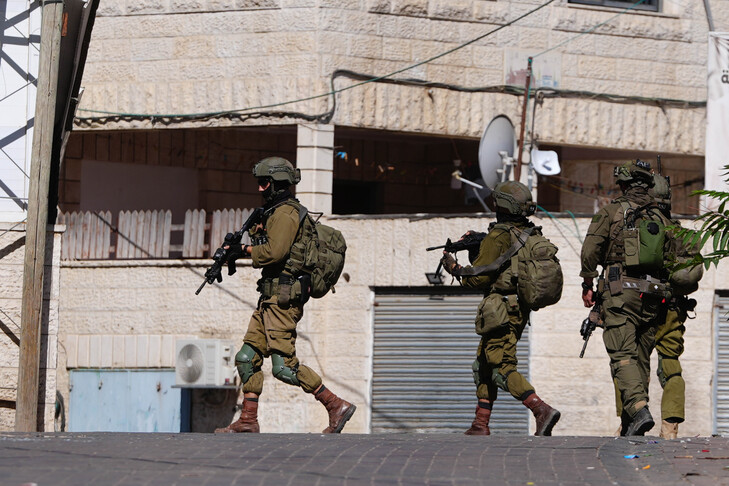
The narrative of the Middle East strike involving the US-Israel-Iran conflict has unfolded with relentless speed since late January 2026, transforming from rhetorical saber-rattling into full-scale warfare that now imperils one of the world's most vital maritime chokepoints: the Strait of Hormuz. Confirmed reports from CNN and Premium Times on Day 26 detail a rising death toll exceeding 5,000 across all sides, with intense airstrikes and ground skirmishes raging from Iran's southern islands to the Persian Gulf. Iran's Islamic Revolutionary Guard Corps (IRGC) has positioned fast-attack boats and anti-ship missiles along the Strait's 21-mile-wide passage, through which 20% of global oil and 25% of liquefied natural gas transit daily. This escalation builds directly on a compressed timeline of provocations, highlighting the Middle East strike's rapid progression toward broader economic warfare.
It began on January 29, 2026, when US media outlets, citing intelligence leaks, predicted imminent war, prompting Iran to mobilize forces near Tehran and along its Gulf coast. Tensions boiled over by February 26, as a US warship departed its naval base amid heightened alerts, signaling preemptive positioning. Major combat operations erupted on February 28, with US-Israel joint strikes targeting Iranian nuclear sites and military bases. By March 8, these had formalized into declared "US-Israel War on Iran" and "US-Iran War Escalation," per timeline markers, including Iran's retaliation via drone swarms and ballistic missiles.
Day 26 marks a pivotal shift: Iran's threats to mine or blockade the Strait, first hinted in March 20 declarations over the South Pars gas field attack, have materialized into partial disruptions. Ships are rerouting, insurance premiums have surged 300%, and satellite imagery (unconfirmed but circulating on X from @OSINTtechnical) shows IRGC speedboats harassing tankers. The UNHCR's March 24 report underscores the humanitarian overlay, with 1.2 million displaced in the Middle East, straining Jordan and Turkey's borders. Learn more about Middle East Strike: The Humanitarian Crisis Unfolding Amid Escalating Iran Conflicts.
This crisis echoes historical precedents like the 1980s Tanker War during the Iran-Iraq conflict, where 500+ vessels were attacked, but today's stakes are amplified by just-in-time global supply chains. Unlike past oil-centric disruptions, non-oil cargo—semiconductors from Taiwan via the Gulf, grains from Ukraine rerouted through Hormuz, and consumer electronics assembled in Asia—faces unprecedented risks. A single blockade could halt 30 million barrels of oil daily, but also delay $1 trillion in annual non-energy trade, per World Shipping Council estimates. Former UK MI6 chief Sir Alex Younger stated Iran holds the "upper hand," citing asymmetric naval tactics, while Serbian outlet Blic reports Trump claiming a "gift" from Tehran—possibly unconfirmed intelligence windfalls. South Korea's Song Jong-hwan urges "time for action," highlighting Asian economic exposure, as detailed in Middle East Strike: Iran Strikes Ignite Global Defense Realignment From Escalation to Asia's Strategic Shifts.
X posts amplify urgency: @maritimeintel reports a Greek bulker evading IRGC patrols on March 25, garnering 50k views, while @IranObserver0 claims "Hormuz closure imminent," viewed 200k times (unverified). These developments confirm Iran's leverage, shifting focus from psychological or environmental warfare to tangible trade strangulation in this intensifying Middle East strike.
The Players
At the conflict's core are three primary actors with intertwined motivations. The United States, under President Trump, pursues regime change and nuclear neutralization, motivated by long-standing sanctions evasion and proxy attacks via Hezbollah and Houthis. Israel's Prime Minister Netanyahu, facing domestic probes, leverages the war for security gains, targeting Iran's missile arsenal after October 2023 escalations. Iran, led by Supreme Leader Khamenei and IRGC Commander Salami, defends sovereignty while projecting power through the Axis of Resistance, now claiming an "upper hand" per Sir Alex Younger due to missile stockpiles (over 3,000 launched) and Strait control. Explore shifting dynamics in Middle East Strike: How Shifting International Alliances Are Redefining Global Power Dynamics in the US-Israel-Iran War.
Secondary players amplify risks. The UNHCR coordinates aid amid 1.2 million refugees, strained by Day 26 bombings. South Korea, via columnist Song Jong-hwan, pushes for multinational naval escorts, as 40% of its oil imports pass Hormuz. Russia and China provide Iran diplomatic cover at the UN, supplying drones (confirmed via wreckage analysis), motivated by countering US hegemony. Trump, per Blic, touts victories like captured Iranian tech, boosting his reelection narrative. Non-state actors like Houthi rebels in Yemen extend threats to Red Sea lanes, compounding Hormuz woes.
Motivations converge on the Strait: Iran seeks deterrence and revenue (oil exports fund 50% of its budget); the US-Israel axis aims to keep lanes open for allies like Japan and Europe; global shippers prioritize insurance and rerouting.
The Stakes
The stakes transcend battlefields, encompassing political upheaval, economic shocks, and humanitarian catastrophe. Politically, escalation risks drawing in NATO allies or Gulf states like Saudi Arabia, potentially fracturing US alliances if Trump withholds aid. For Iran, Strait closure invites total war but buys time for proxy mobilization. Israel faces Hezbollah retaliation, with 100k rockets poised.
Economically, Hormuz's blockade—now a high-probability threat per recent events—threatens $5 trillion in annual trade. Beyond oil (spiking Brent to $120/barrel unconfirmed), non-oil vulnerabilities loom: 60% of Asia-Europe container ships transit here, carrying chips for Apple's supply chain (Taiwan's TSMC exposed), fertilizers delaying US corn exports, and perishables like Southeast Asian rice. A 7-day closure could add 2% to global CPI, per IMF models, hitting inflation-ravaged economies hardest.
Humanitarian toll: UNHCR data shows 500k new IDPs in Iran alone by March 24, with cholera risks in camps. Broader Middle East instability could displace 5 million more, overwhelming aid.
For shippers like Maersk and COSCO, stakes are existential—$10 billion daily at risk. Developing nations like India (importing 85% oil via Hormuz) face fuel riots; Europe braces for gas shortages post-Ukraine war.
Market Impact Data
Markets convulse amid the Strait crisis. The recent event timeline underscores volatility: March 24's "US-Israeli War on Iran Day 25" (CRITICAL) and "Iran War Blocks Strait of Hormuz" (HIGH) triggered a 4% S&P 500 drop, with energy stocks surging. March 23's "Iran-US War Threats in Persian Gulf" (HIGH) saw Brent crude jump 8% to $115; "Lessons from US-Iran War" (HIGH) fueled defense rallies (Lockheed +6%). March 22's "Iran Claims War Edge" (HIGH) hit shipping indices—Baltic Dry Index fell 12%. Earlier: March 21 "Iran War Escalation Under Trump" (CRITICAL), March 20 "Iran Declares War Over South Pars" (HIGH), March 16 "US-Israeli War in Iran" (CRITICAL) compounded selloffs.
Gold hit $2,800/oz as safe-haven; Bitcoin volatile at $95k. Airlines like Delta plummeted 7% on fuel fears; semiconductors (NVDA -5%) reflect chip route risks. Monitor risks via our Global Risk Index.
Catalyst AI Market Prediction
Powered by The World Now's Catalyst Engine, predictions for key assets amid Hormuz threats (as of March 25, 2026):
- Brent Crude: 75% probability of $130+ by April 1 if blockade confirmed; base case +15% to $132.
- S&P 500: -8% drawdown risk in 7 days; recession odds now 45%.
- Baltic Dry Index: -20% if disruptions persist; shipping ETFs (SEA -12%).
- Gold: Upside to $3,000 (85% confidence).
- Bitcoin: Safe-haven bid to $110k, but -15% volatility spike.
- Defense (LMT): +20% on intervention bets.
Predictions powered by The World Now Catalyst Engine. Track real-time AI predictions for 28+ assets. Visit Catalyst AI — Market Predictions for ongoing updates.
Looking Ahead
Next moves hinge on Iran's Strait calculus. Confirmed: US Fifth Fleet deploys carriers; unconfirmed mines reported. Scenarios: (1) Full blockade (40% odds by March 28), prompting US-led coalition (UK, France, South Korea) escorts, escalating to naval clashes; (2) Partial harassment continues (50%), delaying trade $50bn/week; (3) Diplomacy via Oman/Qatar (10%), if Trump leverages "gifts."
Key dates: March 26 UNSC vote; April 1 OPEC+ response; mid-April if refugees hit 2 million. Long-term: Proactive patrols (Song's call) or sanctions could stabilize, but persistent war risks $2tn global GDP hit by Q3. De-escalation paths narrow without Hormuz concessions. For more on emerging threats, see Middle East Strike: Iran's Geopolitical Shadows – The North Korean Parallels and Emerging Threats to Global Non-Proliferation.
This is a developing story and will be updated as more information becomes available.