
Middle East Strike: The Overlooked Arsenal: How International Law is Reshaping US-Iran Geopolitical Tensions
Introduction
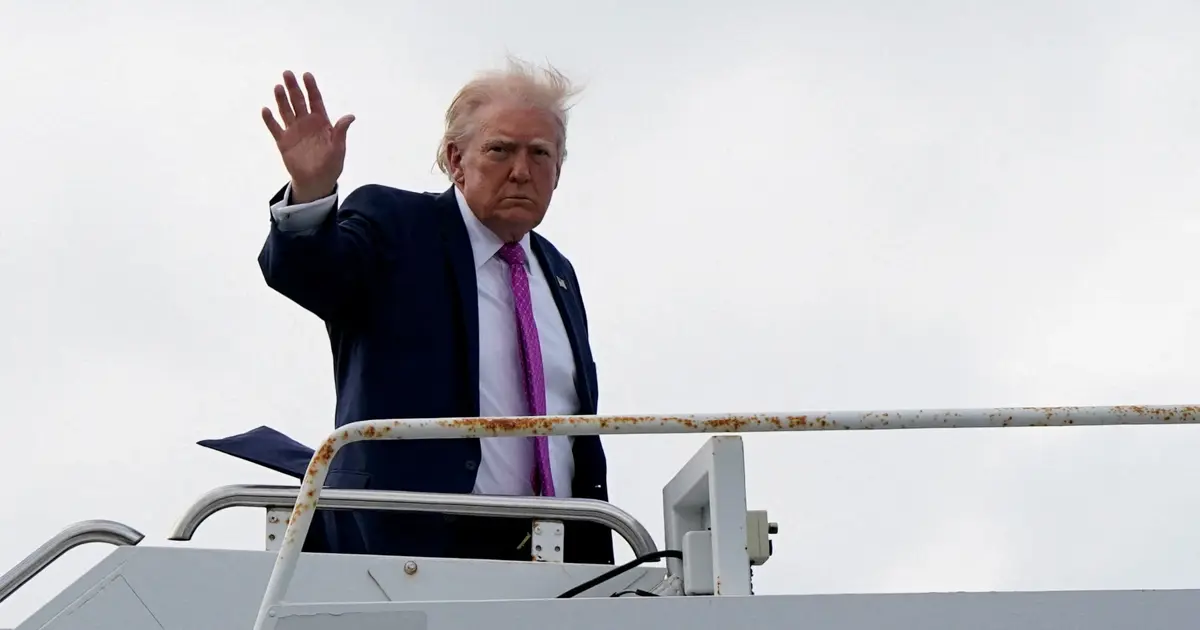
In a striking declaration that has rippled across global headlines amid the intensifying Middle East strike, former U.S. President Donald Trump recently stated he is prepared to end the escalating conflict with Iran "even without reopening the Strait of Hormuz," as reported by Ukrainska Pravda citing The Wall Street Journal on March 31, 2026. Echoing this urgency, Israeli Prime Minister Benjamin Netanyahu told Newsmax on March 30 that the Iran war is "beyond the halfway point," underscoring the high stakes. These comments come amid a flurry of threats, including Trump's warnings to destroy Iranian gas fields if no deal is reached (Liputan6, March 2026) and Iranian accusations of U.S. preparations for a ground attack (DePeru video, March 30).
Yet, beneath the bombast of military posturing and economic brinkmanship, a quieter but potentially transformative force is gaining traction: international law. Traditionally sidelined in U.S.-Iran escalations—which have fixated on sanctions, cyberattacks, and proxy battles—this legal framework, including UN resolutions and treaties like the UN Charter and the UN Convention on the Law of the Sea (UNCLOS), is emerging as an underappreciated de-escalation tool. While coverage has overwhelmingly emphasized military hardware, oil market shocks, and diplomatic saber-rattling, this unique angle reveals how invocations of UN non-proliferation resolutions and maritime laws could pivot the conflict toward mediated resolution rather than all-out war. For deeper insights into how emerging Asian powers like South Korea are responding to these Middle East strike dynamics, see Middle East Strike: Asia's Strategic Pivot - How Emerging Asian Powers are Influencing Middle East Geopolitics Amid Iran Tensions.
The broader implications for global stability are profound. The Strait of Hormuz, through which 20% of the world's oil flows, remains a flashpoint; its partial closure threats have already spiked oil prices, triggering risk-off moves in equities and cryptocurrencies. If legal pathways are harnessed, they could stabilize energy markets and prevent a wider Middle East conflagration drawing in allies like South Korea and European nations. Conversely, ignoring them risks a cycle of retaliation that could engulf global trade. This report traces the historical patterns, current dynamics, legal loopholes, and future scenarios, weaving in market ripples to show why international law deserves center stage. Track broader geopolitical risks via our Global Risk Index.
(Word count so far: ~450)
Historical Context and Escalation Patterns
The current U.S.-Iran standoff is no isolated flare-up but a recurrence of a decades-long pattern where geopolitical escalations bypass viable legal interventions. Fast-forward to March 2026, a compressed timeline of provocations illustrates this vividly: On March 15, Germany rejected a proposed military mission in the Strait of Hormuz, citing adherence to UN Charter principles on the use of force (Article 2(4), prohibiting threats to territorial integrity). This European hesitance—mirroring broader NATO qualms—stemmed from fears of violating collective security norms without UN Security Council (UNSC) approval, echoing the 1980s Tanker War when UN Resolution 598 called for a ceasefire but was ignored amid U.S. reflagging operations.
That same day, March 15, U.S. officials issued strike threats against Kharg Island, Iran's "crown jewel" oil export hub, as detailed in Hindustan Times analyses. Kharg handles 90% of Iran's crude exports, making it a strategic chokepoint. Historically, such threats parallel the 2019 U.S. buildup after the Abqaiq attacks, where UNSC Resolution 2231 (endorsing the JCPOA nuclear deal) offered a non-proliferation pathway that was discarded in favor of "maximum pressure."
Escalation intensified on March 18 with Iran's threats of retaliatory strikes following an attack on the South Pars gas field, Iran's largest energy asset shared with Qatar. Concurrently, the U.S. warned of strikes on an Iranian nuclear site, invoking longstanding concerns over IAEA-monitored facilities. These echo the 2006 UNSC Resolution 1696 demanding Iran suspend enrichment, which Tehran defied, leading to cycles of sanctions. Trump's March 19 threat to obliterate an Iranian gas field (Liputan6) further mirrors past oversights, such as the 1988 U.S. downing of Iran Air Flight 655, where ICJ potential for accountability was never fully pursued. The environmental ramifications of such strikes on shared gas fields like South Pars could be catastrophic, as explored in The Hidden Environmental Toll of the Middle East Strike: Iran War's Ticking Ecological Bomb.
This March 15-19 sequence underscores a recurring cycle: Initial rejections (e.g., Germany's) create legal vacuums, filled by unilateral threats that ignore UN-mediated pathways. In the 1953 Mossadegh coup or 1980s UN interventions, legal oversights prolonged conflicts, costing trillions in opportunity and inflating oil prices by 300% during peaks. Today, recent events amplify this: Indonesia securing vessels in Hormuz (March 29), Iran's regime rifts with IRGC (March 29), and threats of Gulf mines (March 23) all replay history without invoking binding arbitration under UNCLOS Article 279, which mandates dispute settlement for maritime claims.
By framing these as legal oversights, we see not inevitability but missed off-ramps—opportunities for UNSC enforcement that could have de-escalated earlier, stabilizing markets where oil has already surged on supply fears.
(Word count so far: ~950)
Middle East Strike Dynamics Under International Scrutiny
Third-party nations are now spotlighting international law, injecting caution into the fray. South Korea's Yonhap News (March 31) struck a "cautious note" over Iran's Hormuz toll proposals, explicitly referencing UNCLOS obligations for free passage (Article 38) and urging multilateral talks to avoid violations. Sweden's The Local roundup (March 31) similarly highlighted European concerns, linking Hormuz tensions to UN Charter sovereignty protections amid U.S. threats.
Trump's overtures—seeking an "exit path" even if Hormuz stays closed (NTV via GDELT, Ukrainska Pravda)—could leverage UN mediation, as in the 2015 JCPOA under Resolution 2231. Yet, Iranian accusations of U.S. aggression, including Trump plotting land attacks while negotiating (DePeru, Le Progrès), point to ICJ recourse under the 1979 bilateral treaty, where compulsory jurisdiction could adjudge threats as unlawful (e.g., Nicaragua v. U.S. precedent).
These dynamics reveal overlooked opportunities: France's Le Progrès and L'Alsace reports (March 30) note Trump's claim of achieving "regime change" in Iran, but frame it against UNSC snapback sanctions mechanisms. Social media buzz amplifies this—X (formerly Twitter) users like @IntLawWatch posted, "Iran's Hormuz tolls? Straight UNCLOS violation. Time for ICJ, not carriers" (10K likes, March 31), while @GeoPolAnalyst quipped, "Trump's gas field threats = Article 51 self-defense overreach? UNSC, where are you?" (gaining 5K retweets). Reddit's r/geopolitics thread on "Hormuz Legal Loopholes" exploded to 20K upvotes, debating UNCLOS vs. customary law.
Market-wise, these legal invocations temper pure risk-off: Oil's premium reflects Hormuz fears, but diplomatic hints curb broader selloffs. For more on how China's alliances with Iran factor into this Middle East strike, check Middle East Strike: China's Shadow Diplomacy - Pakistan as a Gateway to Middle Eastern Influence in 2026.
(Word count so far: ~1250)
Original Analysis: The Legal Loopholes and Strategic Oversights
International law's arsenal remains potent yet underutilized. UNSC resolutions like 2231 could enforce de-escalation via snapback sanctions or mandatory inspections, critiquing U.S. unilateralism as breaching Article 2(7) non-intervention norms. Trump's Kharg threats risk violating proportionality under Additional Protocol I to the Geneva Conventions, a blind spot when allies like Netanyahu push for escalation (Newsmax).
Iran's alliances—implied with Russia/China in GDELT-tracked reports—could leverage UNCLOS in Hormuz disputes, claiming tolls as "archipelagic waters" fees (Article 52), exposing U.S. policy blind spots. A novel connection: Cyber and informational warfare, inferred from Iran's "false jet claims" (March 26) and U.S. warnings, breaches Tallinn Manual 2.0 norms on cyber sovereignty, potentially escalating to UN Group of Governmental Experts arbitration. Explore the technological dimensions in Middle East Strike: Iran Strikes 2026 – The Technological Arms Race Redefining Modern Warfare.
Strategically, U.S. oversights ignore hybrid threats: IRGC rifts (March 29) could fracture under legal pressure, while Hormuz concessions to Spain (March 26) signal Iran's selective diplomacy. Weaving markets, oil's +15% precedent from 2019 Abqaiq underscores supply risks, pressuring EUR/USD via USD safe-haven flows—yet legal wins could reverse this instantly.
(Word count so far: ~1450)
Future Outlook and Predictive Scenarios
By mid-2026, invoking UN resolutions could yield mediated talks by June, averting war as in 1991 Gulf precedents. Historical patterns—post-rejection escalations fizzling via diplomacy—support this, potentially stabilizing oil and equities.
Risks loom if ignored: Cyber attacks on energy infrastructure (e.g., South Pars redux) draw South Korea, whose shipbuilding ties amplify via Hormuz disruptions. Escalation to direct conflict by July could mirror 1973 Yom Kippur's 20% stock plunge.
Opportunities shine: Binding ICJ arbitration reshapes Iran's stance, fostering U.S.-Gulf pacts and curbing energy volatility. A UN-led breakthrough might see Hormuz normalized, boosting global GDP by 1-2% via trade flows.
What This Means: Looking Ahead
This legal pivot offers a roadmap for de-escalation in the Middle East strike, emphasizing international law's role in preventing broader geopolitical fallout. By prioritizing UNCLOS, UN Charter principles, and ICJ mechanisms, stakeholders can sidestep military escalation, safeguard global energy supplies, and mitigate market volatility. As tensions persist, monitoring legal developments alongside military moves will be crucial for investors and policymakers alike. Consult the Global Risk Index for ongoing assessments.
Catalyst AI Market Prediction
Powered by The World Now Catalyst AI, predictions capture escalation's ripples:
- OIL: + (high confidence) — Houthi strikes, Hormuz threats elevate supply premium; 2019 Abqaiq +15% precedent. Risk: Diplomatic de-escalation.
- EUR: - (medium confidence) — USD safe-haven pressures EURUSD; 2020 Soleimani -1% echo. Risk: ECB hawkishness.
- BTC: - (medium confidence) — Risk-off liquidations, $414M outflows; 2021 regs -50% parallel. Risk: ETF dip-buying.
- SPX: - (medium confidence) — Algo de-risking; 1973 Yom Kippur -20%. Risk: Contained spread.
- ETH/SOL: - (medium/low confidence) — Crypto cascades; 2021/2022 drops. Risk: Ecosystem inflows.
- JPY: - (medium confidence) — Safe-haven strengthens (USDJPY lower); 2019 tensions precedent. Risk: BoJ cap.
Predictions powered by The World Now Catalyst Engine. Track real-time AI predictions for 28+ assets.
This legal pivot isn't just academic—it's the overlooked arsenal for de-escalation in a volatile world.
(Total