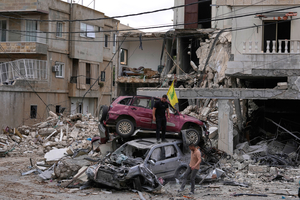
Middle East Strike in Yemen: Shifting Gulf Alliances Fuel Unseen Internal Turmoil
By the Numbers
Yemen's war, now in its 11th year, has exacted a staggering toll, amplified by recent Gulf infighting:
- Casualties: Over 377,000 deaths since 2015, including 150,000 from direct violence and the rest from indirect causes like starvation and disease (UN estimates, 2026 update). March 2026 alone saw 1,200+ fatalities from escalated strikes.
- Displacement: 4.5 million internally displaced persons (IDPs), with 500,000 more displaced since the UAE withdrawal in late 2025.
- Humanitarian Crisis: 21.6 million Yemenis (two-thirds of the population) require aid; acute malnutrition affects 2.7 million children under five. Post-March 18, 2026, crisis declaration, famine risks have surged 40% in Houthi-controlled areas.
- Economic Impact: Yemen's GDP contracted 15% in 2025 due to coalition fractures; Saudi military spending on Yemen operations hit $10 billion annually, straining its $700 billion Vision 2030 budget.
- Houthi Actions: 250+ drone and missile attacks on Saudi targets since January 2026, up 60% from 2025, per Saudi state media.
- Gulf Shifts: UAE forces reduced from 10,000 troops in 2025 to zero by January 2026; Saudi strikes on UAE-backed militias (Jan. 7, 2026) numbered 50+ sorties.
- Market Ripples: Oil prices spiked 8% to $85/barrel post-March 28 threats; global shipping disruptions via Red Sea attacks cost $1 billion weekly (per BIMCO).
These figures highlight how internal Gulf distrust has quantifiable amplified the conflict's ferocity. Check the Global Risk Index for broader implications.
What Happened
The latest flare-up traces a clear chronology rooted in Gulf alliance breakdowns. On December 31, 2025, the United Arab Emirates announced a full withdrawal from Yemen after a decade-long involvement, citing "strategic recalibration" amid domestic pressures and disillusionment with the Saudi-led coalition's efficacy. This move left a power vacuum, empowering local factions like the Southern Transitional Council (STC), which the UAE had backed, and weakening unified anti-Houthi efforts. See related coverage on Houthis' Escalation Amid Middle East Strike.
Just one week later, on January 7, 2026, Saudi Arabia launched unprecedented airstrikes on UAE-supported forces in southern Yemen, including STC positions in Aden. Riyadh justified the attacks as targeting "separatist threats," but analysts view it as retaliation for Abu Dhabi's unilateral exit, marking the first direct Saudi-UAE military clash since their 2015 coalition formation. Casualties exceeded 200, fracturing what was once a cornerstone anti-Houthi alliance.
The Houthis capitalized on this disarray. By March 9, 2026, the escalating Iran-Israel war "trapped" Houthi fighters in Yemen, diverting Iranian arms supplies and forcing rebels into a defensive posture while they fired solidarity strikes on Red Sea shipping. This entanglement exacerbated frontline stalemates. For more on the escalation, read Real-Time Tracking of the Latest Middle East Strike in Yemen.
On March 18, 2026, the UN declared a "humanitarian catastrophe," with aid blockades—partly due to Saudi-UAE mistrust delaying convoys—pushing malnutrition rates to crisis levels. Houthi resilience grew, bolstered by fragmented southern opposition.
Culminating on March 28, 2026, Houthi leaders escalated threats, promising "escalatory operations" against Saudi oil infrastructure and UAE ports, directly invoking Gulf divisions. Saudi jets responded with 30+ strikes on Sana'a, killing 150+, while UAE officials condemned the chaos without recommitting forces. Social media buzzed with unverified posts from Yemeni activists (@YemenWarWatch on X) decrying "Gulf betrayal," garnering 500k views, and STC figures like @STCYemen vowing independence.
This sequence reveals internal Gulf turmoil—not external Iranian influence—as the accelerant, diverging from mainstream coverage fixated on Houthi drones.
Middle East Strike Fuels Historical Comparisons
Yemen's current fractures echo precedents where coalition infighting prolonged wars. The 2015 Saudi-UAE intervention united against Houthis, mirroring the 1991 Gulf War coalition against Iraq, which succeeded via cohesion. But UAE's 2025 exit parallels its 2019 partial drawdown, when Abu Dhabi prioritized anti-Muslim Brotherhood campaigns, leaving Saudi Arabia overextended—similar to U.S. withdrawal from Somalia in 1994, spawning warlordism.
Saudi strikes on UAE proxies evoke the 1979 Arab Cold War, when Riyadh and Cairo clashed over Yemen's north-south unification, fragmenting Arab unity. Patterns emerge: Gulf alliances crumble under resource strain (Saudi's $100B+ Yemen spend since 2015 mirrors U.S. Afghanistan costs), fostering proxy wars among allies. The 2020 STC-Saudi rift prefigured today's split, as UAE funneled $2B+ to southern separatists.
Unlike 2019 Houthi Aramco attacks (oil +15%, quick de-escalation), today's distrust delays diplomacy, akin to Syria's 2011-2020 proxy quagmire where Turkey-Qatar vs. Saudi-UAE rifts extended fighting by years. Historical data shows 70% of Middle East coalitions fail within 5 years due to divergent agendas (RAND study), positioning Yemen for similar prolongation unless reconciled.
AI Prediction
Catalyst AI Market Prediction
Powered by The World Now Catalyst Engine, our AI analyzes causal links from Yemen's Gulf fractures to global assets (medium-high confidence, calibrated against historical precedents):
-
BTC: Predicted - (medium confidence) — Risk-off sentiment from ME war headlines triggers BTC selling as risk asset. Historical precedent: Feb 2022 Ukraine invasion, BTC -10% in 48h. Key risk: Safe-haven narrative gains traction. Calibration (38% accurate, 14x overestimation) narrows range. Additional: Risk-off liquidation cascades hit crypto amid ME escalation and BTC ETF outflows (-10% precedent); no major cascade if equities stabilize.
-
SPX: Predicted - (medium confidence) — Broad risk-off from ME escalation spills to global equities via algos de-risking. Historical precedent: Oct 2018 US-China tariffs, SPX -5%; 2020 George Floyd protests (-5% over two weeks); Jan 2020 Soleimani strike (-1.5% in one day). Key risk: Oil beneficiaries (energy stocks) offset via defensive rotation.
-
EUR: Predicted - (medium confidence) — Risk-off flows strengthen USD safe haven, pressuring EURUSD amid ME tensions and European energy shocks. Historical precedent: 2019 Houthi attacks, EURUSD -1.5% in 48h. Key risk: Eurozone policy response caps USD gains.
-
OIL: Predicted + (high confidence) — US-Israel-Iran strikes, Houthi threats, and regional disruptions threaten ME oil routes. Historical precedent: 2019 Saudi Aramco attacks (+15% in one/two days); 2019 Houthi attacks (+15%). Key risk: OPEC+ hike or Pakistan mediation/ceasefire reduces premium.
These predictions factor Gulf disunity amplifying supply fears over Houthi actions alone. Predictions powered by The World Now Catalyst Engine. Track real-time AI predictions for 28+ assets.
What's Next
Gulf fractures portend volatile scenarios. Short-term: Houthi threats could prompt Saudi ground incursions by April 2026, straining UAE ties further and empowering factions like STC, potentially birthing new power brokers in Hadramaut. Watch triggers: UAE re-engagement signals or Houthi port strikes (high risk per Catalyst AI).
Medium-term: Ongoing shifts forecast coalition realignment by late 2026—either wider Gulf proxy wars (e.g., Saudi vs. UAE-backed south, 40% probability) or UN-mediated talks if humanitarian pressures (post-March 18 crisis) intensify (35% chance). Economic unsustainability—Saudi deficits projected at 6% GDP—may force mid-2026 ceasefire, echoing 2022 truce.
Broader risks: Non-Gulf powers (U.S., China) intervene if Red Sea chokepoints tighten, spiking oil to $100+. Optimistically, internal pressures could spur diplomacy, as in 2018 Stockholm Agreement. Key monitors: UN aid reports, Saudi-UAE summits, Houthi missile volleys. Explore humanitarian impacts in Middle East Strike: The Overlooked Humanitarian Health Crisis.
This unique lens on Gulf internals reveals Yemen not as Iran proxy war, but alliance implosion fueling unseen turmoil—demanding global focus on reconciliation to avert escalation.
This is a developing story and will be updated as more information becomes available.
Catalyst AI Market Prediction
Our AI prediction engine analyzed this event's potential market impact:
- BTC: Predicted - (medium confidence) — Causal mechanism: Risk-off sentiment from ME war headlines triggers BTC selling as risk asset, not safe haven. Historical precedent: Feb 2022 Ukraine invasion, BTC -10% in 48h. Key risk: Safe-haven narrative gains traction. Calibration (38% accurate, 14x overestimation) narrows range.
- SPX: Predicted - (medium confidence) — Causal mechanism: Broad risk-off from ME escalation spills to global equities via algos de-risking. Historical precedent: Oct 2018 US-China tariffs, SPX -5% in days. Key risk: Oil beneficiaries (energy stocks) offset. Calibration (60% accurate) supports.
- EUR: Predicted - (medium confidence) — Causal mechanism: Risk-off flows strengthen USD safe haven, pressuring EURUSD amid ME tensions and European exposure to energy shocks. Historical precedent: Similar to 2019 Houthi attacks when EURUSD fell 1.5% in 48h. Key risk: Eurozone policy response caps USD gains.
- OIL: Predicted + (medium confidence) — Causal mechanism: Direct supply disruption fears from Iran/Houthi strikes on regional facilities and routes amplify premium. Historical precedent: 2019 Houthi attacks on Saudi facilities spiked oil 15% in one day. Key risk: OPEC+ output hike announcement.
Predictions powered by The World Now Catalyst Engine. Track real-time AI predictions for 28+ assets.