
Magnitude-5.0 Earthquake and Nearly 30 Aftershocks Shake Costa Rica Capital Region
Multiple earthquakes struck several countries on August 25, 2026, including a magnitude-5.0 quake near Costa Rica's capital that was followed by nearly 30 aftershocks, along with magnitude-4.1 to 4.2 events off Mexico's Chiapas coast and smaller tremors in Japan, California and Colombia.
Costa Rica Capital Region Hit by Magnitude-5.0 Quake and Aftershocks
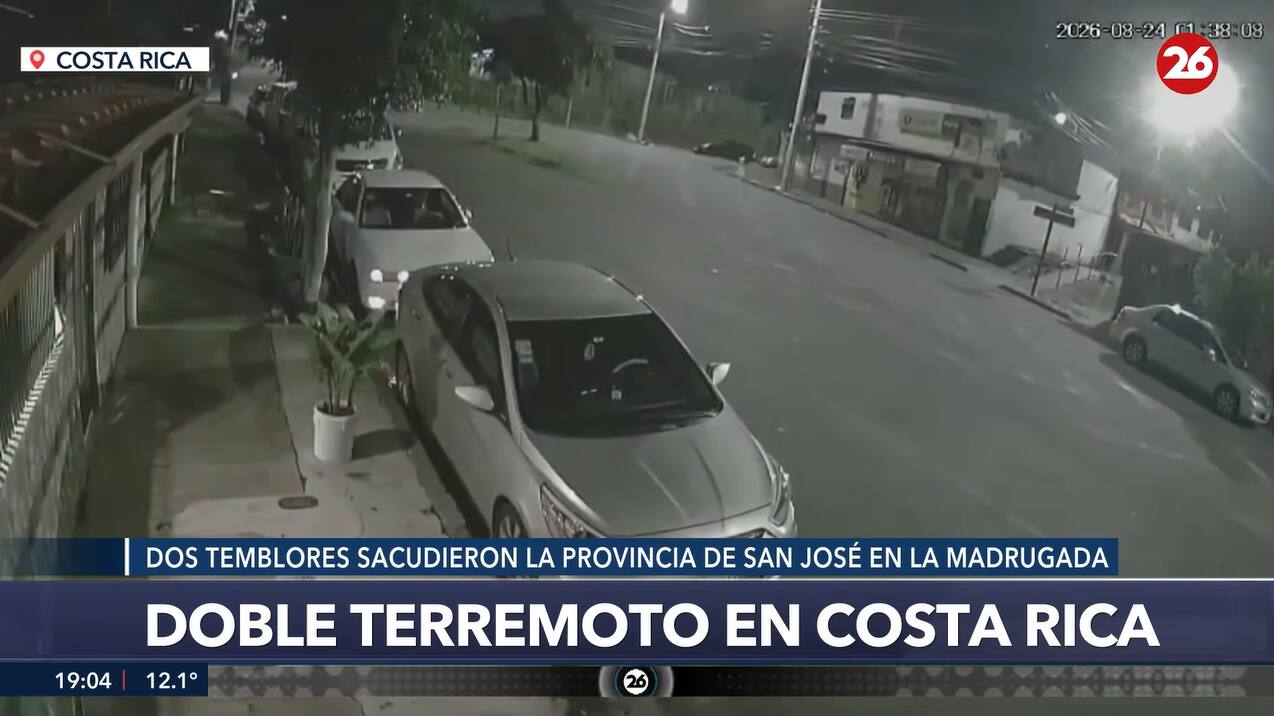
A magnitude-5.0 earthquake struck 8 km northeast of San Isidro de Coronado, Costa Rica, at a depth of 11 km at 1:37 a.m. local time, followed three minutes later by a magnitude-4.5 aftershock. [3] Nearly 30 smaller aftershocks were recorded and none caused damage or injuries. [3] The epicenter of both the main shock and the immediate aftershock was located near the capital. [3] The tremor, which originated from a local fault, was felt in the Costa Rican capital and nearby areas. [3] The Comisión Nacional de Emergencias reported that the events produced no material damage or injuries to people. [3] The Observatorio Vulcanológico y Sismológico de Costa Rica located the main event at the specified coordinates and depth. [3]
Series of Magnitude-4.1–4.2 Earthquakes Strike Off Chiapas, Mexico
Mexico's Servicio Sismológico Nacional recorded three earthquakes of magnitude 4.1–4.2 southwest of Huixtla, Chiapas, between 1:37 a.m. and 1:49 a.m. on August 25. [4] One magnitude-4.1 event occurred 150 km southwest of Huixtla at 1:37 a.m. [4] A magnitude-4.2 event was recorded 149 km southwest of Huixtla at 1:40 a.m. [4] Another magnitude-4.1 event took place 158 km southwest of Huixtla at 1:49 a.m. [4] Mexico lies in a zone of high seismicity, with frequent tremors especially in the southern states including Chiapas. [4] The Servicio Sismológico Nacional monitors all seismic activity across the country, including events below magnitude 3.0 that are considered microseisms. [4]
A magnitude-5.0 earthquake struck near San Isidro de Coronado, Costa Rica, followed by nearly 30 aftershocks. — Source: gdelt
Smaller Tremors Recorded in Japan and California
The USGS reported a magnitude-4.7 earthquake at a depth of 35 km located 77 km east of Tomioka, Japan. [1] A magnitude-3.0 earthquake occurred at a shallow depth of 2.9 km, 12 km north-northeast of Ocotillo Wells, California. [2] These events formed part of the broader seismic activity recorded on the same day as the larger Costa Rica and Mexico quakes. [1] [2]
Ongoing Response to Earlier Colombia Earthquakes
A health-cluster situational report was issued concerning earthquakes that struck Colombia on August 10, 2026. [5] The document corresponds to the second situational report from the Health Cluster in Colombia. [5] Sources for the report include the Health Cluster and the Pan American Health Organization. [5]
Regional Seismic Context in 2026
Costa Rica experiences frequent seismic activity and has recorded 12 earthquakes above magnitude 5 so far in 2026, the strongest being a 5.7-magnitude event on April 15 off Guanacaste. [3] The country is located in a zone of frequent seismic activity and registers dozens of tremors each year, most of which are not felt by the population. [3] None of the 2026 events above magnitude 5 caused material damage or injuries. [3]
Standard Safety Protocols Issued by Mexican Authorities
Mexican authorities published recommendations for actions before, during, and after an earthquake alongside the seismic bulletin. [4] Before an event, families should establish an emergency plan, identify safe zones and evacuation routes, secure furniture, keep a first-aid kit, flashlight, battery radio and important documents on hand, and participate in drills. [4] During an event, people should remain calm, protect themselves under sturdy furniture if evacuating, move away from windows and objects that could fall, avoid elevators, stop vehicles in a safe place if driving, follow the emergency plan and assist vulnerable individuals. [4] After an event, check for injuries and provide first aid if needed, avoid walking barefoot in dark areas, control gas water and electricity leaks, use flashlights instead of matches, stay informed through reliable media, avoid spreading rumors, and assess structural safety before re-entering buildings. [4]
What to watch next: Additional events may be reported through official channels of the Servicio Sismológico Nacional as monitoring continues across Mexican territory.