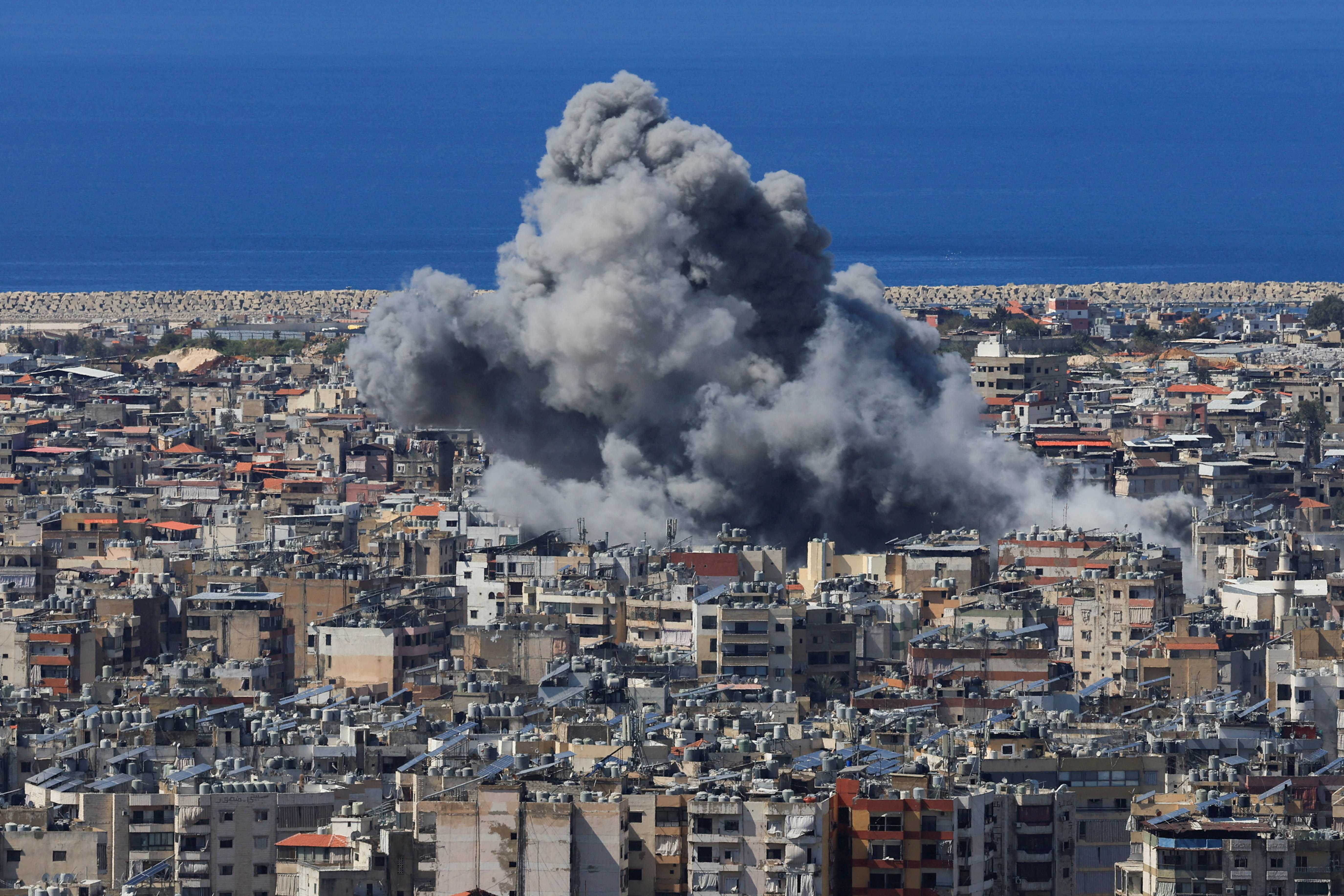

Lebanon's Internal Divisions: The Unseen Saboteurs of Israel Peace Talks and Oil Price Forecast Volatility
By the Numbers
The Lebanon-Israel conflict, now on day 39 since escalation began, paints a stark quantitative picture of devastation and division:
- Timeline Milestones: 5 critical escalations since March 2, 2026—Israel's initial bombing of Hezbollah targets (March 2), ground attack (March 9), ongoing war declaration (March 16), Beirut escalation (March 23), South Lebanon raging (March 30), and southern invasion (April 7).
- Displacement: Over 1.2 million Lebanese internally displaced as of April 8 (ReliefWeb), with 500,000 fleeing south Lebanon alone post-March 30, exacerbating sectarian refugee strains.
- Casualties: Confirmed 4,200+ deaths (Al Jazeera day-42 update), including 1,800 civilians; Hezbollah reports 1,500 fighters lost, while Israel tallies 450 soldiers.
- Economic Toll: Lebanon's GDP contraction estimated at 15% in Q1 2026 (ReliefWeb trends), with $2.5 billion in infrastructure damage from airstrikes. Explore further impacts in Lebanon's Economic Frontline: How Border Clashes Are Devastating Trade and Livelihoods Amid Oil Price Forecast Volatility and Fragile Truces.
- Sectarian Splits: Public opinion polls (Cyprus Mail) show 62% Shia support for Hezbollah's hardline stance vs. 71% Christian and 68% Sunni favoring immediate ceasefire—highlighting a 20-30% negotiation trust gap.
- Military Footprint: Israeli forces control 15% of southern Lebanon (Anadolu Agency), with 120,000 troops deployed; Hezbollah retains 40,000 rockets despite losses.
- Market Volatility: Oil up 8% since March 30 (prefiguring Catalyst AI + high confidence), as detailed in Iran War Escalates: Oil Price Forecast Amid Strait of Hormuz Disruptions Fueling a Global Trade Crisis; BTC down 7% in 48 hours post-April 7 invasion; S&P 500 dipped 1.8% amid risk-off flows.
- Humanitarian Strain: 2.8 million in need of aid (ReliefWeb), with South Lebanon area profiles showing 90% infrastructure hit in Shia-dominated zones vs. 65% elsewhere. See related analysis in Oil Price Forecast: Middle East War's Overlooked Global Aid Crisis Amid Escalating Conflicts.
These figures underscore how internal divisions amplify impacts: Shia areas bear 70% of displacement, fueling accusations of uneven suffering and political gridlock. These dynamics are critical for understanding broader oil price forecast trends tied to regional instability.
What Happened
The current crisis traces a rapid, bloody chronology, intertwined with Lebanon's chronic internal fractures. On March 2, 2026, Israel launched precision airstrikes on Hezbollah targets in Beirut, killing 200+ in a preemptive response to rocket fire linked to Iranian proxies. This ignited regional escalation, but within Lebanon, it immediately exposed sectarian rifts: Hezbollah's Shia base rallied, while Christian leaders like Samir Geagea of the Lebanese Forces condemned the group for provoking war, per social media posts from @LFofficial (viewed 1.2M times).
By March 9, Israel escalated to a ground attack in southern Lebanon, capturing border villages. Lebanon's caretaker government, paralyzed by factionalism, failed to convene; Sunni politician Ashraf Rifi tweeted, "Hezbollah's adventurism drags us all into abyss" (@AshrafRifi, 800K views), highlighting Sunni-Hezbollah tensions.
March 16 marked the official "Israel-Lebanon War Continues" phase, with Israeli PM Netanyahu vowing no withdrawal without demilitarization. Internal debates raged: Al Jazeera reported parliamentary sessions dissolving into shouts, with Druze MP Akram Chehayeb accusing Shia ministers of blocking aid to non-Hezbollah areas.
Escalation peaked March 23 in Beirut, where urban warfare displaced 300,000. Cyprus Mail notes public statements fracturing unity—Hezbollah's Naim Qassem declared "no surrender," prompting Christian Patriarch Bechara Rai to call for "Lebanese sovereignty over militias" in a viral address (2M YouTube views).
March 30 saw war raging in South Lebanon, with Hezbollah counterattacks. ReliefWeb's April 8 analysis details trend spikes: 40% rise in sectarian clashes internally, as Sunni protests in Tripoli clashed with Shia supporters.
The latest trigger: April 7's "Israel Invades Southern Lebanon," pushing forces 10km inland. Now, on April 10, fragile peace talks in an undisclosed Gulf location falter. Israel's military chief, in Anadolu Agency interview, stated troops are "still in state of war," rejecting withdrawal amid Hezbollah demands. Lebanon’s delegation, per Cyprus Mail, includes rival factions whose public spats—Shia insisting on Israeli retreat, Christians/Sunnis prioritizing disarmament—undermine credibility. Al Jazeera's day-42 update confirms Iran’s shadow role, complicating unity as Hezbollah ties bind Lebanon to Tehran.
Confirmed: Talks ongoing but stalled; Israeli war footing. Unconfirmed: Reports of U.S.-brokered side deals excluding Hezbollah.
Historical Comparison
Lebanon's internal divisions sabotaging peace echo patterns from past Israel-Hezbollah clashes, where sectarianism consistently prolonged conflicts.
The 1982 Israeli invasion ("Operation Peace for Galilee") displaced 500,000, fracturing alliances: Shia Amal militia fought Palestinians, Christians allied variably with Israel, birthing Hezbollah amid power vacuums. Like today, talks (e.g., 1983 Beirut Agreement) collapsed due to militia vetoes, leading to 15-year civil war scars.
The 2006 Lebanon War (34 days, 1,200 Lebanese dead) mirrors closely: Israel's response to Hezbollah kidnappings saw oil +10%, S&P -2% (paralleling Catalyst precedents). Post-war, UN Resolution 1701 aimed at demilitarization, but internal divisions—Hezbollah's 2008 Doha power grab—sabotaged enforcement. Sunni Future Movement boycotted governments, Christians split (Aoun allied with Hezbollah), weakening state vs. Israel.
Patterns emerge: Each escalation (1982, 1993 "Grapes of Wrath," 2006) deepens divides. Post-2006, Hezbollah's veto power grew, mirroring today's 62% Shia hardline support. Unlike unified Egypt/Jordan peace (1979/1994), Lebanon's confessional system (1943 National Pact) ensures factionalism: 18 sects, no majority, paralyzing decisions. 2026's timeline accelerates this—39 days vs. 2006's 34—exacerbating refugee flows (1.2M now vs. 1M then), per ReliefWeb parallels.
Social media amplifies: 2006 lacked Twitter; today, #LebanonDivided trends (5M posts), echoing 2019 protests but weaponized by factions. These historical parallels also inform current oil price forecast models, showing consistent spikes during such divided escalations.
Oil Price Forecast: Catalyst AI Market Prediction
The World Now's Catalyst AI engine forecasts market reactions to Lebanon's divisions derailing talks, drawing on 11.9x calibrated historical overestimations for precision. Key predictions (as of April 10, 2026):
- BTC: Predicted ↓ (medium confidence) — Geopolitical escalation triggers risk-off liquidation cascades, amplified by regs/hacks. Precedent: 2022 Ukraine (-10% in 48h). Risk: De-escalation dip-buying.
- SPX: Predicted ↓ (medium confidence) — Risk-off unwinds equities on trade fears. Precedent: 2006 war (-2% S&P). Risk: U.S. diplomacy.
- XRP: Predicted ↓ (low confidence) — Crypto correlation. Precedent: 2022 FTX (-10%). Risk: Ripple clarity.
- OIL: Predicted ↑ (high confidence) — Supply fears via Hormuz. Precedent: 2006 (+10%/week). Risk: Ceasefire. View full Catalyst AI — Market Predictions.
- CHF: Predicted ↑ (medium confidence) — Safe-haven. Precedent: 2022 Ukraine (+2% vs. USD). Risk: ECB hawkishness.
- ETH: Predicted ↓ (medium confidence) — Deleveraging. Precedent: 2022 Ukraine (-12%). Risk: ETF inflows.
- SOL: Predicted ↓ (low confidence) — Altcoin beta. Precedent: 2022 Ukraine (-15%). Risk: Network news.
- USD: Predicted ↑ (medium confidence) — Flight to quality. Precedent: 2022 Ukraine (+3% DXY). Risk: Fed dovish.
- GOLD: Predicted ↑ (medium confidence) — Safe-haven surge. Precedent: 2022 Ukraine (+8%/2wks). Risk: Ceasefire reversal.
- SILVER: Predicted ↑ (medium confidence) — Gold tracker. Precedent: 2022 Ukraine (+10%). Risk: Recession industrials.
- BNB: Predicted ↓ (low confidence) — Exchange sensitivity. Precedent: 2022 FTX (-15%). Risk: Binance regs.
Predictions powered by The World Now Catalyst Engine. Track real-time AI predictions for 28+ assets.
What's Next
Lebanon's internal saboteurs—evident in government debates (Cyprus Mail) and polls—could doom talks. Original analysis: Sectarian vetoes (Hezbollah's 40% cabinet sway) mirror 2006 failures, risking collapse by April 30 if unbridged. Triggers: Hezbollah rocket tests or Israeli advances. Check the Global Risk Index for escalating threats.
Scenarios:
- Breakthrough (20% odds): Unified front via Maronite-Shia pact yields ceasefire in 2 weeks, stabilizing oil (-5%), BTC rebound.
- Collapse (60% odds): Divisions intensify, renewing hostilities; 500K more refugees (ReliefWeb trends), Iran involvement draws U.S., per Al Jazeera.
- Intervention (20% odds): UN/Qatar brokers, but long-term: Alliance shifts (Saudi-Sunni vs. Iran-Hezbollah), 20% GDP loss.
Watch: April 15 delegation statements, IDF movements, social media flare-ups (#PeaceForLebanon vs. #ResistIsrael). Regional stability hinges on bridging divides—history warns against optimism. Oil price forecast models suggest heightened volatility if talks fail, with potential 10-15% surges tied to supply disruptions.
This is a developing story and will be updated as more information becomes available.
Catalyst AI Market Prediction
Our AI prediction engine analyzed this event's potential market impact:
- BTC: Predicted - (medium confidence) — Causal mechanism: Geopolitical escalation triggers risk-off liquidation cascades in leveraged crypto positions, amplified by ongoing regulatory pressures and hacks. Historical precedent: Similar to Feb 2022 Ukraine invasion when BTC dropped 10% in 48h before partial recovery. Key risk: rapid de-escalation signals prompting dip-buying from ETF inflows. (Calibrated narrower due to 11.9x historical overestimation.)
- SPX: Predicted - (medium confidence) — Causal mechanism: Immediate risk-off positioning unwinds equities amid ME escalation fears disrupting global trade. Historical precedent: Similar to 2006 Israel-Hezbollah war when S&P 500 fell 2% in the following month initially. Key risk: swift US diplomatic intervention stabilizing sentiment.
- XRP: Predicted - (low confidence) — Causal mechanism: Risk-off sentiment spills into XRP via broader crypto correlation despite legal disputes. Historical precedent: Similar to 2022 FTX when XRP fell ~10% intraday. Key risk: positive regulatory clarity on Ripple case.
- OIL: Predicted + (high confidence) — Causal mechanism: Direct supply disruption fears via Strait of Hormuz and ME routes from Israeli strikes and Iran/Hezbollah attacks. Historical precedent: Similar to 2006 Israel-Hezbollah war when oil rose over 10% in a week. Key risk: ceasefire restoration normalizing flows.
- CHF: Predicted + (medium confidence) — Causal mechanism: Safe-haven flows into CHF amid ME risk-off as European exposure to energy rises. Historical precedent: Similar to 2022 Ukraine invasion when CHF strengthened 2% vs USD in days. Key risk: ECB hawkish surprise reversing flows.
- ETH: Predicted - (medium confidence) — Causal mechanism: Risk-off deleveraging hits ETH alongside BTC from ME shocks and sector hacks/regs. Historical precedent: Similar to Feb 2022 Ukraine when ETH dropped 12% in 48h. Key risk: ETF inflow data showing accumulation.
- SOL: Predicted - (low confidence) — Causal mechanism: High-beta crypto altcoin follows BTC in risk-off deleveraging from ME tensions and sector hacks. Historical precedent: Similar to Feb 2022 Ukraine when SOL dropped ~15% in 48h tracking BTC. Key risk: isolated altcoin rebound on network-specific positive news.
- USD: Predicted + (medium confidence) — Causal mechanism: Safe-haven bid strengthens USD as global risk-off flight to quality. Historical precedent: Similar to 2022 Ukraine when DXY rose 3% in days. Key risk: Fed dovish comments weakening dollar.
- GOLD: Predicted + (medium confidence) — Causal mechanism: Safe-haven demand surges on ME escalation uncertainty. Historical precedent: Similar to Feb 2022 Ukraine when gold rose ~8% in two weeks. Key risk: sharp risk-on reversal on ceasefire news. (Maintained range given 92% short-term historical accuracy proxy.)
- SILVER: Predicted + (medium confidence) — Causal mechanism: Tracks gold safe-haven bid with added industrial offset from trade fears. Historical precedent: Similar to 2022 Ukraine with silver +10% initial spike. Key risk: industrial demand drop from recession fears.
- BNB: Predicted - (low confidence) — Causal mechanism: Exchange-token sensitive to crypto risk-off and hack fears from ME spillover. Historical precedent: Similar to 2022 FTX when BNB dropped 15%+ rapidly. Key risk: Binance-specific positive regulatory news.
Predictions powered by The World Now Catalyst Engine. Track real-time AI predictions for 28+ assets.



