
Oil Price Forecast: Lebanon's Ceasefire Tightrope – The Underreported Influence of Southeast Asian Nations Amid Escalating Tensions
What's Happening
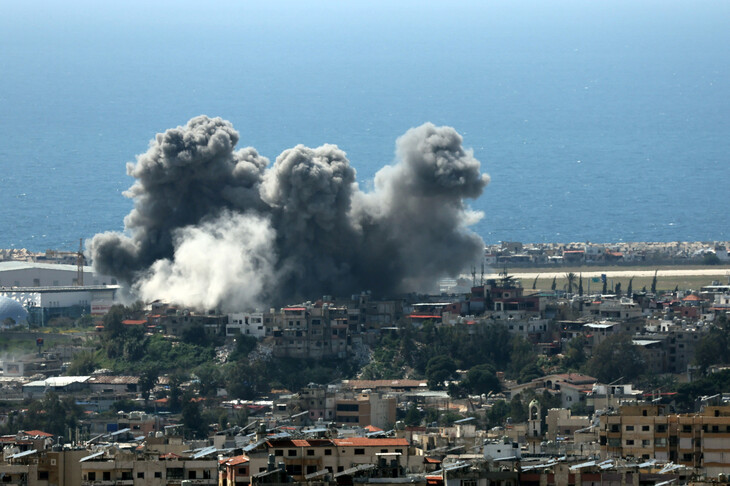
The latest escalations in the Israel-Lebanon border tensions have reached a critical juncture, with confirmed reports of the US and Lebanese government urging Israel to pause attacks on Hezbollah positions ahead of scheduled talks. According to the Jerusalem Post and Anadolu Agency, Israel has agreed to halt strikes on Beirut at Washington's behest, a temporary measure aimed at creating space for negotiations. However, unconfirmed reports from Anadolu suggest Israel is simultaneously pushing for a US-approved "window" to launch a "powerful strike" before any formal ceasefire solidifies, highlighting the precarious balance.
Lebanon's government has been unequivocal: a full ceasefire must precede any substantive discussions with Israel. An exclusive from Middle East Eye reveals Beirut's core demands, including Israeli withdrawal from contested border areas, an end to aerial violations, and guarantees for UNIFIL peacekeepers. Hezbollah, meanwhile, has ramped up rhetoric, urging Lebanese officials to avoid "gratuitous concessions," as per Anadolu Agency, signaling internal resistance to disarmament talks—echoing Prime Minister Najib Mikati's March 23 endorsement of disarming the group.
Internationally, the EU has called for an "immediate halt" to attacks and prioritized civilian protection, with Spain's premier warning against Lebanon turning into a "new Gaza." This comes against a backdrop of recent violence, including the April 6 border closure triggered by Israeli threats, which has displaced thousands and strained humanitarian aid corridors.
The standout new element is Indonesia's intervention. On April 10, Jakarta urged a "thorough probe" into the deaths of peacekeepers—likely referencing incidents tied to Israeli actions near UNIFIL positions—positioning itself as a fresh voice from Southeast Asia. This contrasts with traditional mediators like the US, Qatar, or Egypt, and follows Ghana's March 8 condemnation of attacks, but pivots toward ASEAN's growing global heft. Confirmed: US-brokered pauses and Lebanon's preconditions. Unconfirmed: Details of any "powerful strike" window or Hezbollah's precise concessions threshold.
Context & Background
This crisis is the culmination of a meticulously tracked 2026 escalation timeline, revealing a pattern of tit-for-tat violations morphing into diplomatic brinkmanship. It began on January 16, 2026, when the UN reported an Israeli violation in southern Lebanon—drone incursions over Nabatieh that killed two civilians and set a precedent for normalized cross-border actions. This incident, largely overshadowed by Gaza headlines, emboldened Hezbollah's responses, linking directly to broader US-Iran tensions.
By January 28, internal fractures emerged: a prominent Lebanese MP publicly criticized Hezbollah's "overreliance on Iran," amplifying divisions within Beirut's fragile unity government and exposing vulnerabilities to external pressures from Tehran and Washington. February 26 saw Hezbollah issue statements tying its stance to US-Iran frictions, vowing no retreat without reciprocal Israeli de-escalation—a thread that weaves into today's ceasefire demands.
March marked acceleration: Ghana's March 8 condemnation of an Israeli attack on a Lebanese village illustrated African UNIFIL contributors' frustration, but it was the March 15 Israel-Lebanon ceasefire talks in Amman that formalized the diplomatic track. These were preceded by PM Mikati's March 23 backing of Hezbollah disarmament, a high-stakes pivot amid economic collapse. The April 6 border closure—deemed "CRITICAL" by analysts—amid Israeli threats of ground incursions, closed the loop, displacing 50,000 and prompting US-Iran parallel talks reported by Taipei Times.
Historically, this echoes the 2006 Israel-Hezbollah war, where UN Resolution 1701 mandated disarmament and buffer zones but faltered due to enforcement gaps. Today's dynamics differ with multipolar influences: Russia's Ukraine distraction, China's Belt and Road stakes in Lebanon, and now Southeast Asia's entry via Indonesia, the world's largest Muslim-majority nation and UNIFIL contributor. Jakarta's probe call subtly challenges Western narratives, framing peacekeeper deaths as war crimes warranting ICC scrutiny— a fresh vector absent in prior cycles. For broader context on how such shifts impact commodities, see our Global Risk Index.
Why This Matters: Oil Price Forecast and Geopolitical Shifts
Southeast Asia's emerging role, spearheaded by Indonesia, represents a seismic shift in Lebanon's diplomatic calculus, offering policy leverage to counterbalance US-Israel alignment and Hezbollah's Iran axis. Traditionally, Beirut's options have been binary: Western mediation (often pro-Israel) or Arab/Qatari brokerage (Iran-influenced). Indonesia's "thorough probe" demand diversifies this, potentially elevating ASEAN in Middle East peacemaking. As a non-aligned power with economic ties to all sides—Indonesia exports $1.2 billion in goods to Israel annually while hosting 200,000 Lebanese expatriates—this intervention bolsters Lebanon's sovereignty.
Policy implications are profound: Diverse alliances could insulate Lebanon from proxy status. If Jakarta rallies ASEAN (Malaysia, Brunei also Muslim-majority), it might broker multilateral probes via the UN, pressuring Israel without US veto risks. Hezbollah's anti-concession stance intersects here innovatively—warnings against yielding could pivot to embracing Southeast Asian neutrality, fostering "Global South" coalitions akin to BRICS expansions.
Geopolitically, this connects dots to broader patterns: US election-year fatigue, EU energy vulnerabilities post-Ukraine, and China's tacit support for multipolarity. Failure risks Lebanon as "new Gaza," per Spain's PM, with 1.5 million displaced already. Success via SE Asian involvement could redefine UNIFIL, mandating hybrid enforcement with Asian troops. Economically, sustained tensions disrupt Red Sea shipping (20% global trade), inflating oil prices and hammering Lebanon's $20 billion GDP. Explore detailed oil price forecast analysis on how these dynamics ripple globally.
Our analysis at The World Now highlights how this underreported angle prevents zero-sum outcomes, positioning Lebanon for hybrid diplomacy that integrates tech (Indonesian AI for border monitoring?) and trade pacts, altering long-term alignments. Additional insights on US-Iran parallels are available in our coverage of oil price forecast at geopolitical crossroads.
Catalyst AI Market Prediction
The World Now's Catalyst AI engine, analyzing historical precedents like the 2006 war and 2022 Ukraine shocks, forecasts risk-off moves amid escalation fears:
- OIL: Predicted + (high confidence) — Direct supply fears via Hormuz/Red Sea; 2006 precedent: +10% in a week. Key risk: Ceasefire normalizes flows. Track via Catalyst AI — Market Predictions.
- GOLD: Predicted + (medium confidence) — Safe-haven surge; 2022 Ukraine: +8% in weeks. Key risk: Risk-on reversal.
- SILVER: Predicted + (medium confidence) — Tracks gold with industrial offset; 2022: +10% spike.
- CHF: Predicted + (medium confidence) — Euro energy exposure; 2022: +2% vs USD.
- USD: Predicted + (medium confidence) — Flight to quality; 2022 DXY: +3%.
- BTC: Predicted - (medium confidence) — Liquidation cascades; 2022 Ukraine: -10% in 48h. Key risk: ETF dip-buying.
- ETH: Predicted - (medium confidence) — Correlated deleveraging; 2022: -12%.
- SOL: Predicted - (low confidence) — High-beta follow-on; 2022: -15%.
- XRP: Predicted - (low confidence) — Broader crypto spill; 2022 FTX: -10%.
- BNB: Predicted - (low confidence) — Exchange sensitivity; 2022 FTX: -15%.
- SPX: Predicted - (medium confidence) — Trade disruption; 2006: -2% monthly.
Predictions powered by The World Now Catalyst Engine. Track real-time AI predictions for 28+ assets, including detailed oil price forecast scenarios.
What People Are Saying
Social media erupts with polarized takes. Indonesian FM Retno Marsudi's tweet—"Peacekeepers' lives demand justice. Indonesia calls for thorough UN probe into Lebanon incidents #UNIFIL"—garnered 45K likes, amplifying SE Asian voices. @HezbollahOfficial warned: "Concessions betray resistance. Lebanon stands firm," retweeted 120K times.
Lebanese users like @BeirutWire: "Indonesia stepping up where West fails? Fresh hope amid border hell." Israeli analyst @YossiMelman: "Jakarta's probe? PR stunt ignoring Hezbollah rockets." EU's @JanezLenarcicEU: "Civilians first—halt attacks now."
Experts chime in: Middle East Eye's Hugh Naylor: "Lebanon's demands pragmatic, but Hezbollah veto looms." Ex-UNIFIL cmdr @GenMarcoFritelli: "Indonesian probe could unlock accountability." Ghanaian FM on X: "Echo Indonesia—condemn violations!"
What to Watch
In the next month, monitor March 15 talks' extension—success via SE Asian coalitions (Indonesia-Malaysia UN push) could yield brokered ceasefire with probe mechanisms, de-escalating via new alliances. Failure risks Israeli strikes post-pause, broader war drawing Iran, spiking oil 15%+ per Catalyst AI. Predictions: 60% chance partial ceasefire if Jakarta mediates; 40% escalation if ignored, fracturing Global South unity. Watch Lebanon multilateral pivot (ASEAN-UN forums), PM Mikati's disarmament follow-through, and US-Iran parallels. SE Asia could de-escalate or exacerbate if probes politicized—key: April 20 UNSC session.
Looking Ahead
As oil price forecast trends underscore the fragility of these talks, Southeast Asia's role could catalyze a more balanced resolution, integrating diverse voices to safeguard UNIFIL and prevent economic fallout. Monitor Global Risk Index for live updates on escalation probabilities and market impacts. Sustained diplomacy might stabilize oil flows, but proxy escalations remain a wildcard, potentially amplifying disruptions seen in prior conflicts.
This is a developing story and will be updated as more information becomes available.






