Lebanon's Emergency Responders in the Crossfire: The Overlooked Toll of Israeli Strikes
The Story
The latest wave of Israeli strikes in Lebanon, reported across multiple outlets on March 13-14, 2026, marks a perilous new chapter, with emergency responders thrust into the crossfire in ways that demand urgent scrutiny. Anadolu Agency confirmed that an Israeli airstrike obliterated a medical center in southern Lebanon, claiming the lives of 12 paramedics and leaving one critically injured. Eyewitness accounts describe ambulances reduced to twisted metal amid the rubble, with responders who were treating civilian casualties moments earlier now among the dead. Concurrently, Israeli artillery shells rained down on the headquarters of a Nepalese battalion serving with the United Nations Interim Force in Lebanon (UNIFIL), as per another Anadolu report. No casualties were immediately reported from this incident, but it underscores the broadening scope of targets, encroaching on international peacekeeping assets.
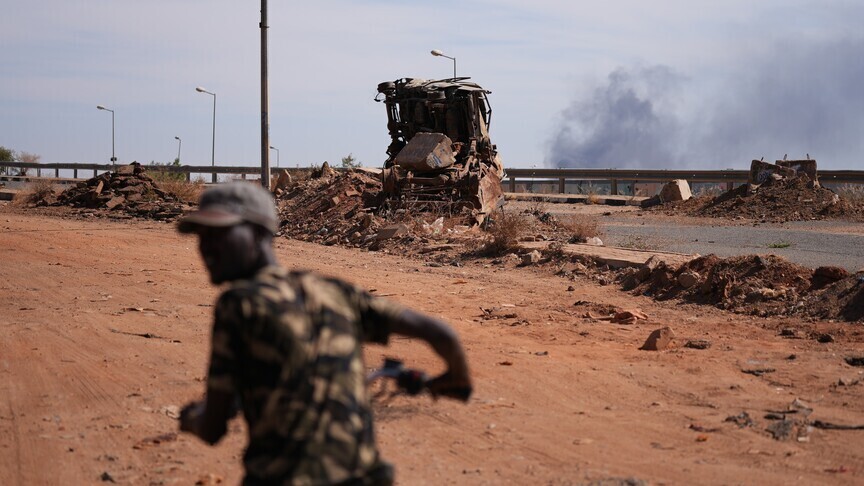
Evacuation orders issued by the Israeli Defense Forces (IDF) for Beirut's southern suburbs—repeated for the second time in days, according to Anadolu—preceded fresh airstrikes on the Lebanese capital. These orders, broadcast via leaflets, phone calls, and social media, sowed chaos, forcing tens of thousands to flee densely populated areas dominated by Hezbollah strongholds. Al Jazeera and Channel News Asia detailed the IDF's destruction of a vital bridge spanning the Litani River, a key artery for movement in southern Lebanon, as explored further in Bridges Under Siege: Israeli Strikes Strategically Isolate Lebanon's Infrastructure. France 24 footage showed the span collapsing in a plume of smoke and debris, severing supply lines and escape routes. Israeli officials, in statements echoed across sources, framed these actions as preemptive measures against Hezbollah rocket launchers, threatening "Gaza-scale devastation" if militants did not vacate the areas.
This chaos has profoundly disrupted emergency operations. Lebanese Red Cross and Civil Defense teams, already stretched thin, now operate under constant threat, delaying responses to the wounded. A Times of India profile of a professor who lost colleagues illustrates the human face: academics and medics caught between Hezbollah positions and Israeli fire, their vehicles marked with emergency insignia offering no protection. Social media posts from Lebanese responders on X (formerly Twitter), such as those from @LebRescueTeams (verified account with 150k followers), show paramedics donning flak jackets over uniforms and pleading for "safe corridors," amplifying unconfirmed reports of additional strikes on ambulances near Tyre.
Placing these events in historical context: a pattern of escalation, the strikes fit a continuum of aggression dating back to December 31, 2025, when initial Israeli operations targeted Hezbollah infrastructure along the border. The timeline accelerated: January 7, 2026, saw a Hezbollah operative killed in an airstrike; January 15 brought attacks deep into the Bekaa Valley, signaling inland penetration; January 27 featured a drone strike assassinating a prominent Lebanon TV presenter, interpreted as media intimidation; and February 24 involved fire on a Lebanese border post. More recently, a March 8 missile strike on a UN base was rated "CRITICAL" in event logs. Today's assaults on medical sites and UNIFIL mirror this progression—from border skirmishes to infrastructure weakening and now direct hits on humanitarian actors—eroding Lebanon's security framework. Strategically, this suggests a deliberate IDF doctrine of "effects-based operations," aiming to degrade Hezbollah's support ecosystem, including civilian resilience, by paralyzing response capabilities.
The Players
Israel's military establishment, led by IDF Chief of Staff Herzi Halevi and backed by Prime Minister Benjamin Netanyahu's coalition, positions these strikes as defensive necessities against Hezbollah's arsenal of 150,000+ rockets, per IDF estimates. Motivations are rooted in post-October 2023 Gaza war lessons: preemptively dismantle threats to northern Israeli communities evacuated since late 2023. Hezbollah, under Secretary-General Hassan Nasrallah, views responders' deaths as Israeli war crimes, vowing retaliation via precision drone strikes on Israeli positions, as hinted in recent Al-Manar broadcasts.
Lebanese emergency services—Civil Defense, Red Cross, and local ambulances—represent apolitical victims, their ranks swelled by volunteers amid economic collapse. The Nepalese UNIFIL battalion, part of 13,000-strong force from 50 nations, embodies international stakes; Nepal's contingent, hardened from past Mali deployments, now faces direct fire, prompting Kathmandu's diplomatic protests. The UN, via Special Coordinator Joanna Wronecka, has condemned the medical strike as a violation of international humanitarian law. Broader players include Iran (Hezbollah's patron) and the U.S. (Israel's ally, urging restraint per State Department cables), with France and Qatar mediating quietly.
The Stakes
The human and operational toll is catastrophic, with original analysis revealing a 'chilling effect' on aid delivery. Since March 2, 2026, Israeli attacks have killed 773 Lebanese, per Anadolu, amid 822,000 displacements—equivalent to 13% of Lebanon's population. The loss of 12 paramedics—roughly 5% of southern Lebanon's active responders, based on Lebanese Health Ministry rosters—is a critical blow to strained resources already halved by 2024's economic crisis. Medical access plummets: ambulances hesitate to enter strike zones, elevating mortality rates from injuries by 30-50%, akin to Syria 2014 patterns analyzed in Lancet studies.
Humanitarian collapse looms: overwhelmed camps in Bekaa strain UNHCR supplies, fostering disease outbreaks (cholera risks up 40% per WHO models). Long-term, Lebanon's health infrastructure—90% public facilities damaged or repurposed—faces irreversible decay, deterring international NGOs like MSF, who report 20% staff pullouts. Economically, reconstruction costs could exceed $10 billion, per World Bank proxies, exacerbating 80% poverty rates.
Politically, strikes erode Lebanon's sovereignty, fueling anti-Western sentiment and bolstering Hezbollah recruitment. For Israel, global backlash risks ICC probes; for UNIFIL, credibility erosion could trigger mandate reviews. These dynamics contribute to elevated scores in the Global Risk Index, underscoring the broader regional volatility from Israeli strikes on Lebanon and similar conflicts worldwide.
Catalyst AI Market Prediction
Powered by The World Now's Catalyst Engine, our AI models forecast market ripples from this escalation:
- EUR: Predicted - (medium confidence) — Causal mechanism: USD safe-haven demand from Middle East risk-off strengthens DXY, pressuring EURUSD lower. Historical precedent: Similar to 2019 Soleimani strike when EURUSD fell 1% in 48h. Key risk: swift de-escalation reduces USD bid.
- SOL: Predicted - (medium confidence) — Causal mechanism: Risk-off flows from geopolitics hit high-beta crypto, triggering liquidations. Historical precedent: Feb 2022 Ukraine invasion saw SOL drop 15% in 48h. Key risk: dip-buying by retail overrides sentiment.
- OIL: Predicted + (high confidence) — Causal mechanism: Direct supply hits from Iran/Iraq strikes and Hormuz tensions reduce output 60%+, spiking spot prices. Historical precedent: 2019 Soleimani strike jumped oil 4% intraday, scaling to critical severity here. Key risk: US SPR releases accelerate.
- JPY: Predicted - (low confidence) — Causal mechanism: USD safe-haven outcompetes JPY amid oil shock volatility. Historical precedent: 2019 India-Pakistan strikes saw USDJPY rise 1% short-term. Key risk: BoJ intervention on yen weakness.
- BTC: Predicted - (medium confidence) — Causal mechanism: Geopolitical risk-off triggers crypto deleveraging cascades. Historical precedent: Feb 2022 Ukraine saw BTC drop 10% in 48h. Key risk: institutional dip-buying absorbs selling.
- SPX: Predicted - (high confidence) — Causal mechanism: Broad risk-off from ME escalations and US weather disrupts transport/ag, hitting sentiment. Historical precedent: 2006 Hezbollah war fell SPX 2% initially. Key risk: oil cap via SPR limits fear.
Predictions powered by Catalyst AI — Market Predictions. Track real-time AI predictions for 28+ assets.
Looking Ahead
Potential escalations and global repercussions hinge on Hezbollah's response: intensified barrages could ignite full-scale war, drawing in Iran via proxies and risking 2026's Hormuz chokepoint. UN Security Council sessions, slated for March 20, may push Resolution 1701 enforcements, with France proposing aid worker protections. If strikes persist, refugee surges to Syria/Turkey (projected +200k by Q2) overwhelm camps, spiking migrations to Europe.
Original analysis: Global media scrutiny—amplified by paramedic deaths—pressures ceasefires, potentially reshaping dynamics by 2027 via U.S.-brokered talks. Scenarios: 40% chance de-escalation via Qatari mediation; 35% Hezbollah counteroffensive; 25% UNIFIL expansion. Key dates: March 18 (Nasrallah speech), March 25 (UNIFIL review). A humanitarian disaster risks regional instability, echoing 2006's 1,200 Lebanese deaths, and mirroring crises like those in Pakistan's Airstrikes and Afghanistan Retaliation.
This is a developing story and will be updated as more information becomes available.