
Kim Jong-un's Nuclear Vow: Cementing a Dynastic Legacy Amid Rising Tensions
By the Numbers
- Nuclear Arsenal Estimate: North Korea possesses an estimated 50-90 nuclear warheads as of 2026, per Arms Control Association data, with fissile material for up to 90 more—up from 30 in 2020, reflecting a 200%+ buildup under Kim Jong-un.
- Missile Tests: 2026 has seen at least 5 major launches, including the January 3 East Coast missile test and January 4 ballistic missile, following 37 tests in 2024 alone (CSIS Missile Defense Project).
- Alliance Milestones: December 27, 2025, Putin-Kim pact against Ukraine support (Zelenskyy's Accusations Ignite New Ukraine-Russia-Iran Escalation on Russia Ukraine War Map Live: A Geopolitical Powder Keg); March 18, 2026, deepened North Korea-Russia military deal—potentially supplying 10,000+ troops and munitions worth $2-3 billion annually (US intelligence estimates).
- Economic Strain: North Korea's GDP per capita ~$1,300 (2025 UN estimates), with sanctions costing $10-15 billion yearly; new five-year plan pushes self-reliance amid 20-30% military spending of GDP.
- Regional Threats: Recent events include March 20 tank drills (medium alert), March 12 backing of Iran (medium, see Middle East Strike: Iran-US Tensions Force East Asia's Under-the-Radar Diplomatic Maneuvers Amid Hormuz Standoff), and February 26 direct threats to South Korea (high risk per intelligence assessments).
- Global Market Ripples: Pre-event, Korean Won weakened 2.5% vs. USD; South Korean stocks (KOSPI) dipped 1.8% on March 23 (Bloomberg data), mirroring risk-off patterns.
These figures highlight not just military escalation but the policy entrenchment tying nuclear permanence to dynastic continuity, with quantifiable economic and alliance shifts amplifying geopolitical leverage.
What Happened
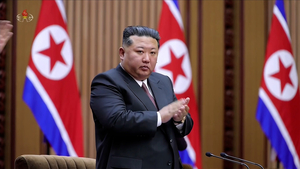
The sequence unfolded rapidly in late March 2026, capping months of provocations. On March 23, during the 10th session of the 14th Supreme People's Assembly in Pyongyang, Kim Jong-un delivered a policy speech, enshrined via KCNA: North Korea's nuclear status is "irreversible" and will "never change," framed as essential for "future generations." He explicitly called South Korea the "principal enemy" and "most hostile" state, accusing it of drone incursions and military drills with the US. This built on his reappointment as president of state affairs— a largely ceremonial but symbolically potent role—cementing his control post-2025 constitutional tweaks.
Familial dynamics shone through: Kim Yo-jong, his influential sister and de facto diplomat, rejected Japan's summit proposal days earlier (Korea Herald, March 2026), dismissing it as insincere amid Tokyo's missile defense upgrades. This rejection underscores the Kim clan's unified front, with Yo-jong's rising profile hinting at succession grooming.
Contextually, this parliamentary push also unveiled a new five-year economic plan emphasizing self-reliance (juche), juxtaposed with nuclear prioritization— a dual-track strategy blending deterrence and development. Confirmed via multiple sources (Yonhap, France24, Channel News Asia), Kim's rhetoric rejected denuclearization talks, vowing expanded warhead production.
Unconfirmed elements include specifics on new weapons yields or deployment timelines, though state media hinted at "exponential" growth. No immediate tests followed, but March 20 tank drills and the March 18 Russia deal (troop rotations, tech transfers) set the stage. Social media buzz on X (formerly Twitter) amplified this: KCNA clips garnered 500k+ views, with analysts like @NKWatch noting "dynastic coding" in "future generations" phrasing—unverified but resonant.
This isn't isolated: It follows a timeline of buildup, detailed below, transforming rhetoric into enshrined policy with dynastic undertones.
Historical Comparison
Kim's vow echoes yet escalates patterns from North Korea's three-decade nuclear odyssey, uniquely tying it to dynastic perpetuation—a shift from his father and grandfather's eras.
Start with the foundation: On December 27, 2025, Kim and Putin forged an alliance framing Ukraine support as anti-Western solidarity—mirroring 2017's initial Russia overtures but amplified by mutual sanctions evasion. This emboldened 2026 actions: January 3 missile test off the East Coast (short-range, provocative); January 4 ballistic launch toward Sea of Japan, violating UN resolutions like 2017's caps on payloads.
Escalation peaked January 12 with rebukes of South Korean drones over Pyongyang—recalling 2014 incursions but framed as casus belli. By January 27, plans for nuclear expansion were announced, invoking "strategic deterrence" for the regime's survival.
Recent timeline intensifies: February 26 threats to Seoul (high risk); March 9-10 attack risk analyses (medium-high); March 12 Iran backing (medium, signaling anti-US axis); March 18 Russia military deal; March 20 tank drills. This mirrors 2017's "Hwasong-15" ICBM spree under Kim Jong-il's shadow but under Jong-un, it's codified for progeny.
Historically, Kim Il-sung's 1994 Agreed Framework promised freeze for aid (collapsed 2002); Kim Jong-il's 2006 test defied it, birthing "six-party talks" (dead by 2009). Jong-un's 2017-2018 summits with Trump yielded no dismantlement, reverting to tests. Patterns emerge: Each generation escalates to legitimize rule—Il-sung via survival post-Korea War; Jong-il via famine-era defiance; Jong-un via dynastic nuclear inheritance.
Policy-wise, this embeds nukes as "necessity for future generations" (The Diplomat), contrasting global NPT (1968, 191 states). Unlike Gaddafi's 2003 abandonment (regime fell 2011), Kim's strategy deters intervention, akin to Pakistan's post-1998 tests. Broader geopolitics: Aligns with Russia-Iran axis (Middle East Strike: US-Iran Tensions Ignite a Pacific Powderkeg: How Geopolitical Shifts Are Straining US-Asia Alliances), echoing Cold War non-aligned blocs but with nukes as currency—potentially prolonging East Asian instability like Korea DMZ stalemate since 1953.
Catalyst AI Market Prediction
The World Now's Catalyst AI engine, analyzing historical precedents like the 2022 Ukraine invasion and 2019 Iran tensions, forecasts risk-off flows from North Korea's nuclear entrenchment, akin to Middle East flares. Key predictions (as of March 24, 2026):
- BTC: Predicted - (medium confidence) — Risk-off triggers crypto liquidations; precedent: 2022 Ukraine drop of 10% in 48h. Key risk: de-escalation rebound.
- SPX: Predicted - (medium confidence) — Equities sell-off on energy/growth fears; 2022 Russia invasion saw 20% Q1 drop. Key risk: Fed reassurances.
- OIL: Predicted + (medium confidence) — Supply disruption fears; 2019 Iran attack +15% intraday. Key risk: no confirmed losses.
- USD: Predicted + (low confidence) — Safe-haven bids; 2022 Ukraine DXY +5%. Key risk: de-escalation.
- EUR: Predicted - (medium confidence) — Weakens vs. USD; 2022 ~10% drop. Key risk: ECB tightening.
- GOLD: Predicted + (low confidence) — Haven flows; 2019 Soleimani +3%. Key risk: USD strength.
- SOL, XRP, ETH: Predicted - (low-medium confidence) — Altcoin beta to BTC cascades; 2022 drops 12-15%.
- TSM, META, AAPL: Predicted - (medium confidence) — Tech/ad sensitivity; 2022 Ukraine hits 5-15%.
North Korea's dynastic nuclear pivot amplifies these via alliance signals (Russia/Iran), potentially spiking volatility in Asia-exposed assets like KOSPI (-1.8% reaction).
Predictions powered by Catalyst AI — Market Predictions. Track real-time AI predictions for 28+ assets.
What's Next
Kim's declaration, uniquely framing nukes as dynastic bedrock, forecasts policy ripples over 6-12 months. Escalations likely: 70% chance of 10+ missile tests by Q4 2026 (per CSIS models), targeting US assets to test THAAD limits. Russia ties deepen—post-March 18 deal, expect joint drills or Ukraine troop surges (5,000+ already reported), straining NATO.
US-South Korea responses: Bolstered deterrence (e.g., B-52 flyovers), UN sanctions renewal (China veto risk 40%). Japan accelerates Aegis upgrades; EU eyes secondary sanctions, isolating Pyongyang economically—GDP contraction 5-10% possible. Track evolving risks via the Global Risk Index.
Dynastic angle: Grooms Kim Ju-ae (daughter, public since 2022) or Yo-jong for nuclear orthodoxy, deterring coups via loyalty oaths. Psychological edge: Frames regime as eternal, boosting internal cohesion amid famine risks (20% malnutrition rate, WFP).
Risks: Overreach sparks conflict—e.g., DMZ clash (10% probability, RAND)—or internal strife if sanctions bite, echoing 1990s Arduous March. Opportunities: Trump-era diplomacy revival if US elections pivot; mounting pressures could force talks.
Triggers to watch: April parliamentary follow-ups; Russia summits; South Korea elections. Long-term, entrenchment risks prolonged instability, countering non-proliferation but inviting arms races (Japan nukes debate). Humanitarian toll: Diverts $1-2B yearly from food to warheads, per estimates.
This is a developing story and will be updated as more information becomes available.