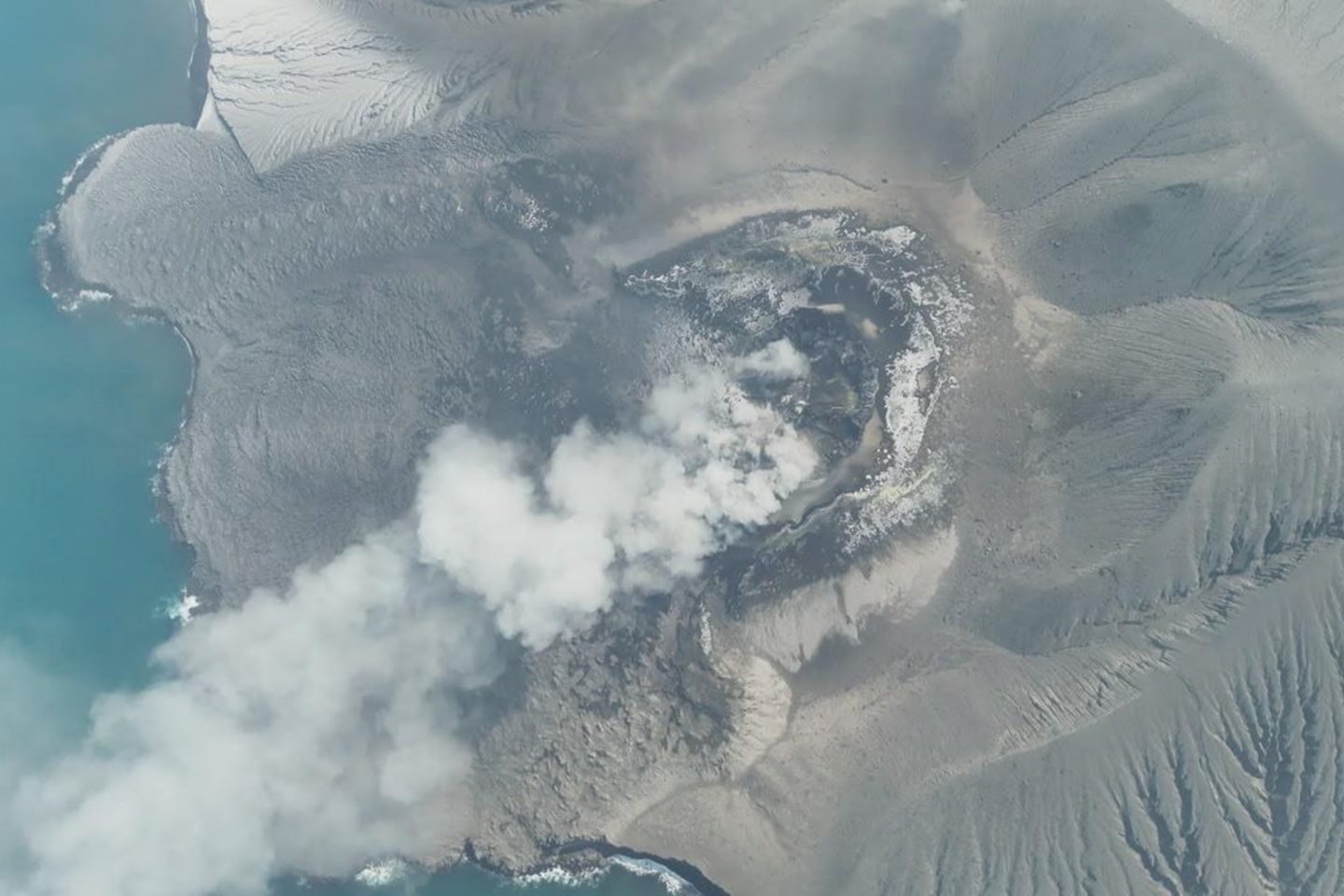

Italy Volcano Ash Plume Forces Catania Airport Closure and Flight Diversions
Mount Etna in Italy erupted on July 5-6 2026, sending an ash plume 1.5 km high and forcing the temporary closure of Catania airport along with widespread flight cancellations and diversions. The Italy volcano activity produced an ash column that drifted south and prompted aviation authorities to restrict operations at the nearby facility.
Eruption Details and Ash Plume
Etna's activity began after a new fissure opened in the Voragine crater on June 26, with a strong ash emission starting around 7:45 local time on July 6 that intensified by 8:45. [3] The observatory for Etna at the Italian National Institute of Geophysics and Volcanology reported that the ash emission reached a height of about 1.5 kilometres above the crater. [3] According to the National Institute of Geophysics and Volcanology, the ash cloud formed after increased activity that began in the night to Sunday and continued into early Monday morning. [4] The cloud is expected to drift further south based on meteorological forecasts. [4] Local sources indicated that the morning eruption in the Voragine crater was followed by intense ejection of volcanic ash. [3]
Impact on Catania Airport Operations
The ash cloud drifted south, leading to a full halt on incoming flights at Catania Vincenzo Bellini airport and severe limits on departures until at least 19:00 local time, with only five landings per hour permitted until 21:00. [4] The airport operator SAC announced that all incoming flights to Catania were suspended while only limited departures were allowed. [3] Passengers were advised to check the status of their flights with airlines before heading to the airport. [3] The affected airspace remained closed until 19:00 on Monday, after which capacity was restricted to five aircraft per hour until around 21:00. [4] The airport remained closed until 12:00 local time on July 6. [5]
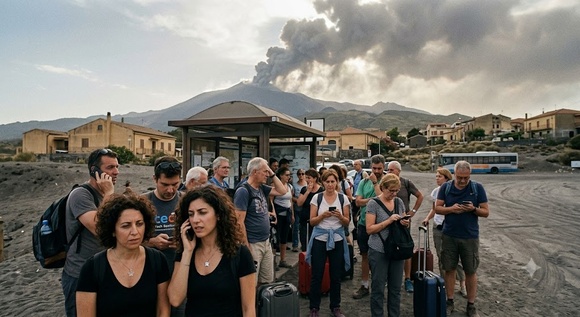
Mount Etna erupts ash plume 1.5 km high above Sicily on July 6 2026. — Source: gdelt
Effects on Specific Airlines and Passengers
Israeli carrier Israir suspended all flights to Catania, stranding dozens of Israeli tourists who remain in hotels awaiting resumption; flights are being diverted to Palermo. [1] Austrian Airlines diverted its Vienna-Catania services to Comiso airport with ground transfers provided, while multiple other carriers including ITA Airways, Ryanair, Wizz Air, British Airways, easyJet and Air France cancelled or rerouted flights. [4] [5] Israir stated it remains in constant contact with airport administration and hopes to resume flights as soon as the situation stabilises. [1] Austrian Airlines flights that were scheduled for Sunday were operated on Monday afternoon instead, with ongoing diversions to the Comiso airport approximately 95 kilometres away. [4] Many arriving flights have been redirected to other Sicilian airports including Palermo, Comiso and Trapani. [5]
Volcanic Ash Risks to Aviation
The airport, located 30 km from the 3,300-metre volcano, is highly vulnerable to fine ash that can melt in jet engines at 1,400-1,700 °C, damaging turbines and blocking sensors such as pitot tubes. [2] Fine volcanic ash melts instantly upon entering a running jet engine and turns into a glassy mass at combustion chamber temperatures between 1400 and 1700 degrees, depositing on turbine blades and potentially causing sudden loss of thrust or complete engine stoppage. [2] Ash also poses a threat to navigation equipment, including pitot speed sensors, whose clogging deprives pilots of critical flight data. [2] A red-level volcanic ash warning was issued to aviation, highlighting that ash clouds could endanger aircraft flying in the region. [5]

Mount Etna erupts ash plume 1.5 km high above Sicily forcing Catania airport closure. — Source: gdelt
Recent Activity Context
Similar disruptions occurred two years earlier in July-August 2024 when Etna produced 11 lava fountains in a short period; authorities continue monitoring with no reopening timeline announced. [2] The volcano showed activity on Sunday after an 11-month gap. [2] The latest eruption began from the upper eastern slope of the Voragine summit crater. [5] Etna, standing about 3,300 metres high, is the largest active volcano in continental Europe. [3]
Ongoing Monitoring and Outlook
The airport, located 30 km from the 3,300-metre volcano, is highly vulnerable to fine ash that can melt in jet engines at 1,400-1,700 °C, damaging turbines and blocking sensors such as pitot tubes. [2] Authorities in Italy have not announced exact timelines for reopening the airport. [2] Emergency response services continue monitoring the state of the volcano to minimise risks to civil aviation and residents in adjacent areas. [2] Travellers are recommended to contact their airline and follow official airport announcements, as flight schedules may change depending on volcanic activity. [5]
What to watch next: Continued INGV monitoring may lead to adjustments in flight restrictions at Catania and alternative Sicilian airports as ash drift patterns evolve.