
Israel blocks all roads to West Bank village of Madama as hundreds of olive trees are uprooted
Complete Isolation of Madama Village
Israeli forces have imposed a total blockade on the West Bank village of Madama, isolating 2,500 residents and uprooting hundreds of olive trees during the critical harvest season. The blockade began on 11 October when Israeli bulldozers sealed all roads connecting Madama to neighbouring communities and Nablus, forcing residents to walk difficult mountain paths for work, school and medical care. [1] Israeli forces used earth and debris to block off all entries and exits to the town of Madama. [1] Rami Nassar, head of Madama village council, told The New Arab that Israeli forces had closed the village's entrances with earth barriers, disrupting access to medical care, schools, workplaces and agricultural land. [1] On the morning of 11 October, residents woke up to find that the village had been isolated from the world through a complete and tightly enforced closure. [1] Israeli forces blocked the northern entrance, the eastern road towards Burin and routes connecting Madama with Asira al-Qibliya, before obstructing smaller roads and dirt tracks. [1] Residents attempting to reach Nablus for work, education or medical appointments have consequently been forced to leave their vehicles behind and walk along difficult mountain paths. [1] Videos supplied to The New Arab show large mounds of earth and rocks obstructing paved roads, with one recording showing schoolchildren carrying backpacks negotiating uneven, rocky ground beside an earth barrier. [1] A brief humanitarian passage reopened on Tuesday was resealed with a bulldozer the following day, cutting off deliveries of food, fuel, cooking gas and medicines. [1] The restrictions have also disrupted deliveries of vegetables, cooking gas and essential medicines, leaving the village described by Nassar as a prison under the open sky. [1]
Medical Emergencies and Chronic Care Disrupted
Patients needing kidney dialysis in Nablus and those in medical emergencies have faced life-threatening delays, with one resident carried by villagers along a rugged path when an ambulance could not reach the village. [1] Among those most seriously affected are patients requiring regular kidney dialysis at An-Najah Hospital in Nablus, who previously travelled by ambulance or private vehicle but now face increasing difficulty accessing treatment. [1] Nassar described an incident in which a resident suffered a serious medical emergency and villagers were forced to carry the patient along a rugged mountain path because an ambulance could not reach the village in time. [1] The blockade has made accessing treatment increasingly difficult for those with chronic illnesses, with Nassar warning of shortages of medication. [1] Israeli forces returned with a bulldozer on Wednesday and blocked the reopened passage again, according to accounts provided by Nassar. [1] The village council has contacted the Nablus governorate, Palestinian authorities, humanitarian organisations, the UN Office for the Coordination of Humanitarian Affairs and the International Committee of the Red Cross, seeking intervention to reopen the roads, but Israeli authorities have provided no official explanation for the closures or indication of when they might end. [1] Nobody has told residents when this collective punishment will end. [1]

Israeli forces block roads and uproot olive trees isolating Madama village in the West Bank. — Source: gdelt
Olive Harvest Devastated by Uprooting and Settler Attacks
Hundreds of olive trees have been uprooted by Israeli forces and settlers, with harvesting equipment confiscated and crops scattered, threatening an entire year's income for families. [1] The blockade has coincided with the annual olive harvest, a vital source of income for Palestinian families. [1] Farmers have struggled to reach their groves, transport equipment and bring harvested olives home, while village accounts describe repeated attacks on agricultural land by Israeli forces and settlers. [1] Footage provided by Nassar shows uprooted olive trees lying amid disturbed earth, while separate recordings show excavators operating among olive groves on hillsides surrounding the village. [1] Nassar said Israeli forces had uprooted hundreds of trees, although the total number destroyed could not be independently established from the footage. [1] Other accounts shared with The New Arab describe a security guard from the nearby illegal Israeli settlement of Yitzhar confiscating harvesting equipment from a Palestinian farmer in the Al-Rasm area south of Madama and scattering collected olives across the ground. [1] Palestinian news agency WAFA separately reported attacks on olive harvesters in Madama and other villages around Nablus on Sunday, including the theft of agricultural equipment and crops. [1] For residents, this season is not merely about agriculture but their livelihood for the entire year and their memory, with Nassar stating that the olive trees stand there waiting but farmers cannot reach their land. [1] Families risk losing an entire year's agricultural income, and Nassar warned that an entire year's labour will be lost before their eyes. [1]
Broader Pattern of West Bank Settler Violence
UN data records 199 harvest-related settler attacks across the West Bank from 1 September to 12 October, resulting in one Palestinian killed, 124 injured and more than 2,500 trees damaged. [1] The events in Madama come amid escalating Israeli settler violence across the occupied West Bank during the olive harvest. [1] According to the UN humanitarian agency OCHA, 199 harvest-related settler attacks were documented between 1 September and 12 October, leaving one Palestinian dead, 124 injured and more than 2,500 trees and saplings damaged. [1] The agency also documented settlers assaulting farmers and stealing harvesting equipment and crops in Madama itself earlier this month. [1] The agency said attacks on farmers have increased sharply in recent years, with restrictions on access to agricultural land threatening the livelihoods of tens of thousands of Palestinian families. [1]

Israeli forces block roads and uproot olive trees in West Bank village of Madama. — Source: thenewarab
Yemeni Government Claims Major Strikes Against Houthis
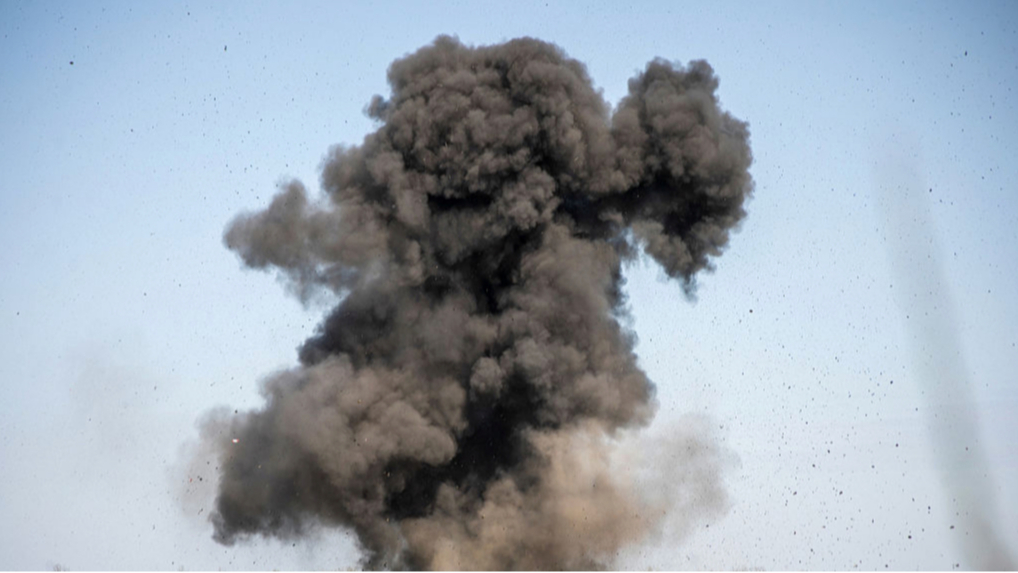
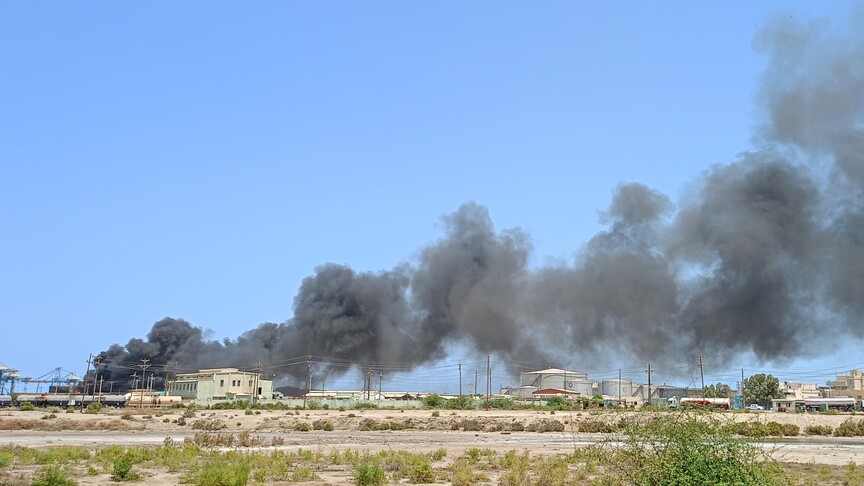
In Yemen, government forces claimed 835 strikes against Houthis in 24 hours, neutralising around 285 fighters and destroying 190 vehicles. [2] Yemeni government forces claim 835 strikes against Houthis in 24 hours. [2] An army spokesman says around 285 Houthi fighters and commanders were neutralized, with 190 military vehicles, equipment and drones destroyed or damaged. [2]
Taiz Faces Tightening Siege and Planned Counteroffensive
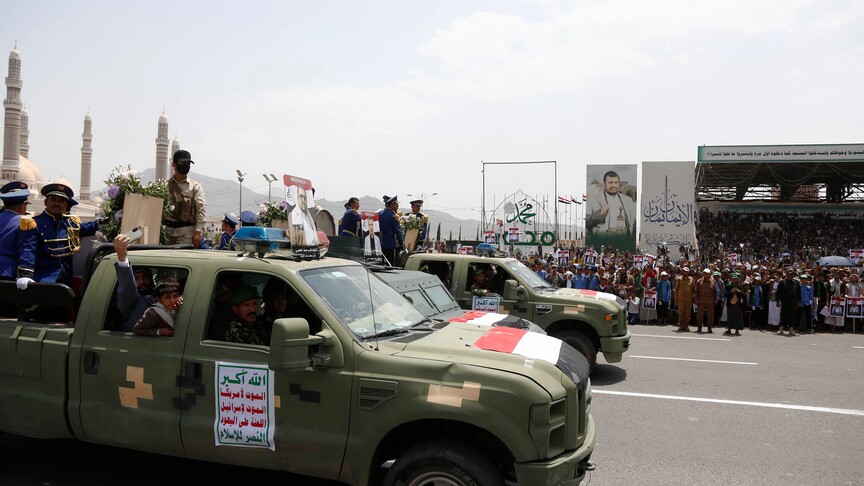
Yemeni government forces and local anti-Houthi fighters are preparing to launch a counteroffensive to break the tightening Houthi siege of Taiz, after a series of battlefield setbacks left the country's third-largest city increasingly isolated. [4] Brigadier General Mohamed al-Mahmoudi, Yemen's deputy interior minister and commander of anti-Houthi forces on Jabal Sabir in Taiz governorate, said government forces had begun regaining the initiative after reorganising their ranks and strengthening defensive positions around the besieged city. [4] He warned that the rapid collapse of government-held positions in the surrounding countryside had left Taiz facing a deepening humanitarian crisis, with around two million people at risk of being cut off from essential supplies. [4] If Taiz falls it means the fall of the Yemeni republic and the legitimate government, as it is the first and last stronghold of the republic. [4] Al-Mahmoudi attributed the latest setbacks to the collapse of National Resistance forces on Yemen's western coast, followed by the loss of al-Kadha, Shamir and Maqbana, and the Houthi advance into Jabal Habashi district and parts of the Al-Hujariyah region. [4] These areas had fallen rapidly because they were predominantly civilian population centres with a limited military presence, allowing Houthi forces to advance with little resistance and tighten their siege of Taiz. [4] The Houthis' incursion into Jabal Habashi had extremely serious consequences, as did their expansion into al-Hujariyah and their capture of its towns, which they were able to overrun at great speed, leading to a suffocating siege on Taiz. [4] Al-Mahmoudi accused Yemen's internationally recognised government and military leadership of failing to prepare for the Houthi offensive, despite years of warnings about the group's intentions. [4] Since the legitimate government agreed to a truce with the Houthi militias in 2022, they have been preparing for this day, while the army, local authorities and other government factions had become distracted by internal disputes and secondary issues while neglecting the growing Houthi threat. [4] Complacency, turning a blind eye and failing to focus on the real enemy led to this outcome. [4] Since Sunday, 18 October, government forces and local anti-Houthi fighters have reorganised their ranks, halted parts of the Houthi advance and reinforced their positions on the mountain. [4] Al-Mahmoudi said the forces were now preparing to move beyond defensive operations towards a counteroffensive aimed at breaking the siege. [4] He identified the battle for al-Misrakh as particularly important to reopening access to Taiz, warning that a prolonged blockade would deprive civilians of fuel, food and freedom of movement. [4] All these factors will put enormous pressure on the resistance and the national army, and action must be taken as fast as possible. [4] It is essential to move the fighting out of Taiz city and into the southern rural areas of Taiz, and to open supply routes from Taiz to the interim capital, Aden, through Al-Hujariyah. [4] The national army is capable of standing firm and must work to arm itself and develop its own capacity using what it seizes from the enemy. [4] Riyadh had maintained assistance through air power, communications and intelligence. [4] Al-Mahmoudi expressed confidence that Taiz would withstand the offensive and that Houthi forces would ultimately be defeated, arguing that domestic, regional and international developments were increasingly working against the group, which he accused of seeking to use the siege of Taiz to strengthen its negotiating position. [4] The Houthis are weak internally right now and wish to wield greater leverage in negotiations by strangling the city and its civilians, however Taiz will emerge victorious. [4]
What to watch next: Government forces and local anti-Houthi fighters are preparing to launch a counteroffensive aimed at breaking the siege of Taiz by moving fighting into southern rural areas and reopening supply routes to Aden through Al-Hujariyah, while Houthi forces continue to tighten their hold following recent territorial gains.