
Geopolitics global reports Britain’s defence funding uncertainty delaying GCAP fighter jet
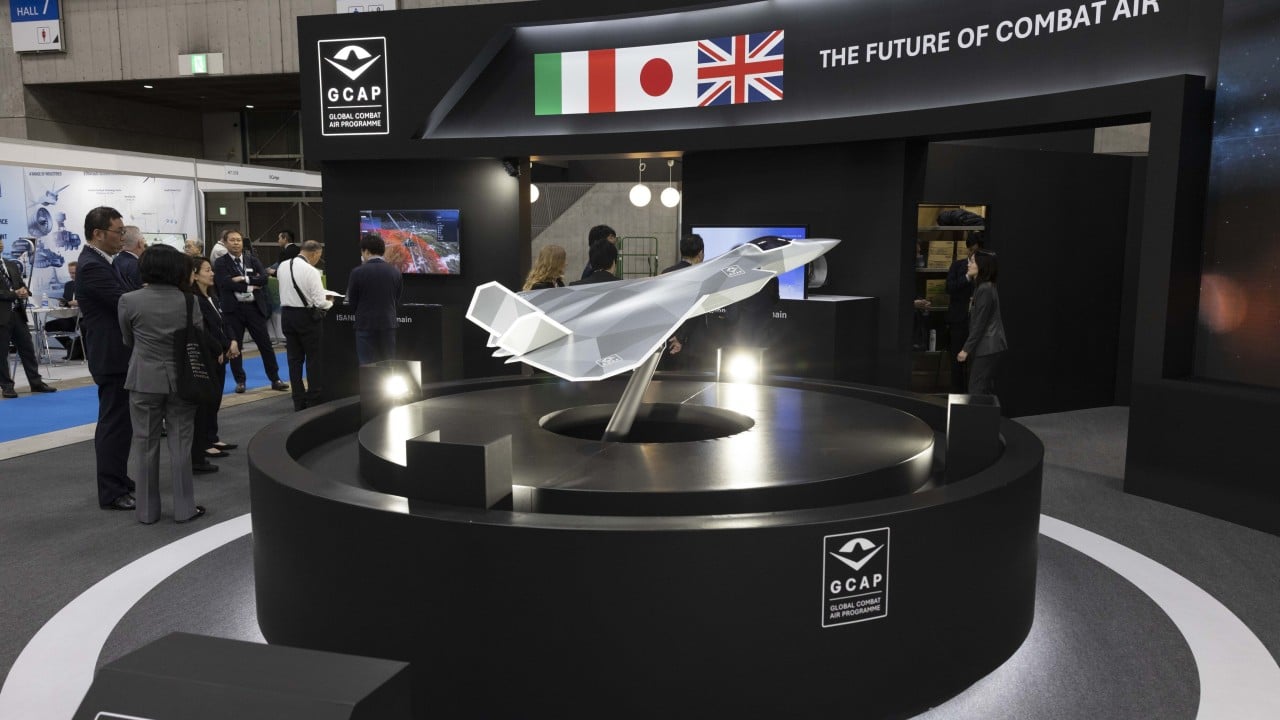
In geopolitics global developments, Britain’s funding shortfall threatens the Global Combat Air Programme fighter jet project developed with Japan and Italy. The reported uncertainty over UK defence spending has introduced the possibility of multi-year delays to a programme intended to produce a next-generation aircraft by 2035.
Geopolitics global: GCAP fighter jet project faces delay risk
The GCAP project aims to deliver a new fighter by 2035 but could face multi-year delays due to uncertainty over UK defence spending. Japan’s patience with Britain as a defence partner is being tested by the reported funding issues. According to reports cited in coverage of the programme, the aircraft could be delayed by several years because of the spending uncertainty in London. [1] The Global Combat Air Programme, or GCAP, is intended to deliver a new fighter for the three countries by 2035, yet the funding shortfall has raised concerns that the timeline may slip. This situation has prompted observers to describe the developments as a “reality check” for Japan regarding its defence partnership with Britain. The report has raised concerns among the participating nations, highlighting how domestic budget decisions in one partner can affect the collective progress of the tri-national effort. Details emerging from the coverage indicate that the uncertainty stems directly from Britain’s defence spending plans, which remain unclear and have therefore placed the entire schedule at risk. Japan’s tested patience reflects the broader challenge of aligning national priorities within a multinational defence initiative of this scale.
South Korea OPCON transfer draws market scrutiny
South Korea’s debate over wartime operational control transfer is viewed by markets as increasing economic risk. Markets do not wait for war before pricing risk; they move when uncertainty increases. [2] That is why South Korea’s debate over wartime operational control, or OPCON, should not be treated only as a military or political issue. It is also a question of how global investors, credit-rating agencies, insurers, banks and multinational companies will read Korea’s future economic security environment. President Lee Jae Myung’s renewed push for the OPCON transfer has reignited a sensitive debate. The transfer debate is framed as an economic security issue because any rise in uncertainty can influence how external actors assess long-term stability. Credit-rating agencies and insurers, among others, factor such political-military shifts into their evaluations of the country’s risk profile. The debate therefore carries implications that extend beyond operational military arrangements into the assessments made by banks and multinational companies regarding future investment conditions.
India adopts new Joint Air Defence Doctrine
India released a Joint Air Defence Doctrine integrating its Army, Navy and Air Force following Operation Sindoor. A year after India broke Pakistan’s offensive during Operation Sindoor, the Joint Air Defence Doctrine was released. [3] India’s defence forces are enhancing aerial protection with the new Joint Air Defence Doctrine, integrating Army, Navy, and Air Force for a unified shield. This move, following successful operations and global vulnerabilities, aims to counter modern threats like drones and hypersonic weapons. Technological advancements, including new missile systems, bolster this multi-layered defence strategy. The doctrine provides an integrated approach across the three services, creating a unified shield designed to address contemporary aerial challenges. The release comes after demonstrated operational success and reflects efforts to strengthen protection against evolving threats through coordinated service capabilities and updated technological systems.
Timor-Leste president addresses Shangri-La Dialogue
Timor-Leste’s president stated at the Shangri-La Dialogue that world leaders have shown ‘abysmal failure’ to uphold global order. President José Ramos-Horta also called on the Southeast Asian grouping to have the “audacity to declare the South China Sea a zone of peace” in a special address at the Shangri-La Dialogue on May 30. [4] The remarks framed ASEAN as holding potential lessons amid perceived shortcomings in maintaining international norms. The call for the South China Sea to be designated a zone of peace underscores the president’s emphasis on regional mechanisms for stability during the dialogue.
What to watch next: Continued reporting on Britain’s defence spending decisions and their effect on GCAP timelines, market reactions to South Korea’s OPCON discussions, further details on India’s integrated air defence implementation, and any ASEAN responses to the South China Sea proposal raised at the Shangri-La Dialogue.