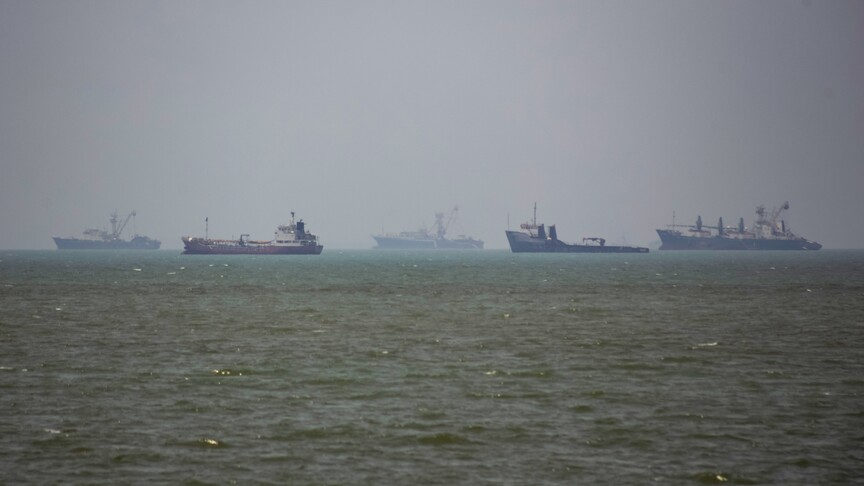

Iran Warns Trump's Use of Frozen Assets for Hormuz Ship Damage Sets Dangerous Precedent
Iran has warned that US President Donald Trump's plan to use frozen Iranian assets to compensate for damage to ships in the Strait of Hormuz sets a dangerous precedent that could lead to global chaos, as tensions widen with stalled talks and conflicting Pentagon reports on US troop deaths. Iranian Foreign Minister Abbas Araghchi stated that no nation's funds would be safe under such a policy. [1] The Pentagon has lowered its reported US troop death toll from the Iran conflict, citing temporary data disruptions and removing four deaths that occurred after Trump declared an April ceasefire. [3] BAE Systems CEO warned the UK has been complacent about the high threat level from adversaries like Russia, urging faster progress toward 3.5% of GDP on defence spending by 2035 and highlighting the rise of autonomous lethal weapons. [2] Pakistan declared Houthi attacks on its ships a 'red line' that would trigger a swift response, while reassuring Saudi Arabia of support against Houthi actions in the Red Sea and Bab el-Mandab. [4] Trump has raised the stakes by threatening major new military operations and financial punishment against Iran as diplomacy falters. [5]
Iran Warns of Dangerous Precedent Over Frozen Assets
Iranian officials have directly addressed the implications of using frozen assets to cover costs from incidents in the Strait of Hormuz. Foreign Minister Abbas Araghchi stated that no nation's funds would be safe under such a policy. [1] The warning emphasized that the approach risks creating widespread instability beyond the immediate region. [1] Araghchi highlighted the potential for chaos if other countries adopt similar measures against held assets. [1] This position comes amid ongoing friction over maritime security in the area. [1] The statement underscores Iran's view that such actions undermine established norms for handling international financial disputes. [1]
Pentagon Revises US Troop Death Toll from Iran Conflict
The Pentagon has adjusted its accounting of casualties linked to the Iran conflict. Reports indicate the death toll was suddenly lowered, with explanations including temporary data disruptions. [3] Four deaths were removed from the count because they occurred after President Trump declared an April ceasefire. [3] The New York Times noted conflicting reasons provided for the change in figures. [3] This revision has drawn attention to how casualty data is tracked and reported during the period of operations. [3] The adjustments reflect efforts to align records with the timeline of the declared ceasefire. [3]
Trump Threatens Expanded Action as Iran Talks Stall
President Donald Trump has signaled intentions to broaden US measures against Iran. He has threatened both a major new military operation and financial punishment. [5] These moves come as diplomatic efforts have faltered and the conflict has widened. [5] The escalation follows stalled negotiations between the parties. [5] Trump positioned the threats as a response to the breakdown in talks. [5] The developments indicate a shift toward more direct pressure on Iranian interests. [5]
UK Defence Chief Warns of Complacency and Rising Threats
BAE Systems CEO Dr Charles Woodburn has described the current threat environment as the highest he has seen in his lifetime. [2] He stated that the UK has been too complacent about the risk of foreign attack, particularly from Russia. [2] Woodburn pointed to profound changes in modern warfare, including the adept use of autonomy in drones and counter-drones by Russia and Ukraine. [2] He urged faster progress to reach the government's target of 3.5% of GDP on defence spending by 2035. [2] Woodburn also warned that countries may soon deploy autonomous lethal weapons without maintaining human control, unlike UK policy. [2] He noted that adversaries continue to build large platforms such as aircraft, ships and submarines alongside unmanned systems. [2] The combination of traditional and new capabilities forms what he called the winning formula. [2]
Pakistan Draws Red Line Against Houthi Attacks on Shipping
Pakistan has issued a clear warning to Houthi rebels regarding attacks on its maritime interests. Foreign Office spokesperson Tahir Andrabi described any such attack as a red line that would be treated as an attack on the country and met with a swift response in self-defence. [4] The armed forces remain vigilant about the situation in Bab el-Mandab. [4] Prime Minister Shehbaz Sharif reassured Saudi Crown Prince Mohammed Bin Salman of Pakistan's full support and condemned Houthi attacks on oil tankers in the Red Sea as unacceptable violations of international law. [4] Pakistan reaffirmed its commitment to bilateral agreements with Saudi Arabia, including a mutual defence arrangement. [4] Efforts continue for de-escalation through diplomacy, with references to the Islamabad MoU and Joint Statement with Qatar as a roadmap. [4] Deputy Prime Minister and Foreign Minister Ishaq Dar met Omani Foreign Minister Sayyid Badr Al Busaidi to review regional developments and stress the importance of preserving the ceasefire. [4]
Calls for Increased Defence Investment and Industrial Benefits
UK officials and BAE Systems have emphasized the need for higher defence spending to meet evolving requirements. Woodburn welcomed the promotion of former Defence Secretary John Healey to Chancellor, noting his understanding of defence needs. [2] Additional funding has raised spending to 2.68% of GDP by 2030, though this falls short of earlier calls for 3%. [2] A further increase is required to achieve the 3.5% target by 2035. [2] Prime Minister Andy Burnham highlighted defence's role in reindustrialising the economy and creating skilled jobs. [2] Defence Secretary Wes Streeting described defence as a central contributor to economic growth and prosperity in regions needing support. [2] Woodburn stressed the importance of communicating industrial and jobs benefits to show that spending is money well spent. [2] He framed the mission as deterring aggression to protect those who protect the country. [2]
What to watch next: Further diplomatic consultations by Pakistan with regional partners, potential adjustments to UK defence spending timelines, and any additional statements from Iranian officials on asset policies.






