
Iran Warns of Severe Retaliation Against US Energy Interests if Infrastructure Targeted
Iran has warned that any US attack on its infrastructure would trigger severe retaliatory strikes against American energy arteries and vital interests, while the Trump administration announced expanded sanctions aimed at the "economic asphyxiation" of Iran and kept military options open amid ongoing Iran tensions. [2][5]
Iran Issues Stern Warning on Infrastructure Attacks
Iran warned that it would deliver hard strategic blows to US energy arteries and vital interests if the United States carried out threats against Iranian infrastructure. [1] The spokesman of the Islamic Revolutionary Guard Corps, General Hossein Mohebi, stated that the United States fully understands any threats against Iranian infrastructure would result in hard strategic blows to US energy arteries and vital interests. [1] Mohebi emphasized Iran's strategy of responding reciprocally to any enemy damage by targeting the adversary's dependent infrastructure and allies. [1] He cited a past incident where Iran launched missiles at infrastructure, interests, and Israeli-linked centers after an attack on the South Pars gas field. [1] According to the spokesman, every damage the enemy attempted to inflict was met with reciprocal strategic damage directed against the adversary itself, its dependent infrastructures, and its allies. [1] Mohebi noted that energy bottlenecks and critical infrastructures under enemy control can also become vulnerable, allowing Iran to transfer strategic costs to the adversary. [1]
Tehran's Advanced Missile and Production Capabilities
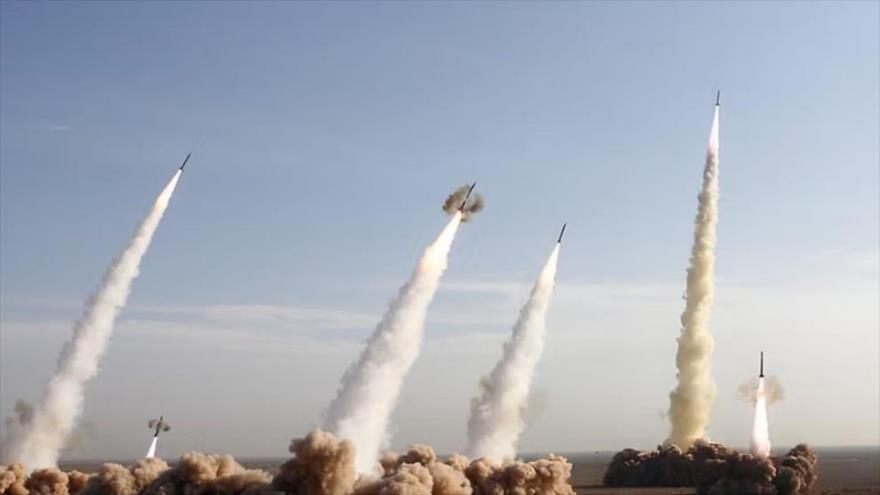
Iran's missile capabilities remain intact with ongoing production. [1] Mohebi stated that Iran's missiles are now technological, capable of mid-flight guidance, trajectory changes, and target identification, countering US claims that reserves would be depleted. [1] He dismissed US assessments that Iran possessed only a limited number of missiles whose reserves would run out with prolonged conflict. [1] Instead, Iran's missile capacity has stayed intact and production has continued, while the enemy experienced wear and reduction of its strategic weapons reserves. [1] Iran's Ministry of Defense reported that domestic production of weapons and defense equipment doubled last year, with some strategic products tripling. [1] This output has allowed rapid replacement of battlefield munitions despite attacks on military industries. [1] The spokesman of Iran's Ministry of Defense, General Reza Talai Nik, highlighted that weapons and munitions used on the battlefield are replaced quickly through daily, continuous, and uninterrupted production along with accumulated reserves built over years and strategic stockpiles. [1]
US Launches Expanded Sanctions Campaign
US Treasury Secretary Bessent outlined new sanctions for the "economic asphyxiation" of Iran. [2] The measures expand secondary sanctions threats with warnings to other countries, though no specific nations or timelines were named. [2] The Trump administration is keeping military options open against Iran even as it launches an economic campaign to choke off Tehran's financial lifelines. [5] The administration is giving Iran's foreign trading partners a chance to change course before they themselves face broader measures. [5] These steps form part of efforts to punish Iran while retaining flexibility on military responses. [5]
Market Reactions and Broader Economic Context
Oil prices fell more than two percent as Bessent laid out plans for the economic asphyxiation of Iran. [2] Analysts described market moves as pretty muted ahead of an eventful week that includes key US inflation data and earnings from Nvidia. [2] The biggest concern in the oil market centers on what type of retaliation might come from Iran on energy infrastructure in the Middle East. [2] Trade tensions returned to headlines after the United States and Canada failed to reach a trade agreement. [2] Tensions in the Middle East continue to disrupt oil flows. [2] In Europe, London closed up while Paris and Frankfurt ended the session lower. [2] Traders will watch this week's annual gathering of central bankers, economists, and finance chiefs in Jackson Hole in the United States for clarity on US monetary policy. [2] The US Treasury plans to buy back more of its own bonds to push down borrowing costs after the 30-year yield surged to levels last seen in 2007. [2]
Diplomatic Engagement with Pakistan
Pakistan's army chief met with Iran's president in Tehran amid the ongoing tensions. [3][4] The meeting occurred as regional actors responded to heightened US-Iran tensions. [3][4]
Ongoing War Dynamics and Iranian Resilience
Statements from Iranian officials occur within the context of US-Israel aggression that began February 28. [1] Iran maintained production of armaments and defense equipment despite attacks on some military industry facilities during the war. [1] The Ministry of Defense noted that national production of armaments and defense equipment doubled during the last year, with certain strategic products reaching triple the usual levels. [1] This sustained output enabled Iran to replace weapons and munitions used in the field through daily continuous production combined with long-accumulated reserves and strategic stockpiles. [1] Iran's approach has focused on making war costly for adversaries by transferring vulnerability strategically to the other side. [1]
What to watch next includes further oil market reactions to any Iranian moves on energy infrastructure, developments from the Jackson Hole gathering on US monetary policy, and whether the Trump administration advances additional secondary sanctions or exercises kept-open military options.







