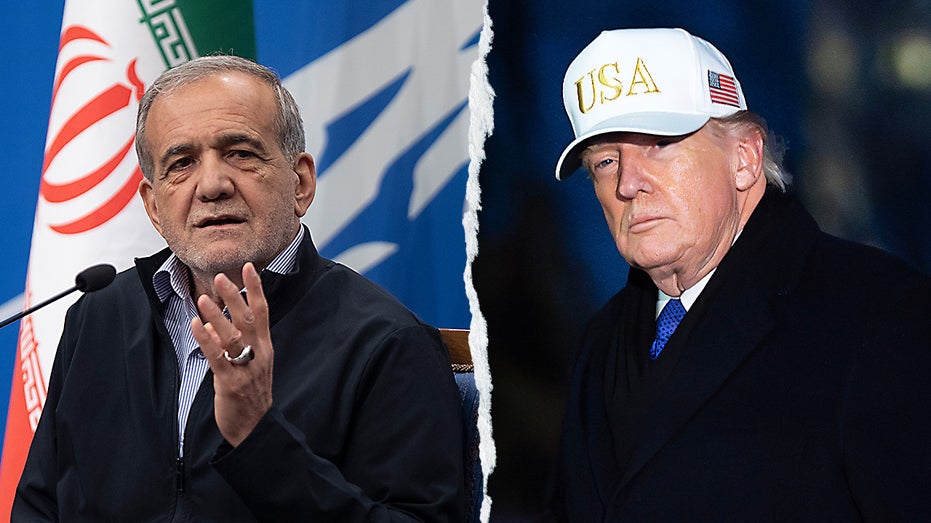

Iran Tensions Rise With Hamas Reaffirmation While Oil Traffic Through Hormuz Falls to Single Digits
Iranian President Masoud Pezeshkian reaffirmed Tehran’s support for Hamas by congratulating its new political bureau chief Khalil al-Hayya, even as US President Donald Trump promotes a Gaza agreement aimed at the group’s complete disarmament amid ongoing Iran tensions.
Iran Reaffirms Hamas Ties
Pezeshkian told al-Hayya that Iran would continue supporting the Palestinian cause and stand with Hamas "in every action you take, despite the attacks we are facing," according to a Hamas statement. [1] The reported conversation highlighted a central contradiction confronting Trump’s Gaza initiative, as the White House presents the roadmap as a landmark agreement to remove Hamas from power while Iran reaffirms its support for the group and its new leader. [1] Analysts say Al-Hayya's elevation signals that Hamas has prioritized organizational cohesion, armed continuity, and the preservation of its Iranian relationship after the destruction of Gaza and losses since Oct. 7, 2023. [1] Tehran’s backing raises fresh questions about whether Hamas is prepared to surrender the arsenal at the core of its power and how the Board of Peace could enforce disarmament against a group that continues to receive political support from one of Washington’s principal regional adversaries. [1]
Trump’s Disarmament Agreement
Trump announced a "HISTORIC agreement for the COMPLETE DISARMAMENT of Hamas and all other armed groups" to be implemented by his Board of Peace, which includes Secretary of State Marco Rubio, Jared Kushner and Tony Blair. [1] Trump chairs the board, whose executive leadership also includes special envoy Steve Witkoff and former British Prime Minister Tony Blair. [1] The White House says the board will oversee Gaza’s transition, mobilize reconstruction funding and hold the parties accountable. [1] The board’s 15-point roadmap calls for Hamas to transfer Gaza’s civilian government and security responsibilities to a Palestinian technocratic body known as the National Committee for the Administration of Gaza. [1] Hamas-run police would surrender their weapons to the committee, while heavy weapons, military production sites, weapons depots and tunnels would be addressed later through a phased decommissioning process linked to an Israeli withdrawal. [1] The intended endpoint is that only the new Palestinian authority would possess or control weapons in Gaza. [1]
Hamas Position on Weapons
Hamas has agreed only to a phased, conditional process for storing weapons after Israel halts attacks and withdraws, avoiding the term "disarmament" and insisting weapons remain under Palestinian control. [1] The roadmap leaves unresolved who will enforce the process, what constitutes compliance and which side must act first. [1] Moumen al-Natour, a Palestinian lawyer from Gaza and co-founder of the anti-Hamas "We Want to Live" movement, said civilians desperately want the agreement to succeed but do not trust Hamas to relinquish power. [1] Michael Milstein, a former military intelligence officer in Israel and now head of the Palestinian Studies Centre at Tel Aviv University, said the compromise has been developing for months under pressure. [1]
US Naval Blockade and Iran Talks
The US naval blockade has diverted 44 commercial vessels around Iran while Trump threatens to maintain it until an agreement or total surrender is reached. [2] CENTCOM has informed that US forces have diverted a total of 44 commercial vessels, while inactivating two vessels and boarding two others in the framework of the naval blockade imposed against Iranian ports and coasts. [2] Trump has called Iran’s attitude "hypocritical" and threatened to maintain the naval blockade on Iranian coasts "until an agreement or total surrender is reached." [2] Iran has denied direct negotiations with the US and says talks are with Oman over Strait of Hormuz security. [3] Iran’s Ministry of Foreign Affairs denied that it is negotiating with the United States or that there are plans for such talks. [3] Spokesman Esmaeil Baghaei stated that Tehran is conducting talks with Oman to reach an understanding on the path to securing navigation through the Strait of Hormuz. [3] Trump has reiterated his promise that "Iran will never have a nuclear weapon." [2]
Impact on Oil Shipping and Economy
Oil traffic through the Strait of Hormuz has fallen sharply to single digits per day, Red Sea routes face new Houthi threats, and Iran’s rial has weakened to near all-time lows near 1.91 million per US dollar with inflation near 90 percent. [4] The number of ships passing through the Strait of Hormuz was just eight on Sunday and 11 on Saturday, compared with more than 100 per day before the war began. [5] Before the conflict, about 20% of the world's oil and gas passed through the strait. [5] The Iranian-backed Houthi militia announced what it called a blockade on Saudi Arabia's Red Sea ports on 20 July and the UK Maritime Trade Operations agency has reported several attacks on ships in the past week. [5] Iran’s rial changed hands for about 1.91 million against the US dollar in Tehran’s open market on Monday, hovering near an all-time low. [4] The Statistical Center of Iran put the inflation rate for the calendar month that ended on July 22 at nearly 90 percent compared to the same month a year earlier. [4] Oil prices fell sharply after Trump said he would cancel planned strikes on Iran based on the potential for upcoming talks, with Brent crude trading 4.4% lower at $84.05 a barrel. [5]
Iranian Public Sentiment and Official Stance
Some Iranians have tuned out Trump’s fluctuating statements due to uncertainty, alongside President Pezeshkian’s support for the June memorandum and hardliners’ resistance. [4] Faezeh, a financial firm employee in Iran’s capital, says she has long stopped paying attention because his words impact lives but she tries to escape the toxic environment of uncertainty. [4] Roham, a colleague of Faezeh, asserted that the US used to have presidents who talked less and did more but now with the role of social media Trump talks more and doesn’t have to do as much. [4] Ali, a product manager at a technology company in the capital, said Trump mostly cares about stock markets and oil prices so he also looks at those indicators when trying to decipher the meaning behind Trump’s statements. [4] Pezeshkian renewed his support for a deal, saying he believes that the memorandum of understanding signed with the US in June will act as “the centre of gravity of our foreign relations in the future.” [4] Hardliners refute any negotiated solution with Washington. [4]
What to watch next: Iran’s foreign ministry spokesman has said any agreement would not lift the current restrictions while US aggression continues, while Kpler analysts note that talks with Oman could be productive but any deal would need US involvement and current negotiations could prove a false start without concessions on at least one side. [5]






