Iran Tensions Rise as Trump Confirms IRGC Backchannel and Urges Surrender
Iran tensions have intensified as the 60-day US-Iran ceasefire expires, with President Trump confirming a backchannel with Iran's IRGC while urging Tehran to surrender its nuclear ambitions amid reports that Iran has used the lull to prepare for a major escalation of the conflict with the US and Israel.
Trump Scales Back Drills With South Korea Over Iran Stance
President Donald Trump ordered the Pentagon to substantially scale back military drills with South Korea. He cited his very good relationship with North Korean leader Kim Jong Un and his disappointment over Seoul not supporting the United States in its war on Iran. In a social media post, Trump said the military exercises are costly and send a signal that is totally inappropriate and hostile to North Korea, which has been unthreatening and respectful while he has been in the White House. [1] Trump noted that it was too late to cancel the drills entirely, so he ordered Defense Secretary Pete Hegseth to substantially reduce them. He added that he recently asked the President of South Korea if they would like to join efforts for the denuclearization of the Islamic Republic of Iran, and they said no thanks. [1] The Ulchi Freedom Shield drills were due to start on Monday and involve 18,000 Korean soldiers and 28,500 US personnel. [1]
Iran Prepares for Wider Conflict During Ceasefire Lull
Iran has reorganized its military with the IRGC gaining greater control over the regular army, accelerated missile and drone production, and is considering options including sabotage of undersea internet cables, inciting unrest in Shia-populated countries, and even operations in Kuwait. [2] Arab intelligence indicates Iran views the current period as preparation for a wider war to raise the cost for the US and its allies, with hardliners prevailing over those seeking a negotiated end to avoid economic collapse. [2] [3] Iranian officials described the approach as a strategic shift where forces prepare to expand the war and inflict damage that prevents repeats of prior strikes. [2] The Revolutionary Guard has sent advisers to Iraq, Yemen, and Lebanon to prepare allied groups for the next phase, including deployment of missile systems and drone launchers toward the Red Sea. [2] A spokesperson for the Revolutionary Guard stated that Iran has fully utilized the ceasefire period to increase capacities, accelerate missile production, and improve precision. [2]
Ceasefire Deadline Expires With Trump Confirming IRGC Backchannel
The 60-day ceasefire deadline is expiring, yet President Donald Trump's resolve on ending Iran's nuclear weapons aspirations remains firm. [4] Trump confirmed there is a backchannel for peace talks with the Islamic Revolutionary Guard Corps that bypasses mediators and Iranian political officials. [4] He stated that Iran should put up the white flag of surrender and emphasized that the number one goal is and always will be that Iran cannot have in any way shape or form a nuclear weapon. [4] Trump added that he has no time schedule and is not in a hurry. [4] He described Iranian officials as good poker players but noted they are dying amid fractured leadership. [4]
Trump Warns Oman and Comments on Regional Dynamics
Trump issued a warning that if Oman gets in the way of a deal on the Strait of Hormuz, the US would bomb it. [4] [5] He said there is still time for peace but stressed that midterms have nothing to do with his thinking on the conflict. [4] Trump commented that it would be most appropriate for him to stay out of Israeli elections but left open the possibility that he may endorse somebody. [4] He also said Israel should not be carrying out strikes in Gaza and noted that the US has its own relationship with Hamas, which is giving up its guns. [4] Trump pushed back on concerns over US weapons stockpiles, stating that what has been used so far is peanuts and that the US has a lot of mid-level weapons. [4] South Korea's presidential office said it expects the friendship between the leaders of North Korea and the US to help lead to bilateral talks on peace on the Korean Peninsula. [1]
North Korean Opposition and Regional Alliances
North Korea has opposed the drills, conducted recent ballistic missile tests, and strengthened ties with Russia and China. [1] Last week North Korea denounced the latest drills as a provocation that heightens tensions on the Korean Peninsula. [1] On August 12 North Korea launched a ballistic missile towards the Sea of Japan, marking the second such test from Pyongyang in less than a week. [1] A spokesperson for North Korea’s Ministry of Foreign Affairs claimed that US-Japan-South Korea military cooperation is turning into a nuclear alliance and that Pyongyang will respond to a new level of threat with a new level of deterrent. [1] Analysts noted that Trump’s announcement could signal an attempt to reinitiate dialogue with North Korea, though it remains to be seen whether Kim Jong Un is interested. [1]
Implications for Tensions and Future Talks
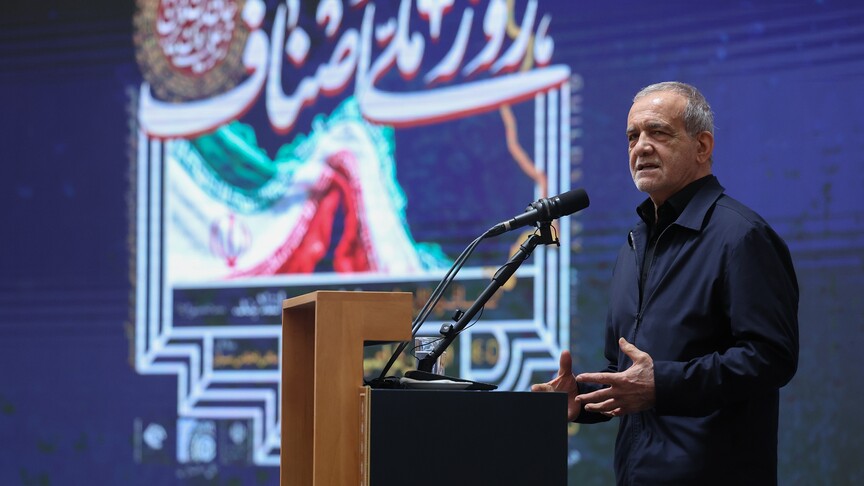
These developments occur amid the US-Israel war on Iran and just days after North Korea launched a ballistic missile. [1] Kim has been beefing up ties with Moscow and entered a three-way partnership with Russia and China in Beijing in 2025. [1] Inside Iran, President Masoud Pezeshkian and more pragmatic voices warn that the country must reach an agreement to end the war and ease sanctions or face serious economic collapse, yet hardliners currently hold the upper hand. [2] An adviser to Iran’s chief negotiator described the situation as a calm before the storm. [2] The US does not have diplomatic relations with North Korea but maintains a policy to ensure peace and prosperity on the Korean Peninsula through the pursuit of complete denuclearization. [1]
What to watch next: South Korea expects friendly relations between the North Korean and US leaders to lead to meaningful talks aimed at advancing peace and stability on the Korean Peninsula, while Arab intelligence continues to track Iranian preparations for expanded operations.